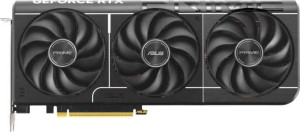
The most telling performance gap between these two cards lies in their shader and compute configurations. The MSI RTX 5070 Ti Shadow 3X fields 8960 shading units and 280 TMUs against the Asus Prime RTX 5070's 6144 shading units and 192 TMUs — a roughly 46% advantage in raw parallelism. This directly explains the Ti's dramatically higher floating-point performance of 43.94 TFLOPS versus 30.87 TFLOPS, a difference that translates into meaningfully faster frame generation, better ray-tracing throughput, and more headroom for AI-accelerated workloads like DLSS.
Interestingly, the Asus Prime RTX 5070 edges ahead on clock speeds — 2512 MHz boost versus 2452 MHz on the Ti — but this modest frequency advantage is nowhere near enough to close the gap created by the Ti's larger execution array. Higher clocks on a smaller chip simply cannot offset the sheer volume of the Ti's additional compute resources. Both cards share identical GPU memory speed at 1750 MHz and both support Double Precision Floating Point, so neither holds an exclusive advantage on those fronts.
Overall, the MSI RTX 5070 Ti Shadow 3X holds a clear and substantial performance edge across every key throughput metric — compute, texturing, and pixel output — making it the stronger choice for demanding gaming resolutions, content creation, or any workload that stresses GPU compute. The Asus Prime RTX 5070 is by no means a slow card, but based strictly on these specs, it competes in a different performance tier.