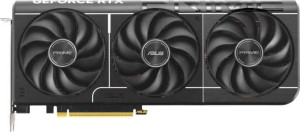
Asus Prime GeForce RTX 5070
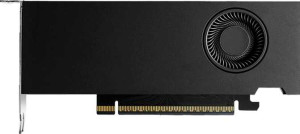
Nvidia RTX Pro 2000 Blackwell

Asus Prime GeForce RTX 5070 Nvidia RTX Pro 2000 Blackwell

Overview

Welcome to our in-depth specification comparison between the Asus Prime GeForce RTX 5070 and the Nvidia RTX Pro 2000 Blackwell. Both cards share the same Blackwell architecture and 5 nm manufacturing process, yet they take strikingly different approaches to raw performance, power consumption, and physical form factor. Read on as we break down every key specification to help you decide which card best suits your needs.

Common Features

  • Both products support Double Precision Floating Point (DPFP).
  • Both products use GDDR7 memory.
  • Both products support ECC memory.
  • Both products are compatible with DirectX 12 Ultimate.
  • Both products support OpenGL version 4.6.
  • Both products support OpenCL version 3.
  • Both products support multi-display technology.
  • Both products support ray tracing.
  • Both products support 3D.
  • Both products support DLSS.
  • XeSS (XMX) support is not available on either product.
  • Neither product has any USB-C ports.
  • Neither product has any DVI outputs.
  • Both products are built on the Blackwell GPU architecture.
  • Both products use PCIe version 5.
  • Both products are manufactured with a 5 nm semiconductor process.
  • Air-water cooling is not available on either product.

Main Differences

  • GPU clock speed is 2325 MHz on Asus Prime GeForce RTX 5070 and 790 MHz on Nvidia RTX Pro 2000 Blackwell.
  • GPU turbo speed is 2512 MHz on Asus Prime GeForce RTX 5070 and 1950 MHz on Nvidia RTX Pro 2000 Blackwell.
  • Pixel rate is 201 GPixel/s on Asus Prime GeForce RTX 5070 and 124.8 GPixel/s on Nvidia RTX Pro 2000 Blackwell.
  • Floating-point performance is 30.87 TFLOPS on Asus Prime GeForce RTX 5070 and 16.97 TFLOPS on Nvidia RTX Pro 2000 Blackwell.
  • Texture rate is 482.3 GTexels/s on Asus Prime GeForce RTX 5070 and 265.2 GTexels/s on Nvidia RTX Pro 2000 Blackwell.
  • GPU memory speed is 1750 MHz on Asus Prime GeForce RTX 5070 and 1125 MHz on Nvidia RTX Pro 2000 Blackwell.
  • Shading units number 6144 on Asus Prime GeForce RTX 5070 and 4352 on Nvidia RTX Pro 2000 Blackwell.
  • Texture mapping units (TMUs) total 192 on Asus Prime GeForce RTX 5070 and 136 on Nvidia RTX Pro 2000 Blackwell.
  • Render output units (ROPs) total 80 on Asus Prime GeForce RTX 5070 and 64 on Nvidia RTX Pro 2000 Blackwell.
  • Effective memory speed is 28000 MHz on Asus Prime GeForce RTX 5070 and 18000 MHz on Nvidia RTX Pro 2000 Blackwell.
  • Maximum memory bandwidth is 672 GB/s on Asus Prime GeForce RTX 5070 and 288 GB/s on Nvidia RTX Pro 2000 Blackwell.
  • VRAM is 12 GB on Asus Prime GeForce RTX 5070 and 16 GB on Nvidia RTX Pro 2000 Blackwell.
  • Memory bus width is 192-bit on Asus Prime GeForce RTX 5070 and 128-bit on Nvidia RTX Pro 2000 Blackwell.
  • An HDMI output is present on Asus Prime GeForce RTX 5070 but not available on Nvidia RTX Pro 2000 Blackwell.
  • DisplayPort outputs number 3 on Asus Prime GeForce RTX 5070 and 0 on Nvidia RTX Pro 2000 Blackwell.
  • Mini DisplayPort outputs number 0 on Asus Prime GeForce RTX 5070 and 4 on Nvidia RTX Pro 2000 Blackwell.
  • Thermal Design Power (TDP) is 250W on Asus Prime GeForce RTX 5070 and 70W on Nvidia RTX Pro 2000 Blackwell.
  • Number of transistors is 31100 million on Asus Prime GeForce RTX 5070 and 21900 million on Nvidia RTX Pro 2000 Blackwell.
  • Width is 306 mm on Asus Prime GeForce RTX 5070 and 167.6 mm on Nvidia RTX Pro 2000 Blackwell.
  • Height is 126 mm on Asus Prime GeForce RTX 5070 and 68.6 mm on Nvidia RTX Pro 2000 Blackwell.
Specs Comparison
Asus Prime GeForce RTX 5070

Asus Prime GeForce RTX 5070

Nvidia RTX Pro 2000 Blackwell

Nvidia RTX Pro 2000 Blackwell

Performance:
GPU clock speed 2325 MHz 790 MHz
GPU turbo 2512 MHz 1950 MHz
pixel rate 201 GPixel/s 124.8 GPixel/s
floating-point performance 30.87 TFLOPS 16.97 TFLOPS
texture rate 482.3 GTexels/s 265.2 GTexels/s
GPU memory speed 1750 MHz 1125 MHz
shading units 6144 4352
texture mapping units (TMUs) 192 136
render output units (ROPs) 80 64
Has Double Precision Floating Point (DPFP)

The Asus Prime RTX 5070 holds a decisive performance advantage across every raw metric in this group. Its base and boost clocks (2325 MHz / 2512 MHz) are roughly three times higher than the RTX Pro 2000 Blackwell's (790 MHz / 1950 MHz), which immediately signals a fundamental architectural difference: the Pro 2000 is built around a workstation-oriented, power-efficiency profile, while the RTX 5070 is tuned for maximum consumer gaming throughput.

That clock speed gap translates directly into compute and throughput figures that matter in practice. The RTX 5070's 30.87 TFLOPS of floating-point performance is nearly double the Pro 2000's 16.97 TFLOPS, meaning shader-heavy workloads — real-time ray tracing, AI-accelerated rendering, and rasterized gaming — will complete significantly faster. Similarly, its texture rate of 482.3 GTexels/s versus 265.2 GTexels/s means the RTX 5070 can push far more textured geometry per second, which directly benefits visual fidelity at high resolutions and frame rates. The higher shading unit count (6144 vs. 4352) and more ROPs (80 vs. 64) reinforce this: more ROPs means the RTX 5070 can write more pixels per clock cycle, supporting higher resolutions with less bottlenecking at the output stage.

Both cards support Double Precision Floating Point (DPFP), which is noteworthy — DPFP capability is typically a workstation/professional feature that enables accurate scientific and simulation computations. Its presence on both cards is a shared strength, but it does not close the wide performance gap. Overall, the RTX 5070 has a clear and substantial edge in every performance dimension provided; the Pro 2000 Blackwell's lower clocks and reduced compute throughput reflect its professional-workstation positioning rather than a competitive gaming performance tier.

Memory:
effective memory speed 28000 MHz 18000 MHz
maximum memory bandwidth 672 GB/s 288 GB/s
VRAM 12GB 16GB
GDDR version GDDR7 GDDR7
memory bus width 192-bit 128-bit
Supports ECC memory

The Asus Prime GeForce RTX 5070 offers an effective memory speed of 28000 MHz, significantly higher than the Nvidia RTX Pro 2000 Blackwell’s 18000 MHz. Additionally, the Asus Prime has a much higher maximum memory bandwidth of 672 GB/s compared to the Blackwell's 288 GB/s, which will contribute to faster data transfer rates and improved performance in memory-heavy tasks.

In terms of VRAM, the Nvidia RTX Pro 2000 Blackwell has 16GB, which exceeds the 12GB of VRAM found in the Asus Prime. Both products use GDDR7 memory and support ECC (Error Correction Code) memory, ensuring data integrity in critical applications.

The memory bus width of the Asus Prime is 192-bit, which is wider than the Blackwell’s 128-bit, potentially allowing the Asus Prime to handle more data per cycle. Both products support ECC memory, ensuring that data errors are detected and corrected during processing.

Features:
DirectX version DirectX 12 Ultimate DirectX 12 Ultimate
OpenGL version 4.6 4.6
OpenCL version 3 3
Supports multi-display technology
supports ray tracing
Supports 3D
supports DLSS
has XeSS (XMX)
AMD SAM / Intel Resizable BAR Intel Resizable BAR Intel Resizable BAR
has LHR
has RGB lighting
supported displays 4 4

Both the Asus Prime GeForce RTX 5070 and the Nvidia RTX Pro 2000 Blackwell share the same specifications in several key areas. They both support DirectX 12 Ultimate, OpenGL 4.6, OpenCL 3, multi-display technology, ray tracing, 3D, and DLSS. Additionally, both cards use Intel Resizable BAR and lack LHR (Lite Hash Rate) features. They also do not support XeSS (XMX) and do not feature RGB lighting.

In terms of display support, both cards can handle up to 4 displays, offering the same multi-monitor capabilities. The specifications for the DirectX, OpenGL, and OpenCL versions, as well as the support for ray tracing, 3D, and DLSS, are identical between the two products.

Overall, the Asus Prime and the Blackwell offer a very similar set of features, with no significant differences in the features listed in this group.

Ports:
has an HDMI output
DisplayPort outputs 3 0
USB-C ports 0 0
DVI outputs 0 0
mini DisplayPort outputs 0 4

The Asus Prime GeForce RTX 5070 and the Nvidia RTX Pro 2000 Blackwell differ significantly in their port configurations. The Asus Prime has an HDMI output and supports three DisplayPort outputs, while the Blackwell does not have an HDMI output. The Blackwell, however, offers four mini DisplayPort outputs, in contrast to the Asus Prime's lack of mini DisplayPort support. Both products have no USB-C ports or DVI outputs.

In summary, the Asus Prime offers HDMI and DisplayPort options, whereas the Blackwell focuses on mini DisplayPort connectivity, lacking HDMI support altogether.

General info:
GPU architecture Blackwell Blackwell
release date January 2025 August 2025
Thermal Design Power (TDP) 250W 70W
PCI Express (PCIe) version 5 5
semiconductor size 5 nm 5 nm
number of transistors 31100 million 21900 million
Has air-water cooling
width 306 mm 167.6 mm
height 126 mm 68.6 mm

Both the Asus Prime GeForce RTX 5070 and the Nvidia RTX Pro 2000 Blackwell share the same GPU architecture, which is Blackwell, and both use a 5 nm semiconductor size. However, there are notable differences in their power and size. The Asus Prime has a significantly higher Thermal Design Power (TDP) of 250W, compared to the Blackwell’s 70W. This indicates that the Asus Prime requires more power to operate effectively.

The number of transistors also differs, with the Asus Prime having 31,100 million transistors, while the Blackwell has 21,900 million. The larger number of transistors in the Asus Prime may contribute to its greater processing capability. As for physical dimensions, the Asus Prime is larger, measuring 306 mm in width and 126 mm in height, compared to the Blackwell's 167.6 mm in width and 68.6 mm in height.

Both products use PCI Express (PCIe) version 5 and lack air-water cooling systems, with no differences in this aspect.

Comparison Summary & Verdict

After examining every specification, a clear picture emerges of two cards built for very different audiences. The Asus Prime GeForce RTX 5070 dominates in outright performance, delivering 30.87 TFLOPS of floating-point power, a 672 GB/s memory bandwidth, and a higher shader and TMU count — making it the go-to choice for demanding gaming and content creation workloads. The Nvidia RTX Pro 2000 Blackwell, by contrast, prioritizes efficiency and compactness: its 70W TDP, significantly smaller dimensions, 16 GB of VRAM, and four mini DisplayPort outputs make it an outstanding fit for professional workstation use, multi-display productivity setups, and space-constrained environments where power draw is a critical concern.

Asus Prime GeForce RTX 5070
Buy Asus Prime GeForce RTX 5070 if...

Buy the Asus Prime GeForce RTX 5070 if you want maximum gaming or creative performance, with higher floating-point throughput, faster memory bandwidth, and full-size DisplayPort and HDMI connectivity.

Nvidia RTX Pro 2000 Blackwell
Buy Nvidia RTX Pro 2000 Blackwell if...

Buy the Nvidia RTX Pro 2000 Blackwell if you need a compact, power-efficient workstation GPU with 16 GB of VRAM, a 70W TDP, and four mini DisplayPort outputs for professional multi-display setups.