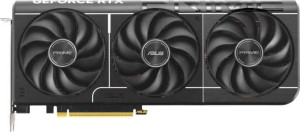
At first glance, the Asus Prime RTX 5070 appears to lead on base clock speed (2325 MHz vs. 1330 MHz), but this comparison is misleading in practice. The RTX 5070's architecture relies on a wide resting-to-boost range, whereas the PowerColor Hellhound RX 9070 is designed to boost aggressively, reaching 2590 MHz at turbo — slightly ahead of the RTX 5070's 2512 MHz. What matters more is sustained throughput, and there the RX 9070 holds a consistent advantage across every key metric.
The RX 9070 delivers 37.13 TFLOPS of floating-point performance versus 30.87 TFLOPS on the RTX 5070 — roughly a 20% lead — which translates directly to more raw compute headroom for rasterization workloads. Its pixel rate of 331.5 GPixel/s (versus 201 GPixel/s) and 128 ROPs (versus 80) mean it can push more pixels to the screen per clock cycle, a real advantage at high resolutions like 4K. Similarly, its texture rate of 580.2 GTexels/s and 224 TMUs outpace the RTX 5070's 482.3 GTexels/s and 192 TMUs, meaning richer, more detailed textures are processed faster. Memory speed also favors the RX 9070 significantly at 2518 MHz vs. 1750 MHz, reducing potential bandwidth bottlenecks under heavy loads.
The RTX 5070 does field a considerably higher shading unit count (6144 vs. 3584), which reflects architectural differences in how each GPU handles parallel workloads — but this advantage does not translate into a throughput lead based on the provided specs. Both cards support Double Precision Floating Point, making neither uniquely suited for DPFP-heavy compute tasks over the other. Overall, the PowerColor Hellhound RX 9070 holds a clear performance edge in this group, with superior throughput across rendering, texturing, and memory speed metrics.