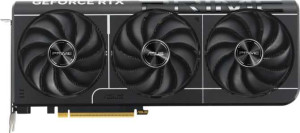
Asus Prime GeForce RTX 5080
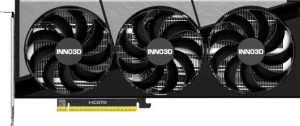
Inno3D GeForce RTX 5080 X3 OC

Asus Prime GeForce RTX 5080 Inno3D GeForce RTX 5080 X3 OC

Overview

When comparing the Asus Prime GeForce RTX 5080 and the Inno3D GeForce RTX 5080 X3 OC, you are looking at two Blackwell-architecture cards that share a remarkable amount of common ground — yet differ in meaningful ways. This head-to-head digs into the key battlegrounds of boost clock speeds, raw compute performance, physical dimensions, and aesthetic features to help you decide which card best fits your setup.

Common Features

  • Both cards share a base GPU clock speed of 2295 MHz.
  • Both cards have a GPU memory speed of 1875 MHz.
  • Both cards feature 10752 shading units.
  • Both cards include 336 texture mapping units (TMUs).
  • Both cards have 112 render output units (ROPs).
  • Double Precision Floating Point (DPFP) is supported on both cards.
  • Both cards have an effective memory speed of 30000 MHz.
  • Both cards offer a maximum memory bandwidth of 960 GB/s.
  • Both cards come with 16GB of VRAM.
  • Both cards use GDDR7 memory.
  • Both cards feature a 256-bit memory bus width.
  • ECC memory is supported on both cards.
  • Both cards support DirectX 12 Ultimate.
  • Both cards support OpenGL version 4.6.
  • Both cards support OpenCL version 3.
  • Multi-display technology is supported on both cards.
  • Ray tracing is supported on both cards.
  • 3D support is available on both cards.
  • DLSS is supported on both cards.
  • XeSS (XMX) is not available on either card.
  • Both cards include 1 HDMI port with HDMI 2.1b.
  • Both cards feature 3 DisplayPort outputs.
  • Neither card has USB-C, DVI, or mini DisplayPort outputs.
  • Both cards are built on the Blackwell GPU architecture.
  • Both cards have a Thermal Design Power (TDP) of 360W.
  • Both cards use PCIe version 5.
  • Both cards are manufactured on a 5 nm semiconductor process.
  • Both cards contain 45600 million transistors.
  • Neither card features air-water cooling.

Main Differences

  • GPU turbo clock speed is 2617 MHz on Asus Prime GeForce RTX 5080 and 2640 MHz on Inno3D GeForce RTX 5080 X3 OC.
  • Pixel rate is 293.1 GPixel/s on Asus Prime GeForce RTX 5080 and 295.7 GPixel/s on Inno3D GeForce RTX 5080 X3 OC.
  • Floating-point performance is 56.28 TFLOPS on Asus Prime GeForce RTX 5080 and 56.77 TFLOPS on Inno3D GeForce RTX 5080 X3 OC.
  • Texture rate is 879.3 GTexels/s on Asus Prime GeForce RTX 5080 and 887 GTexels/s on Inno3D GeForce RTX 5080 X3 OC.
  • RGB lighting is present on Inno3D GeForce RTX 5080 X3 OC but not available on Asus Prime GeForce RTX 5080.
  • Card width is 304 mm on Asus Prime GeForce RTX 5080 and 300 mm on Inno3D GeForce RTX 5080 X3 OC.
  • Card height is 126 mm on Asus Prime GeForce RTX 5080 and 120 mm on Inno3D GeForce RTX 5080 X3 OC.
Specs Comparison
Asus Prime GeForce RTX 5080

Asus Prime GeForce RTX 5080

Inno3D GeForce RTX 5080 X3 OC

Inno3D GeForce RTX 5080 X3 OC

Performance:
GPU clock speed 2295 MHz 2295 MHz
GPU turbo 2617 MHz 2640 MHz
pixel rate 293.1 GPixel/s 295.7 GPixel/s
floating-point performance 56.28 TFLOPS 56.77 TFLOPS
texture rate 879.3 GTexels/s 887 GTexels/s
GPU memory speed 1875 MHz 1875 MHz
shading units 10752 10752
texture mapping units (TMUs) 336 336
render output units (ROPs) 112 112
Has Double Precision Floating Point (DPFP)

Both the Asus Prime RTX 5080 and the Inno3D RTX 5080 X3 OC share an identical hardware foundation: the same 2295 MHz base clock, 10752 shading units, 336 TMUs, 112 ROPs, and 1875 MHz memory speed. This means the raw silicon and memory subsystem are effectively equivalent, and neither card has a structural throughput advantage at the architecture level.

Where the two diverge is in boost behavior. The Inno3D X3 OC carries a slightly higher GPU turbo of 2640 MHz versus the Asus Prime's 2617 MHz — a 23 MHz factory overclock that flows directly into its computed throughput figures. This translates to a 56.77 TFLOPS floating-point performance versus 56.28 TFLOPS, and a texture rate of 887 GTexels/s compared to 879.3 GTexels/s. In practice, these differences are in the range of roughly 0.9%, which means real-world rendering, gaming frame rates, and compute workloads will be virtually indistinguishable between the two.

The Inno3D X3 OC holds a narrow but measurable edge in this group, strictly by virtue of its higher factory boost clock. However, the margin is so slim that it is unlikely to manifest as a perceivable difference in any typical use case. Users prioritizing absolute peak throughput on paper will lean toward the Inno3D, while those indifferent to sub-1% deltas will find the Asus Prime fully competitive on every performance dimension that matters.

Memory:
effective memory speed 30000 MHz 30000 MHz
maximum memory bandwidth 960 GB/s 960 GB/s
VRAM 16GB 16GB
GDDR version GDDR7 GDDR7
memory bus width 256-bit 256-bit
Supports ECC memory

The memory specifications of the Asus Prime GeForce RTX 5080 and the Inno3D GeForce RTX 5080 X3 OC are identical across the board. Both products feature an effective memory speed of 30000 MHz, a maximum memory bandwidth of 960 GB/s, and 16GB of VRAM. They also utilize GDDR7 memory, with a 256-bit memory bus width. Additionally, both cards support ECC memory, ensuring error-correcting capabilities for more reliable performance in demanding tasks.

Since all memory-related specs match exactly between the two products, users can expect the same level of memory performance and capabilities regardless of the choice between the Asus Prime and Inno3D versions.

Overall, there are no differences in memory specifications between the two cards, with both delivering high-end memory performance suited for demanding applications and gaming.

Features:
DirectX version DirectX 12 Ultimate DirectX 12 Ultimate
OpenGL version 4.6 4.6
OpenCL version 3 3
Supports multi-display technology
supports ray tracing
Supports 3D
supports DLSS
has XeSS (XMX)
AMD SAM / Intel Resizable BAR Intel Resizable BAR Intel Resizable BAR
has LHR
has RGB lighting
supported displays 4 4

The Asus Prime GeForce RTX 5080 and Inno3D GeForce RTX 5080 X3 OC share nearly identical feature sets. Both cards support DirectX 12 Ultimate, OpenGL 4.6, and OpenCL 3, ensuring compatibility with the latest graphics APIs. They also both support multi-display technology, ray tracing, 3D content, and DLSS, offering a range of advanced graphical features. Neither card supports XeSS (XMX), and both are equipped with Intel Resizable BAR support, which helps optimize performance in compatible systems.

However, one key difference between the two products is the inclusion of RGB lighting on the Inno3D model, which the Asus Prime lacks. Additionally, both cards do not feature LHR (Lite Hash Rate) technology, and they support up to four displays.

Overall, the differences between the two are minimal in terms of features, with the primary distinction being the presence of RGB lighting on the Inno3D GeForce RTX 5080 X3 OC, while the Asus Prime GeForce RTX 5080 lacks this aesthetic enhancement.

Ports:
has an HDMI output
HDMI ports 1 1
HDMI version HDMI 2.1b HDMI 2.1b
DisplayPort outputs 3 3
USB-C ports 0 0
DVI outputs 0 0
mini DisplayPort outputs 0 0

The ports available on the Asus Prime GeForce RTX 5080 and the Inno3D GeForce RTX 5080 X3 OC are identical. Both cards feature one HDMI output with HDMI 2.1b support, along with three DisplayPort outputs. Neither card has USB-C, DVI, or mini DisplayPort outputs.

Given the identical port configurations, both models offer the same level of connectivity for displays, with the main distinction being the use of HDMI 2.1b and DisplayPort for high-resolution and high-refresh-rate setups.

In summary, there are no differences between the two products in terms of available ports, as both provide the same options for connecting external displays.

General info:
GPU architecture Blackwell Blackwell
release date January 2025 January 2025
Thermal Design Power (TDP) 360W 360W
PCI Express (PCIe) version 5 5
semiconductor size 5 nm 5 nm
number of transistors 45600 million 45600 million
Has air-water cooling
width 304 mm 300 mm
height 126 mm 120 mm

The general specifications for the Asus Prime GeForce RTX 5080 and the Inno3D GeForce RTX 5080 X3 OC are largely the same. Both cards are built on the Blackwell GPU architecture and feature a Thermal Design Power (TDP) of 360W. They both also support PCI Express (PCIe) version 5 and are manufactured using a 5 nm semiconductor process with 45600 million transistors.

One difference between the two cards is their physical dimensions. The Asus Prime is slightly larger, with a width of 304 mm and a height of 126 mm, compared to the Inno3D’s 300 mm width and 120 mm height.

Both models do not include air-water cooling solutions, meaning they rely on traditional cooling methods. Overall, the differences in general specs are minimal, with the primary distinction being the slight size difference between the two cards.

Comparison Summary & Verdict

Both the Asus Prime GeForce RTX 5080 and the Inno3D GeForce RTX 5080 X3 OC are built on the same Blackwell architecture, share identical 16GB GDDR7 memory with 960 GB/s bandwidth, and deliver the same broad feature set including ray tracing and DLSS support. The Inno3D edges ahead with a slightly higher GPU turbo of 2640 MHz, marginally better floating-point performance at 56.77 TFLOPS, and adds RGB lighting, while also being slightly more compact at 300 x 120 mm. The Asus Prime, measuring 304 x 126 mm and lacking RGB, suits builders who prefer a clean, understated aesthetic. Choose the Inno3D GeForce RTX 5080 X3 OC for a small but measurable performance advantage and visual flair, or the Asus Prime GeForce RTX 5080 for a no-frills installation where RGB lighting is unwanted.

Asus Prime GeForce RTX 5080
Buy Asus Prime GeForce RTX 5080 if...

Buy the Asus Prime GeForce RTX 5080 if you prefer a clean, understated card without RGB lighting and have no need for the marginal boost clock and performance uplift offered by the Inno3D.

Inno3D GeForce RTX 5080 X3 OC
Buy Inno3D GeForce RTX 5080 X3 OC if...

Buy the Inno3D GeForce RTX 5080 X3 OC if you want the highest available boost clock of 2640 MHz, slightly better compute performance, a more compact form factor, and RGB lighting for a visually expressive build.