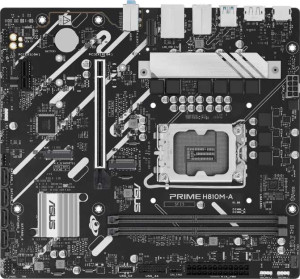
Asus Prime H810M-A
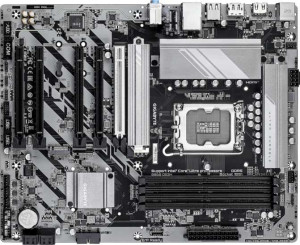
Gigabyte B860 DS3H

Asus Prime H810M-A Gigabyte B860 DS3H

Overview

Welcome to our in-depth specification comparison between the Asus Prime H810M-A and the Gigabyte B860 DS3H, two LGA 1851 motherboards targeting different types of builders. While both boards share a solid DDR5 foundation and 7.1 audio support, they diverge significantly when it comes to form factor, memory capacity, expansion slots, and overclocking capabilities. Read on to see which board best fits your build goals.

Common Features

  • Both boards use the LGA 1851 CPU socket.
  • Neither board includes Wi-Fi connectivity.
  • Neither board includes Bluetooth connectivity.
  • Both boards feature HDMI 2.1 output.
  • RGB lighting is present on both boards.
  • Both boards have a single CPU socket.
  • Neither board has integrated graphics.
  • Both boards carry a 3-year warranty.
  • Both boards support a maximum RAM speed of 6400 MHz.
  • Both boards use DDR5 memory.
  • Both boards operate in dual-channel memory mode.
  • Neither board supports ECC memory.
  • Neither board has USB 3.2 Gen 1 Type-A rear ports.
  • Neither board has USB 3.2 Gen 2 Type-C rear ports.
  • Neither board has USB 3.2 Gen 1 Type-C rear ports.
  • Both boards provide 4 USB 2.0 rear ports.
  • Neither board includes Thunderbolt 3 or Thunderbolt 4 ports.
  • Both boards provide 2 USB 3.2 Gen 1 headers for expansion.
  • Both boards include 4 SATA 3 connectors and no SATA 2 connectors.
  • Both boards offer 2 M.2 sockets.
  • Neither board has a U.2 socket or mSATA connector.
  • Both boards include a TPM connector.
  • Neither board has PCIe 3.0 x16, PCIe 2.0 x16, PCIe x4, PCIe x8, or PCI slots.
  • Both boards support 7.1 audio channels with 3 audio connectors.
  • Neither board has an S/PDIF Out port.
  • Neither board supports RAID 0+1.

Main Differences

  • The Asus Prime H810M-A uses a Micro-ATX form factor, while the Gigabyte B860 DS3H uses an ATX form factor.
  • Overclocking support is not available on the Asus Prime H810M-A but is present on the Gigabyte B860 DS3H.
  • Easy BIOS reset is available on the Asus Prime H810M-A but not on the Gigabyte B860 DS3H.
  • Dual BIOS is not present on the Asus Prime H810M-A but is available on the Gigabyte B860 DS3H.
  • The Asus Prime H810M-A measures 222 mm in height, while the Gigabyte B860 DS3H measures 244 mm.
  • The Asus Prime H810M-A measures 244 mm in width, while the Gigabyte B860 DS3H measures 305 mm.
  • Maximum memory capacity is 128 GB on the Asus Prime H810M-A and 256 GB on the Gigabyte B860 DS3H.
  • The Asus Prime H810M-A has 2 memory slots, while the Gigabyte B860 DS3H has 4 memory slots.
  • USB 3.2 Gen 2 Type-A rear ports number 2 on the Asus Prime H810M-A and 1 on the Gigabyte B860 DS3H.
  • USB 3.2 Gen 2x2 rear ports are absent on the Asus Prime H810M-A but 1 is present on the Gigabyte B860 DS3H.
  • USB Type-C connectivity is not available on the Asus Prime H810M-A but is present on the Gigabyte B860 DS3H.
  • USB 2.0 expansion headers support 2 ports on the Asus Prime H810M-A and 4 ports on the Gigabyte B860 DS3H.
  • The Asus Prime H810M-A provides 3 fan headers, while the Gigabyte B860 DS3H provides 6 fan headers.
  • The Asus Prime H810M-A has 1 PCIe 4.0 x16 slot, while the Gigabyte B860 DS3H has none.
  • The Gigabyte B860 DS3H has 1 PCIe 5.0 x16 slot, while the Asus Prime H810M-A has none.
  • PCIe x1 slots number 1 on the Asus Prime H810M-A and 4 on the Gigabyte B860 DS3H.
Specs Comparison
Asus Prime H810M-A

Asus Prime H810M-A

Gigabyte B860 DS3H

Gigabyte B860 DS3H

General info:
CPU socket LGA 1851 LGA 1851
form factor Micro-ATX ATX
release date January 2025 January 2025
supports Wi-Fi
Has Bluetooth
HDMI version HDMI 2.1 HDMI 2.1
Easy to overclock
has RGB lighting
Easy to reset BIOS
Has dual BIOS
CPU sockets 1 1
Has integrated graphics
warranty period 3 years 3 years
height 222 mm 244 mm
width 244 mm 305 mm
Has integrated CPU

Both the Asus Prime H810M-A and the Gigabyte B860 DS3H share the same LGA 1851 socket, meaning they target the same generation of Intel processors. They also match on HDMI 2.1 output, the absence of onboard Wi-Fi and Bluetooth, RGB lighting, and a 3-year warranty — so for users who rely on wired connectivity and plan to add a discrete GPU anyway, neither board holds an inherent advantage on these fronts.

The most meaningful differences emerge around form factor and enthusiast-oriented features. The Asus is a Micro-ATX board (222 × 244 mm), making it the right pick for compact or mid-tower builds with limited space. The Gigabyte is a full ATX board (244 × 305 mm), which typically translates to more expansion slots, better power delivery layout, and greater upgrade headroom. More significantly, the Gigabyte supports easy overclocking and includes a dual BIOS — a hardware-level safety net that lets you recover from a failed BIOS flash without external tools. The Asus counters with an easy BIOS reset feature, which is more of a convenience mechanism than a true redundancy system.

Overall, the Gigabyte B860 DS3H has a clear edge for users who want overclocking capability and a more robust BIOS protection story. The Asus Prime H810M-A is the better fit for space-constrained builds or users who prioritize a simpler, smaller platform and have no intention of pushing CPU frequencies beyond stock.

Memory:
maximum memory amount 128GB 256GB
RAM speed (max) 6400 MHz 6400 MHz
memory slots 2 4
DDR memory version 5 5
memory channels 2 2
Supports ECC memory

The Asus Prime H810M-A and Gigabyte B860 DS3H differ in memory capacity and slot count. The Asus motherboard supports a maximum memory amount of 128GB, while the Gigabyte model can handle up to 256GB. Both motherboards support DDR5 memory, with a maximum RAM speed of 6400 MHz, and they feature two memory channels. However, the Asus Prime H810M-A has two memory slots, while the Gigabyte B860 DS3H has four, allowing for potentially more memory expansion with the Gigabyte board.

Neither motherboard supports ECC memory, so neither is suited for error-correcting memory configurations. The DDR5 memory version is consistent across both products, so there is no difference there. Overall, the main differences in the memory specs lie in the maximum capacity and the number of memory slots available on each motherboard.

Ports:
USB 3.2 Gen 2 ports (USB-A) 2 1
USB 3.2 Gen 1 ports (USB-A) 0 0
USB 3.2 Gen 2 ports (USB-C) 0 0
USB 3.2 Gen 1 ports (USB-C) 0 0
USB 2.0 ports 4 4
USB 3.2 Gen 2x2 ports 0 1
USB 4 40Gbps ports 0 0
USB 4 20Gbps ports 0 0
Thunderbolt 4 ports 0 0
Thunderbolt 3 ports 0 0
has an HDMI output
DisplayPort outputs 1 1
RJ45 ports 1 1
Has USB Type-C
eSATA ports 0 0
DVI outputs 0 0
has a VGA connector
PS/2 ports 1 1

The Asus Prime H810M-A and Gigabyte B860 DS3H both offer a range of ports, but there are a few key differences. Both motherboards feature HDMI output and DisplayPort outputs, with one of each on both boards. The Asus Prime H810M-A has 2 USB 3.2 Gen 2 ports (USB-A) and 4 USB 2.0 ports, but it lacks USB Type-C and any USB 3.2 Gen 2x2 ports. In contrast, the Gigabyte B860 DS3H offers 1 USB 3.2 Gen 2 port (USB-A), 4 USB 2.0 ports, and adds USB Type-C support, along with a USB 3.2 Gen 2x2 port for faster data transfer.

Both boards have a PS/2 port and 1 RJ45 port for Ethernet connectivity, but only the Gigabyte B860 DS3H has USB Type-C support. The Asus Prime H810M-A does not have any USB Type-C ports. Additionally, the Asus model lacks USB 3.2 Gen 2x2 ports, while the Gigabyte board includes 1 such port, providing potential for higher-speed USB devices.

Neither motherboard has eSATA, DVI outputs, or VGA connectors, and neither supports Thunderbolt 3 or 4. Both boards do, however, have one DisplayPort output. Overall, the Gigabyte B860 DS3H offers more modern connectivity options, especially with its USB Type-C and USB 3.2 Gen 2x2 ports, while the Asus Prime H810M-A sticks with more traditional USB-A ports.

Connectors:
USB 3.2 Gen 1 ports (through expansion) 2 2
USB 2.0 ports (through expansion) 2 4
SATA 3 connectors 4 4
fan headers 3 6
USB 3.0 ports (through expansion) 2 2
M.2 sockets 2 2
Has TPM connector
U.2 sockets 0 0
Has mSATA connector
SATA 2 connectors 0 0

The Asus Prime H810M-A and Gigabyte B860 DS3H both provide several expansion options but differ in the number of fan headers and USB 2.0 ports through expansion. Both motherboards offer 2 USB 3.2 Gen 1 ports (through expansion) and 2 USB 3.0 ports (through expansion), with the Asus model providing 2 USB 2.0 ports (through expansion), while the Gigabyte model offers 4. The Gigabyte B860 DS3H also has 6 fan headers compared to the Asus Prime H810M-A's 3, making it more versatile for cooling solutions.

Both motherboards feature 4 SATA 3 connectors and 2 M.2 sockets, ensuring support for modern storage solutions. Neither board includes U.2 sockets, and both boards lack mSATA connectors. Both models have a TPM connector for additional security, but the Asus Prime H810M-A does not have any SATA 2 connectors, while this is also the case for the Gigabyte B860 DS3H.

Overall, the Gigabyte B860 DS3H stands out for its increased number of fan headers and USB 2.0 ports (through expansion), while the Asus Prime H810M-A offers a similar feature set but with fewer fan header options.

Expansion slots:
PCIe 4.0 x16 slots 1 0
PCIe 5.0 x16 slots 0 1
PCIe 3.0 x16 slots 0 0
PCIe x1 slots 1 4
PCI slots 0 0
PCIe 2.0 x16 slots 0 0
PCIe x4 slots 0 0
PCIe x8 slots 0 0

The Asus Prime H810M-A and Gigabyte B860 DS3H offer different configurations for expansion slots. The Asus board has 1 PCIe 4.0 x16 slot and 1 PCIe x1 slot, but no support for PCIe 5.0 or PCIe 3.0 x16 slots. In contrast, the Gigabyte B860 DS3H offers 1 PCIe 5.0 x16 slot and 4 PCIe x1 slots, but lacks PCIe 4.0 x16 or PCIe 3.0 x16 slots.

Both motherboards do not include any PCI slots, PCIe 2.0 x16 slots, or PCIe x4/x8 slots. The primary difference is that the Asus Prime H810M-A provides a PCIe 4.0 x16 slot, while the Gigabyte B860 DS3H includes a more modern PCIe 5.0 x16 slot, which may be more future-proof for certain high-performance components.

Overall, the Asus model focuses on PCIe 4.0 compatibility, whereas the Gigabyte model emphasizes PCIe 5.0 with a higher number of PCIe x1 slots, offering a slightly broader expansion potential in this category.

Audio:
audio channels 7.1 7.1
Has S/PDIF Out port
audio connectors 3 3

The Asus Prime H810M-A and Gigabyte B860 DS3H both offer 7.1 audio channels, providing similar sound quality capabilities. Neither motherboard includes an S/PDIF Out port, so they lack the ability to output digital audio directly to compatible devices. Both boards feature 3 audio connectors, making them similar in terms of the number of physical connections available for audio devices.

Overall, the audio specifications on both motherboards are identical, with both offering 7.1 audio channels, no S/PDIF Out port, and 3 audio connectors. There is no significant difference between the two products in this category.

Storage:
Supports RAID 0+1

Both the Asus Prime H810M-A and the Gigabyte B860 DS3H do not support RAID 0+1. This means that neither motherboard offers the ability to configure RAID 0+1 arrays for enhanced data redundancy and performance.

With both motherboards lacking RAID 0+1 support, there are no differences between the two in terms of RAID capabilities in this category.

Comparison Summary & Verdict

After a thorough side-by-side analysis, these two boards serve clearly different audiences. The Asus Prime H810M-A is a compelling pick for compact build enthusiasts thanks to its Micro-ATX form factor and straightforward BIOS reset feature, making it ideal for space-constrained cases and users who value easy maintenance. However, builders who need more headroom will find the Gigabyte B860 DS3H far more capable, offering a PCIe 5.0 x16 slot, support for up to 256 GB of RAM across four memory slots, dual BIOS redundancy, six fan headers for advanced cooling setups, and native overclocking support. The Gigabyte also edges ahead on connectivity with a USB Type-C port and a USB 3.2 Gen 2x2 port. In short, choose the Asus for a smaller, no-fuss build, and opt for the Gigabyte when you need a feature-rich, future-proof platform.

Asus Prime H810M-A
Buy Asus Prime H810M-A if...

Buy the Asus Prime H810M-A if you are building a compact system and need a Micro-ATX board with an easy BIOS reset feature and a PCIe 4.0 x16 slot.

Gigabyte B860 DS3H
Buy Gigabyte B860 DS3H if...

Buy the Gigabyte B860 DS3H if you need a full ATX board with PCIe 5.0 support, up to 256 GB of RAM across four slots, overclocking capability, dual BIOS, and more extensive fan and USB connectivity.