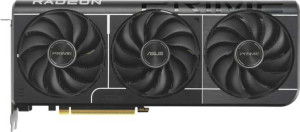
Asus Prime Radeon RX 9060 XT OC Edition 16GB
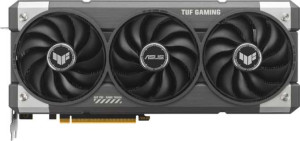
Asus TUF Gaming GeForce RTX 5060 OC Edition

Asus Prime Radeon RX 9060 XT OC Edition 16GB Asus TUF Gaming GeForce RTX 5060 OC Edition

Overview

Choosing between the Asus Prime Radeon RX 9060 XT OC Edition 16GB and the Asus TUF Gaming GeForce RTX 5060 OC Edition means navigating two very different approaches to mid-range GPU design. From raw compute throughput and VRAM capacity to memory technology generations and AI-driven upscaling features, these two cards carve out distinct competitive positions that are well worth examining closely before committing to a purchase.

Common Features

  • Both products support Double Precision Floating Point (DPFP).
  • Both products share a 128-bit memory bus width.
  • Both products support ECC memory.
  • Both products support DirectX 12 Ultimate.
  • Both products support OpenGL version 4.6.
  • Both products support multi-display technology.
  • Both products support ray tracing.
  • Both products support 3D.
  • XeSS (XMX) support is not available on either product.
  • LHR is not present on either product.
  • RGB lighting is featured on both products.
  • Both products have an HDMI output.
  • Both products include 1 HDMI port.
  • Both products use HDMI version 2.1b.
  • Neither product has USB-C ports.
  • Neither product has DVI outputs.
  • Neither product has mini DisplayPort outputs.
  • Both products use PCI Express (PCIe) version 5.
  • Neither product uses air-water cooling.

Main Differences

  • GPU clock speed is 1700 MHz on Asus Prime Radeon RX 9060 XT OC Edition 16GB and 2280 MHz on Asus TUF Gaming GeForce RTX 5060 OC Edition.
  • GPU turbo speed is 3130 MHz on Asus Prime Radeon RX 9060 XT OC Edition 16GB and 2640 MHz on Asus TUF Gaming GeForce RTX 5060 OC Edition.
  • Pixel rate is 200.3 GPixel/s on Asus Prime Radeon RX 9060 XT OC Edition 16GB and 126.7 GPixel/s on Asus TUF Gaming GeForce RTX 5060 OC Edition.
  • Floating-point performance is 25.64 TFLOPS on Asus Prime Radeon RX 9060 XT OC Edition 16GB and 20.28 TFLOPS on Asus TUF Gaming GeForce RTX 5060 OC Edition.
  • Texture rate is 400.6 GTexels/s on Asus Prime Radeon RX 9060 XT OC Edition 16GB and 316.8 GTexels/s on Asus TUF Gaming GeForce RTX 5060 OC Edition.
  • GPU memory speed is 2518 MHz on Asus Prime Radeon RX 9060 XT OC Edition 16GB and 1750 MHz on Asus TUF Gaming GeForce RTX 5060 OC Edition.
  • Shading units count is 2048 on Asus Prime Radeon RX 9060 XT OC Edition 16GB and 3840 on Asus TUF Gaming GeForce RTX 5060 OC Edition.
  • Texture mapping units (TMUs) total 128 on Asus Prime Radeon RX 9060 XT OC Edition 16GB and 120 on Asus TUF Gaming GeForce RTX 5060 OC Edition.
  • Render output units (ROPs) total 64 on Asus Prime Radeon RX 9060 XT OC Edition 16GB and 48 on Asus TUF Gaming GeForce RTX 5060 OC Edition.
  • Effective memory speed is 20000 MHz on Asus Prime Radeon RX 9060 XT OC Edition 16GB and 28000 MHz on Asus TUF Gaming GeForce RTX 5060 OC Edition.
  • Maximum memory bandwidth is 322.3 GB/s on Asus Prime Radeon RX 9060 XT OC Edition 16GB and 448 GB/s on Asus TUF Gaming GeForce RTX 5060 OC Edition.
  • VRAM is 16GB on Asus Prime Radeon RX 9060 XT OC Edition 16GB and 8GB on Asus TUF Gaming GeForce RTX 5060 OC Edition.
  • GDDR version is GDDR6 on Asus Prime Radeon RX 9060 XT OC Edition 16GB and GDDR7 on Asus TUF Gaming GeForce RTX 5060 OC Edition.
  • OpenCL version is 2.2 on Asus Prime Radeon RX 9060 XT OC Edition 16GB and 3 on Asus TUF Gaming GeForce RTX 5060 OC Edition.
  • DLSS support is present on Asus TUF Gaming GeForce RTX 5060 OC Edition but not available on Asus Prime Radeon RX 9060 XT OC Edition 16GB.
  • Asus Prime Radeon RX 9060 XT OC Edition 16GB uses AMD SAM while Asus TUF Gaming GeForce RTX 5060 OC Edition uses Intel Resizable BAR.
  • Supported displays number 3 on Asus Prime Radeon RX 9060 XT OC Edition 16GB and 4 on Asus TUF Gaming GeForce RTX 5060 OC Edition.
  • DisplayPort outputs total 2 on Asus Prime Radeon RX 9060 XT OC Edition 16GB and 3 on Asus TUF Gaming GeForce RTX 5060 OC Edition.
  • GPU architecture is RDNA 4.0 on Asus Prime Radeon RX 9060 XT OC Edition 16GB and Blackwell on Asus TUF Gaming GeForce RTX 5060 OC Edition.
  • Thermal Design Power (TDP) is 160W on Asus Prime Radeon RX 9060 XT OC Edition 16GB and 145W on Asus TUF Gaming GeForce RTX 5060 OC Edition.
  • Semiconductor size is 4 nm on Asus Prime Radeon RX 9060 XT OC Edition 16GB and 5 nm on Asus TUF Gaming GeForce RTX 5060 OC Edition.
  • Number of transistors is 29700 million on Asus Prime Radeon RX 9060 XT OC Edition 16GB and 21900 million on Asus TUF Gaming GeForce RTX 5060 OC Edition.
  • Width is 304 mm on Asus Prime Radeon RX 9060 XT OC Edition 16GB and 302 mm on Asus TUF Gaming GeForce RTX 5060 OC Edition.
  • Height is 126 mm on Asus Prime Radeon RX 9060 XT OC Edition 16GB and 133.5 mm on Asus TUF Gaming GeForce RTX 5060 OC Edition.
Specs Comparison
Asus Prime Radeon RX 9060 XT OC Edition 16GB

Asus Prime Radeon RX 9060 XT OC Edition 16GB

Asus TUF Gaming GeForce RTX 5060 OC Edition

Asus TUF Gaming GeForce RTX 5060 OC Edition

Performance:
GPU clock speed 1700 MHz 2280 MHz
GPU turbo 3130 MHz 2640 MHz
pixel rate 200.3 GPixel/s 126.7 GPixel/s
floating-point performance 25.64 TFLOPS 20.28 TFLOPS
texture rate 400.6 GTexels/s 316.8 GTexels/s
GPU memory speed 2518 MHz 1750 MHz
shading units 2048 3840
texture mapping units (TMUs) 128 120
render output units (ROPs) 64 48
Has Double Precision Floating Point (DPFP)

At first glance, the Asus TUF Gaming GeForce RTX 5060 OC Edition appears to hold a clock speed advantage at its base frequency of 2280 MHz versus the Asus Prime Radeon RX 9060 XT OC Edition's 1700 MHz. However, this comparison quickly inverts when looking at boost clocks: the RX 9060 XT surges to an exceptional 3130 MHz turbo, far outpacing the RTX 5060's 2640 MHz ceiling. Because GPUs spend the vast majority of gaming workloads at or near their boost frequency, the RX 9060 XT's dramatically higher turbo clock is the more meaningful real-world figure.

That clock advantage cascades directly into compute throughput. The RX 9060 XT delivers 25.64 TFLOPS of floating-point performance and a texture rate of 400.6 GTexels/s, compared to the RTX 5060's 20.28 TFLOPS and 316.8 GTexels/s — a roughly 26% lead in raw compute and texturing. The RX 9060 XT also holds a decisive edge in pixel fill rate at 200.3 GPixel/s versus 126.7 GPixel/s, which translates to a higher ceiling for rendering complex scenes at high resolutions. Complementing this, its memory interface runs at 2518 MHz versus the RTX 5060's 1750 MHz, meaning data is fed to the GPU significantly faster — a critical factor for texture-heavy workloads. While the RTX 5060 does field more raw shading units (3840 vs 2048), the RX 9060 XT's architecture clearly extracts far more throughput per-unit, resulting in superior aggregate performance across every major compute metric.

Based strictly on the provided performance specifications, the Asus Prime Radeon RX 9060 XT OC Edition holds a clear and broad advantage. It leads in boost clock, TFLOPS, pixel rate, texture throughput, and memory speed — the metrics that most directly govern real-world rendering performance. The RTX 5060's higher shader count alone is not sufficient to overcome these deficits as the final throughput numbers tell a consistent story in the RX 9060 XT's favor.
Memory:
effective memory speed 20000 MHz 28000 MHz
maximum memory bandwidth 322.3 GB/s 448 GB/s
VRAM 16GB 8GB
GDDR version GDDR6 GDDR7
memory bus width 128-bit 128-bit
Supports ECC memory

Both cards share an identical 128-bit memory bus, so the key differentiators here lie in what each side brings to that shared interface. The Asus TUF Gaming GeForce RTX 5060 leverages the newer GDDR7 standard to achieve an effective memory speed of 28000 MHz and a peak bandwidth of 448 GB/s, while the Asus Prime Radeon RX 9060 XT relies on GDDR6 at 20000 MHz, yielding 322.3 GB/s. That is roughly a 39% bandwidth advantage for the RTX 5060 — a meaningful gap that helps compensate for the narrower bus by feeding data to the GPU more rapidly, which is particularly beneficial in texture-streaming and high-resolution scenarios.

The equation shifts sharply when VRAM capacity enters the picture. The RX 9060 XT carries 16GB of frame buffer versus the RTX 5060's 8GB — a full doubling of onboard memory. In practical terms, VRAM capacity determines how large a scene, texture set, or model can reside on the GPU without triggering slower system-memory fallback. At higher resolutions or with modern titles that ship with multi-gigabyte texture packs, 8GB can become a hard ceiling that causes stuttering or forced quality reductions, regardless of how fast that memory operates. The RTX 5060's bandwidth advantage is real, but bandwidth only helps if there is enough capacity to hold the data in the first place.

This group presents a genuine trade-off with no clean winner across all use cases. For workloads and resolutions where 8GB proves sufficient, the RTX 5060's superior bandwidth gives it a throughput edge. But for users targeting high-resolution gaming, content creation, or future-proofing against increasingly VRAM-hungry titles, the RX 9060 XT's 16GB capacity is the more consequential specification — making it the stronger choice for long-term headroom and demanding memory workloads.

Features:
DirectX version DirectX 12 Ultimate DirectX 12 Ultimate
OpenGL version 4.6 4.6
OpenCL version 2.2 3
Supports multi-display technology
supports ray tracing
Supports 3D
supports DLSS
has XeSS (XMX)
AMD SAM / Intel Resizable BAR AMD SAM Intel Resizable BAR
has LHR
has RGB lighting
supported displays 3 4

The foundation is largely shared: both cards support DirectX 12 Ultimate, OpenGL 4.6, ray tracing, and multi-display output, so neither holds an advantage on the core compatibility pillars that determine which games and APIs each card can run. Where the feature sets begin to diverge is in upscaling and compute versioning. The Asus TUF Gaming GeForce RTX 5060 supports DLSS, Nvidia's AI-driven upscaling technology, which can substantially boost effective frame rates in supported titles by rendering at a lower resolution and reconstructing the image — a capability the Asus Prime Radeon RX 9060 XT entirely lacks, as it carries no DLSS and no XeSS support either. This is a meaningful real-world gap for users who play DLSS-compatible titles and want the performance headroom that upscaling provides.

The RTX 5060 also edges ahead in a couple of secondary areas: its OpenCL 3 support is a step above the RX 9060 XT's OpenCL 2.2, which can matter for GPU-accelerated compute workloads and certain professional applications that target the newer standard. It additionally supports up to 4 simultaneous displays versus the RX 9060 XT's 3, a minor but practical advantage for multi-monitor power users.

Taken together, the Asus TUF Gaming GeForce RTX 5060 holds a clear feature advantage in this group. The absence of any upscaling technology on the RX 9060 XT is the most impactful differentiator — DLSS support directly expands the RTX 5060's effective performance ceiling in a growing library of titles. The additional display output and newer OpenCL version further tilt the balance, making the RTX 5060 the stronger card from a software features and ecosystem standpoint.

Ports:
has an HDMI output
HDMI ports 1 1
HDMI version HDMI 2.1b HDMI 2.1b
DisplayPort outputs 2 3
USB-C ports 0 0
DVI outputs 0 0
mini DisplayPort outputs 0 0

Port configurations for both cards are nearly identical at a glance — each offers one HDMI 2.1b output and zero USB-C or DVI connections. HDMI 2.1b is the current high-end standard, capable of driving 4K at high refresh rates or even 8K displays, so neither card is compromised on that front. The sole differentiator is DisplayPort count: the Asus TUF Gaming GeForce RTX 5060 provides 3 DisplayPort outputs versus the Asus Prime Radeon RX 9060 XT's 2.

In practice, that extra DisplayPort matters primarily for multi-monitor users. Combined with its single HDMI port, the RTX 5060 can drive up to four displays simultaneously — consistent with its supported display count noted elsewhere — while the RX 9060 XT is capped at three total connections. For the overwhelming majority of single or dual-monitor setups, this distinction is irrelevant. It becomes meaningful only for users running three or more DisplayPort monitors concurrently without wanting to occupy the HDMI port.

This is a narrow group with minimal real-world impact for most buyers. The Asus TUF Gaming GeForce RTX 5060 holds a slight edge by virtue of its additional DisplayPort output, but the advantage is situational rather than broadly significant — both cards are well-equipped for standard single and dual-display use cases with equivalent HDMI capability.

General info:
GPU architecture RDNA 4.0 Blackwell
release date May 2025 May 2025
Thermal Design Power (TDP) 160W 145W
PCI Express (PCIe) version 5 5
semiconductor size 4 nm 5 nm
number of transistors 29700 million 21900 million
Has air-water cooling
width 304 mm 302 mm
height 126 mm 133.5 mm

Manufactured on a 4 nm process node versus the RTX 5060's 5 nm, the Asus Prime Radeon RX 9060 XT is built on the more advanced fabrication technology, and its transistor count reflects that density advantage: 29,700 million transistors versus 21,900 million on the Blackwell-based RTX 5060. A smaller node generally enables more transistors per unit area, contributing to better power efficiency and higher peak performance ceilings — which aligns with the RX 9060 XT's compute lead seen in the performance group.

The power story, however, favors the Asus TUF Gaming GeForce RTX 5060. Its 145W TDP sits 15 watts below the RX 9060 XT's 160W, meaning it draws less power under sustained load — a relevant consideration for users with tighter PSU headroom or those sensitive to long-term electricity costs and heat output in constrained cases. It is a moderate gap rather than a dramatic one, but it does mean the RTX 5060 is the more power-frugal option at the wall. Both cards share PCIe 5.0 compatibility, so neither has an interface bottleneck on modern motherboards. Physical dimensions are nearly identical, with length within 2mm of each other, making both cards broadly compatible with the same range of cases.

This group does not produce a clean overall winner — it surfaces a meaningful trade-off. The RX 9060 XT brings a more advanced process node and significantly higher transistor density, underpinning its architectural headroom. The RTX 5060 counters with lower power consumption, which is a practical advantage for system builders prioritizing efficiency. Users who value raw silicon sophistication lean toward the RX 9060 XT; those optimizing for power draw have reason to prefer the RTX 5060.

Comparison Summary & Verdict

After reviewing all the specifications, these two cards clearly target different priorities. The Asus Prime Radeon RX 9060 XT OC Edition 16GB leads in raw throughput with a higher GPU turbo clock of 3130 MHz, superior pixel and texture rates, more ROPs and TMUs, and a generous 16GB GDDR6 VRAM — making it the stronger choice for users who demand maximum memory headroom and higher compute performance out of the box. The Asus TUF Gaming GeForce RTX 5060 OC Edition answers with faster GDDR7 memory delivering 448 GB/s of bandwidth, a larger shading unit count of 3840, exclusive DLSS support, a lower 145W TDP, and four-display connectivity — suiting users who prioritize AI-powered upscaling, modern memory speed, and energy efficiency.

Asus Prime Radeon RX 9060 XT OC Edition 16GB
Buy Asus Prime Radeon RX 9060 XT OC Edition 16GB if...

Buy the Asus Prime Radeon RX 9060 XT OC Edition 16GB if you prioritize a larger 16GB VRAM pool, higher raw compute performance, and superior pixel and texture throughput.

Asus TUF Gaming GeForce RTX 5060 OC Edition
Buy Asus TUF Gaming GeForce RTX 5060 OC Edition if...

Buy the Asus TUF Gaming GeForce RTX 5060 OC Edition if you value DLSS support, faster GDDR7 memory with greater bandwidth, a lower 145W TDP, and connectivity for up to four displays.