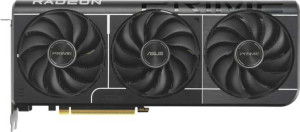
Asus Prime Radeon RX 9060 XT OC Edition 16GB
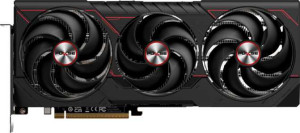
Sapphire Pulse Radeon RX 9070 XT

Asus Prime Radeon RX 9060 XT OC Edition 16GB Sapphire Pulse Radeon RX 9070 XT

Overview

Welcome to our detailed spec comparison between the Asus Prime Radeon RX 9060 XT OC Edition 16GB and the Sapphire Pulse Radeon RX 9070 XT. Both cards share the same RDNA 4.0 architecture, 4 nm manufacturing process, and 16 GB of GDDR6 memory, yet they diverge sharply when it comes to raw compute throughput, memory bandwidth, and power consumption. Read on to discover which GPU best fits your needs.

Common Features

  • GPU memory speed is 2518 MHz on both products.
  • Both products support Double Precision Floating Point (DPFP).
  • Effective memory speed is 20000 MHz on both products.
  • Both products come with 16GB of VRAM.
  • Both products use GDDR6 memory.
  • Both products support ECC memory.
  • Both products support DirectX 12 Ultimate.
  • OpenGL version is 4.6 on both products.
  • OpenCL version is 2.2 on both products.
  • Multi-display technology is supported on both products.
  • Ray tracing is supported on both products.
  • 3D support is available on both products.
  • DLSS is not supported on either product.
  • FSR4 is available on both products.
  • Both products have an HDMI output using HDMI version 2.1b.
  • Both products feature 2 DisplayPort outputs.
  • Neither product has USB-C ports, DVI outputs, or mini DisplayPort outputs.
  • Both products are built on the RDNA 4.0 GPU architecture.
  • Both products use PCIe version 5.
  • Both products are manufactured on a 4 nm semiconductor process.
  • Neither product uses air-water cooling.

Main Differences

  • GPU clock speed is 1700 MHz on Asus Prime Radeon RX 9060 XT OC Edition 16GB and 1660 MHz on Sapphire Pulse Radeon RX 9070 XT.
  • GPU turbo speed is 3130 MHz on Asus Prime Radeon RX 9060 XT OC Edition 16GB and 2970 MHz on Sapphire Pulse Radeon RX 9070 XT.
  • Pixel rate is 200.3 GPixel/s on Asus Prime Radeon RX 9060 XT OC Edition 16GB and 380.2 GPixel/s on Sapphire Pulse Radeon RX 9070 XT.
  • Floating-point performance is 25.64 TFLOPS on Asus Prime Radeon RX 9060 XT OC Edition 16GB and 48.66 TFLOPS on Sapphire Pulse Radeon RX 9070 XT.
  • Texture rate is 400.6 GTexels/s on Asus Prime Radeon RX 9060 XT OC Edition 16GB and 760.3 GTexels/s on Sapphire Pulse Radeon RX 9070 XT.
  • Shading units total 2048 on Asus Prime Radeon RX 9060 XT OC Edition 16GB and 4096 on Sapphire Pulse Radeon RX 9070 XT.
  • Texture mapping units (TMUs) number 128 on Asus Prime Radeon RX 9060 XT OC Edition 16GB and 256 on Sapphire Pulse Radeon RX 9070 XT.
  • Render output units (ROPs) total 64 on Asus Prime Radeon RX 9060 XT OC Edition 16GB and 128 on Sapphire Pulse Radeon RX 9070 XT.
  • Maximum memory bandwidth is 322.3 GB/s on Asus Prime Radeon RX 9060 XT OC Edition 16GB and 644.6 GB/s on Sapphire Pulse Radeon RX 9070 XT.
  • Memory bus width is 128-bit on Asus Prime Radeon RX 9060 XT OC Edition 16GB and 256-bit on Sapphire Pulse Radeon RX 9070 XT.
  • RGB lighting is present on Asus Prime Radeon RX 9060 XT OC Edition 16GB but not available on Sapphire Pulse Radeon RX 9070 XT.
  • Supported displays number 3 on Asus Prime Radeon RX 9060 XT OC Edition 16GB and 4 on Sapphire Pulse Radeon RX 9070 XT.
  • HDMI port count is 1 on Asus Prime Radeon RX 9060 XT OC Edition 16GB and 2 on Sapphire Pulse Radeon RX 9070 XT.
  • Thermal Design Power (TDP) is 160W on Asus Prime Radeon RX 9060 XT OC Edition 16GB and 304W on Sapphire Pulse Radeon RX 9070 XT.
  • Number of transistors is 29700 million on Asus Prime Radeon RX 9060 XT OC Edition 16GB and 53900 million on Sapphire Pulse Radeon RX 9070 XT.
  • Width is 304 mm on Asus Prime Radeon RX 9060 XT OC Edition 16GB and 320 mm on Sapphire Pulse Radeon RX 9070 XT.
  • Height is 126 mm on Asus Prime Radeon RX 9060 XT OC Edition 16GB and 120.3 mm on Sapphire Pulse Radeon RX 9070 XT.
Specs Comparison
Asus Prime Radeon RX 9060 XT OC Edition 16GB

Asus Prime Radeon RX 9060 XT OC Edition 16GB

Sapphire Pulse Radeon RX 9070 XT

Sapphire Pulse Radeon RX 9070 XT

Performance:
GPU clock speed 1700 MHz 1660 MHz
GPU turbo 3130 MHz 2970 MHz
pixel rate 200.3 GPixel/s 380.2 GPixel/s
floating-point performance 25.64 TFLOPS 48.66 TFLOPS
texture rate 400.6 GTexels/s 760.3 GTexels/s
GPU memory speed 2518 MHz 2518 MHz
shading units 2048 4096
texture mapping units (TMUs) 128 256
render output units (ROPs) 64 128
Has Double Precision Floating Point (DPFP)

Looking at raw compute resources, the Sapphire Pulse RX 9070 XT holds a commanding lead. It doubles the shading units (4096 vs 2048), TMUs, and ROPs compared to the Asus Prime RX 9060 XT OC. This directly translates into nearly twice the theoretical throughput across every major performance metric: floating-point performance reaches 48.66 TFLOPS against 25.64 TFLOPS, texture rate hits 760.3 vs 400.6 GTexels/s, and pixel fill rate stands at 380.2 vs 200.3 GPixel/s. In practice, this gap means the RX 9070 XT can push significantly higher frame rates at demanding resolutions, handle geometry-heavy scenes more comfortably, and sustain performance under GPU-limited workloads where the RX 9060 XT would start to bottleneck.

The one area where the RX 9060 XT OC Edition edges ahead is clock speed. Its base clock of 1700 MHz and turbo of 3130 MHz are modestly higher than the RX 9070 XT′s 1660 MHz base and 2970 MHz turbo. However, clock speed advantages only matter when the underlying execution unit count is comparable — here, the RX 9060 XT′s higher clocks cannot offset having half the compute hardware. Both cards share identical GPU memory speed (2518 MHz) and both support Double Precision Floating Point, so neither holds an advantage on memory bandwidth timing or compute versatility from those angles.

The performance edge in this group belongs clearly to the Sapphire Pulse RX 9070 XT. Its architectural advantage — twice the shading, texturing, and rasterization resources — makes it the stronger performer for gaming at high resolutions and for GPU-accelerated workloads, with the RX 9060 XT′s clock speed lead being too marginal to change that conclusion.
Memory:
effective memory speed 20000 MHz 20000 MHz
maximum memory bandwidth 322.3 GB/s 644.6 GB/s
VRAM 16GB 16GB
GDDR version GDDR6 GDDR6
memory bus width 128-bit 256-bit
Supports ECC memory

On the surface, these two cards look nearly identical in memory configuration: both carry 16GB of GDDR6 at the same 20000 MHz effective speed, and both support ECC memory. For most buyers, 16GB is a comfortable amount of VRAM for modern gaming and content creation workloads, so neither card has an advantage there. The real divergence, however, lies beneath those shared specs.

The critical differentiator is the memory bus width. The Sapphire Pulse RX 9070 XT uses a 256-bit bus, while the Asus Prime RX 9060 XT OC is limited to a 128-bit bus — exactly half. Since bandwidth scales directly with bus width when clock speeds are equal, this produces a near-perfect doubling of maximum memory bandwidth: 644.6 GB/s on the RX 9070 XT versus 322.3 GB/s on the RX 9060 XT. In practical terms, a wider memory bus means the GPU can feed its shaders and texture units with data far more quickly, which becomes especially critical at high resolutions, with large textures, or in scenarios involving ray tracing — all of which are bandwidth-hungry workloads.

The memory edge in this group goes decisively to the Sapphire Pulse RX 9070 XT. While equal VRAM capacity keeps both cards competitive for asset-heavy titles, the RX 9070 XT′s doubled bandwidth ensures it will not be starved for data the way a 128-bit card can be under sustained GPU load — a meaningful real-world advantage that compounds with its wider compute hardware.

Features:
DirectX version DirectX 12 Ultimate DirectX 12 Ultimate
OpenGL version 4.6 4.6
OpenCL version 2.2 2.2
Supports multi-display technology
supports ray tracing
Supports 3D
supports DLSS
has FSR4
has XeSS (XMX)
AMD SAM / Intel Resizable BAR AMD SAM AMD SAM
has LHR
has RGB lighting
supported displays 3 4

Across the core software and API feature set, these two cards are virtually indistinguishable. Both support DirectX 12 Ultimate, hardware-accelerated ray tracing, FSR4, and AMD SAM — meaning users on either card get access to AMD′s latest upscaling technology and the full suite of modern rendering features. Neither supports DLSS or XeSS, which is expected given their AMD lineage. For the vast majority of gaming and compute use cases, both cards arrive at the same feature destination.

The two meaningful differences are minor but worth noting. The Sapphire Pulse RX 9070 XT supports 4 simultaneous displays compared to the RX 9060 XT′s 3, making it the better choice for users running expansive multi-monitor setups. Conversely, the Asus Prime RX 9060 XT OC includes RGB lighting, which the RX 9070 XT lacks — a purely aesthetic consideration, but relevant for buyers building themed systems.

This group is effectively a near-tie. The RX 9070 XT′s extra display output is a functional, if niche, advantage, while the RX 9060 XT′s RGB is cosmetic. Neither difference is significant enough to drive a purchasing decision on its own, and buyers should weight other specification groups — particularly performance and memory — far more heavily when choosing between these two cards.

Ports:
has an HDMI output
HDMI ports 1 2
HDMI version HDMI 2.1b HDMI 2.1b
DisplayPort outputs 2 2
USB-C ports 0 0
DVI outputs 0 0
mini DisplayPort outputs 0 0

Port selection between these two cards is nearly identical, with one notable difference. Both offer 2 DisplayPort outputs and at least one HDMI 2.1b port — a modern standard capable of 4K at high refresh rates and 8K output, covering the needs of virtually any current display. Where they diverge is that the Sapphire Pulse RX 9070 XT includes 2 HDMI ports versus the single HDMI on the Asus Prime RX 9060 XT OC, bringing its total output count to 4 — consistent with the display count advantage noted in the Features group.

The practical value of a second HDMI port depends entirely on the user′s setup. For most single or dual-monitor configurations it is irrelevant, but it becomes genuinely useful in home theater or sim-racing setups where multiple HDMI-only devices — such as TVs, projectors, or VR headsets — need to be connected simultaneously without adapters. Neither card offers USB-C or legacy DVI, so both are squarely aimed at modern display ecosystems.

The RX 9070 XT holds a modest edge here by virtue of its additional HDMI port. It is not a deciding factor for most users, but for anyone managing a mixed HDMI display environment, it offers a small but tangible convenience advantage over the RX 9060 XT.

General info:
GPU architecture RDNA 4.0 RDNA 4.0
release date May 2025 March 2025
Thermal Design Power (TDP) 160W 304W
PCI Express (PCIe) version 5 5
semiconductor size 4 nm 4 nm
number of transistors 29700 million 53900 million
Has air-water cooling
width 304 mm 320 mm
height 126 mm 120.3 mm

Both cards are built on the same RDNA 4.0 architecture using a 4 nm process node, so they share the same generational foundation and manufacturing efficiency. The divergence comes from how much silicon AMD packed in. The Sapphire Pulse RX 9070 XT houses 53,900 million transistors against the Asus Prime RX 9060 XT OC′s 29,700 million — an 81% larger die that directly explains the performance and memory bandwidth gaps seen in other groups. More transistors mean more functional units, and that scale-up has a direct cost in power draw.

That cost is significant: the RX 9070 XT carries a 304W TDP compared to just 160W for the RX 9060 XT. Nearly double the power consumption has real implications — it demands a more robust PSU, generates more heat that the system must dissipate, and will result in noticeably higher electricity costs over time. For small form factor builds or systems with tighter power budgets, the RX 9060 XT′s efficiency profile is a genuine advantage. Both cards use air cooling and both run on PCIe 5.0, so neither has an interface or cooling-type edge.

Physically, the RX 9070 XT is marginally longer at 320 mm versus 304 mm, while the RX 9060 XT is slightly taller at 126 mm versus 120.3 mm — differences small enough to be irrelevant in most standard cases. The defining takeaway from this group is the power trade-off: the RX 9060 XT holds a clear advantage in efficiency and build compatibility, while the RX 9070 XT′s higher TDP is the direct cost of its substantially larger, more capable silicon.

Comparison Summary & Verdict

After examining every specification, a clear picture emerges. The Sapphire Pulse Radeon RX 9070 XT is the outright performance champion: its 4096 shading units, 48.66 TFLOPS of floating-point performance, 644.6 GB/s memory bandwidth, and 256-bit bus width make it the superior choice for demanding gaming, content creation, and workloads that benefit from maximum throughput. It also supports up to four displays and offers two HDMI 2.1b outputs. The Asus Prime Radeon RX 9060 XT OC Edition 16GB, on the other hand, wins on power efficiency with a 160 W TDP versus 304 W, a slightly higher boost clock of 3130 MHz, a more compact footprint, and RGB lighting for build aesthetics. Both cards share ray tracing, FSR4, and DirectX 12 Ultimate support. Choose the 9060 XT for an energy-efficient mid-range build, and the 9070 XT when top-tier performance is the priority.

Asus Prime Radeon RX 9060 XT OC Edition 16GB
Buy Asus Prime Radeon RX 9060 XT OC Edition 16GB if...

Buy the Asus Prime Radeon RX 9060 XT OC Edition 16GB if you want a power-efficient GPU with a 160 W TDP, a higher boost clock of 3130 MHz, RGB lighting, and a more compact form factor for a budget-conscious or small-form-factor build.

Sapphire Pulse Radeon RX 9070 XT
Buy Sapphire Pulse Radeon RX 9070 XT if...

Buy the Sapphire Pulse Radeon RX 9070 XT if you need maximum graphics performance, with double the shading units, 48.66 TFLOPS of compute power, 644.6 GB/s memory bandwidth, and support for up to four simultaneous displays.