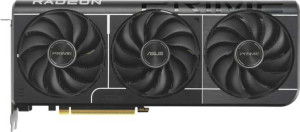
Asus Prime Radeon RX 9060 XT OC Edition 16GB
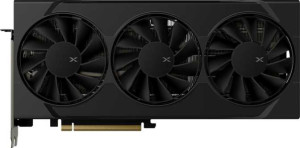
XFX Swift Radeon RX 9060 XT OC Triple Fan Gaming Edition 16GB

Asus Prime Radeon RX 9060 XT OC Edition 16GB XFX Swift Radeon RX 9060 XT OC Triple Fan Gaming Edition 16GB

Overview

Welcome to our in-depth specification comparison between the Asus Prime Radeon RX 9060 XT OC Edition 16GB and the XFX Swift Radeon RX 9060 XT OC Triple Fan Gaming Edition 16GB. Both cards are built on the same RDNA 4.0 architecture and share an identical 16GB GDDR6 memory configuration, yet they diverge in meaningful ways around clock speeds and raw compute performance, as well as physical dimensions. Read on to see how these two mid-range contenders stack up across every key specification.

Common Features

  • Both cards share the same GPU memory speed of 2518 MHz.
  • Both cards feature 2048 shading units.
  • Both cards have 128 texture mapping units (TMUs).
  • Both cards have 64 render output units (ROPs).
  • Double Precision Floating Point (DPFP) is supported on both cards.
  • Both cards have an effective memory speed of 20000 MHz.
  • Both cards offer a maximum memory bandwidth of 322.3 GB/s.
  • Both cards come with 16GB of VRAM.
  • Both cards use GDDR6 memory.
  • Both cards have a 128-bit memory bus width.
  • ECC memory is supported on both cards.
  • Both cards support DirectX 12 Ultimate.
  • Both cards support OpenGL version 4.6.
  • Both cards support OpenCL version 2.2.
  • Multi-display technology is supported on both cards.
  • Ray tracing is supported on both cards.
  • 3D support is available on both cards.
  • DLSS is not supported on either card.
  • FSR4 is available on both cards.
  • Both cards have one HDMI 2.1b output and two DisplayPort outputs, with no USB-C or DVI outputs.
  • Both cards are built on the RDNA 4.0 architecture.
  • Both cards have a Thermal Design Power (TDP) of 160W.
  • Both cards use PCIe version 5.
  • Both cards are manufactured using a 4 nm semiconductor process.
  • Both cards feature 29700 million transistors.
  • Air-water cooling is not available on either card.

Main Differences

  • GPU base clock speed is 1700 MHz on the Asus Prime Radeon RX 9060 XT OC Edition 16GB and 1900 MHz on the XFX Swift Radeon RX 9060 XT OC Triple Fan Gaming Edition 16GB.
  • GPU turbo clock speed is 3130 MHz on the Asus Prime Radeon RX 9060 XT OC Edition 16GB and 3320 MHz on the XFX Swift Radeon RX 9060 XT OC Triple Fan Gaming Edition 16GB.
  • Pixel rate is 200.3 GPixel/s on the Asus Prime Radeon RX 9060 XT OC Edition 16GB and 212.5 GPixel/s on the XFX Swift Radeon RX 9060 XT OC Triple Fan Gaming Edition 16GB.
  • Floating-point performance is 25.64 TFLOPS on the Asus Prime Radeon RX 9060 XT OC Edition 16GB and 27.2 TFLOPS on the XFX Swift Radeon RX 9060 XT OC Triple Fan Gaming Edition 16GB.
  • Texture rate is 400.6 GTexels/s on the Asus Prime Radeon RX 9060 XT OC Edition 16GB and 425 GTexels/s on the XFX Swift Radeon RX 9060 XT OC Triple Fan Gaming Edition 16GB.
  • Card width is 304 mm on the Asus Prime Radeon RX 9060 XT OC Edition 16GB and 290 mm on the XFX Swift Radeon RX 9060 XT OC Triple Fan Gaming Edition 16GB.
  • Card height is 126 mm on the Asus Prime Radeon RX 9060 XT OC Edition 16GB and 124 mm on the XFX Swift Radeon RX 9060 XT OC Triple Fan Gaming Edition 16GB.
Specs Comparison
Asus Prime Radeon RX 9060 XT OC Edition 16GB

Asus Prime Radeon RX 9060 XT OC Edition 16GB

XFX Swift Radeon RX 9060 XT OC Triple Fan Gaming Edition 16GB

XFX Swift Radeon RX 9060 XT OC Triple Fan Gaming Edition 16GB

Performance:
GPU clock speed 1700 MHz 1900 MHz
GPU turbo 3130 MHz 3320 MHz
pixel rate 200.3 GPixel/s 212.5 GPixel/s
floating-point performance 25.64 TFLOPS 27.2 TFLOPS
texture rate 400.6 GTexels/s 425 GTexels/s
GPU memory speed 2518 MHz 2518 MHz
shading units 2048 2048
texture mapping units (TMUs) 128 128
render output units (ROPs) 64 64
Has Double Precision Floating Point (DPFP)

Both cards share identical silicon architecture at their core — the same 2048 shading units, 128 TMUs, and 64 ROPs — meaning any performance gap between them is driven purely by clock speeds, not by hardware configuration differences. This makes the comparison especially clean: it is essentially the same GPU running at different frequencies.

And that frequency gap is meaningful. The XFX Swift carries a base clock of 1900 MHz versus the Asus Prime's 1700 MHz, a difference of about 12%. At boost, the XFX reaches 3320 MHz against the Asus Prime's 3130 MHz — a roughly 6% advantage that flows directly into every performance metric. The XFX consequently leads in floating-point throughput (27.2 TFLOPS vs 25.64 TFLOPS), texture fill rate (425 GTexels/s vs 400.6 GTexels/s), and pixel output rate (212.5 GPixel/s vs 200.3 GPixel/s). In practice, this translates to a modest but consistent advantage in compute-heavy and graphically demanding workloads, with the XFX sustaining higher throughput when the GPU is pushed to its limits. Memory speed is identical at 2518 MHz on both, so bandwidth is not a differentiating factor.

The XFX Swift holds a clear performance edge in this group. The ~6% boost clock advantage is not transformative, but it is consistent and measurable across all derived throughput metrics. For users who want the most headroom from this GPU architecture out of the box — without overclocking — the XFX Swift is the stronger choice on paper.

Memory:
effective memory speed 20000 MHz 20000 MHz
maximum memory bandwidth 322.3 GB/s 322.3 GB/s
VRAM 16GB 16GB
GDDR version GDDR6 GDDR6
memory bus width 128-bit 128-bit
Supports ECC memory

When it comes to memory, these two cards are mirror images of each other. Every single spec — 16GB GDDR6, a 128-bit memory bus, 20000 MHz effective speed, and 322.3 GB/s of bandwidth — is identical across the Asus Prime and XFX Swift. ECC memory support is also present on both, which aids stability in precision compute workloads.

The 322.3 GB/s bandwidth figure deserves some context. Delivered through a 128-bit bus, this is a fairly modest pipeline by modern GPU standards, and it means memory bandwidth could become a bottleneck in high-resolution or heavily texture-dependent scenarios. That said, it is a constraint both cards share equally, so neither has an architectural workaround for this limitation. The 16GB VRAM capacity, however, is a genuine strength — it provides ample headroom for high-resolution texture packs, large frame buffers at 1440p and beyond, and demanding creative or AI workloads where VRAM capacity directly limits what fits in-frame.

This group is a complete tie. There is no basis to prefer one card over the other on memory alone — buyers should look to other specification groups, such as performance or cooling, to differentiate between the two.

Features:
DirectX version DirectX 12 Ultimate DirectX 12 Ultimate
OpenGL version 4.6 4.6
OpenCL version 2.2 2.2
Supports multi-display technology
supports ray tracing
Supports 3D
supports DLSS
has FSR4
has XeSS (XMX)
AMD SAM / Intel Resizable BAR AMD SAM AMD SAM
has LHR
has RGB lighting
supported displays 3 3

Feature parity is total here. The Asus Prime and XFX Swift carry an identical software and API feature set — DirectX 12 Ultimate, ray tracing support, FSR4, AMD SAM, and a 3-display output cap are shared across both cards without exception. Neither supports DLSS or XeSS, which is expected given these are AMD GPUs, and neither is hampered by LHR mining restrictions.

A few of these shared features are worth highlighting for their real-world significance. FSR4 is AMD's latest upscaling technology, offering AI-driven frame reconstruction and quality improvements that can meaningfully boost perceived frame rates in supported titles — a genuine asset for users targeting high refresh rates at 1440p or 4K. DirectX 12 Ultimate compliance ensures full support for hardware ray tracing, mesh shaders, and variable rate shading in modern titles, future-proofing both cards for the current game generation. AMD SAM, meanwhile, allows a compatible CPU and motherboard to access the full VRAM pool directly, which can yield a modest performance uplift in SAM-aware games.

As with the memory group, this is an unambiguous tie. No feature present on one card is absent from the other, so software capabilities offer zero leverage in choosing between them. The decision will need to be made on grounds covered in other specification groups.

Ports:
has an HDMI output
HDMI ports 1 1
HDMI version HDMI 2.1b HDMI 2.1b
DisplayPort outputs 2 2
USB-C ports 0 0
DVI outputs 0 0
mini DisplayPort outputs 0 0

Port configurations are identical on both cards: one HDMI 2.1b output and two DisplayPort outputs, for a total of three connections — no USB-C, no DVI, no mini DisplayPort on either. This layout aligns with what each card supports in terms of simultaneous display count, so users can drive all three monitors without needing adapters, provided the displays use HDMI or DisplayPort natively.

The HDMI 2.1b specification is worth noting — it supports up to 4K at high refresh rates and 8K output, making it well-suited for modern TVs and high-end monitors alike. The dual DisplayPort outputs complement this nicely for multi-monitor desktop setups. The absence of USB-C is a minor consideration for users who own USB-C or Thunderbolt-based displays, as they would need an active adapter, but this is a commonplace limitation at this product tier.

Ports are another complete tie between the Asus Prime and the XFX Swift. Connectivity will not be a factor in differentiating these two cards for any buyer.

General info:
GPU architecture RDNA 4.0 RDNA 4.0
release date May 2025 June 2025
Thermal Design Power (TDP) 160W 160W
PCI Express (PCIe) version 5 5
semiconductor size 4 nm 4 nm
number of transistors 29700 million 29700 million
Has air-water cooling
width 304 mm 290 mm
height 126 mm 124 mm

At the foundational level, these two cards are built from the same cloth. Identical RDNA 4.0 architecture, a shared 4 nm manufacturing process, 29,700 million transistors, and a matching 160W TDP mean they draw the same power, generate roughly the same heat, and sit on the same generational technology platform. PCIe 5.0 support on both ensures neither will face interface bandwidth constraints on current or near-future motherboards.

The only differentiating data points in this group are physical dimensions. The Asus Prime measures 304 mm × 126 mm, while the XFX Swift is marginally more compact at 290 mm × 124 mm — a 14 mm length difference. In most mid-tower and full-tower cases this distinction is academic, but in smaller form-factor builds where GPU clearance is tight, the XFX Swift's slightly shorter footprint could be the deciding factor between a card fitting or not.

For general-purpose builds, this group is effectively a tie on everything that matters — power envelope, architecture, and process node are all shared. The XFX Swift holds a narrow edge for compact builds solely due to its smaller dimensions, but this only becomes relevant if case clearance is a constraint for the buyer.

Comparison Summary & Verdict

After examining every specification, it is clear that both cards share a very strong foundation: identical 16GB GDDR6 memory, a 128-bit bus, 322.3 GB/s bandwidth, a 160W TDP, and full support for ray tracing, FSR4, and DirectX 12 Ultimate. The key differentiator lies in clock speeds and throughput — the XFX Swift pulls ahead with a higher turbo of 3320 MHz, delivering 27.2 TFLOPS of floating-point performance versus 25.64 TFLOPS on the Asus Prime. However, the Asus Prime is the physically larger card at 304 mm wide, which may suit larger cases better. If outright performance headroom matters most, the XFX Swift has the edge; if a slightly more relaxed factory overclock and a familiar brand ecosystem are priorities, the Asus Prime remains a well-rounded choice.

Asus Prime Radeon RX 9060 XT OC Edition 16GB
Buy Asus Prime Radeon RX 9060 XT OC Edition 16GB if...

Buy the Asus Prime Radeon RX 9060 XT OC Edition 16GB if you have a larger chassis and prefer a slightly more conservative factory overclock while still enjoying the full RDNA 4.0 feature set.

XFX Swift Radeon RX 9060 XT OC Triple Fan Gaming Edition 16GB
Buy XFX Swift Radeon RX 9060 XT OC Triple Fan Gaming Edition 16GB if...

Buy the XFX Swift Radeon RX 9060 XT OC Triple Fan Gaming Edition 16GB if you want the highest clock speeds and peak compute performance available in this GPU class, in a marginally more compact form factor.