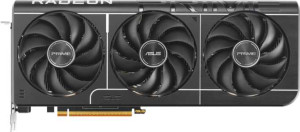
Asus Prime Radeon RX 9070 OC Edition
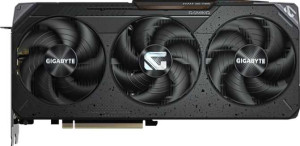
Gigabyte Radeon RX 9070 XT Gaming OC

Asus Prime Radeon RX 9070 OC Edition Gigabyte Radeon RX 9070 XT Gaming OC

Overview

Welcome to our in-depth specification comparison between the Asus Prime Radeon RX 9070 OC Edition and the Gigabyte Radeon RX 9070 XT Gaming OC, two RDNA 4.0-based graphics cards that share the same memory platform but diverge in meaningful ways. Both cards bring 16GB of GDDR6 memory and ray tracing support to the table, yet they differ considerably when it comes to raw compute performance, power consumption, and physical design. Read on as we break down every spec side by side to help you find the right fit.

Common Features

  • GPU memory speed is 2518 MHz on both products.
  • Both products have 128 render output units (ROPs).
  • Double Precision Floating Point (DPFP) is supported on both products.
  • Effective memory speed is 20000 MHz on both products.
  • Maximum memory bandwidth is 644.6 GB/s on both products.
  • Both products come with 16GB of VRAM.
  • Both products use GDDR6 memory.
  • Memory bus width is 256-bit on both products.
  • ECC memory is supported on both products.
  • Both products support DirectX 12 Ultimate.
  • OpenGL version is 4.6 on both products.
  • OpenCL version is 2.2 on both products.
  • Multi-display technology is supported on both products.
  • Ray tracing is supported on both products.
  • 3D support is available on both products.
  • DLSS is not supported on either product.
  • FSR4 is available on both products.
  • Both products include an HDMI output using HDMI version 2.1b.
  • Neither product has USB-C ports, DVI outputs, or mini DisplayPort outputs.
  • Both products are built on the RDNA 4.0 GPU architecture.
  • Both products use PCIe version 5.
  • Both products feature 53900 million transistors.
  • Air-water cooling is not available on either product.

Main Differences

  • GPU base clock speed is 1330 MHz on Asus Prime Radeon RX 9070 OC Edition and 1660 MHz on Gigabyte Radeon RX 9070 XT Gaming OC.
  • GPU turbo clock is 2590 MHz on Asus Prime Radeon RX 9070 OC Edition and 3060 MHz on Gigabyte Radeon RX 9070 XT Gaming OC.
  • Pixel rate is 331.5 GPixel/s on Asus Prime Radeon RX 9070 OC Edition and 391.7 GPixel/s on Gigabyte Radeon RX 9070 XT Gaming OC.
  • Floating-point performance is 37.13 TFLOPS on Asus Prime Radeon RX 9070 OC Edition and 50.14 TFLOPS on Gigabyte Radeon RX 9070 XT Gaming OC.
  • Texture rate is 580.2 GTexels/s on Asus Prime Radeon RX 9070 OC Edition and 783.4 GTexels/s on Gigabyte Radeon RX 9070 XT Gaming OC.
  • Shading units total 3584 on Asus Prime Radeon RX 9070 OC Edition and 4096 on Gigabyte Radeon RX 9070 XT Gaming OC.
  • Texture mapping units (TMUs) number 224 on Asus Prime Radeon RX 9070 OC Edition and 256 on Gigabyte Radeon RX 9070 XT Gaming OC.
  • RGB lighting is not present on Asus Prime Radeon RX 9070 OC Edition but is available on Gigabyte Radeon RX 9070 XT Gaming OC.
  • HDMI port count is 1 on Asus Prime Radeon RX 9070 OC Edition and 2 on Gigabyte Radeon RX 9070 XT Gaming OC.
  • DisplayPort outputs number 3 on Asus Prime Radeon RX 9070 OC Edition and 2 on Gigabyte Radeon RX 9070 XT Gaming OC.
  • Thermal Design Power (TDP) is 220W on Asus Prime Radeon RX 9070 OC Edition and 304W on Gigabyte Radeon RX 9070 XT Gaming OC.
  • Semiconductor size is 5 nm on Asus Prime Radeon RX 9070 OC Edition and 4 nm on Gigabyte Radeon RX 9070 XT Gaming OC.
  • Card width is 312 mm on Asus Prime Radeon RX 9070 OC Edition and 288 mm on Gigabyte Radeon RX 9070 XT Gaming OC.
  • Card height is 130 mm on Asus Prime Radeon RX 9070 OC Edition and 132 mm on Gigabyte Radeon RX 9070 XT Gaming OC.
Specs Comparison
Asus Prime Radeon RX 9070 OC Edition

Asus Prime Radeon RX 9070 OC Edition

Gigabyte Radeon RX 9070 XT Gaming OC

Gigabyte Radeon RX 9070 XT Gaming OC

Performance:
GPU clock speed 1330 MHz 1660 MHz
GPU turbo 2590 MHz 3060 MHz
pixel rate 331.5 GPixel/s 391.7 GPixel/s
floating-point performance 37.13 TFLOPS 50.14 TFLOPS
texture rate 580.2 GTexels/s 783.4 GTexels/s
GPU memory speed 2518 MHz 2518 MHz
shading units 3584 4096
texture mapping units (TMUs) 224 256
render output units (ROPs) 128 128
Has Double Precision Floating Point (DPFP)

The most telling performance gap between these two cards comes down to their GPU architectures. The Gigabyte RX 9070 XT ships with 4096 shading units and 256 TMUs, versus 3584 shading units and 224 TMUs on the Asus Prime RX 9070 — meaning AMD has physically enabled more compute resources on the XT die. Combined with a significantly higher turbo clock of 3060 MHz versus 2590 MHz, this translates into a floating-point throughput of 50.14 TFLOPS on the XT versus 37.13 TFLOPS on the non-XT — a difference of roughly 35%. In real-world terms, that gap is meaningful: it directly affects how many shader calculations can be performed per second, which drives frame rates in GPU-limited scenarios, especially at higher resolutions like 1440p and 4K.

The texture rate tells a similar story. At 783.4 GTexels/s, the XT can process textured geometry at a rate nearly 35% faster than the Asus Prime's 580.2 GTexels/s. This matters most in complex, detail-rich scenes where texture sampling is a bottleneck. Both cards share identical 128 ROPs and the same 2518 MHz memory speed, meaning pixel output throughput and memory bandwidth are evenly matched — but the XT's higher clock still pushes its pixel rate to 391.7 GPixel/s versus 331.5 GPixel/s, a modest but real edge for high-resolution rendering.

Both cards support Double Precision Floating Point (DPFP), which is relevant for compute workloads like simulation or certain AI/ML tasks rather than gaming. In the context of pure gaming performance, however, the Gigabyte RX 9070 XT Gaming OC holds a clear and consistent advantage across every major throughput metric, driven by its larger shader array and higher clock speeds. The Asus Prime RX 9070 OC is not a slow card, but it is definitively the lower-performance tier of the two.
Memory:
effective memory speed 20000 MHz 20000 MHz
maximum memory bandwidth 644.6 GB/s 644.6 GB/s
VRAM 16GB 16GB
GDDR version GDDR6 GDDR6
memory bus width 256-bit 256-bit
Supports ECC memory

Across every single memory specification provided, the Asus Prime RX 9070 OC Edition and the Gigabyte RX 9070 XT Gaming OC are identical. Both feature 16GB of GDDR6 memory on a 256-bit bus, running at an effective speed of 20000 MHz and delivering a maximum bandwidth of 644.6 GB/s. This is a substantial bandwidth figure that comfortably handles demanding workloads at 1440p and 4K, and ensures neither card will be memory-starved in current-generation titles or content creation tasks.

The shared 256-bit bus width is worth noting in context: it strikes a practical balance between cost and throughput at this tier. The 644.6 GB/s ceiling means that texture streaming, frame buffer management, and large asset handling are handled with headroom to spare. Both cards also support ECC memory, which adds error-correction capability — a feature more relevant to compute and professional workloads than gaming, but a welcome inclusion at this price segment regardless.

This group is a definitive tie. No differentiation exists between these two cards on memory, so it should play no role in a purchase decision. Any performance differences between the two products will be determined entirely by their GPU compute resources and clock speeds — not their memory subsystems.

Features:
DirectX version DirectX 12 Ultimate DirectX 12 Ultimate
OpenGL version 4.6 4.6
OpenCL version 2.2 2.2
Supports multi-display technology
supports ray tracing
Supports 3D
supports DLSS
has FSR4
has XeSS (XMX)
AMD SAM / Intel Resizable BAR AMD SAM AMD SAM
has LHR
has RGB lighting
supported displays 4 4

Feature parity between these two cards is remarkably high. Both support DirectX 12 Ultimate and ray tracing, confirming full compatibility with modern rendering pipelines including hardware-accelerated reflections, shadows, and global illumination. Equally important for AMD users is shared support for FSR4 — AMD's latest upscaling generation — which can meaningfully boost frame rates in supported titles with minimal visual quality loss. Neither card supports DLSS or XeSS, which is expected given their AMD architecture.

Both cards also support AMD SAM (Smart Access Memory), allowing a compatible AMD CPU to access the full GPU frame buffer directly, which can yield performance gains in certain titles. Multi-display support across up to 4 displays is identical, making either card equally capable for productivity-oriented or multi-monitor gaming setups.

The only differentiator in this group is RGB lighting: the Gigabyte RX 9070 XT Gaming OC includes it, while the Asus Prime RX 9070 OC Edition does not. This is purely an aesthetic consideration with no bearing on performance or functional capability. For users who prioritize a clean, understated build, the Asus Prime's lack of RGB may actually be a deliberate appeal — but for those who want their card to integrate into a lit system, the Gigabyte holds a minor cosmetic edge. Functionally, this group is otherwise a complete tie.

Ports:
has an HDMI output
HDMI ports 1 2
HDMI version HDMI 2.1b HDMI 2.1b
DisplayPort outputs 3 2
USB-C ports 0 0
DVI outputs 0 0
mini DisplayPort outputs 0 0

Both cards offer a total of four display outputs and share the same HDMI 2.1b standard, which supports 4K at high refresh rates and 8K output — so signal quality and display compatibility are identical. The difference lies in how those four ports are distributed. The Asus Prime RX 9070 OC Edition opts for 1 HDMI and 3 DisplayPort, while the Gigabyte RX 9070 XT Gaming OC flips the balance with 2 HDMI and 2 DisplayPort.

In practice, this distinction matters depending on your monitor setup. DisplayPort is generally preferred for high-refresh-rate PC monitors, as it supports adaptive sync and higher bandwidth configurations. The Asus Prime's three DisplayPort outputs make it the stronger choice for users running multiple gaming monitors. Conversely, the Gigabyte's dual HDMI configuration is more convenient for setups that mix a PC monitor with a TV or projector — both of which typically rely on HDMI — without needing an adapter.

Neither layout is objectively superior; the edge belongs to whichever card aligns with a user's specific display ecosystem. For pure multi-monitor PC gaming, the Asus Prime's 3 DisplayPort outputs offer more flexibility. For mixed PC-and-TV setups, the Gigabyte's 2 HDMI ports provide a more convenient plug-and-play experience.

General info:
GPU architecture RDNA 4.0 RDNA 4.0
release date March 2025 March 2025
Thermal Design Power (TDP) 220W 304W
PCI Express (PCIe) version 5 5
semiconductor size 5 nm 4 nm
number of transistors 53900 million 53900 million
Has air-water cooling
width 312 mm 288 mm
height 130 mm 132 mm

Sharing the same RDNA 4.0 architecture, identical transistor counts of 53,900 million, and PCIe 5.0 connectivity, these two cards are built from the same generational foundation. The key divergence at this level comes down to process node and power envelope. The Gigabyte RX 9070 XT Gaming OC is manufactured on a 4 nm process versus 5 nm for the Asus Prime RX 9070 OC Edition — a finer node that typically enables higher clock speeds or improved efficiency at equivalent power levels, consistent with the XT's significantly higher turbo clocks seen in the Performance group.

The power draw gap is substantial and worth careful consideration. The Asus Prime draws 220W TDP, while the Gigabyte XT demands 304W — a difference of 84W. Over extended gaming sessions, that translates into meaningfully higher electricity consumption and greater heat output, placing more demand on case airflow and PSU headroom. Users with tightly specced power supplies or thermally constrained cases will find the Asus Prime considerably easier to accommodate.

Physical dimensions add another wrinkle: the Asus Prime is the longer card at 312 mm versus the Gigabyte's 288 mm, though both are nearly identical in height. The Asus Prime's extra 24 mm of length could be a fitment concern in smaller or mid-tower cases with limited GPU clearance. Neither card offers liquid cooling. Overall, the Asus Prime RX 9070 OC Edition holds a clear advantage for power-constrained or compact builds, while the Gigabyte XT's finer process node supports its higher-performance operating point at the cost of a significantly larger power budget.

Comparison Summary & Verdict

After examining every specification, a clear picture emerges for each card. The Gigabyte Radeon RX 9070 XT Gaming OC holds a decisive lead in pure performance metrics, offering higher floating-point throughput at 50.14 TFLOPS, a faster turbo clock of 3060 MHz, more shading units, and a superior texture rate, making it the stronger choice for demanding gaming workloads and content creation. However, this performance advantage comes at the cost of a significantly higher 304W TDP. The Asus Prime Radeon RX 9070 OC Edition, by contrast, operates at a more power-efficient 220W, offers an extra DisplayPort output, and has a slightly wider but otherwise compact form factor, making it the smarter pick for users who value energy efficiency and connectivity flexibility. Both cards share an identical memory subsystem, feature set, and architectural foundation, so neither disappoints on fundamentals.

Asus Prime Radeon RX 9070 OC Edition
Buy Asus Prime Radeon RX 9070 OC Edition if...

Buy the Asus Prime Radeon RX 9070 OC Edition if you want a more power-efficient card with a lower 220W TDP and an extra DisplayPort output for a multi-monitor setup.

Gigabyte Radeon RX 9070 XT Gaming OC
Buy Gigabyte Radeon RX 9070 XT Gaming OC if...

Buy the Gigabyte Radeon RX 9070 XT Gaming OC if you want maximum graphical performance, with higher clock speeds, more shading units, greater floating-point throughput, and RGB lighting.