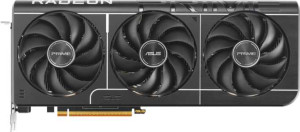
Asus Prime Radeon RX 9070 OC Edition
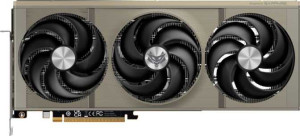
Sapphire Nitro+ Radeon RX 9070 XT

Asus Prime Radeon RX 9070 OC Edition Sapphire Nitro+ Radeon RX 9070 XT

Common Features

  • GPU memory speed is 2518 MHz on both products.
  • Both products have 128 render output units (ROPs).
  • Double Precision Floating Point (DPFP) is supported by both products.
  • Effective memory speed is 20000 MHz on both products.
  • Maximum memory bandwidth is 644.6 GB/s on both products.
  • Both products have 16GB of VRAM.
  • Both products use GDDR6 memory.
  • Memory bus width is 256-bit on both products.
  • ECC memory is supported by both products.
  • Both products support DirectX 12 Ultimate.
  • OpenGL version is 4.6 on both products.
  • OpenCL version is 2.2 on both products.
  • Multi-display technology is supported by both products.
  • Ray tracing is supported by both products.
  • 3D is supported by both products.
  • DLSS is not supported by either product.
  • FSR4 is available on both products.
  • Both products have an HDMI output with HDMI version 2.1b.
  • Neither product has USB-C ports, DVI outputs, or mini DisplayPort outputs.
  • Both products use the RDNA 4.0 GPU architecture.
  • Both products use PCIe version 5.
  • Both products have 53900 million transistors.
  • Neither product has air-water cooling.

Main Differences

  • GPU clock speed is 1330 MHz on Asus Prime Radeon RX 9070 OC Edition and 1660 MHz on Sapphire Nitro+ Radeon RX 9070 XT.
  • GPU turbo speed is 2590 MHz on Asus Prime Radeon RX 9070 OC Edition and 3060 MHz on Sapphire Nitro+ Radeon RX 9070 XT.
  • Pixel rate is 331.5 GPixel/s on Asus Prime Radeon RX 9070 OC Edition and 391.7 GPixel/s on Sapphire Nitro+ Radeon RX 9070 XT.
  • Floating-point performance is 37.13 TFLOPS on Asus Prime Radeon RX 9070 OC Edition and 50.14 TFLOPS on Sapphire Nitro+ Radeon RX 9070 XT.
  • Texture rate is 580.2 GTexels/s on Asus Prime Radeon RX 9070 OC Edition and 783.4 GTexels/s on Sapphire Nitro+ Radeon RX 9070 XT.
  • Shading units count is 3584 on Asus Prime Radeon RX 9070 OC Edition and 4096 on Sapphire Nitro+ Radeon RX 9070 XT.
  • Texture mapping units (TMUs) number 224 on Asus Prime Radeon RX 9070 OC Edition and 256 on Sapphire Nitro+ Radeon RX 9070 XT.
  • RGB lighting is present on Sapphire Nitro+ Radeon RX 9070 XT but not available on Asus Prime Radeon RX 9070 OC Edition.
  • HDMI port count is 1 on Asus Prime Radeon RX 9070 OC Edition and 2 on Sapphire Nitro+ Radeon RX 9070 XT.
  • DisplayPort outputs number 3 on Asus Prime Radeon RX 9070 OC Edition and 2 on Sapphire Nitro+ Radeon RX 9070 XT.
  • Thermal Design Power (TDP) is 220W on Asus Prime Radeon RX 9070 OC Edition and 330W on Sapphire Nitro+ Radeon RX 9070 XT.
  • Semiconductor size is 5 nm on Asus Prime Radeon RX 9070 OC Edition and 4 nm on Sapphire Nitro+ Radeon RX 9070 XT.
  • Width is 312 mm on Asus Prime Radeon RX 9070 OC Edition and 330.8 mm on Sapphire Nitro+ Radeon RX 9070 XT.
  • Height is 130 mm on Asus Prime Radeon RX 9070 OC Edition and 128.5 mm on Sapphire Nitro+ Radeon RX 9070 XT.
Specs Comparison
Asus Prime Radeon RX 9070 OC Edition

Asus Prime Radeon RX 9070 OC Edition

Sapphire Nitro+ Radeon RX 9070 XT

Sapphire Nitro+ Radeon RX 9070 XT

Performance:
GPU clock speed 1330 MHz 1660 MHz
GPU turbo 2590 MHz 3060 MHz
pixel rate 331.5 GPixel/s 391.7 GPixel/s
floating-point performance 37.13 TFLOPS 50.14 TFLOPS
texture rate 580.2 GTexels/s 783.4 GTexels/s
GPU memory speed 2518 MHz 2518 MHz
shading units 3584 4096
texture mapping units (TMUs) 224 256
render output units (ROPs) 128 128
Has Double Precision Floating Point (DPFP)

The most telling performance gap between these two cards lies in their raw compute muscle. The Sapphire Nitro+ RX 9070 XT delivers 50.14 TFLOPS of floating-point performance versus 37.13 TFLOPS on the Asus Prime RX 9070 OC — a roughly 35% advantage that stems directly from the XT having 4096 shading units and 256 TMUs compared to 3584 and 224 respectively. In practice, this translates to a measurable lead in GPU-bound workloads: complex 3D rendering, ray tracing, and compute tasks like AI denoising will all run noticeably faster on the XT. The texture rate gap — 783.4 GTexels/s vs 580.2 GTexels/s — reinforces this, meaning the XT can push more textured detail per second, which matters in high-resolution gaming scenarios.

Clock speeds further widen the divide. The Nitro+ boosts to 3060 MHz turbo versus the Prime OC's 2590 MHz, a nearly 500 MHz difference that compounds the architectural advantage of having more shading units. One area where the two cards are genuinely equal is memory throughput: both share identical 2518 MHz GPU memory speed and the same 128 ROPs, meaning pixel output bandwidth and fillrate are matched — the RX 9070 OC's 331.5 GPixel/s pixel rate versus the XT's 391.7 GPixel/s difference comes purely from the higher clocks, not a memory bottleneck. Both also support Double Precision Floating Point, so neither holds an exclusive edge for DPFP-dependent workloads.

Overall, the Sapphire Nitro+ RX 9070 XT holds a clear and consistent performance advantage in this group across nearly every compute and rendering metric. The Asus Prime RX 9070 OC is not without merit — its shared memory speed and ROP count keep it competitive in bandwidth-limited scenarios — but for users prioritizing raw GPU throughput, the XT's lead is substantial enough to be decisive.

Memory:
effective memory speed 20000 MHz 20000 MHz
maximum memory bandwidth 644.6 GB/s 644.6 GB/s
VRAM 16GB 16GB
GDDR version GDDR6 GDDR6
memory bus width 256-bit 256-bit
Supports ECC memory

When it comes to memory, these two cards are in complete lockstep. Both carry 16GB of GDDR6 running at an effective 20000 MHz across a 256-bit bus, resulting in identical maximum bandwidth of 644.6 GB/s. That bandwidth figure is substantial — enough to keep even demanding 4K textures and large AI model weights flowing to the GPU without starving the shaders.

Both cards also support ECC memory, a feature typically associated with professional and compute workloads where data integrity is critical. For gaming users this is largely irrelevant, but it does signal that either card can pull double duty in content creation or light workstation scenarios without concern for memory error correction.

This group is a clear tie — every meaningful memory specification is identical. Buyers should not let memory be a factor in choosing between these two cards; the decision ultimately comes down to performance, cooling, and pricing.

Features:
DirectX version DirectX 12 Ultimate DirectX 12 Ultimate
OpenGL version 4.6 4.6
OpenCL version 2.2 2.2
Supports multi-display technology
supports ray tracing
Supports 3D
supports DLSS
has FSR4
has XeSS (XMX)
AMD SAM / Intel Resizable BAR AMD SAM AMD SAM
has LHR
has RGB lighting
supported displays 4 4

Feature parity dominates this category. Both cards share the same foundational software stack: DirectX 12 Ultimate, OpenGL 4.6, ray tracing support, and AMD SAM (Smart Access Memory), which improves CPU-GPU data throughput on compatible AMD platforms. Critically, both include FSR4 — AMD's latest upscaling technology — while neither supports DLSS or XeSS, which is expected given their AMD architecture. FSR4 is a meaningful inclusion, enabling AI-assisted upscaling that can significantly boost frame rates with minimal visual quality loss in supported titles.

Both cards are equally capable at driving complex multi-monitor setups, supporting up to 4 displays simultaneously — practical for productivity users or sim racers running triple-screen configurations. The absence of LHR (Lite Hash Rate) on both is also worth noting: neither card imposes artificial compute restrictions.

The sole differentiator here is that the Sapphire Nitro+ RX 9070 XT includes RGB lighting, while the Asus Prime RX 9070 OC does not. This has no bearing on performance and comes down entirely to aesthetics. For builders who prioritize a clean, understated look, the Prime's lack of RGB may actually be a positive. Overall, this group is essentially a tie on anything that matters functionally — the RGB distinction is purely cosmetic.

Ports:
has an HDMI output
HDMI ports 1 2
HDMI version HDMI 2.1b HDMI 2.1b
DisplayPort outputs 3 2
USB-C ports 0 0
DVI outputs 0 0
mini DisplayPort outputs 0 0

Both cards offer the same total of four display outputs and share the same HDMI 2.1b standard — capable of driving 4K at high refresh rates or even 8K output — so neither has an edge in raw display technology. The difference lies entirely in how those four ports are distributed. The Asus Prime RX 9070 OC goes with 1 HDMI and 3 DisplayPort outputs, while the Sapphire Nitro+ RX 9070 XT opts for 2 HDMI and 2 DisplayPort.

In practice, this split matters depending on your display setup. Users with multiple HDMI-only monitors — such as TVs, older panels, or certain ultrawide displays — will find the Nitro+ more accommodating without needing adapters. Conversely, the Prime's three DisplayPort outputs suit a typical PC multi-monitor desk setup more naturally, since most modern gaming monitors favor DisplayPort for high refresh rate connections. Neither layout is objectively superior; it comes down to what your specific monitors require.

This group is a contextual tie. Both cards max out at four supported displays, use identical HDMI technology, and offer no USB-C or legacy DVI outputs. The port split is the only differentiator, and the edge goes to whichever card better matches the buyer's existing display connections — the Nitro+ RX 9070 XT for HDMI-heavy setups, and the Prime RX 9070 OC for DisplayPort-dominant configurations.

General info:
GPU architecture RDNA 4.0 RDNA 4.0
release date March 2025 March 2025
Thermal Design Power (TDP) 220W 330W
PCI Express (PCIe) version 5 5
semiconductor size 5 nm 4 nm
number of transistors 53900 million 53900 million
Has air-water cooling
width 312 mm 330.8 mm
height 130 mm 128.5 mm

Sharing the same RDNA 4.0 architecture, identical transistor count of 53,900 million, and PCIe 5.0 interface, these two cards come from the same fundamental design lineage. However, a closer look reveals meaningful divergence. The Sapphire Nitro+ RX 9070 XT is built on a 4nm process versus the 5nm node used by the Asus Prime RX 9070 OC. A smaller process node generally allows for higher clock speeds or improved power efficiency at equivalent performance — context that helps explain why the XT achieves its significantly higher turbo clocks despite sharing the same transistor count.

The power draw gap is the most consequential practical difference here. The Nitro+ XT carries a 330W TDP compared to the Prime OC's notably lower 220W. That 110W difference has real implications: the XT demands a more robust PSU, produces more heat requiring better case airflow, and will reflect visibly in electricity costs over time. For small form factor builds or systems with modest power supplies, the Prime OC's lower thermal envelope is a genuine advantage. Both cards rely solely on air cooling, so neither offers a hybrid cooling option.

Physically, the two cards are close in size — the Nitro+ XT is marginally longer at 330.8mm versus 312mm — a small but worth-checking difference for tighter cases. On balance, the Asus Prime RX 9070 OC holds a clear edge in this group for power-conscious and space-constrained builds, while the Nitro+ XT's 4nm process and higher TDP headroom are what enable its performance lead seen elsewhere.

Comparison Summary & Verdict

This is a specification comparison between Asus Prime Radeon RX 9070 OC Edition and Sapphire Nitro+ Radeon RX 9070 XT. Both products share 16GB VRAM, GDDR6 memory, a 256-bit memory bus, and RDNA 4.0 GPU architecture. The Asus Prime Radeon RX 9070 OC Edition has a GPU clock speed of 1330 MHz and a GPU turbo of 2590 MHz, while the Sapphire Nitro+ Radeon RX 9070 XT reaches 1660 MHz and 3060 MHz respectively. Thermal Design Power differs with 220W for Asus and 330W for Sapphire, and the Asus model does not include RGB lighting while the Sapphire model does. Additionally, Asus provides 3 DisplayPort outputs versus 2 on Sapphire, and the width and height also vary slightly between the two models.