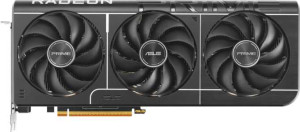
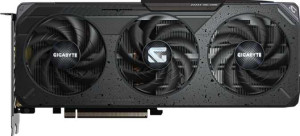
On the surface, these two cards look nearly identical in memory configuration — both carry 16GB of GDDR6 running at an effective 20000 MHz, and both support ECC memory. For users who care about VRAM capacity for large textures, AI workloads, or high-resolution assets, neither card has an advantage here. But dig one level deeper and a critical structural difference emerges: the memory bus width.
The Asus RX 9070 XT uses a 256-bit memory interface, while the Gigabyte RX 9060 XT is limited to 128-bit. Because bandwidth is the product of bus width and memory speed, identical GDDR6 speeds on a wider bus produce dramatically different results — 644.6 GB/s vs 322.3 GB/s, an exact 2:1 ratio. Memory bandwidth is the pipeline that feeds the GPU's shader cores with data; when that pipeline is narrow, fast shaders stall waiting for textures, geometry data, or framebuffer reads. This bottleneck becomes especially pronounced at higher resolutions and with effects like high-resolution shadow maps, large render targets, or bandwidth-hungry post-processing.
In practical terms, the 9070 XT's bandwidth advantage reinforces its raw compute lead from the performance group — more shaders paired with twice the memory throughput means it can sustain peak utilization more consistently. The 9060 XT's 128-bit bus is the single most constraining spec in this group, and while 16GB of VRAM is generous for its tier, bandwidth will be a tangible limiter before capacity ever becomes one. The Asus RX 9070 XT holds a clear and significant memory advantage here, entirely due to its wider bus.