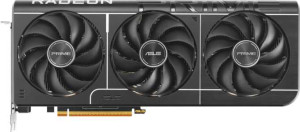
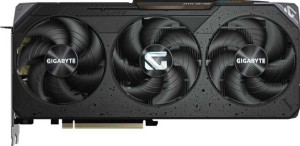
The most telling performance gap between these two cards lies in their compute resources and clock speeds. The Asus Prime RX 9070 XT OC ships with 4096 shading units and a turbo clock of 3010 MHz, translating to 49.32 TFLOPS of floating-point performance. The Gigabyte RX 9070 Gaming OC, built on a cut-down GPU die, carries 3584 shading units and reaches only 2700 MHz at boost, yielding 38.71 TFLOPS — a roughly 27% deficit in raw compute throughput. In practice, this gap shows up most clearly in GPU-limited scenarios: higher resolutions, heavy ray tracing workloads, and compute-adjacent tasks like AI-accelerated rendering.
The texture throughput story reinforces this divide. The Asus card's 770.6 GTexels/s texture rate versus the Gigabyte's 604.8 GTexels/s means the XT can push significantly more textured geometry per second — a relevant differentiator in complex, detail-rich scenes. Pixel fill rate tells a more nuanced story: both cards share 128 ROPs, so their pixel rate difference (385.3 vs. 345.6 GPixel/s) is driven purely by the clock speed delta rather than a hardware count difference, meaning the Gigabyte is not architecturally bandwidth-starved on the raster output side. One meaningful shared strength is identical GPU memory speed at 2518 MHz and full Double Precision Floating Point support on both cards — useful for professional or scientific compute workloads.
Overall, the Asus Prime RX 9070 XT OC holds a clear and substantial performance advantage in this group. The combination of a fuller shader array, higher TMU count, and significantly higher boost clock gives it a commanding lead in every compute and throughput metric that matters for gaming and GPU workloads. The Gigabyte RX 9070 Gaming OC is not a slow card, but buyers prioritizing peak performance should note the XT's ~27% compute edge is not a marginal difference — it represents a tangible tier separation between the two products.