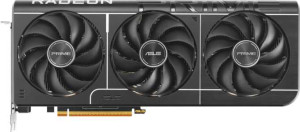
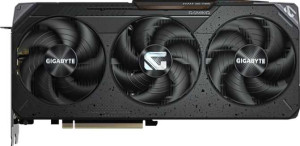
At their core, both the Asus Prime RX 9070 XT OC and the Gigabyte RX 9070 XT Gaming OC share the same fundamental GPU architecture: identical base clocks of 1660 MHz, the same 4096 shading units, 256 TMUs, 128 ROPs, and equal memory speeds of 2518 MHz. This means the two cards are built on the exact same silicon foundation, and neither has a structural hardware advantage over the other in terms of raw compute resources.
The only meaningful performance differentiation lies in the boost clock and the figures derived from it. The Gigabyte Gaming OC reaches a higher GPU turbo of 3060 MHz versus the Asus Prime OC's 3010 MHz — a difference of 50 MHz, or roughly 1.7%. This translates directly into slightly higher derived metrics: the Gigabyte edges ahead with 50.14 TFLOPS of floating-point performance versus 49.32 TFLOPS, and a texture rate of 783.4 GTexels/s compared to 770.6 GTexels/s. In practice, a ~1.7% boost clock advantage is unlikely to produce perceptible frame rate differences in real-world gaming, but it does confirm the Gigabyte is the marginally faster card on paper.
Overall, the Gigabyte RX 9070 XT Gaming OC holds a narrow but consistent performance edge in this group, driven entirely by its higher turbo clock. The Asus Prime OC is not meaningfully slower — buyers should weigh this minor difference against other factors such as cooling design, price, and power delivery rather than treating it as a decisive performance gap.