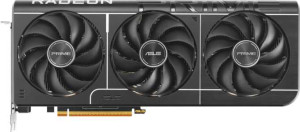
Asus Prime Radeon RX 9070 XT OC Edition
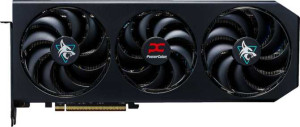
PowerColor Hellhound Radeon RX 9070 XT

Asus Prime Radeon RX 9070 XT OC Edition PowerColor Hellhound Radeon RX 9070 XT

Overview

Welcome to our in-depth spec comparison between the Asus Prime Radeon RX 9070 XT OC Edition and the PowerColor Hellhound Radeon RX 9070 XT — two compelling takes on AMD's powerful RDNA 4.0 architecture. Both cards share the same core silicon, clock speeds, and memory configuration, making the choice between them surprisingly nuanced. In this comparison, we examine where they diverge: DirectX support levels, physical dimensions, and aesthetic features like RGB lighting.

Common Features

  • Both cards have a base GPU clock speed of 1660 MHz.
  • Both cards reach a GPU turbo clock of 3010 MHz.
  • Both cards deliver a pixel rate of 385.3 GPixel/s.
  • Both cards provide 49.32 TFLOPS of floating-point performance.
  • Both cards offer a texture rate of 770.6 GTexels/s.
  • Both cards have a GPU memory speed of 2518 MHz.
  • Both cards include 4096 shading units.
  • Both cards feature 256 texture mapping units (TMUs).
  • Both cards have an effective memory speed of 20000 MHz.
  • Both cards provide a maximum memory bandwidth of 644.6 GB/s.
  • Both cards come with 16GB of VRAM.
  • Both cards use GDDR6 memory.
  • Both cards use a 256-bit memory bus width.
  • ECC memory support is available on both cards.
  • Both cards support OpenGL version 4.6.
  • Both cards support OpenCL version 2.2.
  • Multi-display technology is supported on both cards.
  • Ray tracing is supported on both cards.
  • 3D support is available on both cards.
  • DLSS is not supported on either card.
  • FSR4 is available on both cards.
  • XeSS (XMX) is not supported on either card.
  • Both cards feature one HDMI output running HDMI version 2.1b.
  • Both cards include three DisplayPort outputs.
  • Neither card has USB-C ports, DVI outputs, or mini DisplayPort outputs.
  • Both cards are built on the RDNA 4.0 GPU architecture.
  • Both cards have a Thermal Design Power (TDP) of 304W.
  • Both cards use PCIe version 5.
  • Both cards are manufactured on a 4 nm semiconductor process.
  • Both cards contain 53900 million transistors.
  • Neither card uses air-water cooling.

Main Differences

  • The DirectX version is DirectX 12 Ultimate on the Asus Prime Radeon RX 9070 XT OC Edition, while the PowerColor Hellhound Radeon RX 9070 XT supports DirectX 12.
  • RGB lighting is present on the PowerColor Hellhound Radeon RX 9070 XT but not available on the Asus Prime Radeon RX 9070 XT OC Edition.
  • The card width is 312 mm on the Asus Prime Radeon RX 9070 XT OC Edition and 340 mm on the PowerColor Hellhound Radeon RX 9070 XT.
  • The card height is 130 mm on the Asus Prime Radeon RX 9070 XT OC Edition and 142 mm on the PowerColor Hellhound Radeon RX 9070 XT.
Specs Comparison
Asus Prime Radeon RX 9070 XT OC Edition

Asus Prime Radeon RX 9070 XT OC Edition

PowerColor Hellhound Radeon RX 9070 XT

PowerColor Hellhound Radeon RX 9070 XT

Performance:
GPU clock speed 1660 MHz 1660 MHz
GPU turbo 3010 MHz 3010 MHz
pixel rate 385.3 GPixel/s 385.3 GPixel/s
floating-point performance 49.32 TFLOPS 49.32 TFLOPS
texture rate 770.6 GTexels/s 770.6 GTexels/s
GPU memory speed 2518 MHz 2518 MHz
shading units 4096 4096
texture mapping units (TMUs) 256 256
render output units (ROPs) 128 128
Has Double Precision Floating Point (DPFP)

In the Performance category, the Asus Prime RX 9070 XT OC Edition and the PowerColor Hellhound RX 9070 XT are an exact match across every single measured spec. Both cards share an identical base clock of 1660 MHz and a peak turbo of 3010 MHz, meaning neither chip runs faster out of the box. Compute throughput is likewise identical at 49.32 TFLOPS of floating-point performance, which places both firmly in high-end 1440p and capable 4K gaming territory.

The underlying silicon resources confirm this parity: both GPUs carry the same 4096 shading units, 256 TMUs, and 128 ROPs, paired with memory running at 2518 MHz. The ROP count directly governs how fast pixels are written to the framebuffer, and at 128 ROPs these cards deliver a pixel fill rate of 385.3 GPixel/s — enough to sustain high framerates even at demanding resolutions. The shared Double Precision Floating Point support is a useful bonus for compute workloads, though it is less relevant for pure gaming.

The verdict here is a straightforward tie: every performance metric is numerically identical. Any real-world difference in gaming or compute benchmarks between these two cards will come down to factors outside this spec group — cooling efficiency, power delivery, and driver tuning — rather than raw GPU performance figures.

Memory:
effective memory speed 20000 MHz 20000 MHz
maximum memory bandwidth 644.6 GB/s 644.6 GB/s
VRAM 16GB 16GB
GDDR version GDDR6 GDDR6
memory bus width 256-bit 256-bit
Supports ECC memory

Memory configuration is often a decisive factor in a GPU's longevity and ability to handle demanding workloads, so it is worth examining closely — even when two cards share the same silicon. Both the Asus Prime RX 9070 XT OC Edition and the PowerColor Hellhound RX 9070 XT come equipped with 16GB of GDDR6 running across a 256-bit bus, delivering a peak bandwidth of 644.6 GB/s. That combination is well-suited to high-resolution texture streaming and large asset workloads, making both cards comfortable choices for 4K gaming and memory-intensive creative applications.

The ECC memory support shared by both cards is a noteworthy inclusion. Error-Correcting Code memory automatically detects and corrects single-bit data errors, a feature historically reserved for professional workstation GPUs. For consumers this rarely matters in gaming, but it adds tangible reliability for anyone using these cards for AI inference, data processing, or scientific compute tasks where data integrity is critical.

Much like the Performance group, this category ends in a complete tie. Every memory specification — capacity, bus width, effective speed, bandwidth, and ECC support — is numerically identical across both cards. Neither product holds any memory advantage over the other, and buyers should look to other spec groups, such as cooling or connectivity, to differentiate the two.

Features:
DirectX version DirectX 12 Ultimate DirectX 12
OpenGL version 4.6 4.6
OpenCL version 2.2 2.2
Supports multi-display technology
supports ray tracing
Supports 3D
supports DLSS
has FSR4
has XeSS (XMX)
AMD SAM / Intel Resizable BAR AMD SAM AMD SAM
has LHR
has RGB lighting
supported displays 4 4

Two meaningful differences emerge in this group, and the more significant one is the DirectX version. The Asus Prime RX 9070 XT OC Edition supports DirectX 12 Ultimate, while the PowerColor Hellhound RX 9070 XT lists only DirectX 12. DirectX 12 Ultimate is a superset that formally certifies support for features like hardware-accelerated ray tracing tiers, mesh shaders, and variable rate shading — capabilities that game developers increasingly rely on for next-generation visual effects. While both cards support ray tracing in practice, the Ultimate certification on the Asus Prime signals a higher level of API compliance that could matter as titles push further into DX12U-exclusive feature territory.

The other differentiator is purely aesthetic: the Hellhound carries RGB lighting, while the Asus Prime does not. For users building a system where visual presentation inside the case matters, this is a genuine point of distinction — the Hellhound offers more flexibility for themed builds without requiring additional accessories. Conversely, those who prioritize a clean, understated look or who never see the inside of their case may consider the absence of RGB on the Asus Prime a non-issue or even a preference.

On shared ground, both cards bring FSR4, AMD SAM, ray tracing, and support for up to 4 displays — a solid, well-rounded feature set for modern gaming. On balance, the Asus Prime holds a functional edge through its DirectX 12 Ultimate support, while the Hellhound counters with RGB lighting for aesthetics-conscious builders. Which advantage matters more depends entirely on the buyer's priorities.
Ports:
has an HDMI output
HDMI ports 1 1
HDMI version HDMI 2.1b HDMI 2.1b
DisplayPort outputs 3 3
USB-C ports 0 0
DVI outputs 0 0
mini DisplayPort outputs 0 0

Connectivity layouts are identical across both cards. The Asus Prime RX 9070 XT OC Edition and the PowerColor Hellhound RX 9070 XT each offer one HDMI 2.1b port and three DisplayPort outputs, totaling four simultaneous display connections — consistent with what was noted in the Features group. Neither card includes USB-C, DVI, or mini DisplayPort outputs.

The port selection itself is well-chosen for a modern high-end GPU. HDMI 2.1b supports 4K at up to 144Hz and 8K at 60Hz, making it well-matched to current and near-future displays, including TVs used for console-style gaming setups. The three DisplayPort outputs give multi-monitor users plenty of flexibility for productivity or immersive gaming arrangements without needing adapters.

This category is a straightforward tie — the port count, types, and versions are a perfect match. Buyers who prioritize a specific connectivity need, such as USB-C for a compatible monitor, will find neither card accommodates it, and should factor that into their broader purchasing decision.

General info:
GPU architecture RDNA 4.0 RDNA 4.0
release date March 2025 March 2025
Thermal Design Power (TDP) 304W 304W
PCI Express (PCIe) version 5 5
semiconductor size 4 nm 4 nm
number of transistors 53900 million 53900 million
Has air-water cooling
width 312 mm 340 mm
height 130 mm 142 mm

At a foundational level, these two cards are built from the same cloth: identical RDNA 4.0 architecture on a 4nm process node, the same 53,900 million transistors, a shared 304W TDP, and PCIe 5.0 connectivity. The 4nm process node is relevant because it directly enables the high transistor density that underpins the cards' compute and efficiency credentials, while PCIe 5.0 ensures maximum bandwidth headroom for current and future platform pairings.

Where the two cards diverge in this group is physical footprint. The Asus Prime RX 9070 XT OC Edition measures 312 × 130 mm, while the PowerColor Hellhound RX 9070 XT is noticeably larger at 340 × 142 mm — a difference of 28mm in length and 12mm in height. That gap is practically meaningful: smaller cases with tight GPU clearance limits may comfortably accommodate the Asus Prime but reject the Hellhound. Builders working with compact mid-tower or small-form-factor enclosures should measure available GPU space carefully before committing to the PowerColor.

Given that TDP, architecture, and process node are all equal, the deciding factor in this group is case compatibility. The Asus Prime holds a clear advantage for users with space-constrained builds, while the Hellhound's larger size is a neutral trait only in cases with ample GPU clearance. Neither card uses liquid cooling, so thermal management relies entirely on each manufacturer's air-cooling solution — a factor outside the scope of this group's data.

Comparison Summary & Verdict

After a thorough side-by-side review, it is clear that the Asus Prime Radeon RX 9070 XT OC Edition and the PowerColor Hellhound Radeon RX 9070 XT are near-identical performers, sharing the same GPU clocks, 16GB GDDR6 memory, 304W TDP, and port configuration. The distinctions lie in the details. The Asus card holds a meaningful edge with DirectX 12 Ultimate support, unlocking access to the full suite of advanced rendering features, and it occupies a noticeably smaller physical footprint at 312 x 130 mm, making it a better fit for compact or space-constrained builds. The PowerColor Hellhound, measuring 340 x 142 mm, counters with RGB lighting for builders who value a visually striking system aesthetic. Neither card is objectively superior across the board; the right choice depends entirely on your priorities.

Asus Prime Radeon RX 9070 XT OC Edition
Buy Asus Prime Radeon RX 9070 XT OC Edition if...

Buy the Asus Prime Radeon RX 9070 XT OC Edition if you want DirectX 12 Ultimate support and need a more compact card that fits easily into smaller PC cases.

PowerColor Hellhound Radeon RX 9070 XT
Buy PowerColor Hellhound Radeon RX 9070 XT if...

Buy the PowerColor Hellhound Radeon RX 9070 XT if RGB lighting is important to your build aesthetics and case size is not a concern.