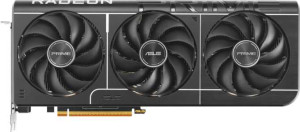
Asus Prime Radeon RX 9070 XT OC Edition
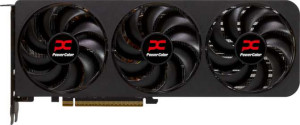
PowerColor Reaper Radeon RX 9070 XT

Asus Prime Radeon RX 9070 XT OC Edition PowerColor Reaper Radeon RX 9070 XT

Overview

Welcome to this head-to-head comparison between the Asus Prime Radeon RX 9070 XT OC Edition and the PowerColor Reaper Radeon RX 9070 XT. Both cards are built on the same RDNA 4.0 foundation with identical memory configurations, yet key battlegrounds remain: boost clock speeds, raw compute throughput, DirectX feature level support, and physical dimensions. Read on to discover which card best suits your build and performance needs.

Common Features

  • Both cards share a base GPU clock speed of 1660 MHz.
  • Both cards have a GPU memory speed of 2518 MHz.
  • Both cards feature 4096 shading units.
  • Both cards have 256 texture mapping units (TMUs).
  • Both cards have 128 render output units (ROPs).
  • Double Precision Floating Point (DPFP) is supported on both cards.
  • Both cards have an effective memory speed of 20000 MHz.
  • Both cards offer a maximum memory bandwidth of 644.6 GB/s.
  • Both cards come with 16GB of VRAM.
  • Both cards use GDDR6 memory.
  • Both cards have a 256-bit memory bus width.
  • ECC memory is supported on both cards.
  • Both cards support OpenGL version 4.6.
  • Both cards support OpenCL version 2.2.
  • Multi-display technology is supported on both cards.
  • Ray tracing is supported on both cards.
  • 3D support is available on both cards.
  • DLSS is not supported on either card.
  • FSR4 is supported on both cards.
  • XeSS (XMX) is not supported on either card.
  • Both cards have one HDMI 2.1b output and three DisplayPort outputs, with no USB-C, DVI, or mini DisplayPort outputs.
  • Both cards are built on the RDNA 4.0 GPU architecture.
  • Both cards have a Thermal Design Power (TDP) of 304W.
  • Both cards use PCIe version 5.
  • Both cards are manufactured on a 4 nm semiconductor process.
  • Both cards contain 53900 million transistors.
  • Neither card features air-water cooling.

Main Differences

  • GPU turbo clock speed is 3010 MHz on Asus Prime Radeon RX 9070 XT OC Edition and 2970 MHz on PowerColor Reaper Radeon RX 9070 XT.
  • Pixel rate is 385.3 GPixel/s on Asus Prime Radeon RX 9070 XT OC Edition and 380.2 GPixel/s on PowerColor Reaper Radeon RX 9070 XT.
  • Floating-point performance is 49.32 TFLOPS on Asus Prime Radeon RX 9070 XT OC Edition and 48.66 TFLOPS on PowerColor Reaper Radeon RX 9070 XT.
  • Texture rate is 770.6 GTexels/s on Asus Prime Radeon RX 9070 XT OC Edition and 760.3 GTexels/s on PowerColor Reaper Radeon RX 9070 XT.
  • DirectX 12 Ultimate support is present on Asus Prime Radeon RX 9070 XT OC Edition, while PowerColor Reaper Radeon RX 9070 XT supports DirectX 12.
  • Width is 312 mm on Asus Prime Radeon RX 9070 XT OC Edition and 304 mm on PowerColor Reaper Radeon RX 9070 XT.
  • Height is 130 mm on Asus Prime Radeon RX 9070 XT OC Edition and 127 mm on PowerColor Reaper Radeon RX 9070 XT.
Specs Comparison
Asus Prime Radeon RX 9070 XT OC Edition

Asus Prime Radeon RX 9070 XT OC Edition

PowerColor Reaper Radeon RX 9070 XT

PowerColor Reaper Radeon RX 9070 XT

Performance:
GPU clock speed 1660 MHz 1660 MHz
GPU turbo 3010 MHz 2970 MHz
pixel rate 385.3 GPixel/s 380.2 GPixel/s
floating-point performance 49.32 TFLOPS 48.66 TFLOPS
texture rate 770.6 GTexels/s 760.3 GTexels/s
GPU memory speed 2518 MHz 2518 MHz
shading units 4096 4096
texture mapping units (TMUs) 256 256
render output units (ROPs) 128 128
Has Double Precision Floating Point (DPFP)

At their core, the Asus Prime RX 9070 XT OC Edition and the PowerColor Reaper RX 9070 XT are built on identical silicon foundations: both share the same 1660 MHz base clock, 4096 shading units, 256 TMUs, 128 ROPs, and 2518 MHz memory speed. This means the vast majority of their rendering pipeline operates in lockstep, and both cards support Double Precision Floating Point, which is relevant for compute and professional workloads beyond gaming.

The only meaningful performance gap lies in the GPU boost clock: the Asus OC Edition reaches 3010 MHz versus the PowerColor Reaper's 2970 MHz — a 40 MHz difference. This directly translates into the small but consistent leads the Asus holds in derived metrics: 49.32 TFLOPS vs 48.66 TFLOPS in floating-point throughput, 385.3 GPixel/s vs 380.2 GPixel/s in pixel fill rate, and 770.6 GTexels/s vs 760.3 GTexels/s in texture throughput. In real-world gaming, a ~1.3% boost clock advantage is unlikely to produce perceptible frame rate differences — it falls well within the noise of normal run-to-run variance.

Overall, the Asus Prime RX 9070 XT OC Edition holds a narrow technical edge in this group, entirely attributable to its factory overclock. However, the advantage is marginal enough that performance alone should not be the deciding factor between these two cards — thermal design, acoustics, and price-to-performance will matter far more in practice.

Memory:
effective memory speed 20000 MHz 20000 MHz
maximum memory bandwidth 644.6 GB/s 644.6 GB/s
VRAM 16GB 16GB
GDDR version GDDR6 GDDR6
memory bus width 256-bit 256-bit
Supports ECC memory

When it comes to memory, these two cards are completely identical in every measurable way. Both feature 16GB of GDDR6 on a 256-bit bus, running at an effective speed of 20000 MHz and delivering 644.6 GB/s of bandwidth. That bandwidth figure is substantial — it comfortably supports high-resolution textures and large frame buffers at 4K, and gives the GPU enough throughput to avoid memory bottlenecks in modern titles and creative workloads alike.

The 16GB capacity is a particularly important trait at this tier. It provides meaningful headroom for 4K gaming with high-resolution texture packs, as well as AI-assisted workloads and content creation tasks that can rapidly exhaust the 8GB or 12GB found on lower-end cards. ECC memory support is also present on both, adding error-correction capability that benefits compute and professional use cases where data integrity is critical — though it has no impact on standard gaming performance.

This group is a complete tie. There is no memory-related reason to favor one card over the other — every spec, from capacity and bus width to bandwidth and error correction, is shared between the Asus Prime OC Edition and the PowerColor Reaper.

Features:
DirectX version DirectX 12 Ultimate DirectX 12
OpenGL version 4.6 4.6
OpenCL version 2.2 2.2
Supports multi-display technology
supports ray tracing
Supports 3D
supports DLSS
has FSR4
has XeSS (XMX)
AMD SAM / Intel Resizable BAR AMD SAM AMD SAM
has LHR
has RGB lighting
supported displays 4 4

Most of the feature set here is shared ground: both cards support ray tracing, FSR4, AMD SAM, up to 4 simultaneous displays, and identical OpenGL and OpenCL versions. Neither supports DLSS (an Nvidia-exclusive technology) or XeSS with XMX acceleration, which is expected for AMD hardware. The presence of FSR4 on both is noteworthy — AMD's latest upscaling generation offers meaningful image quality improvements over its predecessors, making it a relevant feature for high-resolution gaming.

The one concrete differentiator in this group is the DirectX version. The Asus Prime OC Edition lists DirectX 12 Ultimate, while the PowerColor Reaper carries only DirectX 12. DirectX 12 Ultimate is a superset that formally certifies support for hardware ray tracing, mesh shaders, variable rate shading, and sampler feedback — capabilities that are increasingly leveraged in modern game engines. While both cards list ray tracing support separately, the Ultimate certification on the Asus signals a more comprehensive and formally validated feature compliance profile.

The Asus Prime OC Edition holds a narrow but real edge in this group, solely due to its DirectX 12 Ultimate designation. For users targeting modern titles that fully exploit DX12 Ultimate features, this distinction is worth noting — though in practice, both cards are likely capable of similar feature execution given their shared underlying architecture.

Ports:
has an HDMI output
HDMI ports 1 1
HDMI version HDMI 2.1b HDMI 2.1b
DisplayPort outputs 3 3
USB-C ports 0 0
DVI outputs 0 0
mini DisplayPort outputs 0 0

Port configurations are identical across both cards: each offers 1 HDMI 2.1b output and 3 DisplayPort outputs, totaling four display connections — matching the maximum supported display count noted in the features group. There are no USB-C, DVI, or mini DisplayPort outputs on either card.

The quality of these ports matters as much as the count. HDMI 2.1b supports up to 10K resolution and high refresh rates at 4K and beyond, making it well-suited for modern TVs and high-end monitors. The three DisplayPort outputs similarly accommodate multi-monitor productivity setups or high-refresh-rate gaming displays without any compromise. The absence of USB-C is worth flagging for users who rely on that connector for display output to certain ultrawide or portable monitors, though it is not an unusual omission at this product tier.

This is a complete tie. Both the Asus Prime OC Edition and the PowerColor Reaper offer the exact same port layout with no differences whatsoever — connectivity should play no role in choosing between these two cards.

General info:
GPU architecture RDNA 4.0 RDNA 4.0
release date March 2025 March 2025
Thermal Design Power (TDP) 304W 304W
PCI Express (PCIe) version 5 5
semiconductor size 4 nm 4 nm
number of transistors 53900 million 53900 million
Has air-water cooling
width 312 mm 304 mm
height 130 mm 127 mm

Fundamentally, these two cards are built from the same cloth: both use AMD's RDNA 4.0 architecture on a 4nm process node with an identical 53,900 million transistors and a shared 304W TDP. The 4nm process and RDNA 4.0 pairing is significant — it represents AMD's most efficient and capable consumer GPU architecture to date, and the transistor count confirms there is no silicon-level difference between the two designs. PCIe 5.0 support on both ensures neither card will face any bandwidth bottleneck on current or near-future platforms.

The only differentiator in this group is physical size. The Asus Prime OC Edition measures 312 mm × 130 mm, while the PowerColor Reaper is slightly more compact at 304 mm × 127 mm. The difference is small — 8mm shorter and 3mm less tall — but it can matter in practice. Users with smaller mid-tower cases or tighter PCIe clearance may find the PowerColor Reaper marginally easier to fit, while the difference is entirely irrelevant in full-tower builds.

Given the identical TDP, architecture, and process node, neither card has a systemic thermal or efficiency advantage on paper. The PowerColor Reaper earns a slight edge in this group purely on the basis of its more compact footprint, which offers modestly better case compatibility — making it the more flexible choice for builds where space is a consideration.

Comparison Summary & Verdict

After examining every spec, both the Asus Prime Radeon RX 9070 XT OC Edition and the PowerColor Reaper Radeon RX 9070 XT share an impressive common ground — RDNA 4.0 architecture, 16GB GDDR6 memory on a 256-bit bus, a 304W TDP, and an identical port layout. Where they diverge is telling: the Asus card edges ahead with a higher GPU turbo clock of 3010 MHz, 49.32 TFLOPS of floating-point performance, and full DirectX 12 Ultimate support, making it the stronger choice for enthusiasts who want peak throughput and broader API compatibility. The PowerColor Reaper counters with a more compact form factor — 304 mm wide and 127 mm tall — which can be a deciding factor in space-constrained or small-form-factor builds. If maximum performance and future-proof API support are your priorities, the Asus is the clear pick. If a smaller card fits your case better and the core performance is sufficient, the PowerColor Reaper delivers excellent value.

Asus Prime Radeon RX 9070 XT OC Edition
Buy Asus Prime Radeon RX 9070 XT OC Edition if...

Buy the Asus Prime Radeon RX 9070 XT OC Edition if you want a higher boost clock, greater floating-point performance, and DirectX 12 Ultimate support for a more future-proof gaming setup.

PowerColor Reaper Radeon RX 9070 XT
Buy PowerColor Reaper Radeon RX 9070 XT if...

Choose the PowerColor Reaper Radeon RX 9070 XT if a more compact physical footprint is important for your case, while still enjoying the same core RDNA 4.0 architecture and 16GB GDDR6 memory.