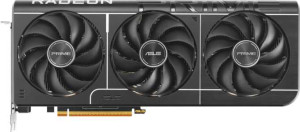
Asus Prime Radeon RX 9070 XT OC Edition
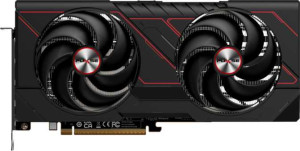
Sapphire Pulse Radeon RX 9070

Asus Prime Radeon RX 9070 XT OC Edition Sapphire Pulse Radeon RX 9070

Overview

Welcome to our detailed spec comparison between the Asus Prime Radeon RX 9070 XT OC Edition and the Sapphire Pulse Radeon RX 9070. Both cards share the same RDNA 4.0 architecture and 16GB of GDDR6 memory, yet they diverge significantly across raw compute performance, power consumption, and physical dimensions. Read on to discover how these two AMD-powered cards stack up across every key specification.

Common Features

  • GPU memory speed is 2518 MHz on both products.
  • Both products have 128 render output units (ROPs).
  • Double Precision Floating Point (DPFP) is supported on both products.
  • Effective memory speed is 20000 MHz on both products.
  • Maximum memory bandwidth is 644.6 GB/s on both products.
  • Both products feature 16GB of VRAM.
  • Both products use GDDR6 memory.
  • Memory bus width is 256-bit on both products.
  • ECC memory is supported on both products.
  • Both products support DirectX 12 Ultimate.
  • OpenGL version 4.6 is supported on both products.
  • OpenCL version 2.2 is supported on both products.
  • Multi-display technology is supported on both products.
  • Ray tracing is supported on both products.
  • 3D support is available on both products.
  • DLSS is not supported on either product.
  • FSR4 is available on both products.
  • Both products have an HDMI output with HDMI version 2.1b.
  • Neither product has USB-C ports, DVI outputs, or mini DisplayPort outputs.
  • Both products are built on the RDNA 4.0 GPU architecture.
  • Both products use PCIe version 5.
  • Both products feature 53900 million transistors.
  • Air-water cooling is not available on either product.

Main Differences

  • GPU base clock speed is 1660 MHz on Asus Prime Radeon RX 9070 XT OC Edition and 1330 MHz on Sapphire Pulse Radeon RX 9070.
  • GPU turbo clock speed is 3010 MHz on Asus Prime Radeon RX 9070 XT OC Edition and 2520 MHz on Sapphire Pulse Radeon RX 9070.
  • Pixel rate is 385.3 GPixel/s on Asus Prime Radeon RX 9070 XT OC Edition and 322.6 GPixel/s on Sapphire Pulse Radeon RX 9070.
  • Floating-point performance is 49.32 TFLOPS on Asus Prime Radeon RX 9070 XT OC Edition and 36.13 TFLOPS on Sapphire Pulse Radeon RX 9070.
  • Texture rate is 770.6 GTexels/s on Asus Prime Radeon RX 9070 XT OC Edition and 564.5 GTexels/s on Sapphire Pulse Radeon RX 9070.
  • Shading units count is 4096 on Asus Prime Radeon RX 9070 XT OC Edition and 3584 on Sapphire Pulse Radeon RX 9070.
  • Texture mapping units (TMUs) number 256 on Asus Prime Radeon RX 9070 XT OC Edition and 224 on Sapphire Pulse Radeon RX 9070.
  • HDMI port count is 1 on Asus Prime Radeon RX 9070 XT OC Edition and 2 on Sapphire Pulse Radeon RX 9070.
  • DisplayPort output count is 3 on Asus Prime Radeon RX 9070 XT OC Edition and 2 on Sapphire Pulse Radeon RX 9070.
  • Thermal Design Power (TDP) is 304W on Asus Prime Radeon RX 9070 XT OC Edition and 220W on Sapphire Pulse Radeon RX 9070.
  • Semiconductor size is 4 nm on Asus Prime Radeon RX 9070 XT OC Edition and 5 nm on Sapphire Pulse Radeon RX 9070.
  • Width is 312 mm on Asus Prime Radeon RX 9070 XT OC Edition and 280 mm on Sapphire Pulse Radeon RX 9070.
  • Height is 130 mm on Asus Prime Radeon RX 9070 XT OC Edition and 120.3 mm on Sapphire Pulse Radeon RX 9070.
Specs Comparison
Asus Prime Radeon RX 9070 XT OC Edition

Asus Prime Radeon RX 9070 XT OC Edition

Sapphire Pulse Radeon RX 9070

Sapphire Pulse Radeon RX 9070

Performance:
GPU clock speed 1660 MHz 1330 MHz
GPU turbo 3010 MHz 2520 MHz
pixel rate 385.3 GPixel/s 322.6 GPixel/s
floating-point performance 49.32 TFLOPS 36.13 TFLOPS
texture rate 770.6 GTexels/s 564.5 GTexels/s
GPU memory speed 2518 MHz 2518 MHz
shading units 4096 3584
texture mapping units (TMUs) 256 224
render output units (ROPs) 128 128
Has Double Precision Floating Point (DPFP)

The most significant performance gap between these two cards lies in their compute throughput. The Asus Prime RX 9070 XT delivers 49.32 TFLOPS of floating-point performance against the Sapphire Pulse RX 9070's 36.13 TFLOPS — a difference of roughly 36%. In practical terms, this translates directly to more headroom for complex shader workloads, ray tracing calculations, and AI-accelerated features. The 9070 XT also carries more raw hardware: 4096 shading units and 256 TMUs versus 3584 and 224 on the 9070, meaning it can process more geometry and texture data per clock cycle.

Clock speeds reinforce this advantage. The 9070 XT's boost clock reaches 3010 MHz, compared to 2520 MHz on the 9070 — nearly a 500 MHz gap at peak. This higher turbo frequency amplifies the already larger shader and texture unit counts, pushing the texture fill rate to 770.6 GTexels/s versus 564.5 GTexels/s. The pixel rate gap is narrower — 385.3 vs. 322.6 GPixel/s — because both cards share an identical 128 ROPs count; the difference there is driven purely by clock speed. One area where the cards are evenly matched is memory interface speed, with both running GDDR at 2518 MHz, and both support Double Precision Floating Point.

Overall, the Asus Prime RX 9070 XT holds a clear and consistent performance advantage across every compute and rendering metric in this group. The 9070 XT is the stronger choice for users targeting higher resolutions or more demanding workloads, while the Sapphire Pulse RX 9070 competes as a more modest option — relevant only if price or power considerations (not covered in this group) make the performance delta an acceptable trade-off.

Memory:
effective memory speed 20000 MHz 20000 MHz
maximum memory bandwidth 644.6 GB/s 644.6 GB/s
VRAM 16GB 16GB
GDDR version GDDR6 GDDR6
memory bus width 256-bit 256-bit
Supports ECC memory

Memory is one area where these two cards offer absolutely no grounds for differentiation. Both the Asus Prime RX 9070 XT and the Sapphire Pulse RX 9070 are equipped with 16GB of GDDR6 running on a 256-bit bus at an effective speed of 20000 MHz, yielding identical maximum bandwidth of 644.6 GB/s. Every single memory specification is a match.

That shared bandwidth figure is worth contextualizing: 644.6 GB/s is a substantial allocation that comfortably supports high-resolution textures, large frame buffers at 4K, and memory-intensive workloads like content creation or AI inference. The 16GB capacity likewise ensures neither card will struggle with VRAM pressure in current or near-future titles and applications. Both cards also support ECC memory, a feature more commonly associated with professional workloads, adding a layer of data integrity that most gaming users won't need but will not be penalized for having.

This group is an unambiguous tie. A buyer's decision cannot hinge on memory specs alone — the 9070 XT and 9070 are on completely equal footing here, and any meaningful distinction between the two must be found in other specification groups such as performance or power.

Features:
DirectX version DirectX 12 Ultimate DirectX 12 Ultimate
OpenGL version 4.6 4.6
OpenCL version 2.2 2.2
Supports multi-display technology
supports ray tracing
Supports 3D
supports DLSS
has FSR4
has XeSS (XMX)
AMD SAM / Intel Resizable BAR AMD SAM AMD SAM
has LHR
has RGB lighting
supported displays 4 4

Feature parity between these two cards is total. Both the Asus Prime RX 9070 XT and the Sapphire Pulse RX 9070 run on DirectX 12 Ultimate — the current standard that enables hardware ray tracing, mesh shaders, and variable-rate shading — and both do in fact support ray tracing. They share the same OpenGL and OpenCL versions, and both support up to 4 simultaneous displays, making either a capable multi-monitor option without distinction.

On the upscaling front, the picture is equally identical. Neither card supports DLSS (which is exclusive to Nvidia hardware), but both carry FSR4 — AMD's latest upscaling generation — and neither supports Intel's XeSS with XMX acceleration. AMD SAM (Smart Access Memory) is present on both, which allows a compatible AMD CPU to access the full GPU memory pool, reducing CPU bottlenecks in supported titles. The absence of LHR (Lite Hash Rate) limiters on both is also consistent, though largely irrelevant for typical gaming use cases today.

Like the memory group, this category delivers a clean tie with zero differentiators. Every feature that matters — ray tracing support, FSR4, DirectX 12 Ultimate, and multi-display capability — is shared identically. Buyers comparing these two cards on features alone will find no reason to favor one over the other; the decision must rest on performance output or other factors outside this group.

Ports:
has an HDMI output
HDMI ports 1 2
HDMI version HDMI 2.1b HDMI 2.1b
DisplayPort outputs 3 2
USB-C ports 0 0
DVI outputs 0 0
mini DisplayPort outputs 0 0

Unlike the previous groups, ports offer a genuine — if nuanced — point of divergence. Both cards share the same total of four display outputs and use HDMI 2.1b, the latest HDMI standard capable of driving 4K at high refresh rates or 8K displays. The split, however, differs: the Asus Prime RX 9070 XT opts for 1 HDMI + 3 DisplayPort, while the Sapphire Pulse RX 9070 goes with 2 HDMI + 2 DisplayPort.

Whether this matters depends entirely on the user's display setup. DisplayPort is generally preferred for PC monitors, particularly high-refresh-rate gaming panels, making the 9070 XT's configuration more natural for a traditional desktop multi-monitor arrangement. The 9070's two HDMI ports, on the other hand, are more convenient for users connecting TVs, projectors, or other consumer displays that commonly rely on HDMI — a meaningful advantage if, for example, someone wants to drive a gaming monitor and a living-room TV simultaneously without an adapter.

Neither configuration is objectively superior — it is a question of use case fit. For a pure PC gaming setup with multiple monitors, the 9070 XT's three DisplayPort outputs provide a slight practical edge. For mixed environments that lean on HDMI-native displays, the Sapphire Pulse RX 9070's dual HDMI layout is more accommodating. Users should match this against their actual display inventory rather than treating one layout as categorically better.

General info:
GPU architecture RDNA 4.0 RDNA 4.0
release date March 2025 March 2025
Thermal Design Power (TDP) 304W 220W
PCI Express (PCIe) version 5 5
semiconductor size 4 nm 5 nm
number of transistors 53900 million 53900 million
Has air-water cooling
width 312 mm 280 mm
height 130 mm 120.3 mm

Both cards are built on AMD's RDNA 4.0 architecture and connect via PCIe 5, so their generational footing is identical. What stands out immediately — and somewhat unusually — is that despite sharing an identical transistor count of 53,900 million, the two cards are manufactured on different process nodes: 4nm for the 9070 XT and 5nm for the 9070. A finer node typically enables higher clock speeds or better power efficiency at equivalent transistor density, which aligns with the 9070 XT's significantly higher boost clocks seen in the performance group.

The thermal story is where this group carries the most practical weight. The Asus Prime RX 9070 XT carries a 304W TDP against the Sapphire Pulse RX 9070's 220W — an 84W gap that is far from trivial. Users considering the 9070 XT will need to verify that their power supply has adequate headroom, and they should expect meaningfully higher electricity consumption and heat output over time. The 9070 is the notably more power-efficient card, which may matter in small form factor builds or for those mindful of long-term running costs.

Physical size follows a similar pattern: the 9070 XT measures 312 × 130 mm while the 9070 is a more compact 280 × 120.3 mm. The 32mm length difference can be relevant in mid-tower or smaller cases with tight GPU clearance limits. For builders with spacious cases and robust power supplies, the 9070 XT's larger footprint and higher TDP are acceptable trade-offs for its greater performance. For constrained builds or efficiency-focused systems, the Sapphire Pulse RX 9070 holds a clear advantage in this group.

Comparison Summary & Verdict

After examining every specification, a clear picture emerges for each card. The Asus Prime Radeon RX 9070 XT OC Edition delivers a decisive lead in raw horsepower, boasting a 49.32 TFLOPS floating-point performance rating, a 3010 MHz turbo clock, 4096 shading units, and a higher texture rate of 770.6 GTexels/s — making it the stronger choice for enthusiasts who demand peak gaming or creative workload performance. However, this comes at the cost of a 304W TDP and a larger physical footprint. The Sapphire Pulse Radeon RX 9070, by contrast, operates at a much more modest 220W TDP, runs on a 5 nm process, and fits into a smaller chassis, making it an appealing option for builders prioritizing power efficiency and compact builds. Both cards share the same 16GB GDDR6 memory, ray tracing support, FSR4, and DirectX 12 Ultimate compatibility, so the shared feature set remains strong regardless of which you choose.

Asus Prime Radeon RX 9070 XT OC Edition
Buy Asus Prime Radeon RX 9070 XT OC Edition if...

Buy the Asus Prime Radeon RX 9070 XT OC Edition if you want maximum GPU performance, with higher clock speeds, more shading units, and greater floating-point throughput, and your system can accommodate its 304W power draw.

Sapphire Pulse Radeon RX 9070
Buy Sapphire Pulse Radeon RX 9070 if...

Buy the Sapphire Pulse Radeon RX 9070 if you prioritize power efficiency and a more compact card, as its 220W TDP and smaller dimensions make it ideal for builds where space and energy consumption matter.