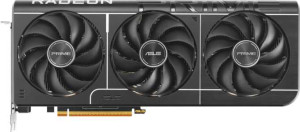
Asus Prime Radeon RX 9070 XT OC Edition
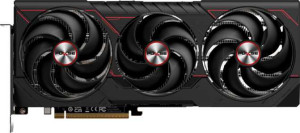
Sapphire Pulse Radeon RX 9070 XT

Asus Prime Radeon RX 9070 XT OC Edition Sapphire Pulse Radeon RX 9070 XT

Overview

Welcome to our in-depth spec comparison between the Asus Prime Radeon RX 9070 XT OC Edition and the Sapphire Pulse Radeon RX 9070 XT, two compelling RDNA 4.0-based graphics cards targeting the high-performance segment. While both share the same 16 GB GDDR6 memory, 304W TDP, and feature set, key battlegrounds emerge around GPU boost clocks and raw throughput, as well as differences in port configuration and physical dimensions. Read on to find out which card best suits your needs.

Common Features

  • Both cards share a base GPU clock speed of 1660 MHz.
  • Both cards have a GPU memory speed of 2518 MHz.
  • Both cards feature 4096 shading units.
  • Both cards have 256 texture mapping units (TMUs).
  • Both cards have 128 render output units (ROPs).
  • Double Precision Floating Point (DPFP) is supported on both cards.
  • Both cards have an effective memory speed of 20000 MHz.
  • Both cards offer a maximum memory bandwidth of 644.6 GB/s.
  • Both cards come with 16 GB of VRAM.
  • Both cards use GDDR6 memory.
  • Both cards feature a 256-bit memory bus width.
  • ECC memory is supported on both cards.
  • Both cards support DirectX 12 Ultimate.
  • Both cards support OpenGL version 4.6.
  • Both cards support OpenCL version 2.2.
  • Multi-display technology is supported on both cards.
  • Ray tracing is supported on both cards.
  • 3D support is available on both cards.
  • DLSS is not supported on either card.
  • FSR4 is supported on both cards.
  • Both cards have an HDMI 2.1b output.
  • Neither card has any USB-C ports, DVI outputs, or mini DisplayPort outputs.
  • Both cards are built on the RDNA 4.0 GPU architecture.
  • Both cards have a Thermal Design Power (TDP) of 304W.
  • Both cards use PCIe version 5.
  • Both cards are manufactured on a 4 nm semiconductor process.
  • Both cards contain 53,900 million transistors.
  • Neither card features air-water cooling.

Main Differences

  • GPU turbo clock speed is 3010 MHz on the Asus Prime Radeon RX 9070 XT OC Edition and 2970 MHz on the Sapphire Pulse Radeon RX 9070 XT.
  • Pixel rate is 385.3 GPixel/s on the Asus Prime Radeon RX 9070 XT OC Edition and 380.2 GPixel/s on the Sapphire Pulse Radeon RX 9070 XT.
  • Floating-point performance is 49.32 TFLOPS on the Asus Prime Radeon RX 9070 XT OC Edition and 48.66 TFLOPS on the Sapphire Pulse Radeon RX 9070 XT.
  • Texture rate is 770.6 GTexels/s on the Asus Prime Radeon RX 9070 XT OC Edition and 760.3 GTexels/s on the Sapphire Pulse Radeon RX 9070 XT.
  • The number of HDMI ports is 1 on the Asus Prime Radeon RX 9070 XT OC Edition and 2 on the Sapphire Pulse Radeon RX 9070 XT.
  • DisplayPort outputs number 3 on the Asus Prime Radeon RX 9070 XT OC Edition and 2 on the Sapphire Pulse Radeon RX 9070 XT.
  • Card width is 312 mm on the Asus Prime Radeon RX 9070 XT OC Edition and 320 mm on the Sapphire Pulse Radeon RX 9070 XT.
  • Card height is 130 mm on the Asus Prime Radeon RX 9070 XT OC Edition and 120.3 mm on the Sapphire Pulse Radeon RX 9070 XT.
Specs Comparison
Asus Prime Radeon RX 9070 XT OC Edition

Asus Prime Radeon RX 9070 XT OC Edition

Sapphire Pulse Radeon RX 9070 XT

Sapphire Pulse Radeon RX 9070 XT

Performance:
GPU clock speed 1660 MHz 1660 MHz
GPU turbo 3010 MHz 2970 MHz
pixel rate 385.3 GPixel/s 380.2 GPixel/s
floating-point performance 49.32 TFLOPS 48.66 TFLOPS
texture rate 770.6 GTexels/s 760.3 GTexels/s
GPU memory speed 2518 MHz 2518 MHz
shading units 4096 4096
texture mapping units (TMUs) 256 256
render output units (ROPs) 128 128
Has Double Precision Floating Point (DPFP)

At their core, the Asus Prime RX 9070 XT OC Edition and the Sapphire Pulse RX 9070 XT share identical GPU foundations: the same 1660 MHz base clock, 4096 shading units, 256 TMUs, 128 ROPs, and 2518 MHz memory speed. This means both cards draw from the same underlying silicon capabilities and memory bandwidth, and any performance gap between them will be purely a function of how aggressively each is factory-tuned.

The one meaningful differentiator is the GPU boost clock: the Asus reaches 3010 MHz versus the Sapphire's 2970 MHz — a 40 MHz or roughly 1.3% advantage. This flows directly into every derived throughput metric: the Asus edges ahead with 49.32 TFLOPS of floating-point performance versus 48.66 TFLOPS, a 770.6 GTexels/s texture rate versus 760.3 GTexels/s, and a 385.3 GPixel/s pixel fill rate versus 380.2 GPixel/s. In real-world terms, these margins translate to a theoretical framerate uplift of just over 1%, which is imperceptible in gameplay and would only show up as a consistent, minor lead in benchmark averages.

The Asus Prime RX 9070 XT OC Edition holds a narrow but real performance edge on paper, entirely attributable to its higher factory overclock. However, the gap is so slim that it will have no meaningful impact in practical use. Both cards are effectively performance-equivalent, and a buyer's decision should hinge on factors like cooling design, acoustics, price, or warranty rather than these marginal clock speed differences.
Memory:
effective memory speed 20000 MHz 20000 MHz
maximum memory bandwidth 644.6 GB/s 644.6 GB/s
VRAM 16GB 16GB
GDDR version GDDR6 GDDR6
memory bus width 256-bit 256-bit
Supports ECC memory

When it comes to memory, these two cards are in complete lockstep. Both carry 16GB of GDDR6 running at an effective 20000 MHz across a 256-bit bus, delivering an identical 644.6 GB/s of peak memory bandwidth. That bandwidth figure is substantial — enough to feed the GPU comfortably even in demanding scenarios like 4K texturing, high-resolution ray tracing, or GPU-accelerated compute workloads.

The 16GB VRAM buffer is particularly noteworthy in the current landscape, where titles at 4K with high-resolution texture packs and modern rendering techniques are increasingly pushing past the 12GB ceiling of competing cards. Both the Asus and Sapphire variants are equally well-positioned here. ECC memory support is also present on both, which is a practical bonus for users doing creative or compute work where memory error correction adds a layer of data integrity.

This group is an unambiguous dead heat. Every memory specification is identical across both cards, meaning neither holds any advantage in bandwidth, capacity, or memory reliability. A buyer should look entirely elsewhere — performance clocks, cooling, or pricing — to differentiate between them on memory grounds.

Features:
DirectX version DirectX 12 Ultimate DirectX 12 Ultimate
OpenGL version 4.6 4.6
OpenCL version 2.2 2.2
Supports multi-display technology
supports ray tracing
Supports 3D
supports DLSS
has FSR4
has XeSS (XMX)
AMD SAM / Intel Resizable BAR AMD SAM AMD SAM
has LHR
has RGB lighting
supported displays 4 4

Feature parity is total here. Both the Asus Prime RX 9070 XT OC and the Sapphire Pulse RX 9070 XT support DirectX 12 Ultimate and ray tracing, placing them squarely in the current generation of GPU feature sets. DirectX 12 Ultimate in particular is the benchmark for modern gaming compatibility, encompassing hardware ray tracing, variable rate shading, and mesh shaders — all relevant to titles being released today and in the near future.

On the upscaling front, both cards support FSR4 but lack DLSS and XeSS (XMX). FSR4 is AMD's latest upscaling generation and represents a meaningful quality improvement over its predecessors, making it a genuinely competitive option for boosting framerates without proportional image quality loss. The absence of DLSS is expected on AMD hardware, so this is not a disadvantage unique to either card. Both also feature AMD SAM (Smart Access Memory), which can yield measurable performance gains when paired with a compatible AMD CPU by allowing the processor full access to VRAM. Multi-monitor users are equally served, with support for up to 4 simultaneous displays on both cards.

There is no differentiator to call out in this category — every feature present on one card is identically present on the other. For buyers weighing features, this group offers no reason to prefer one over the other, and the decision remains entirely in the hands of other factors.

Ports:
has an HDMI output
HDMI ports 1 2
HDMI version HDMI 2.1b HDMI 2.1b
DisplayPort outputs 3 2
USB-C ports 0 0
DVI outputs 0 0
mini DisplayPort outputs 0 0

Both cards offer a total of four display outputs and share the same HDMI 2.1b standard, which supports 4K at high refresh rates and 8K output — so the bandwidth ceiling is identical. The difference lies purely in how those four ports are distributed. The Asus Prime RX 9070 XT OC Edition goes with 1 HDMI and 3 DisplayPort, while the Sapphire Pulse RX 9070 XT flips the balance to 2 HDMI and 2 DisplayPort.

In practical terms, this split matters depending on your display setup. DisplayPort is generally preferred for high-refresh-rate PC monitors, so the Asus configuration suits users running multiple gaming monitors. The Sapphire's dual-HDMI layout, on the other hand, is more convenient for anyone mixing a TV or a console-style display into their setup alongside a monitor — connecting two HDMI devices without needing an adapter is a genuine quality-of-life advantage in that scenario.

Neither layout is objectively superior — it comes down to the user's specific display ecosystem. However, for the most common use case of a PC-centric multi-monitor gaming desk, the Asus's 3 DisplayPort outputs offer more flexibility. For mixed HDMI-heavy setups, the Sapphire Pulse holds the practical edge with its 2 HDMI ports.

General info:
GPU architecture RDNA 4.0 RDNA 4.0
release date March 2025 March 2025
Thermal Design Power (TDP) 304W 304W
PCI Express (PCIe) version 5 5
semiconductor size 4 nm 4 nm
number of transistors 53900 million 53900 million
Has air-water cooling
width 312 mm 320 mm
height 130 mm 120.3 mm

Underneath the heatsink, these two cards are built from identical silicon. Both are based on the RDNA 4.0 architecture, fabbed on a 4nm process with 53.9 billion transistors, and both draw a maximum of 304W TDP. The shared PCIe 5.0 interface ensures neither card will face any bandwidth bottleneck on a modern platform. In short, the underlying chip is the same, and the power delivery demands placed on a system will be identical regardless of which brand you choose.

The only distinction this group surfaces is in physical dimensions. The Asus Prime OC measures 312 mm long by 130 mm tall, while the Sapphire Pulse is slightly longer at 320 mm but noticeably slimmer at 120.3 mm tall. The 8mm difference in length is a minor case-clearance consideration, but the roughly 10mm reduction in height on the Sapphire could matter in tighter builds — a shorter card height leaves more clearance between the GPU and adjacent components or cables in compact mid-tower cases.

For general build planning, both cards are effectively equivalent in power requirements and platform compatibility. The Sapphire Pulse's lower profile gives it a marginal practical edge in space-constrained builds, while the Asus is slightly more compact lengthwise. Neither difference is significant enough to be a deciding factor for most users, making this group largely a tie with a minor fitment nuance to be aware of.

Comparison Summary & Verdict

Both the Asus Prime Radeon RX 9070 XT OC Edition and the Sapphire Pulse Radeon RX 9070 XT are built on the same RDNA 4.0 architecture and share identical memory specs, feature support, and power envelopes, making the choice between them a matter of finer details. The Asus Prime OC Edition edges ahead with a higher GPU turbo of 3010 MHz, delivering marginally better pixel rate, texture rate, and floating-point performance, making it the stronger pick for users who want every last drop of performance. The Sapphire Pulse, on the other hand, offers a second HDMI port, a slightly more compact height of 120.3 mm, and two DisplayPort outputs, making it a better fit for multi-monitor or multi-display setups that rely on HDMI connectivity. Neither card is an outright loser; your ideal choice depends on whether raw performance headroom or display output flexibility matters more to you.

Asus Prime Radeon RX 9070 XT OC Edition
Buy Asus Prime Radeon RX 9070 XT OC Edition if...

Buy the Asus Prime Radeon RX 9070 XT OC Edition if you want the highest possible GPU boost clock and marginally superior raw performance in pixel rate, texture rate, and floating-point throughput. It also offers three DisplayPort outputs for users with a DP-centric monitor setup.

Sapphire Pulse Radeon RX 9070 XT
Buy Sapphire Pulse Radeon RX 9070 XT if...

Buy the Sapphire Pulse Radeon RX 9070 XT if you need two HDMI outputs for connecting TVs or HDMI-dependent displays alongside your monitor. Its slightly more compact height of 120.3 mm may also suit tighter PC cases better.