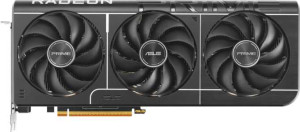
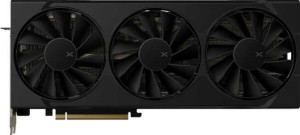
Feature parity between these two cards is remarkably high. Both support DirectX 12 Ultimate and ray tracing, meaning neither cuts corners on the modern rendering pipeline — DX12 Ultimate compliance guarantees access to hardware-accelerated ray tracing, variable rate shading, mesh shaders, and sampler feedback, all of which are increasingly leveraged by current-generation titles. Add in FSR4 support on both cards and users gain AMD's latest upscaling technology, which can meaningfully boost frame rates at higher resolutions with minimal visual quality loss. Notably, neither card supports DLSS, which is expected given these are AMD GPUs — that is not a disadvantage specific to either product.
AMD SAM (Smart Access Memory) is present on both, allowing a compatible AMD CPU and motherboard to access the full VRAM pool rather than the traditional 256MB window, which can yield measurable performance gains in supported titles. The 4-display output capability is shared as well, making both cards equally suited for multi-monitor productivity setups. The only functional differentiator in this group is RGB lighting: the XFX Swift RX 9070 OC includes it, while the Asus Prime RX 9070 XT OC does not.
For most buyers, this group is effectively a tie on anything that affects actual rendering capability or software compatibility. The sole distinction — RGB lighting on the XFX Swift — is entirely aesthetic. Users building a themed system who want illuminated components may prefer the XFX on that basis alone, but it carries zero impact on gaming or compute performance. Feature-wise, neither card holds a meaningful functional advantage over the other.