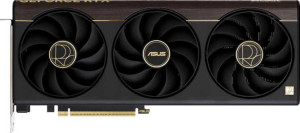
Asus ProArt GeForce RTX 5070 Ti OC Edition
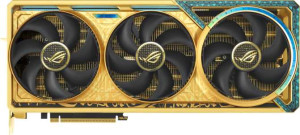
Asus ROG Astral GeForce RTX 5080 Dhahab Core OC Edition

Asus ProArt GeForce RTX 5070 Ti OC Edition Asus ROG Astral GeForce RTX 5080 Dhahab Core OC Edition

Common Features

  • Both products have a GPU clock speed of 2295 MHz.
  • Both products support double precision floating point (DPFP).
  • Both products support DirectX 12 Ultimate.
  • Both products support OpenGL 4.6.
  • Both products support OpenCL 3.
  • Both products support multi-display technology.
  • Both products support ray tracing.
  • Both products support 3D.
  • Both products support DLSS.
  • Both products have 16GB of VRAM.
  • Both products use GDDR7 memory.
  • Both products have a memory bus width of 256-bit.
  • Both products support ECC memory.
  • Both products have HDMI 2.1b output.
  • Both products do not have DVI outputs.
  • Both products do not have mini DisplayPort outputs.
  • Both products have PCIe version 5.
  • Both products use Blackwell GPU architecture.
  • Both products have a semiconductor size of 5 nm.
  • Both products have 45600 million transistors.

Main Differences

  • GPU turbo is 2588 MHz on Asus ProArt GeForce RTX 5070 Ti OC Edition and 2760 MHz on Asus ROG Astral GeForce RTX 5080 Dhahab Core OC Edition.
  • Pixel rate is 248.4 GPixel/s on Asus ProArt GeForce RTX 5070 Ti OC Edition and 309.1 GPixel/s on Asus ROG Astral GeForce RTX 5080 Dhahab Core OC Edition.
  • Floating-point performance is 46.38 TFLOPS on Asus ProArt GeForce RTX 5070 Ti OC Edition and 59.35 TFLOPS on Asus ROG Astral GeForce RTX 5080 Dhahab Core OC Edition.
  • Texture rate is 724.6 GTexels/s on Asus ProArt GeForce RTX 5070 Ti OC Edition and 927.4 GTexels/s on Asus ROG Astral GeForce RTX 5080 Dhahab Core OC Edition.
  • GPU memory speed is 1750 MHz on Asus ProArt GeForce RTX 5070 Ti OC Edition and 1875 MHz on Asus ROG Astral GeForce RTX 5080 Dhahab Core OC Edition.
  • Shading units are 8960 on Asus ProArt GeForce RTX 5070 Ti OC Edition and 10752 on Asus ROG Astral GeForce RTX 5080 Dhahab Core OC Edition.
  • Texture mapping units (TMUs) are 280 on Asus ProArt GeForce RTX 5070 Ti OC Edition and 336 on Asus ROG Astral GeForce RTX 5080 Dhahab Core OC Edition.
  • Render output units (ROPs) are 96 on Asus ProArt GeForce RTX 5070 Ti OC Edition and 112 on Asus ROG Astral GeForce RTX 5080 Dhahab Core OC Edition.
  • Effective memory speed is 28000 MHz on Asus ProArt GeForce RTX 5070 Ti OC Edition and 30000 MHz on Asus ROG Astral GeForce RTX 5080 Dhahab Core OC Edition.
  • Maximum memory bandwidth is 896 GB/s on Asus ProArt GeForce RTX 5070 Ti OC Edition and 960 GB/s on Asus ROG Astral GeForce RTX 5080 Dhahab Core OC Edition.
  • HDMI ports are 1 on Asus ProArt GeForce RTX 5070 Ti OC Edition and 2 on Asus ROG Astral GeForce RTX 5080 Dhahab Core OC Edition.
  • DisplayPort outputs are 2 on Asus ProArt GeForce RTX 5070 Ti OC Edition and 3 on Asus ROG Astral GeForce RTX 5080 Dhahab Core OC Edition.
  • USB-C ports are 1 on Asus ProArt GeForce RTX 5070 Ti OC Edition and 0 on Asus ROG Astral GeForce RTX 5080 Dhahab Core OC Edition.
  • Thermal Design Power (TDP) is 300W on Asus ProArt GeForce RTX 5070 Ti OC Edition and 360W on Asus ROG Astral GeForce RTX 5080 Dhahab Core OC Edition.
  • Width is 304 mm on Asus ProArt GeForce RTX 5070 Ti OC Edition and 357.6 mm on Asus ROG Astral GeForce RTX 5080 Dhahab Core OC Edition.
  • Height is 126 mm on Asus ProArt GeForce RTX 5070 Ti OC Edition and 149.3 mm on Asus ROG Astral GeForce RTX 5080 Dhahab Core OC Edition.
Specs Comparison
Asus ProArt GeForce RTX 5070 Ti OC Edition

Asus ProArt GeForce RTX 5070 Ti OC Edition

Asus ROG Astral GeForce RTX 5080 Dhahab Core OC Edition

Asus ROG Astral GeForce RTX 5080 Dhahab Core OC Edition

Performance:
GPU clock speed 2295 MHz 2295 MHz
GPU turbo 2588 MHz 2760 MHz
pixel rate 248.4 GPixel/s 309.1 GPixel/s
floating-point performance 46.38 TFLOPS 59.35 TFLOPS
texture rate 724.6 GTexels/s 927.4 GTexels/s
GPU memory speed 1750 MHz 1875 MHz
shading units 8960 10752
texture mapping units (TMUs) 280 336
render output units (ROPs) 96 112
Has Double Precision Floating Point (DPFP)

Both the Asus ProArt GeForce RTX 5070 Ti OC Edition and the Asus ROG Astral GeForce RTX 5080 Dhahab Core OC Edition share the same GPU clock speed of 2295 MHz, but the ROG Astral model features a higher GPU turbo boost of 2760 MHz compared to the 5070 Ti's 2588 MHz. This difference in turbo speeds could result in a higher peak performance for the 5080 model under load.

When it comes to pixel rate, the ROG Astral outperforms the ProArt with 309.1 GPixel/s, compared to the 5070 Ti's 248.4 GPixel/s. This suggests that the Astral model can handle higher pixel throughput, which may improve visual performance in demanding tasks. The texture rate also favors the Astral, with 927.4 GTexels/s versus 724.6 GTexels/s on the 5070 Ti, indicating a superior ability to process textures in real-time.

The floating-point performance is another area where the ROG Astral leads, offering 59.35 TFLOPS, whereas the 5070 Ti provides 46.38 TFLOPS. This means the Astral model could be more capable in tasks requiring intense computational power, such as AI and machine learning. Additionally, the 5070 Ti has 8960 shading units, while the Astral has 10752, allowing for potentially more detailed and intricate shading in the Astral model. The Astral also has more texture mapping units (336 vs. 280) and render output units (112 vs. 96), which could contribute to better overall graphical rendering efficiency. Both models support Double Precision Floating Point (DPFP), offering high precision for professional-level computing needs.

Memory:
effective memory speed 28000 MHz 30000 MHz
maximum memory bandwidth 896 GB/s 960 GB/s
VRAM 16GB 16GB
GDDR version GDDR7 GDDR7
memory bus width 256-bit 256-bit
Supports ECC memory

Both the Asus ProArt GeForce RTX 5070 Ti OC Edition and the Asus ROG Astral GeForce RTX 5080 Dhahab Core OC Edition are equipped with 16GB of VRAM, which is the same for both models. Additionally, both cards utilize GDDR7 memory, ensuring the latest memory standard for high-performance tasks. The memory bus width for both products is also identical at 256-bit.

When comparing effective memory speed, the ROG Astral offers a slightly faster rate of 30000 MHz, compared to the 5070 Ti's 28000 MHz. This indicates a marginal speed advantage for the Astral in terms of memory performance.

The maximum memory bandwidth differs between the two models, with the ROG Astral providing a higher bandwidth of 960 GB/s, while the 5070 Ti reaches 896 GB/s. This difference in bandwidth could affect the overall speed at which the memory is accessed, potentially giving the Astral a slight edge in memory-intensive tasks. Both models support ECC memory, ensuring error correction for more reliable data handling during demanding workloads.

Features:
DirectX version DirectX 12 Ultimate DirectX 12 Ultimate
OpenGL version 4.6 4.6
OpenCL version 3 3
Supports multi-display technology
supports ray tracing
Supports 3D
supports DLSS
has XeSS (XMX)
AMD SAM / Intel Resizable BAR Intel Resizable BAR Intel Resizable BAR
has LHR
has RGB lighting
supported displays 4 4

Both the Asus ProArt GeForce RTX 5070 Ti OC Edition and the Asus ROG Astral GeForce RTX 5080 Dhahab Core OC Edition share identical support for DirectX 12 Ultimate, OpenGL 4.6, OpenCL 3, and both support ray tracing, 3D, and DLSS. Additionally, both models offer multi-display technology, with support for up to four displays, and feature RGB lighting for customizable aesthetics. Neither product includes XeSS (XMX) support, and both are equipped with Intel Resizable BAR (AMD SAM is not supported).

Both products are also free from LHR (Low Hash Rate) limitations, meaning they can fully utilize their processing power for mining, gaming, or other demanding tasks without restrictions on performance.

Ports:
has an HDMI output
HDMI ports 1 2
HDMI version HDMI 2.1b HDMI 2.1b
DisplayPort outputs 2 3
USB-C ports 1 0
DVI outputs 0 0
mini DisplayPort outputs 0 0

The Asus ProArt GeForce RTX 5070 Ti OC Edition and the Asus ROG Astral GeForce RTX 5080 Dhahab Core OC Edition both feature HDMI 2.1b outputs, but the number of HDMI ports differs. The ProArt has a single HDMI port, while the ROG Astral offers two HDMI ports. Additionally, the ProArt includes one USB-C port, whereas the ROG Astral does not provide any USB-C ports.

For display connectivity, the ProArt offers two DisplayPort outputs, while the ROG Astral provides three DisplayPort outputs. Neither model includes DVI or mini DisplayPort outputs, so the primary display options are HDMI and DisplayPort.

General info:
GPU architecture Blackwell Blackwell
release date September 2025 August 2025
Thermal Design Power (TDP) 300W 360W
PCI Express (PCIe) version 5 5
semiconductor size 5 nm 5 nm
number of transistors 45600 million 45600 million
Has air-water cooling
width 304 mm 357.6 mm
height 126 mm 149.3 mm

Both the Asus ProArt GeForce RTX 5070 Ti OC Edition and the Asus ROG Astral GeForce RTX 5080 Dhahab Core OC Edition use the Blackwell GPU architecture and have a 5 nm semiconductor size, with both featuring 45600 million transistors. The key differences between the two models lie in their Thermal Design Power (TDP), size, and dimensions.

The ProArt model has a TDP of 300W, while the ROG Astral has a higher TDP of 360W, which could suggest greater power requirements for the Astral. In terms of physical dimensions, the ProArt is 304 mm wide and 126 mm tall, while the ROG Astral is larger, measuring 357.6 mm in width and 149.3 mm in height.

Neither card includes air-water cooling, so both rely on traditional cooling solutions. However, the larger size and higher TDP of the ROG Astral may require more advanced or effective cooling setups.

Comparison Summary

This is a specification comparison between the Asus ProArt GeForce RTX 5070 Ti OC Edition and Asus ROG Astral GeForce RTX 5080 Dhahab Core OC Edition. Both products share a GPU clock speed of 2295 MHz and 16GB of VRAM, and support DirectX 12 Ultimate and ray tracing. However, the Asus ProArt GeForce RTX 5070 Ti OC Edition has a lower GPU turbo speed of 2588 MHz compared to 2760 MHz on the Asus ROG Astral GeForce RTX 5080 Dhahab Core OC Edition. The latter also offers higher floating-point performance at 59.35 TFLOPS, compared to 46.38 TFLOPS on the former. Other differences include a higher TDP of 360W on the 5080 model versus 300W on the 5070 Ti, and a larger height of 149.3 mm on the 5080 model compared to 126 mm on the 5070 Ti.