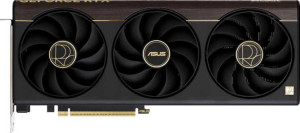
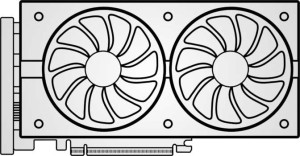
Sharing the same Blackwell architecture, 5nm process node, and PCIe 5.0 interface, these two cards are built from the same generational foundation. The process and bus commonality mean both benefit equally from Blackwell's architectural efficiency gains and have identical platform compatibility requirements. What the shared foundation obscures, however, is just how differently sized these two dies actually are.
The ProArt RTX 5070 Ti OC packs 45,600 million transistors versus the RTX 5060 Ti's 21,900 million — more than double the transistor count, which maps almost directly to the shader and compute differences seen in the Performance group. That larger die comes at a power cost: the 5070 Ti OC carries a 300W TDP compared to the 5060 Ti's 180W. A 120W difference is substantial in practice — it demands a more capable PSU, generates more heat that the cooling solution must manage, and will be more noticeable on electricity costs over time. Neither card offers liquid cooling from the factory.
The RTX 5060 Ti 8GB has a meaningful advantage in power efficiency terms — it draws significantly less for a system that needs to be quieter, cooler, or more constrained by PSU headroom. For users where those factors matter, the 5060 Ti is the more practical choice in this group. The ProArt RTX 5070 Ti OC, by contrast, trades that efficiency for the much larger silicon that underpins its performance lead — making the 300W draw an expected cost of its class, not a flaw.