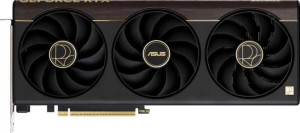
Asus ProArt GeForce RTX 5070 Ti
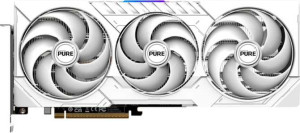
Sapphire Pure Radeon RX 9070 XT

Asus ProArt GeForce RTX 5070 Ti Sapphire Pure Radeon RX 9070 XT

Overview

Welcome to our in-depth specification comparison between the Asus ProArt GeForce RTX 5070 Ti and the Sapphire Pure Radeon RX 9070 XT — two high-performance graphics cards representing the latest generations from Nvidia and AMD. In this head-to-head, we examine key battlegrounds including memory technology and bandwidth, raw compute performance, feature support, and physical connectivity to help you decide which card best fits your needs.

Common Features

  • Both cards support Double Precision Floating Point (DPFP).
  • Both cards come with 16GB of VRAM.
  • Both cards use a 256-bit memory bus width.
  • ECC memory support is available on both products.
  • Both cards support DirectX 12 Ultimate.
  • Both cards support OpenGL version 4.6.
  • Multi-display technology is supported on both products.
  • Ray tracing support is available on both products.
  • 3D support is available on both products.
  • XeSS (XMX) support is not available on either product.
  • LHR (Lite Hash Rate) is not present on either product.
  • RGB lighting is featured on both products.
  • Both cards include an HDMI output running at HDMI 2.1b.
  • Both cards feature 2 DisplayPort outputs.
  • Neither card has any DVI outputs.
  • Neither card has any mini DisplayPort outputs.
  • Both cards use PCI Express version 5.
  • Neither card uses air-water cooling.

Main Differences

  • GPU base clock speed is 2295 MHz on Asus ProArt GeForce RTX 5070 Ti and 1660 MHz on Sapphire Pure Radeon RX 9070 XT.
  • GPU turbo clock speed is 2452 MHz on Asus ProArt GeForce RTX 5070 Ti and 3010 MHz on Sapphire Pure Radeon RX 9070 XT.
  • Pixel rate is 235.4 GPixel/s on Asus ProArt GeForce RTX 5070 Ti and 385.3 GPixel/s on Sapphire Pure Radeon RX 9070 XT.
  • Floating-point performance is 43.94 TFLOPS on Asus ProArt GeForce RTX 5070 Ti and 49.32 TFLOPS on Sapphire Pure Radeon RX 9070 XT.
  • Texture rate is 686.6 GTexels/s on Asus ProArt GeForce RTX 5070 Ti and 770.6 GTexels/s on Sapphire Pure Radeon RX 9070 XT.
  • GPU memory speed is 1750 MHz on Asus ProArt GeForce RTX 5070 Ti and 2518 MHz on Sapphire Pure Radeon RX 9070 XT.
  • Shading units count is 8960 on Asus ProArt GeForce RTX 5070 Ti and 4096 on Sapphire Pure Radeon RX 9070 XT.
  • Texture mapping units (TMUs) number 280 on Asus ProArt GeForce RTX 5070 Ti and 256 on Sapphire Pure Radeon RX 9070 XT.
  • Render output units (ROPs) total 96 on Asus ProArt GeForce RTX 5070 Ti and 128 on Sapphire Pure Radeon RX 9070 XT.
  • Effective memory speed is 28000 MHz on Asus ProArt GeForce RTX 5070 Ti and 20000 MHz on Sapphire Pure Radeon RX 9070 XT.
  • Maximum memory bandwidth is 896 GB/s on Asus ProArt GeForce RTX 5070 Ti and 644.6 GB/s on Sapphire Pure Radeon RX 9070 XT.
  • Asus ProArt GeForce RTX 5070 Ti uses GDDR7 memory while Sapphire Pure Radeon RX 9070 XT uses GDDR6 memory.
  • OpenCL version is 3 on Asus ProArt GeForce RTX 5070 Ti and 2.2 on Sapphire Pure Radeon RX 9070 XT.
  • DLSS support is present on Asus ProArt GeForce RTX 5070 Ti but not available on Sapphire Pure Radeon RX 9070 XT.
  • Asus ProArt GeForce RTX 5070 Ti uses Intel Resizable BAR while Sapphire Pure Radeon RX 9070 XT uses AMD SAM.
  • HDMI port count is 1 on Asus ProArt GeForce RTX 5070 Ti and 2 on Sapphire Pure Radeon RX 9070 XT.
  • Asus ProArt GeForce RTX 5070 Ti features 1 USB-C port while Sapphire Pure Radeon RX 9070 XT has no USB-C port.
  • GPU architecture is Blackwell on Asus ProArt GeForce RTX 5070 Ti and RDNA 4.0 on Sapphire Pure Radeon RX 9070 XT.
  • Thermal Design Power (TDP) is 300W on Asus ProArt GeForce RTX 5070 Ti and 317W on Sapphire Pure Radeon RX 9070 XT.
  • Semiconductor size is 5 nm on Asus ProArt GeForce RTX 5070 Ti and 4 nm on Sapphire Pure Radeon RX 9070 XT.
  • Transistor count is 45600 million on Asus ProArt GeForce RTX 5070 Ti and 53900 million on Sapphire Pure Radeon RX 9070 XT.
  • Card width is 304 mm on Asus ProArt GeForce RTX 5070 Ti and 320 mm on Sapphire Pure Radeon RX 9070 XT.
  • Card height is 126 mm on Asus ProArt GeForce RTX 5070 Ti and 120.3 mm on Sapphire Pure Radeon RX 9070 XT.
Specs Comparison
Asus ProArt GeForce RTX 5070 Ti

Asus ProArt GeForce RTX 5070 Ti

Sapphire Pure Radeon RX 9070 XT

Sapphire Pure Radeon RX 9070 XT

Performance:
GPU clock speed 2295 MHz 1660 MHz
GPU turbo 2452 MHz 3010 MHz
pixel rate 235.4 GPixel/s 385.3 GPixel/s
floating-point performance 43.94 TFLOPS 49.32 TFLOPS
texture rate 686.6 GTexels/s 770.6 GTexels/s
GPU memory speed 1750 MHz 2518 MHz
shading units 8960 4096
texture mapping units (TMUs) 280 256
render output units (ROPs) 96 128
Has Double Precision Floating Point (DPFP)

At first glance, the clock speed story here is counterintuitive. The Asus ProArt RTX 5070 Ti posts a higher base clock at 2295 MHz, but the Sapphire Pure RX 9070 XT surges ahead at boost with a 3010 MHz turbo — a gap of over 550 MHz. In practice, GPUs spend the vast majority of gaming and compute workloads at or near their boost clocks, so the RX 9070 XT's headroom advantage is the more operationally relevant figure. The RTX 5070 Ti's higher base simply means it reaches a solid floor faster, not that it sustains higher performance overall.

The throughput numbers reinforce this picture. Despite packing nearly twice the shading units (8960 vs. 4096), the RTX 5070 Ti trails on every bandwidth-sensitive metric: the RX 9070 XT delivers 49.32 TFLOPS of floating-point performance versus 43.94, a 385.3 GPixel/s pixel fill rate versus 235.4, and a 770.6 GTexels/s texture rate versus 686.6. This tells a clear architectural story — AMD's RDNA 4 design extracts far more work per shader than the raw unit count would suggest, while the RX 9070 XT's 128 ROPs (vs. 96) give it a tangible edge in rendering high-resolution frames and handling heavy anti-aliasing loads. Memory speed follows the same trend: the RX 9070 XT's 2518 MHz memory clock outpaces the RTX 5070 Ti's 1750 MHz, meaning the AMD card feeds its compute units data more efficiently under load.

Both cards support Double Precision Floating Point, which matters for professional compute and simulation workloads rather than gaming. Overall, on the metrics provided, the Sapphire Pure RX 9070 XT holds a clear performance edge in raw throughput and fill rate despite its lower shader count — its architectural efficiency, higher turbo headroom, faster memory, and superior pixel and texture output rates make it the stronger performer within this spec group.
Memory:
effective memory speed 28000 MHz 20000 MHz
maximum memory bandwidth 896 GB/s 644.6 GB/s
VRAM 16GB 16GB
GDDR version GDDR7 GDDR6
memory bus width 256-bit 256-bit
Supports ECC memory

Both cards ship with 16GB of VRAM on a 256-bit bus, so capacity and bus width are a wash — but the generation of memory used creates a meaningful split. The RTX 5070 Ti runs GDDR7 while the RX 9070 XT uses GDDR6, and that generational gap translates directly into bandwidth: the RTX 5070 Ti achieves an effective memory speed of 28000 MHz and a peak bandwidth of 896 GB/s, compared to 20000 MHz and 644.6 GB/s on the RX 9070 XT. That is roughly a 39% bandwidth advantage on the same bus width — a result of GDDR7's higher data rate per pin rather than any physical widening of the memory interface.

Why does this matter? Memory bandwidth is the pipeline that feeds the GPU's compute units with texture data, frame buffer contents, and geometry. At high resolutions or with demanding effects like ray tracing and AI-driven upscaling, a bandwidth-starved GPU stalls and loses frame rate. The RTX 5070 Ti's 251 GB/s bandwidth advantage means it is considerably less likely to hit that ceiling, particularly in scenarios that push VRAM utilization hard. Both cards support ECC memory, which adds value for professional or semi-professional workloads where data integrity matters — this is a tie on that front.

On memory specifications, the RTX 5070 Ti holds a clear and significant edge. The GDDR7 advantage is not marginal: nearly 900 GB/s of bandwidth on a 256-bit bus is a flagship-tier figure, and it notably offsets some of the throughput gap seen in raw compute metrics from the previous group. For users who prioritize memory-intensive workloads or future-proofing at high resolutions, the RTX 5070 Ti's memory subsystem is the stronger foundation.

Features:
DirectX version DirectX 12 Ultimate DirectX 12 Ultimate
OpenGL version 4.6 4.6
OpenCL version 3 2.2
Supports multi-display technology
supports ray tracing
Supports 3D
supports DLSS
has XeSS (XMX)
AMD SAM / Intel Resizable BAR Intel Resizable BAR AMD SAM
has LHR
has RGB lighting
supported displays 4 4

The shared feature set here is substantial: both cards run DirectX 12 Ultimate, OpenGL 4.6, support ray tracing, multi-display output across up to 4 screens, and include RGB lighting. Neither carries an LHR limiter. For the majority of gaming and productivity use cases, these overlapping capabilities mean users on either card will have access to the same core API ecosystem and display flexibility.

The most consequential divergence in this group is upscaling support. The RTX 5070 Ti supports DLSS, Nvidia's AI-driven upscaling and frame generation technology, while the RX 9070 XT does not — and neither card supports XeSS. DLSS has grown into a meaningful real-world advantage: in supported titles, it can substantially boost frame rates and enable frame generation, which directly affects gaming smoothness. The RX 9070 XT's absence of a comparable upscaling entry in this spec set is a notable gap for gamers who rely on that pipeline. On the OpenCL front, the RTX 5070 Ti also edges ahead with version 3 versus the RX 9070 XT's 2.2, which can matter for compute applications and creative software that leverage OpenCL acceleration.

The memory resizability technologies differ by vendor — Intel Resizable BAR on the RTX 5070 Ti versus AMD SAM on the RX 9070 XT — but both serve the same functional purpose of allowing the CPU full access to GPU memory, so this is effectively a tie in practice. Overall, the RTX 5070 Ti holds a clear feature advantage in this group, driven primarily by DLSS support and a newer OpenCL version, both of which have tangible implications for gaming performance and compute workloads.

Ports:
has an HDMI output
HDMI ports 1 2
HDMI version HDMI 2.1b HDMI 2.1b
DisplayPort outputs 2 2
USB-C ports 1 0
DVI outputs 0 0
mini DisplayPort outputs 0 0

Both cards share a common foundation: two DisplayPort outputs and HDMI 2.1b, the latter supporting 4K at high refresh rates and 8K output — so the display protocol quality is identical. Where they diverge is in how that total port count is distributed. The RX 9070 XT opts for 2 HDMI ports alongside its two DisplayPorts, giving it four outputs in total. The RTX 5070 Ti instead trades one of those HDMI slots for a USB-C port, arriving at a different but equally four-output configuration.

The practical implications depend entirely on the user's setup. The RX 9070 XT's dual HDMI layout is straightforward for anyone running multiple TVs, AV receivers, or HDMI-native monitors simultaneously without adapters. The RTX 5070 Ti's USB-C port, on the other hand, opens compatibility with USB-C and Thunderbolt-capable displays, VR headsets, and portable monitors — a more versatile connector type that the RX 9070 XT simply lacks.

This group is effectively a tie in total output count and display protocol quality, with each card catering to a slightly different user preference. The RX 9070 XT suits those who need more HDMI connections out of the box, while the RTX 5070 Ti edges ahead in connectivity flexibility for users with USB-C displays or modern VR hardware. Neither configuration is objectively superior — it comes down to the specific devices in the user's setup.

General info:
GPU architecture Blackwell RDNA 4.0
release date September 2025 March 2025
Thermal Design Power (TDP) 300W 317W
PCI Express (PCIe) version 5 5
semiconductor size 5 nm 4 nm
number of transistors 45600 million 53900 million
Has air-water cooling
width 304 mm 320 mm
height 126 mm 120.3 mm

Manufactured on a 4 nm process versus the RTX 5070 Ti's 5 nm, the RX 9070 XT operates at a smaller node — and that extra density shows up directly in transistor count: 53.9 billion versus 45.6 billion for the RTX 5070 Ti. A smaller node generally enables more transistors per unit area and improved power efficiency at equivalent performance levels, which makes the AMD card's silicon foundation the more advanced of the two by these figures alone.

The TDP numbers are close but not identical: the RX 9070 XT draws up to 317W while the RTX 5070 Ti is rated at 300W — a 17W gap that is unlikely to be decisive in most builds, though it does mean the AMD card places a marginally higher load on the PSU and case thermals. Both require PCIe 5.0 and neither offers an air-water hybrid cooling option, so those are non-differentiators. On physical dimensions, the RX 9070 XT is slightly longer at 320 mm versus 304 mm, while the RTX 5070 Ti is a touch taller at 126 mm versus 120.3 mm — differences small enough that case compatibility should be checked against the longer RX 9070 XT footprint as the primary constraint.

Within this group, the RX 9070 XT holds a modest architectural edge on paper — its 4 nm process node and higher transistor count represent a more advanced silicon design. However, the RTX 5070 Ti's lower TDP means it achieves its performance profile at a slightly reduced power cost. Neither advantage is dramatic, making this group broadly competitive, but the process node and transistor density tip the balance marginally toward the AMD card.

Comparison Summary & Verdict

After reviewing the full spec sheet, both cards deliver compelling but distinctly different propositions. The Asus ProArt GeForce RTX 5070 Ti stands out with its GDDR7 memory offering a massive 896 GB/s bandwidth advantage, a higher shading unit count of 8960, broader feature support including DLSS and OpenCL 3, and a useful USB-C port — making it the stronger pick for creators and gamers who rely on Nvidia-exclusive technologies. The Sapphire Pure Radeon RX 9070 XT, on the other hand, edges ahead in raw floating-point performance at 49.32 TFLOPS, a higher pixel rate, faster GPU turbo clock, more ROPs, and a slightly lower TDP relative to its output, making it an attractive choice for users seeking strong rasterization performance and AMD ecosystem compatibility at a potentially competitive price point.

Asus ProArt GeForce RTX 5070 Ti
Buy Asus ProArt GeForce RTX 5070 Ti if...

Buy the Asus ProArt GeForce RTX 5070 Ti if you want superior memory bandwidth with GDDR7, DLSS support, and a higher shading unit count for Nvidia-powered workloads and gaming.

Sapphire Pure Radeon RX 9070 XT
Buy Sapphire Pure Radeon RX 9070 XT if...

Buy the Sapphire Pure Radeon RX 9070 XT if you prioritize higher raw floating-point performance, a faster GPU turbo clock, and AMD SAM compatibility within the AMD ecosystem.