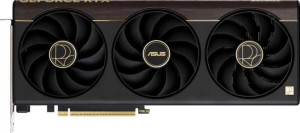
Asus ProArt GeForce RTX 5070 Ti
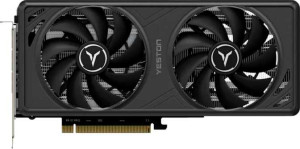
Yeston Gaea GeForce RTX 5070

Asus ProArt GeForce RTX 5070 Ti Yeston Gaea GeForce RTX 5070

Overview

Welcome to our detailed specification face-off between the Asus ProArt GeForce RTX 5070 Ti and the Yeston Gaea GeForce RTX 5070. Both cards share the same Blackwell architecture and GDDR7 memory standard, yet they diverge in meaningful ways across raw compute performance, memory capacity, power consumption, and connectivity options. Read on to discover exactly how these two Nvidia-based cards stack up across every key specification.

Common Features

  • Both cards share a GPU memory speed of 1750 MHz.
  • Double Precision Floating Point (DPFP) is supported on both cards.
  • Both cards have an effective memory speed of 28000 MHz.
  • Both cards use GDDR7 memory.
  • ECC memory is supported on both cards.
  • Both cards support DirectX 12 Ultimate.
  • Both cards support OpenGL version 4.6.
  • Both cards support OpenCL version 3.
  • Multi-display technology is supported on both cards.
  • Ray tracing is supported on both cards.
  • 3D is supported on both cards.
  • DLSS is supported on both cards.
  • XeSS (XMX) is not available on either card.
  • Both cards have one HDMI output using HDMI version 2.1b.
  • Neither card has DVI outputs.
  • Neither card has mini DisplayPort outputs.
  • Both cards are built on the Blackwell GPU architecture.
  • Both cards use PCIe version 5.
  • Both cards are manufactured on a 5 nm semiconductor process.
  • Air-water cooling is not available on either card.

Main Differences

  • GPU clock speed is 2295 MHz on Asus ProArt GeForce RTX 5070 Ti and 2325 MHz on Yeston Gaea GeForce RTX 5070.
  • GPU turbo speed is 2452 MHz on Asus ProArt GeForce RTX 5070 Ti and 2512 MHz on Yeston Gaea GeForce RTX 5070.
  • Pixel rate is 235.4 GPixel/s on Asus ProArt GeForce RTX 5070 Ti and 201 GPixel/s on Yeston Gaea GeForce RTX 5070.
  • Floating-point performance is 43.94 TFLOPS on Asus ProArt GeForce RTX 5070 Ti and 30.87 TFLOPS on Yeston Gaea GeForce RTX 5070.
  • Texture rate is 686.6 GTexels/s on Asus ProArt GeForce RTX 5070 Ti and 482.3 GTexels/s on Yeston Gaea GeForce RTX 5070.
  • Shading units total 8960 on Asus ProArt GeForce RTX 5070 Ti and 6144 on Yeston Gaea GeForce RTX 5070.
  • Texture mapping units (TMUs) number 280 on Asus ProArt GeForce RTX 5070 Ti and 192 on Yeston Gaea GeForce RTX 5070.
  • Render output units (ROPs) number 96 on Asus ProArt GeForce RTX 5070 Ti and 80 on Yeston Gaea GeForce RTX 5070.
  • Maximum memory bandwidth is 896 GB/s on Asus ProArt GeForce RTX 5070 Ti and 672 GB/s on Yeston Gaea GeForce RTX 5070.
  • VRAM is 16GB on Asus ProArt GeForce RTX 5070 Ti and 12GB on Yeston Gaea GeForce RTX 5070.
  • Memory bus width is 256-bit on Asus ProArt GeForce RTX 5070 Ti and 192-bit on Yeston Gaea GeForce RTX 5070.
  • DisplayPort outputs number 2 on Asus ProArt GeForce RTX 5070 Ti and 3 on Yeston Gaea GeForce RTX 5070.
  • A USB-C port is present on Asus ProArt GeForce RTX 5070 Ti but not available on Yeston Gaea GeForce RTX 5070.
  • Thermal Design Power (TDP) is 300W on Asus ProArt GeForce RTX 5070 Ti and 250W on Yeston Gaea GeForce RTX 5070.
  • The number of transistors is 45600 million on Asus ProArt GeForce RTX 5070 Ti and 31100 million on Yeston Gaea GeForce RTX 5070.
  • Width is 304 mm on Asus ProArt GeForce RTX 5070 Ti and 283 mm on Yeston Gaea GeForce RTX 5070.
  • Height is 126 mm on Asus ProArt GeForce RTX 5070 Ti and 141 mm on Yeston Gaea GeForce RTX 5070.
Specs Comparison
Asus ProArt GeForce RTX 5070 Ti

Asus ProArt GeForce RTX 5070 Ti

Yeston Gaea GeForce RTX 5070

Yeston Gaea GeForce RTX 5070

Performance:
GPU clock speed 2295 MHz 2325 MHz
GPU turbo 2452 MHz 2512 MHz
pixel rate 235.4 GPixel/s 201 GPixel/s
floating-point performance 43.94 TFLOPS 30.87 TFLOPS
texture rate 686.6 GTexels/s 482.3 GTexels/s
GPU memory speed 1750 MHz 1750 MHz
shading units 8960 6144
texture mapping units (TMUs) 280 192
render output units (ROPs) 96 80
Has Double Precision Floating Point (DPFP)

At first glance, the Yeston Gaea RTX 5070 appears to edge out the Asus ProArt RTX 5070 Ti in raw clock speeds — its 2512 MHz turbo versus the 5070 Ti's 2452 MHz — but this narrow advantage is largely irrelevant once you look at the underlying silicon. Clock speed only tells part of the story; what matters is how many units are doing the work at those clocks.

The 5070 Ti's substantially larger GPU houses 8960 shading units, 280 TMUs, and 96 ROPs, compared to the 5070's 6144 shaders, 192 TMUs, and 80 ROPs. This hardware gap translates directly into the compute numbers: the 5070 Ti delivers 43.94 TFLOPS of floating-point performance versus the 5070's 30.87 TFLOPS — roughly a 42% advantage. Similarly, its texture throughput of 686.6 GTexels/s and pixel rate of 235.4 GPixel/s significantly outpace the 5070 across both rendering and compute-heavy workloads. In practice, this means the 5070 Ti will handle higher resolutions, denser geometry, and complex shader-heavy scenes with more headroom. Both cards share the same 1750 MHz memory speed and support Double Precision Floating Point, so those are non-differentiators.

The Asus ProArt RTX 5070 Ti holds a clear and substantial performance advantage across every meaningful throughput metric in this group. The 5070's marginally higher clock frequencies do not compensate for its considerably smaller shader array, making the 5070 Ti the decisive winner here for users prioritizing raw rendering and compute performance.

Memory:
effective memory speed 28000 MHz 28000 MHz
maximum memory bandwidth 896 GB/s 672 GB/s
VRAM 16GB 12GB
GDDR version GDDR7 GDDR7
memory bus width 256-bit 192-bit
Supports ECC memory

Both cards share a strong common foundation: GDDR7 memory running at an identical 28000 MHz effective speed, and both support ECC memory — a feature valued in professional and compute workloads where data integrity matters. With those similarities out of the way, the differences in bus width and capacity tell a meaningful story.

The RTX 5070 Ti uses a 256-bit memory bus paired with 16GB of VRAM, yielding a maximum bandwidth of 896 GB/s. The RTX 5070 steps down to a 192-bit bus with 12GB, producing 672 GB/s. Since both GPUs run memory at the same speed, the bandwidth gap is entirely a product of bus width — the 5070 Ti's wider bus pushes roughly 33% more data per second to its shader array. In practice, this matters most at high resolutions and in scenarios with large, complex assets, where the GPU constantly feeds texture and geometry data to thousands of processing cores. A bottlenecked memory bus can throttle even a powerful GPU, so the 5070 Ti's wider pipeline keeps its larger shader array better supplied.

The 4GB VRAM advantage compounds this further. At 4K or in memory-intensive professional applications — large texture sets, AI inference, or multi-display rendering — 16GB provides considerably more headroom before the GPU is forced to swap assets, which can cause stuttering or degraded performance. The Asus ProArt RTX 5070 Ti takes a clear and well-rounded win in the memory category, leading on both capacity and bandwidth.
Features:
DirectX version DirectX 12 Ultimate DirectX 12 Ultimate
OpenGL version 4.6 4.6
OpenCL version 3 3
Supports multi-display technology
supports ray tracing
Supports 3D
supports DLSS
has XeSS (XMX)
AMD SAM / Intel Resizable BAR Intel Resizable BAR Intel Resizable BAR
has LHR
has RGB lighting
supported displays 4 4

When two products share an identical feature set, the comparison becomes straightforward — and that is exactly the case here. Every specification in this group matches precisely between the RTX 5070 Ti and the RTX 5070, from DirectX 12 Ultimate and OpenGL 4.6 support down to RGB lighting and a maximum of 4 supported displays.

The shared highlights are worth contextualizing. Both cards support ray tracing and DLSS, which together define the modern gaming feature tier — ray tracing enables physically accurate lighting and shadows, while DLSS uses AI upscaling to recover the frame rate cost that ray tracing typically imposes. Both also support Intel Resizable BAR, which allows the CPU to access the full GPU framebuffer simultaneously rather than in smaller chunks, offering measurable performance gains in supported games. Neither card carries an LHR (Lite Hash Rate) limiter, though this is largely inconsequential for mainstream users today.

This group is an unambiguous tie. Regardless of budget or use case, buyers get an identical software and feature ecosystem from both cards. The decision between these two products must rest entirely on the performance and memory differences examined in the other specification groups.

Ports:
has an HDMI output
HDMI ports 1 1
HDMI version HDMI 2.1b HDMI 2.1b
DisplayPort outputs 2 3
USB-C ports 1 0
DVI outputs 0 0
mini DisplayPort outputs 0 0

Both cards offer the same single HDMI 2.1b port, which supports the bandwidth needed for 4K high refresh rate and 8K output — a solid baseline for any modern display setup. The divergence comes in how each card fills out its remaining connectivity. The Yeston Gaea RTX 5070 opts for 3 DisplayPort outputs, giving multi-monitor users maximum flexibility using the most universally compatible connector for high-resolution, high-refresh displays. The Asus ProArt RTX 5070 Ti trades one of those DisplayPorts for a USB-C port, landing at 2 DisplayPort outputs plus USB-C alongside its HDMI.

That USB-C port is the defining differentiator here. For users connecting to USB-C monitors, VR headsets, or needing video output to modern laptops and portable displays, the ProArt's USB-C adds genuine real-world convenience without requiring an adapter. However, for someone running a traditional triple-monitor DisplayPort setup, the Yeston's three native DisplayPort outputs mean one fewer cable or adapter to manage — the ProArt would require a USB-C to DisplayPort adapter to match that configuration.

There is no absolute winner in this group — it comes down entirely to the user's setup. The Asus ProArt RTX 5070 Ti has the edge for modern, mixed-connector or USB-C-centric environments, while the Yeston Gaea RTX 5070 is the more practical choice for conventional multi-monitor rigs built around DisplayPort.

General info:
GPU architecture Blackwell Blackwell
release date September 2025 March 2025
Thermal Design Power (TDP) 300W 250W
PCI Express (PCIe) version 5 5
semiconductor size 5 nm 5 nm
number of transistors 45600 million 31100 million
Has air-water cooling
width 304 mm 283 mm
height 126 mm 141 mm

Sharing the same Blackwell architecture, 5nm process node, and PCIe 5.0 interface, both cards come from the same generational platform — but the die underneath each cooler tells a very different story. The RTX 5070 Ti packs 45,600 million transistors versus the RTX 5070's 31,100 million, a gap of nearly 47% that directly explains the performance and memory advantages seen in other spec groups. More transistors on the same node means a physically larger, more capable GPU chip — this is not a tuning difference, it is a fundamental difference in silicon.

That larger die comes with a higher power appetite: the 5070 Ti carries a 300W TDP against the 5070's 250W. The extra 50W is meaningful — it demands a more robust PSU headroom and will generate more heat under sustained load, requiring adequate case airflow. Neither card offers liquid cooling in this configuration, so both rely entirely on their air coolers. On physical dimensions, the two cards take different shapes: the 5070 Ti is longer at 304mm but slimmer at 126mm tall, while the 5070 is shorter at 283mm but taller at 141mm. Case compatibility checks should account for both length and slot height accordingly.

Neither card holds a general advantage in this group — they are evenly matched on platform fundamentals. The 5070 Ti's larger transistor count is simply the reason it performs more powerfully, and the 50W TDP premium is the expected cost of that capability. Buyers in smaller cases or with tighter PSU budgets may find the Yeston Gaea RTX 5070's lower power draw a practical consideration worth weighing.

Comparison Summary & Verdict

After examining every specification, a clear picture emerges for each card. The Asus ProArt GeForce RTX 5070 Ti pulls ahead in the areas that matter most for demanding workloads: it offers significantly higher floating-point performance at 43.94 TFLOPS, a wider 256-bit memory bus, 16GB of GDDR7 VRAM, and greater texture and pixel throughput — making it the stronger choice for creators and power users. The Yeston Gaea GeForce RTX 5070, on the other hand, delivers a lower 250W TDP, a slightly higher base and boost clock, three DisplayPort outputs, and a more compact footprint, positioning it as a capable and efficient option for users with tighter power or space constraints. Both cards share ray tracing, DLSS, and DirectX 12 Ultimate support, so the choice ultimately comes down to workload intensity and system requirements.

Asus ProArt GeForce RTX 5070 Ti
Buy Asus ProArt GeForce RTX 5070 Ti if...

Buy the Asus ProArt GeForce RTX 5070 Ti if you need maximum compute performance, more VRAM, and higher memory bandwidth for demanding creative or rendering workloads. Its greater shading units, wider memory bus, and USB-C port make it the more capable card overall.

Yeston Gaea GeForce RTX 5070
Buy Yeston Gaea GeForce RTX 5070 if...

Buy the Yeston Gaea GeForce RTX 5070 if you want a more power-efficient card with a lower 250W TDP, slightly higher clock speeds, three DisplayPort outputs, and a smaller physical footprint.