Asus ProArt GeForce RTX 5080 OC Edition
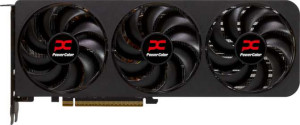
PowerColor Reaper Radeon RX 9070 XT

Asus ProArt GeForce RTX 5080 OC Edition PowerColor Reaper Radeon RX 9070 XT

Overview

Welcome to our in-depth specification comparison between the Asus ProArt GeForce RTX 5080 OC Edition and the PowerColor Reaper Radeon RX 9070 XT. These two high-end graphics cards come from rival architectures — NVIDIA Blackwell and AMD RDNA 4.0 — and each brings a distinct set of trade-offs to the table. We examine key battlegrounds including raw compute performance, memory subsystem capabilities, feature sets, and connectivity options to help you determine which card best suits your needs.

Common Features

  • Both cards support Double Precision Floating Point (DPFP).
  • Both cards come with 16GB of VRAM.
  • Both cards use a 256-bit memory bus width.
  • ECC memory support is available on both products.
  • Both cards support OpenGL version 4.6.
  • Multi-display technology is supported on both products.
  • Ray tracing support is available on both products.
  • 3D support is available on both products.
  • XeSS (XMX) support is not available on either product.
  • LHR is not present on either product.
  • Both cards support up to 4 displays.
  • Both cards include one HDMI 2.1b port and no DVI or mini DisplayPort outputs.
  • Both cards use PCIe version 5.
  • Air-water cooling is not available on either product.
  • Both cards share the same width of 304 mm.

Main Differences

  • GPU base clock speed is 2295 MHz on Asus ProArt GeForce RTX 5080 OC Edition and 1660 MHz on PowerColor Reaper Radeon RX 9070 XT.
  • GPU turbo clock speed is 2700 MHz on Asus ProArt GeForce RTX 5080 OC Edition and 2970 MHz on PowerColor Reaper Radeon RX 9070 XT.
  • Pixel rate is 302.4 GPixel/s on Asus ProArt GeForce RTX 5080 OC Edition and 380.2 GPixel/s on PowerColor Reaper Radeon RX 9070 XT.
  • Floating-point performance is 58.06 TFLOPS on Asus ProArt GeForce RTX 5080 OC Edition and 48.66 TFLOPS on PowerColor Reaper Radeon RX 9070 XT.
  • Texture rate is 907.2 GTexels/s on Asus ProArt GeForce RTX 5080 OC Edition and 760.3 GTexels/s on PowerColor Reaper Radeon RX 9070 XT.
  • GPU memory speed is 1875 MHz on Asus ProArt GeForce RTX 5080 OC Edition and 2518 MHz on PowerColor Reaper Radeon RX 9070 XT.
  • Shading units number 10752 on Asus ProArt GeForce RTX 5080 OC Edition and 4096 on PowerColor Reaper Radeon RX 9070 XT.
  • Texture mapping units (TMUs) total 336 on Asus ProArt GeForce RTX 5080 OC Edition and 256 on PowerColor Reaper Radeon RX 9070 XT.
  • Render output units (ROPs) total 112 on Asus ProArt GeForce RTX 5080 OC Edition and 128 on PowerColor Reaper Radeon RX 9070 XT.
  • Effective memory speed is 30000 MHz on Asus ProArt GeForce RTX 5080 OC Edition and 20000 MHz on PowerColor Reaper Radeon RX 9070 XT.
  • Maximum memory bandwidth is 960 GB/s on Asus ProArt GeForce RTX 5080 OC Edition and 644.6 GB/s on PowerColor Reaper Radeon RX 9070 XT.
  • The Asus ProArt GeForce RTX 5080 OC Edition uses GDDR7 memory, while the PowerColor Reaper Radeon RX 9070 XT uses GDDR6.
  • DirectX version is DirectX 12 Ultimate on Asus ProArt GeForce RTX 5080 OC Edition and DirectX 12 on PowerColor Reaper Radeon RX 9070 XT.
  • OpenCL version is 3 on Asus ProArt GeForce RTX 5080 OC Edition and 2.2 on PowerColor Reaper Radeon RX 9070 XT.
  • DLSS support is present on Asus ProArt GeForce RTX 5080 OC Edition but not available on PowerColor Reaper Radeon RX 9070 XT.
  • Resizable BAR implementation is Intel Resizable BAR on Asus ProArt GeForce RTX 5080 OC Edition and AMD SAM on PowerColor Reaper Radeon RX 9070 XT.
  • RGB lighting is present on Asus ProArt GeForce RTX 5080 OC Edition but not available on PowerColor Reaper Radeon RX 9070 XT.
  • DisplayPort outputs number 2 on Asus ProArt GeForce RTX 5080 OC Edition and 3 on PowerColor Reaper Radeon RX 9070 XT.
  • The Asus ProArt GeForce RTX 5080 OC Edition includes 1 USB-C port, while the PowerColor Reaper Radeon RX 9070 XT has none.
  • GPU architecture is Blackwell on Asus ProArt GeForce RTX 5080 OC Edition and RDNA 4.0 on PowerColor Reaper Radeon RX 9070 XT.
  • Thermal Design Power (TDP) is 360W on Asus ProArt GeForce RTX 5080 OC Edition and 304W on PowerColor Reaper Radeon RX 9070 XT.
  • Semiconductor size is 5 nm on Asus ProArt GeForce RTX 5080 OC Edition and 4 nm on PowerColor Reaper Radeon RX 9070 XT.
  • Transistor count is 45600 million on Asus ProArt GeForce RTX 5080 OC Edition and 53900 million on PowerColor Reaper Radeon RX 9070 XT.
  • Height is 126 mm on Asus ProArt GeForce RTX 5080 OC Edition and 127 mm on PowerColor Reaper Radeon RX 9070 XT.
Specs Comparison
Asus ProArt GeForce RTX 5080 OC Edition

Asus ProArt GeForce RTX 5080 OC Edition

PowerColor Reaper Radeon RX 9070 XT

PowerColor Reaper Radeon RX 9070 XT

Performance:
GPU clock speed 2295 MHz 1660 MHz
GPU turbo 2700 MHz 2970 MHz
pixel rate 302.4 GPixel/s 380.2 GPixel/s
floating-point performance 58.06 TFLOPS 48.66 TFLOPS
texture rate 907.2 GTexels/s 760.3 GTexels/s
GPU memory speed 1875 MHz 2518 MHz
shading units 10752 4096
texture mapping units (TMUs) 336 256
render output units (ROPs) 112 128
Has Double Precision Floating Point (DPFP)

The most telling contrast between these two cards lies in their shader counts and raw compute throughput. The Asus ProArt RTX 5080 fields 10,752 shading units against the PowerColor Reaper RX 9070 XT's 4,096 — nearly 2.6× more. That translates directly into its 58.06 TFLOPS of floating-point performance versus 48.66 TFLOPS for the RX 9070 XT, and a texture rate advantage of 907.2 GTexels/s to 760.3 GTexels/s. In practice, this means the RTX 5080 can push significantly more geometry and shading work per frame — a real-world advantage in heavily tessellated scenes, ray-traced workloads, and GPU compute tasks.

The RX 9070 XT punches back in a couple of specific areas. Its GPU turbo clock reaches 2970 MHz versus the RTX 5080's 2700 MHz, and crucially it boasts a higher pixel fill rate of 380.2 GPixel/s (vs. 302.4 GPixel/s), backed by more render output units (128 ROPs vs. 112). A higher pixel fill rate means the RX 9070 XT can resolve more pixels per second to the framebuffer, which can benefit high-resolution, high-refresh-rate scenarios. Its GPU memory speed of 2518 MHz also outpaces the RTX 5080's 1875 MHz, suggesting faster data throughput to and from VRAM.

Overall, the Asus ProArt RTX 5080 OC Edition holds a clear performance edge in compute-heavy and texture-bound workloads — the areas that most define modern gaming and creative rendering. The PowerColor Reaper RX 9070 XT closes the gap meaningfully in pixel output and memory bandwidth efficiency, making it competitive at high resolutions, but it cannot match the RTX 5080's sheer parallel processing muscle. Both support Double Precision Floating Point, which is a parity point for users with professional compute needs. The RTX 5080 is the stronger performer by the numbers in this group.

Memory:
effective memory speed 30000 MHz 20000 MHz
maximum memory bandwidth 960 GB/s 644.6 GB/s
VRAM 16GB 16GB
GDDR version GDDR7 GDDR6
memory bus width 256-bit 256-bit
Supports ECC memory

Both cards arrive with identical 16GB of VRAM over a 256-bit memory bus, so neither has a raw capacity or bus-width advantage. Where they diverge sharply is the memory technology underneath. The RTX 5080 uses GDDR7, while the RX 9070 XT relies on GDDR6 — a full generation apart — and the performance gap this creates is substantial.

That generational difference manifests most clearly in bandwidth: the RTX 5080 delivers 960 GB/s of maximum memory bandwidth against the RX 9070 XT's 644.6 GB/s — nearly 50% more. In practice, memory bandwidth is often the bottleneck in high-resolution gaming, large texture streaming, and GPU-accelerated workloads. More bandwidth means the GPU can feed its shader cores faster, reducing stalls in bandwidth-hungry scenarios like 4K rendering or heavy ray tracing. The effective memory speed figures — 30,000 MHz versus 20,000 MHz — confirm this isn't a marginal gap but a structural advantage for the RTX 5080.

ECC memory support is shared by both, which is a meaningful parity point for users doing professional or compute work where data integrity matters. But on the whole, the Asus ProArt RTX 5080 OC Edition holds a decisive memory subsystem edge — same capacity and bus width, but dramatically faster throughput thanks to GDDR7. The PowerColor Reaper RX 9070 XT is not starved for bandwidth by any modern standard, yet it cannot match the RTX 5080 here, and that gap will be most felt in the most demanding, memory-intensive use cases.

Features:
DirectX version DirectX 12 Ultimate DirectX 12
OpenGL version 4.6 4.6
OpenCL version 3 2.2
Supports multi-display technology
supports ray tracing
Supports 3D
supports DLSS
has XeSS (XMX)
AMD SAM / Intel Resizable BAR Intel Resizable BAR AMD SAM
has LHR
has RGB lighting
supported displays 4 4

At the API level, the RTX 5080 pulls ahead with DirectX 12 Ultimate versus the RX 9070 XT's DirectX 12. The ″Ultimate″ tier unlocks hardware-accelerated features like mesh shaders and variable-rate shading at the API level, which developers can target for more optimized rendering pipelines. The RTX 5080 also supports OpenCL 3 compared to the RX 9070 XT's OpenCL 2.2, a meaningful difference for GPU compute workloads outside of gaming. Both share OpenGL 4.6, ray tracing support, and a four-display output ceiling — solid parity on the basics.

The single most impactful feature split for gaming users is upscaling. The RTX 5080 supports DLSS, Nvidia's AI-driven upscaling technology, while the RX 9070 XT does not — and neither card supports XeSS. DLSS has broad game library support and can dramatically boost frame rates with minimal visual quality loss, making it a substantial practical advantage in titles that implement it. The RX 9070 XT's ecosystem relies on AMD's own upscaling solutions, which are not reflected in the provided data for this group. On the memory access side, each card brings its platform's native resizable BAR implementation — Intel Resizable BAR for the RTX 5080 and AMD SAM for the RX 9070 XT — both serving the same purpose of allowing the CPU broader access to VRAM for potential performance uplift.

Taken together, the Asus ProArt RTX 5080 OC Edition holds a clear feature advantage: a more capable DirectX tier, a newer OpenCL version, and DLSS support are all concrete, real-world differentiators. The PowerColor Reaper RX 9070 XT matches it on display output and ray tracing, but lacks equivalent upscaling tech within this data set — a notable gap for gamers prioritizing frame rate headroom in supported titles.

Ports:
has an HDMI output
HDMI ports 1 1
HDMI version HDMI 2.1b HDMI 2.1b
DisplayPort outputs 2 3
USB-C ports 1 0
DVI outputs 0 0
mini DisplayPort outputs 0 0

Connectivity is closely matched here, with both cards sharing a single HDMI 2.1b port — the latest HDMI revision, capable of driving 4K at high refresh rates or 8K displays. The real divergence is in how each card fills out its remaining outputs. The RX 9070 XT offers three DisplayPort outputs, while the RTX 5080 provides two DisplayPort outputs plus a USB-C port.

For users running a traditional multi-monitor setup using standard DisplayPort cables, the RX 9070 XT's three-port layout is straightforwardly more flexible — one extra native connection without needing adapters. The RTX 5080 trades that third DisplayPort for a USB-C output, which opens compatibility with USB-C monitors, VR headsets, and certain portable displays, but requires users with three DisplayPort monitors to rely on an adapter or daisy-chaining where supported.

Neither card has a clear universal winner in this group — the advantage depends entirely on the user's setup. The PowerColor Reaper RX 9070 XT is the stronger choice for anyone planning a three-monitor DisplayPort configuration out of the box. The Asus ProArt RTX 5080 OC Edition is better suited to users who need USB-C display connectivity, such as those pairing the card with a modern creative monitor or USB-C-equipped display — fitting given its ProArt branding.

General info:
GPU architecture Blackwell RDNA 4.0
release date August 2025 March 2025
Thermal Design Power (TDP) 360W 304W
PCI Express (PCIe) version 5 5
semiconductor size 5 nm 4 nm
number of transistors 45600 million 53900 million
Has air-water cooling
width 304 mm 304 mm
height 126 mm 127 mm

Physically, these two cards are virtually identical in footprint — both measure 304 mm wide and differ by just 1 mm in height — so slot compatibility and case clearance will be a non-issue for either. Both also run on PCIe 5.0, keeping them future-proofed on that front. The more telling differences lie under the hood, in the silicon itself.

The RX 9070 XT is built on a 4 nm process node versus the RTX 5080's 5 nm, and packs considerably more transistors: 53,900 million against 45,600 million. A smaller process node generally enables greater power efficiency and transistor density, which helps explain why the RX 9070 XT manages its larger transistor count while drawing a meaningfully lower 304W TDP compared to the RTX 5080's 360W. That 56W gap is significant — it translates to real differences in power supply headroom requirements, system heat output, and long-term electricity costs under sustained load.

On efficiency grounds, the PowerColor Reaper RX 9070 XT has a tangible advantage in this group: a denser, more modern process node and a lower thermal envelope. The Asus ProArt RTX 5080 OC Edition demands considerably more power from the system, which users will need to account for in PSU selection and thermal planning. Neither card offers liquid cooling as an option here, so both rely on air cooling to manage their respective loads.

Comparison Summary & Verdict

After examining all the evidence, both cards serve different types of users well. The Asus ProArt GeForce RTX 5080 OC Edition dominates in sheer compute throughput with 58.06 TFLOPS, a vastly higher shading unit count of 10752, superior memory bandwidth of 960 GB/s via GDDR7, and exclusive access to DLSS and DirectX 12 Ultimate — making it the stronger pick for content creators and gamers who need cutting-edge feature support. The PowerColor Reaper Radeon RX 9070 XT, on the other hand, offers a higher turbo clock of 2970 MHz, a better pixel rate of 380.2 GPixel/s, a more efficient 304W TDP, and one extra DisplayPort output, making it a compelling choice for budget-conscious buyers who prioritize efficiency and rasterization performance per watt.

Asus ProArt GeForce RTX 5080 OC Edition
Buy Asus ProArt GeForce RTX 5080 OC Edition if...

Buy the Asus ProArt GeForce RTX 5080 OC Edition if you want the highest memory bandwidth, superior floating-point performance, DLSS support, and DirectX 12 Ultimate for demanding creative workloads and next-gen gaming features.

PowerColor Reaper Radeon RX 9070 XT
Buy PowerColor Reaper Radeon RX 9070 XT if...

Buy the PowerColor Reaper Radeon RX 9070 XT if you prioritize a lower power draw, a higher turbo clock speed, better pixel rate, and a more efficient design without needing DLSS or DirectX 12 Ultimate features.