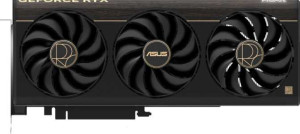
The most consequential difference in this group is the DirectX version. The Asus ProArt RTX 5080 supports DirectX 12 Ultimate, while the Nvidia RTX Pro 4000 Blackwell tops out at DirectX 12. This distinction matters more than it might initially appear: DirectX 12 Ultimate adds hardware-level guarantees for features like mesh shaders, variable rate shading, and advanced ray tracing tiers, meaning the ProArt RTX 5080 is better positioned for next-generation game engines and rendering pipelines that explicitly target the Ultimate feature set. For a card aimed at professional creative work, this future-proofs the ProArt more effectively against evolving real-time rendering standards.
Across the remaining feature set, the two cards are remarkably aligned. Both support ray tracing, DLSS, multi-display output, OpenGL 4.6, OpenCL 3, and Intel Resizable BAR — a feature that allows the CPU to access the full GPU frame buffer, reducing bottlenecks in certain workloads. Neither carries a hardware LHR limiter. The one cosmetic differentiator is RGB lighting, present on the ProArt RTX 5080 but absent on the Pro 4000 Blackwell — a minor point, but worth noting for users building aesthetically curated workstations.
On balance, the Asus ProArt RTX 5080 holds a narrow but real advantage in this group, solely due to its DirectX 12 Ultimate support. For users whose workflows intersect with modern real-time rendering or game development tools, that distinction is meaningful. For purely professional compute or traditional DCC applications, the feature parity between the two cards is otherwise essentially complete.