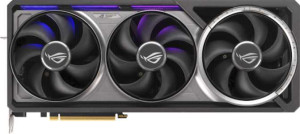
Asus ROG Astral GeForce RTX 5080 OC Edition
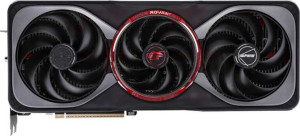
Colorful iGame GeForce RTX 5070 Advanced OC

Asus ROG Astral GeForce RTX 5080 OC Edition Colorful iGame GeForce RTX 5070 Advanced OC

Overview

Welcome to our in-depth comparison of the Asus ROG Astral GeForce RTX 5080 OC Edition and the Colorful iGame GeForce RTX 5070 Advanced OC — two high-performance graphics cards built on the same Blackwell architecture and 5 nm process. In this head-to-head, we examine the key battlegrounds of raw compute performance, memory capacity and bandwidth, thermal power requirements, and physical dimensions to help you decide which card best fits your needs.

Common Features

  • Both products support Double Precision Floating Point (DPFP).
  • Both products use GDDR7 memory.
  • Both products support ECC memory.
  • Both products support DirectX 12 Ultimate.
  • Both products support OpenGL version 4.6.
  • Both products support OpenCL version 3.
  • Both products support multi-display technology.
  • Both products support ray tracing.
  • Both products support 3D.
  • Both products support DLSS.
  • XeSS (XMX) support is not available on either product.
  • Both products have an HDMI output with HDMI version 2.1b.
  • Both products have 3 DisplayPort outputs.
  • Neither product has USB-C ports, DVI outputs, or mini DisplayPort outputs.
  • Both products use the Blackwell GPU architecture.
  • Both products use PCIe version 5.
  • Both products are built on a 5 nm semiconductor process.
  • Air-water cooling is not available on either product.

Main Differences

  • GPU base clock speed is 2295 MHz on Asus ROG Astral GeForce RTX 5080 OC Edition and 2325 MHz on Colorful iGame GeForce RTX 5070 Advanced OC.
  • GPU turbo clock is 2760 MHz on Asus ROG Astral GeForce RTX 5080 OC Edition and 2572 MHz on Colorful iGame GeForce RTX 5070 Advanced OC.
  • Pixel rate is 309.1 GPixel/s on Asus ROG Astral GeForce RTX 5080 OC Edition and 205.8 GPixel/s on Colorful iGame GeForce RTX 5070 Advanced OC.
  • Floating-point performance is 59.35 TFLOPS on Asus ROG Astral GeForce RTX 5080 OC Edition and 31.6 TFLOPS on Colorful iGame GeForce RTX 5070 Advanced OC.
  • Texture rate is 927.4 GTexels/s on Asus ROG Astral GeForce RTX 5080 OC Edition and 493.8 GTexels/s on Colorful iGame GeForce RTX 5070 Advanced OC.
  • GPU memory speed is 1875 MHz on Asus ROG Astral GeForce RTX 5080 OC Edition and 1750 MHz on Colorful iGame GeForce RTX 5070 Advanced OC.
  • Shading units number 10752 on Asus ROG Astral GeForce RTX 5080 OC Edition and 6144 on Colorful iGame GeForce RTX 5070 Advanced OC.
  • Texture mapping units (TMUs) total 336 on Asus ROG Astral GeForce RTX 5080 OC Edition and 192 on Colorful iGame GeForce RTX 5070 Advanced OC.
  • Render output units (ROPs) total 112 on Asus ROG Astral GeForce RTX 5080 OC Edition and 80 on Colorful iGame GeForce RTX 5070 Advanced OC.
  • Effective memory speed is 30000 MHz on Asus ROG Astral GeForce RTX 5080 OC Edition and 28000 MHz on Colorful iGame GeForce RTX 5070 Advanced OC.
  • Maximum memory bandwidth is 960 GB/s on Asus ROG Astral GeForce RTX 5080 OC Edition and 672 GB/s on Colorful iGame GeForce RTX 5070 Advanced OC.
  • VRAM is 16 GB on Asus ROG Astral GeForce RTX 5080 OC Edition and 12 GB on Colorful iGame GeForce RTX 5070 Advanced OC.
  • Memory bus width is 256-bit on Asus ROG Astral GeForce RTX 5080 OC Edition and 192-bit on Colorful iGame GeForce RTX 5070 Advanced OC.
  • HDMI port count is 2 on Asus ROG Astral GeForce RTX 5080 OC Edition and 1 on Colorful iGame GeForce RTX 5070 Advanced OC.
  • Thermal Design Power (TDP) is 360W on Asus ROG Astral GeForce RTX 5080 OC Edition and 270W on Colorful iGame GeForce RTX 5070 Advanced OC.
  • Transistor count is 45600 million on Asus ROG Astral GeForce RTX 5080 OC Edition and 31100 million on Colorful iGame GeForce RTX 5070 Advanced OC.
  • Card width is 357.6 mm on Asus ROG Astral GeForce RTX 5080 OC Edition and 330 mm on Colorful iGame GeForce RTX 5070 Advanced OC.
  • Card height is 149.3 mm on Asus ROG Astral GeForce RTX 5080 OC Edition and 140 mm on Colorful iGame GeForce RTX 5070 Advanced OC.
Specs Comparison
Asus ROG Astral GeForce RTX 5080 OC Edition

Asus ROG Astral GeForce RTX 5080 OC Edition

Colorful iGame GeForce RTX 5070 Advanced OC

Colorful iGame GeForce RTX 5070 Advanced OC

Performance:
GPU clock speed 2295 MHz 2325 MHz
GPU turbo 2760 MHz 2572 MHz
pixel rate 309.1 GPixel/s 205.8 GPixel/s
floating-point performance 59.35 TFLOPS 31.6 TFLOPS
texture rate 927.4 GTexels/s 493.8 GTexels/s
GPU memory speed 1875 MHz 1750 MHz
shading units 10752 6144
texture mapping units (TMUs) 336 192
render output units (ROPs) 112 80
Has Double Precision Floating Point (DPFP)

The most telling gap between these two cards lies in their raw computational muscle. The Asus ROG Astral RTX 5080 OC delivers 59.35 TFLOPS of floating-point performance versus 31.6 TFLOPS on the Colorful iGame RTX 5070 Advanced OC — nearly double the throughput. This difference flows directly from the shading unit count: 10,752 vs 6,144. In practice, this means the RTX 5080 can push far more parallel compute workloads simultaneously, which matters not just for gaming frame rates but also for AI-accelerated rendering, ray tracing workloads, and creative applications.

The clock speed story is more nuanced. The RTX 5070 actually has a marginally higher base clock (2325 MHz vs 2295 MHz), but the RTX 5080 pulls decisively ahead under boost, reaching 2760 MHz vs 2572 MHz. That wider boost headroom translates to more sustained peak performance during demanding scenes rather than just brief spikes. The texture and pixel throughput numbers reinforce this: the RTX 5080's 927.4 GTexels/s texture rate and 309.1 GPixel/s pixel rate are roughly 88% and 50% higher respectively, meaning noticeably sharper and faster geometry and texture processing at high resolutions. Memory speed also favors the RTX 5080 at 1875 MHz vs 1750 MHz, providing extra bandwidth headroom.

Both cards support Double Precision Floating Point (DPFP), which is relevant for compute and scientific workloads beyond gaming. Overall, the Asus ROG Astral RTX 5080 OC holds a clear and substantial performance advantage across every meaningful metric in this group — the RTX 5070 is not a slow card, but the 5080 occupies a categorically higher performance tier.

Memory:
effective memory speed 30000 MHz 28000 MHz
maximum memory bandwidth 960 GB/s 672 GB/s
VRAM 16GB 12GB
GDDR version GDDR7 GDDR7
memory bus width 256-bit 192-bit
Supports ECC memory

The Asus ROG Astral GeForce RTX 5080 OC Edition features an effective memory speed of 30000 MHz, which is faster than the Colorful iGame GeForce RTX 5070 Advanced OC’s 28000 MHz. In terms of maximum memory bandwidth, the RTX 5080 OC has a significant lead with 960 GB/s, while the RTX 5070 Advanced OC offers 672 GB/s. The VRAM on the RTX 5080 OC is also higher at 16GB, compared to the 12GB found in the RTX 5070 Advanced OC.

Both products use GDDR7 memory and support Error-Correcting Code (ECC) memory, ensuring data integrity. However, the memory bus width on the RTX 5080 OC is 256-bit, which is wider than the 192-bit memory bus width of the RTX 5070 Advanced OC, contributing to better overall memory performance in the 5080 OC.

Despite these differences, both products share the same GDDR version and ECC support, but the Asus ROG Astral GeForce RTX 5080 OC Edition generally offers higher memory speed, bandwidth, and VRAM capacity when compared to the Colorful iGame GeForce RTX 5070 Advanced OC.

Features:
DirectX version DirectX 12 Ultimate DirectX 12 Ultimate
OpenGL version 4.6 4.6
OpenCL version 3 3
Supports multi-display technology
supports ray tracing
Supports 3D
supports DLSS
has XeSS (XMX)
AMD SAM / Intel Resizable BAR Intel Resizable BAR Intel Resizable BAR
has LHR
has RGB lighting
supported displays 4 4

Both the Asus ROG Astral GeForce RTX 5080 OC Edition and the Colorful iGame GeForce RTX 5070 Advanced OC support DirectX 12 Ultimate, OpenGL version 4.6, and OpenCL version 3, ensuring compatibility with a wide range of modern games and applications. Additionally, both GPUs support multi-display technology, ray tracing, 3D rendering, DLSS, and are equipped with Intel Resizable BAR, with neither having support for XeSS (XMX) nor featuring LHR (Lite Hash Rate) capabilities.

Both products also feature RGB lighting and support up to 4 displays, offering a visually customizable and versatile experience for users. Despite the similarities in features, the specifications for these two GPUs are identical in this category.

In summary, the Asus ROG Astral GeForce RTX 5080 OC Edition and the Colorful iGame GeForce RTX 5070 Advanced OC share a very similar set of features, including support for key technologies and multi-display setups, as well as RGB lighting and 4-display support. No significant differences are found in this group.

Ports:
has an HDMI output
HDMI ports 2 1
HDMI version HDMI 2.1b HDMI 2.1b
DisplayPort outputs 3 3
USB-C ports 0 0
DVI outputs 0 0
mini DisplayPort outputs 0 0

Both the Asus ROG Astral GeForce RTX 5080 OC Edition and the Colorful iGame GeForce RTX 5070 Advanced OC come with HDMI 2.1b outputs. However, the RTX 5080 OC has two HDMI ports, while the RTX 5070 Advanced OC has only one HDMI port. Both GPUs feature 3 DisplayPort outputs, and neither includes USB-C, DVI, or mini DisplayPort outputs.

In summary, the main difference between the two products in this category is the number of HDMI ports, with the RTX 5080 OC offering two, compared to the RTX 5070 Advanced OC’s single HDMI port.

Overall, both products provide a similar set of output options, but the RTX 5080 OC offers more flexibility in terms of HDMI connections.

General info:
GPU architecture Blackwell Blackwell
release date January 2025 March 2025
Thermal Design Power (TDP) 360W 270W
PCI Express (PCIe) version 5 5
semiconductor size 5 nm 5 nm
number of transistors 45600 million 31100 million
Has air-water cooling
width 357.6 mm 330 mm
height 149.3 mm 140 mm

Both the Asus ROG Astral GeForce RTX 5080 OC Edition and the Colorful iGame GeForce RTX 5070 Advanced OC are built on the Blackwell GPU architecture and feature a 5 nm semiconductor size. The RTX 5080 OC has a higher Thermal Design Power (TDP) of 360W, compared to the 270W TDP of the RTX 5070 Advanced OC. Both products use PCIe version 5 for connectivity, ensuring high bandwidth and low latency for data transfer.

The Asus ROG Astral GeForce RTX 5080 OC Edition has a larger physical size, measuring 357.6 mm in width and 149.3 mm in height, while the Colorful iGame GeForce RTX 5070 Advanced OC is smaller with a width of 330 mm and a height of 140 mm.

In terms of transistor count, the RTX 5080 OC has 45,600 million transistors, which is higher than the 31,100 million found in the RTX 5070 Advanced OC. Neither GPU features air-water cooling, both relying on standard cooling solutions.

Comparison Summary & Verdict

After a thorough look at the specifications, both cards share a strong foundation: Blackwell architecture, GDDR7 memory with ECC support, PCIe 5, DirectX 12 Ultimate, ray tracing, and DLSS — making either a capable modern GPU. However, the Asus ROG Astral GeForce RTX 5080 OC Edition pulls decisively ahead in raw power, delivering 59.35 TFLOPS of floating-point performance, a 960 GB/s memory bandwidth, 16 GB of VRAM on a 256-bit bus, and a 2760 MHz turbo clock — ideal for enthusiasts chasing maximum 4K performance and demanding workloads. The Colorful iGame GeForce RTX 5070 Advanced OC, on the other hand, offers a more accessible profile with a 270W TDP, a slightly higher base clock of 2325 MHz, a more compact form factor, and a lower power draw — making it an excellent choice for builders seeking strong 1440p performance with greater energy efficiency and a smaller footprint.

Asus ROG Astral GeForce RTX 5080 OC Edition
Buy Asus ROG Astral GeForce RTX 5080 OC Edition if...

Choose the Asus ROG Astral GeForce RTX 5080 OC Edition if you want maximum GPU performance, with 59.35 TFLOPS, 16 GB of GDDR7 VRAM, 960 GB/s memory bandwidth, and a 2760 MHz turbo clock for uncompromising 4K gaming and heavy workloads.

Colorful iGame GeForce RTX 5070 Advanced OC
Buy Colorful iGame GeForce RTX 5070 Advanced OC if...

Choose the Colorful iGame GeForce RTX 5070 Advanced OC if you prefer a more power-efficient and compact card, with a 270W TDP, a higher 2325 MHz base clock, and a smaller physical footprint that suits tighter builds without sacrificing modern GPU feature support.