Asus ROG Astral GeForce RTX 5080
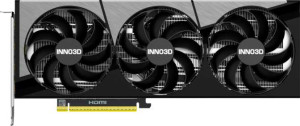
Inno3D GeForce RTX 5080 X3 Gaming OC

Asus ROG Astral GeForce RTX 5080 Inno3D GeForce RTX 5080 X3 Gaming OC

Overview

When choosing between two high-end Blackwell-architecture graphics cards that share the same 16GB GDDR7 memory and 360W TDP, the finer details start to matter a great deal. This head-to-head between the Asus ROG Astral GeForce RTX 5080 and the Inno3D GeForce RTX 5080 X3 Gaming OC places both cards side by side, examining their boost clock speeds, real-world throughput figures, display connectivity options, and physical dimensions to help you identify the right fit for your build.

Common Features

  • Both cards share the same base GPU clock speed of 2295 MHz.
  • Both cards have a GPU memory speed of 1875 MHz.
  • Both cards feature 10752 shading units.
  • Both cards include 336 texture mapping units (TMUs).
  • Both cards have 112 render output units (ROPs).
  • Double Precision Floating Point (DPFP) is supported on both cards.
  • Both cards have an effective memory speed of 30000 MHz.
  • Both cards offer a maximum memory bandwidth of 960 GB/s.
  • Both cards come with 16GB of VRAM.
  • Both cards use GDDR7 memory.
  • Both cards have a 256-bit memory bus width.
  • ECC memory support is available on both cards.
  • Both cards support DirectX 12 Ultimate.
  • Both cards support OpenGL version 4.6.
  • Both cards support OpenCL version 3.
  • Multi-display technology is supported on both cards.
  • Ray tracing is supported on both cards.
  • DLSS is supported on both cards.
  • XeSS (XMX) support is not available on either card.
  • 3D support is available on both cards.
  • Both cards include an HDMI 2.1b output.
  • Both cards feature 3 DisplayPort outputs.
  • Neither card has USB-C ports.
  • Neither card has DVI outputs.
  • Neither card has mini DisplayPort outputs.
  • Both cards are based on the Blackwell GPU architecture.
  • Both cards have a Thermal Design Power (TDP) of 360W.
  • Both cards use PCIe version 5.
  • Both cards are manufactured on a 5 nm semiconductor process.
  • Both cards feature 45600 million transistors.
  • Air-water cooling is not available on either card.

Main Differences

  • GPU turbo clock speed is 2640 MHz on the Asus ROG Astral GeForce RTX 5080 and 2700 MHz on the Inno3D GeForce RTX 5080 X3 Gaming OC.
  • Pixel rate is 295.7 GPixel/s on the Asus ROG Astral GeForce RTX 5080 and 302.4 GPixel/s on the Inno3D GeForce RTX 5080 X3 Gaming OC.
  • Floating-point performance is 56.77 TFLOPS on the Asus ROG Astral GeForce RTX 5080 and 58.06 TFLOPS on the Inno3D GeForce RTX 5080 X3 Gaming OC.
  • Texture rate is 887 GTexels/s on the Asus ROG Astral GeForce RTX 5080 and 907.2 GTexels/s on the Inno3D GeForce RTX 5080 X3 Gaming OC.
  • The number of HDMI ports is 2 on the Asus ROG Astral GeForce RTX 5080 and 1 on the Inno3D GeForce RTX 5080 X3 Gaming OC.
  • Width is 357.6 mm on the Asus ROG Astral GeForce RTX 5080 and 300 mm on the Inno3D GeForce RTX 5080 X3 Gaming OC.
  • Height is 149.3 mm on the Asus ROG Astral GeForce RTX 5080 and 120 mm on the Inno3D GeForce RTX 5080 X3 Gaming OC.
Specs Comparison
Asus ROG Astral GeForce RTX 5080

Asus ROG Astral GeForce RTX 5080

Inno3D GeForce RTX 5080 X3 Gaming OC

Inno3D GeForce RTX 5080 X3 Gaming OC

Performance:
GPU clock speed 2295 MHz 2295 MHz
GPU turbo 2640 MHz 2700 MHz
pixel rate 295.7 GPixel/s 302.4 GPixel/s
floating-point performance 56.77 TFLOPS 58.06 TFLOPS
texture rate 887 GTexels/s 907.2 GTexels/s
GPU memory speed 1875 MHz 1875 MHz
shading units 10752 10752
texture mapping units (TMUs) 336 336
render output units (ROPs) 112 112
Has Double Precision Floating Point (DPFP)

Both cards are built on the same RTX 5080 silicon, and it shows: they share an identical foundation of 10,752 shading units, 336 TMUs, 112 ROPs, and a base GPU clock of 2295 MHz. This means any performance difference between the two comes down entirely to how aggressively each manufacturer has pushed the boost clock — not architectural variation.

That is where the Inno3D GeForce RTX 5080 X3 Gaming OC pulls ahead. Its 2700 MHz GPU turbo outpaces the Asus ROG Astral's 2640 MHz by 60 MHz — a roughly 2.3% higher ceiling. This gap ripples directly into every derived performance metric: the X3 Gaming OC delivers 58.06 TFLOPS of floating-point throughput versus 56.77 TFLOPS, a 302.4 GPixel/s pixel rate versus 295.7 GPixel/s, and 907.2 GTexels/s texture throughput against 887 GTexels/s. In practice, a ~2% compute advantage of this kind translates to marginally higher sustained frame rates in GPU-bound scenarios, particularly at high resolutions where the GPU is the clear bottleneck.

In terms of raw performance, the Inno3D X3 Gaming OC holds a clear, if modest, edge in this group, driven purely by its higher factory boost clock. Both cards support Double Precision Floating Point, and their memory subsystems are identical at 1875 MHz, so the Inno3D's lead is real but narrow — meaningful for enthusiasts chasing every last frame, but unlikely to be perceptible in everyday gaming workloads.

Memory:
effective memory speed 30000 MHz 30000 MHz
maximum memory bandwidth 960 GB/s 960 GB/s
VRAM 16GB 16GB
GDDR version GDDR7 GDDR7
memory bus width 256-bit 256-bit
Supports ECC memory

The memory specifications of the Asus ROG Astral GeForce RTX 5080 and the Inno3D GeForce RTX 5080 X3 Gaming OC are identical across all key areas. Both products feature an effective memory speed of 30000 MHz, ensuring high-speed data transfer. Additionally, each card has a maximum memory bandwidth of 960 GB/s, allowing for quick access to memory resources.

Both models are equipped with 16GB of VRAM, offering substantial memory capacity for demanding graphical workloads. The GDDR7 memory version is used in both cards, further enhancing their overall performance potential. Furthermore, both models share a 256-bit memory bus width, facilitating efficient memory access.

Both products also support Error Correcting Code (ECC) memory, providing a layer of reliability by detecting and correcting memory errors during operation.

Features:
DirectX version DirectX 12 Ultimate DirectX 12 Ultimate
OpenGL version 4.6 4.6
OpenCL version 3 3
Supports multi-display technology
supports ray tracing
Supports 3D
supports DLSS
has XeSS (XMX)
AMD SAM / Intel Resizable BAR Intel Resizable BAR Intel Resizable BAR
has LHR
has RGB lighting
supported displays 4 4

The Asus ROG Astral GeForce RTX 5080 and the Inno3D GeForce RTX 5080 X3 Gaming OC have identical feature sets across the board. Both models support DirectX 12 Ultimate, OpenGL 4.6, and OpenCL 3, ensuring compatibility with modern software and APIs. Both cards also offer support for multi-display technology, ray tracing, 3D, and DLSS, providing an immersive and cutting-edge gaming experience.

Neither model includes XeSS (XMX) support, but both feature Intel Resizable BAR (part of AMD SAM/Intel Resizable BAR), allowing for enhanced performance with compatible CPUs. Additionally, both the Asus and Inno3D models are free from LHR (Lite Hash Rate), making them equally suitable for tasks beyond gaming, such as cryptocurrency mining.

RGB lighting is present on both products, adding a customizable visual flair to your system. Finally, both cards support up to 4 displays, offering ample connectivity for users with multi-monitor setups.

Ports:
has an HDMI output
HDMI ports 2 1
HDMI version HDMI 2.1b HDMI 2.1b
DisplayPort outputs 3 3
USB-C ports 0 0
DVI outputs 0 0
mini DisplayPort outputs 0 0

The Asus ROG Astral GeForce RTX 5080 and the Inno3D GeForce RTX 5080 X3 Gaming OC both come equipped with HDMI 2.1b outputs, but there is a difference in the number of HDMI ports. The Asus model features 2 HDMI ports, while the Inno3D version includes just 1 HDMI port. Both cards offer 3 DisplayPort outputs, providing solid options for multi-display setups.

Neither of the two products includes USB-C ports, DVI outputs, or mini DisplayPort outputs, indicating a similar lack of these specific connections on both models.

General info:
GPU architecture Blackwell Blackwell
release date January 2025 April 2025
Thermal Design Power (TDP) 360W 360W
PCI Express (PCIe) version 5 5
semiconductor size 5 nm 5 nm
number of transistors 45600 million 45600 million
Has air-water cooling
width 357.6 mm 300 mm
height 149.3 mm 120 mm

Both the Asus ROG Astral GeForce RTX 5080 and the Inno3D GeForce RTX 5080 X3 Gaming OC share the same GPU architecture, Blackwell, and feature a thermal design power (TDP) of 360W. They are both built with a 5 nm semiconductor size and contain the same number of transistors, 45600 million. Additionally, both models use PCI Express 5.0 for faster data transfer.

Neither product includes air-water cooling, indicating that they rely on standard cooling solutions. However, there are size differences: the Asus model is wider, measuring 357.6 mm, and taller, at 149.3 mm, compared to the Inno3D model which is 300 mm wide and 120 mm tall.

Comparison Summary & Verdict

Both the Asus ROG Astral GeForce RTX 5080 and the Inno3D GeForce RTX 5080 X3 Gaming OC share the same Blackwell architecture, identical memory configurations, feature sets, and power envelopes, which makes their differences subtle yet worthwhile to consider. The Inno3D GeForce RTX 5080 X3 Gaming OC pulls ahead with a higher boost clock of 2700 MHz, translating into marginally better pixel rate, texture rate, and floating-point throughput — a genuine advantage for users who demand the highest possible frame rates. On the other hand, the Asus ROG Astral GeForce RTX 5080 distinguishes itself with dual HDMI 2.1b ports, making it the stronger choice for setups that rely on multiple HDMI-connected displays. Its larger physical footprint of 357.6 mm requires careful case clearance planning, but for buyers who prioritize display connectivity over raw peak performance, it remains the more versatile option.

Asus ROG Astral GeForce RTX 5080
Buy Asus ROG Astral GeForce RTX 5080 if...

Choose the Asus ROG Astral GeForce RTX 5080 if you need dual HDMI 2.1b outputs to connect multiple displays simultaneously and have a case that accommodates its larger dimensions.

Inno3D GeForce RTX 5080 X3 Gaming OC
Buy Inno3D GeForce RTX 5080 X3 Gaming OC if...

Choose the Inno3D GeForce RTX 5080 X3 Gaming OC if you want a higher boost clock and better peak throughput figures in a more compact card that fits more easily into tighter builds.