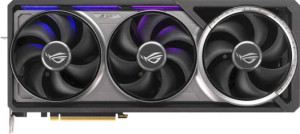
Asus ROG Astral GeForce RTX 5090 OC Edition
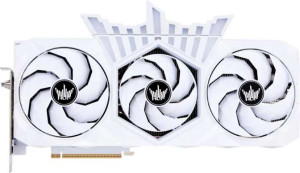
Galax GeForce RTX 5070 Ti HOF OC Lab Deluxe

Asus ROG Astral GeForce RTX 5090 OC Edition Galax GeForce RTX 5070 Ti HOF OC Lab Deluxe

Overview

Welcome to our in-depth specification comparison between the Asus ROG Astral GeForce RTX 5090 OC Edition and the Galax GeForce RTX 5070 Ti HOF OC Lab Deluxe. Both cards share the same Blackwell architecture and PCIe 5 platform, yet they diverge sharply when it comes to raw compute power, memory capacity, and power requirements. Read on to see how these two GPUs stack up across performance, memory, features, and physical design.

Common Features

  • Both cards share a GPU turbo clock of 2580 MHz.
  • Both cards have a GPU memory speed of 1750 MHz.
  • Double Precision Floating Point (DPFP) support is available on both products.
  • Both cards use GDDR7 memory with an effective memory speed of 28000 MHz.
  • ECC memory support is available on both products.
  • Both cards support DirectX 12 Ultimate.
  • Both cards support OpenGL version 4.6.
  • Both cards support OpenCL version 3.
  • Multi-display technology support is available on both products.
  • Ray tracing support is available on both products.
  • 3D support is available on both products.
  • DLSS support is available on both products.
  • XeSS (XMX) support is not available on either product.
  • Both cards feature an HDMI output with HDMI version 2.1b.
  • Both cards have 3 DisplayPort outputs.
  • Neither card has USB-C ports, DVI outputs, or mini DisplayPort outputs.
  • Both cards are built on the Blackwell GPU architecture.
  • Both cards use PCIe version 5.
  • Both cards are manufactured on a 5 nm semiconductor process.
  • Air-water cooling is not available on either product.

Main Differences

  • GPU base clock speed is 2017 MHz on Asus ROG Astral GeForce RTX 5090 OC Edition and 2295 MHz on Galax GeForce RTX 5070 Ti HOF OC Lab Deluxe.
  • Pixel rate is 454.1 GPixel/s on Asus ROG Astral GeForce RTX 5090 OC Edition and 247.7 GPixel/s on Galax GeForce RTX 5070 Ti HOF OC Lab Deluxe.
  • Floating-point performance is 112.3 TFLOPS on Asus ROG Astral GeForce RTX 5090 OC Edition and 46.23 TFLOPS on Galax GeForce RTX 5070 Ti HOF OC Lab Deluxe.
  • Texture rate is 1754 GTexels/s on Asus ROG Astral GeForce RTX 5090 OC Edition and 722.4 GTexels/s on Galax GeForce RTX 5070 Ti HOF OC Lab Deluxe.
  • Shading units total 21760 on Asus ROG Astral GeForce RTX 5090 OC Edition and 8960 on Galax GeForce RTX 5070 Ti HOF OC Lab Deluxe.
  • Texture mapping units (TMUs) number 680 on Asus ROG Astral GeForce RTX 5090 OC Edition and 280 on Galax GeForce RTX 5070 Ti HOF OC Lab Deluxe.
  • Render output units (ROPs) number 176 on Asus ROG Astral GeForce RTX 5090 OC Edition and 96 on Galax GeForce RTX 5070 Ti HOF OC Lab Deluxe.
  • Maximum memory bandwidth is 1790 GB/s on Asus ROG Astral GeForce RTX 5090 OC Edition and 896 GB/s on Galax GeForce RTX 5070 Ti HOF OC Lab Deluxe.
  • VRAM is 32GB on Asus ROG Astral GeForce RTX 5090 OC Edition and 16GB on Galax GeForce RTX 5070 Ti HOF OC Lab Deluxe.
  • Memory bus width is 512-bit on Asus ROG Astral GeForce RTX 5090 OC Edition and 256-bit on Galax GeForce RTX 5070 Ti HOF OC Lab Deluxe.
  • HDMI port count is 2 on Asus ROG Astral GeForce RTX 5090 OC Edition and 1 on Galax GeForce RTX 5070 Ti HOF OC Lab Deluxe.
  • Thermal Design Power (TDP) is 575W on Asus ROG Astral GeForce RTX 5090 OC Edition and 300W on Galax GeForce RTX 5070 Ti HOF OC Lab Deluxe.
  • Transistor count is 92200 million on Asus ROG Astral GeForce RTX 5090 OC Edition and 45600 million on Galax GeForce RTX 5070 Ti HOF OC Lab Deluxe.
  • Card width is 357.6 mm on Asus ROG Astral GeForce RTX 5090 OC Edition and 349.4 mm on Galax GeForce RTX 5070 Ti HOF OC Lab Deluxe.
  • Card height is 149.3 mm on Asus ROG Astral GeForce RTX 5090 OC Edition and 160 mm on Galax GeForce RTX 5070 Ti HOF OC Lab Deluxe.
Specs Comparison
Asus ROG Astral GeForce RTX 5090 OC Edition

Asus ROG Astral GeForce RTX 5090 OC Edition

Galax GeForce RTX 5070 Ti HOF OC Lab Deluxe

Galax GeForce RTX 5070 Ti HOF OC Lab Deluxe

Performance:
GPU clock speed 2017 MHz 2295 MHz
GPU turbo 2580 MHz 2580 MHz
pixel rate 454.1 GPixel/s 247.7 GPixel/s
floating-point performance 112.3 TFLOPS 46.23 TFLOPS
texture rate 1754 GTexels/s 722.4 GTexels/s
GPU memory speed 1750 MHz 1750 MHz
shading units 21760 8960
texture mapping units (TMUs) 680 280
render output units (ROPs) 176 96
Has Double Precision Floating Point (DPFP)

At the heart of this comparison lies a fundamental architectural gap. The Asus ROG Astral RTX 5090 fields 21,760 shading units, 680 TMUs, and 176 ROPs, compared to 8,960 shaders, 280 TMUs, and 96 ROPs on the Galax RTX 5070 Ti HOF. This roughly 2.4× advantage in raw compute resources directly translates into the floating-point performance delta: 112.3 TFLOPS versus 46.23 TFLOPS. In practice, that gap means the RTX 5090 can handle far heavier shader workloads — complex ray tracing scenes, massive geometry budgets, and compute-heavy tasks — without the throughput ceiling the 5070 Ti will hit first.

One notable nuance is the base clock story. The Galax 5070 Ti actually runs a higher base GPU clock at 2295 MHz versus the RTX 5090's 2017 MHz, yet both cards reach an identical 2580 MHz turbo. This means the 5070 Ti sustains its peak more readily from idle, while the 5090 climbs further from its base to match it. In real-world gaming or rendering sessions, this makes virtually no difference at sustained load — both cards operate at the same ceiling — but it underscores that the 5090's advantage is entirely about width, not clock speed. Memory speed is also identical at 1750 MHz on both, removing memory bandwidth frequency as a differentiator.

The RTX 5090 holds a commanding and clear performance edge in this group. Its pixel rate of 454.1 GPixel/s is nearly double the 5070 Ti's 247.7 GPixel/s, and its texture rate of 1754 GTexels/s dwarfs the 5070 Ti's 722.4 GTexels/s — both metrics directly impacting fill-rate-heavy workloads and high-resolution rendering quality. Both cards support Double Precision Floating Point, making them viable for professional compute tasks, but the 5090's TFLOPS lead extends that advantage significantly into that domain as well. For users prioritizing raw throughput at the highest resolutions or in demanding compute scenarios, the ROG Astral RTX 5090 wins this group decisively.
Memory:
effective memory speed 28000 MHz 28000 MHz
maximum memory bandwidth 1790 GB/s 896 GB/s
VRAM 32GB 16GB
GDDR version GDDR7 GDDR7
memory bus width 512-bit 256-bit
Supports ECC memory

Both the Asus ROG Astral GeForce RTX 5090 OC Edition and the Galax GeForce RTX 5070 Ti HOF OC Lab Deluxe feature the same effective memory speed of 28000 MHz. However, there is a significant difference in their maximum memory bandwidth. The Asus card offers a much higher bandwidth of 1790 GB/s, compared to the 896 GB/s of the Galax model.

In terms of VRAM, the Asus card comes with 32GB, while the Galax card has 16GB, meaning the Asus model provides twice as much memory. Both GPUs use GDDR7 memory and have a 512-bit memory bus width for the Asus model and a 256-bit bus width for the Galax card, with the Asus card having the wider bus.

Both products support ECC memory, ensuring error correction, but otherwise, no other differences in this spec group are noted between the two products.

Features:
DirectX version DirectX 12 Ultimate DirectX 12 Ultimate
OpenGL version 4.6 4.6
OpenCL version 3 3
Supports multi-display technology
supports ray tracing
Supports 3D
supports DLSS
has XeSS (XMX)
AMD SAM / Intel Resizable BAR Intel Resizable BAR Intel Resizable BAR
has LHR
has RGB lighting
supported displays 4 4

The Asus ROG Astral GeForce RTX 5090 OC Edition and the Galax GeForce RTX 5070 Ti HOF OC Lab Deluxe are very similar in terms of features. Both cards support DirectX 12 Ultimate, OpenGL 4.6, and OpenCL 3. Additionally, both support multi-display technology, ray tracing, 3D, and DLSS, ensuring a high-quality gaming and computing experience. Neither card has XeSS (XMX) support, and both support Intel Resizable BAR (with no mention of AMD SAM support).

Both the Asus and Galax cards feature RGB lighting, which adds a customizable aesthetic. Furthermore, both cards support up to 4 displays, making them suitable for multi-monitor setups. In terms of limitations, neither card has LHR (Lite Hash Rate) support, which may be relevant for users considering mining capabilities.

Overall, the features of these two GPUs align very closely, with no significant differences in any of the specifications provided.

Ports:
has an HDMI output
HDMI ports 2 1
HDMI version HDMI 2.1b HDMI 2.1b
DisplayPort outputs 3 3
USB-C ports 0 0
DVI outputs 0 0
mini DisplayPort outputs 0 0

Both the Asus ROG Astral GeForce RTX 5090 OC Edition and the Galax GeForce RTX 5070 Ti HOF OC Lab Deluxe include HDMI 2.1b outputs. However, there is a difference in the number of HDMI ports; the Asus card has 2 HDMI ports, while the Galax card has only 1 HDMI port.

Both GPUs offer 3 DisplayPort outputs, but neither includes any USB-C, DVI, or mini DisplayPort outputs.

Overall, the key distinction between these two cards in terms of ports is the number of HDMI ports, with the Asus model offering an additional port compared to the Galax card.

General info:
GPU architecture Blackwell Blackwell
release date January 2025 February 2025
Thermal Design Power (TDP) 575W 300W
PCI Express (PCIe) version 5 5
semiconductor size 5 nm 5 nm
number of transistors 92200 million 45600 million
Has air-water cooling
width 357.6 mm 349.4 mm
height 149.3 mm 160 mm

Both the Asus ROG Astral GeForce RTX 5090 OC Edition and the Galax GeForce RTX 5070 Ti HOF OC Lab Deluxe share the same GPU architecture, Blackwell, and both use a 5 nm semiconductor size. However, there is a significant difference in the number of transistors: the Asus card features 92200 million transistors, whereas the Galax card has 45600 million transistors.

The thermal design power (TDP) of the Asus card is 575W, which is much higher than the 300W TDP of the Galax card, indicating the Asus card requires more power to operate. Both cards use PCI Express version 5 and lack air-water cooling systems.

In terms of physical dimensions, the Asus ROG Astral GeForce RTX 5090 OC Edition is slightly larger, with a width of 357.6 mm and a height of 149.3 mm, compared to the Galax card, which has a width of 349.4 mm and a height of 160 mm. The Galax card is slightly taller but narrower than the Asus model.

Comparison Summary & Verdict

After examining every specification, a clear picture emerges for each card. The Asus ROG Astral GeForce RTX 5090 OC Edition dominates in sheer horsepower, delivering 112.3 TFLOPS of floating-point performance, a massive 32GB of GDDR7 memory on a 512-bit bus, and 1790 GB/s of memory bandwidth — making it the go-to choice for professionals and enthusiasts who demand the absolute best in rendering, AI workloads, and high-resolution gaming. The Galax GeForce RTX 5070 Ti HOF OC Lab Deluxe, on the other hand, offers a compelling balance of performance and efficiency: its higher base clock of 2295 MHz, a more manageable 300W TDP, and 16GB of GDDR7 memory make it an excellent option for users who want strong next-generation performance without the extreme power and space requirements of a flagship card. Both support ray tracing, DLSS, and DirectX 12 Ultimate, so neither will leave you short on modern features.

Asus ROG Astral GeForce RTX 5090 OC Edition
Buy Asus ROG Astral GeForce RTX 5090 OC Edition if...

Buy the Asus ROG Astral GeForce RTX 5090 OC Edition if you need maximum floating-point performance, 32GB of GDDR7 memory, and the highest memory bandwidth available for demanding workloads and top-tier gaming.

Galax GeForce RTX 5070 Ti HOF OC Lab Deluxe
Buy Galax GeForce RTX 5070 Ti HOF OC Lab Deluxe if...

Buy the Galax GeForce RTX 5070 Ti HOF OC Lab Deluxe if you want a strong next-generation GPU with a higher base clock, a significantly lower 300W power draw, and a more compact footprint.