Asus ROG Astral GeForce RTX 5090
Nvidia RTX Pro 4500 Blackwell

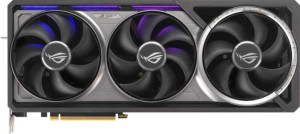
Asus ROG Astral GeForce RTX 5090 Nvidia RTX Pro 4500 Blackwell

Overview

Welcome to our in-depth comparison of the Asus ROG Astral GeForce RTX 5090 and the Nvidia RTX Pro 4500 Blackwell — two Blackwell-architecture GPUs that serve very different masters. Both cards share a 32GB GDDR7 memory pool and ray tracing support, yet they diverge sharply on raw compute power, thermal envelopes, and intended audiences. Read on as we break down every key specification to help you decide which card belongs in your system.

Common Features

  • Both cards share a GPU memory speed of 1750 MHz.
  • Double Precision Floating Point (DPFP) is supported on both products.
  • Both cards have an effective memory speed of 28000 MHz.
  • Both products feature 32GB of VRAM.
  • Both cards use GDDR7 memory.
  • ECC memory support is available on both products.
  • Both products support OpenGL version 4.6.
  • Both products support OpenCL version 3.
  • Multi-display technology is supported on both products.
  • Ray tracing is supported on both products.
  • 3D support is available on both products.
  • DLSS is supported on both products.
  • XeSS (XMX) support is not available on either product.
  • Both products support Intel Resizable BAR.
  • Neither product has any USB-C ports.
  • Neither product has any DVI outputs.
  • Neither product has any mini DisplayPort outputs.
  • Both cards are built on the Blackwell GPU architecture.
  • Both products use PCIe version 5.
  • Both cards are manufactured on a 5 nm semiconductor process.
  • Air-water cooling is not available on either product.

Main Differences

  • GPU base clock speed is 2017 MHz on Asus ROG Astral GeForce RTX 5090 and 1590 MHz on Nvidia RTX Pro 4500 Blackwell.
  • GPU turbo clock speed is 2437 MHz on Asus ROG Astral GeForce RTX 5090 and 2617 MHz on Nvidia RTX Pro 4500 Blackwell.
  • Pixel rate is 428.9 GPixel/s on Asus ROG Astral GeForce RTX 5090 and 293.1 GPixel/s on Nvidia RTX Pro 4500 Blackwell.
  • Floating-point performance is 106.1 TFLOPS on Asus ROG Astral GeForce RTX 5090 and 54.94 TFLOPS on Nvidia RTX Pro 4500 Blackwell.
  • Texture rate is 1657 GTexels/s on Asus ROG Astral GeForce RTX 5090 and 858.4 GTexels/s on Nvidia RTX Pro 4500 Blackwell.
  • Shading units number 21760 on Asus ROG Astral GeForce RTX 5090 and 10496 on Nvidia RTX Pro 4500 Blackwell.
  • Texture mapping units (TMUs) total 680 on Asus ROG Astral GeForce RTX 5090 and 328 on Nvidia RTX Pro 4500 Blackwell.
  • Render output units (ROPs) total 176 on Asus ROG Astral GeForce RTX 5090 and 112 on Nvidia RTX Pro 4500 Blackwell.
  • Maximum memory bandwidth is 1790 GB/s on Asus ROG Astral GeForce RTX 5090 and 896 GB/s on Nvidia RTX Pro 4500 Blackwell.
  • Memory bus width is 512-bit on Asus ROG Astral GeForce RTX 5090 and 256-bit on Nvidia RTX Pro 4500 Blackwell.
  • DirectX version is DirectX 12 Ultimate on Asus ROG Astral GeForce RTX 5090 and DirectX 12 on Nvidia RTX Pro 4500 Blackwell.
  • RGB lighting is present on Asus ROG Astral GeForce RTX 5090 but not available on Nvidia RTX Pro 4500 Blackwell.
  • An HDMI output is present on Asus ROG Astral GeForce RTX 5090 but not available on Nvidia RTX Pro 4500 Blackwell.
  • DisplayPort outputs number 3 on Asus ROG Astral GeForce RTX 5090 and 4 on Nvidia RTX Pro 4500 Blackwell.
  • Thermal Design Power (TDP) is 575W on Asus ROG Astral GeForce RTX 5090 and 200W on Nvidia RTX Pro 4500 Blackwell.
  • The number of transistors is 92200 million on Asus ROG Astral GeForce RTX 5090 and 45600 million on Nvidia RTX Pro 4500 Blackwell.
  • Card width is 357.6 mm on Asus ROG Astral GeForce RTX 5090 and 266.7 mm on Nvidia RTX Pro 4500 Blackwell.
  • Card height is 149.3 mm on Asus ROG Astral GeForce RTX 5090 and 111.8 mm on Nvidia RTX Pro 4500 Blackwell.
Specs Comparison
Asus ROG Astral GeForce RTX 5090

Asus ROG Astral GeForce RTX 5090

Nvidia RTX Pro 4500 Blackwell

Nvidia RTX Pro 4500 Blackwell

Performance:
GPU clock speed 2017 MHz 1590 MHz
GPU turbo 2437 MHz 2617 MHz
pixel rate 428.9 GPixel/s 293.1 GPixel/s
floating-point performance 106.1 TFLOPS 54.94 TFLOPS
texture rate 1657 GTexels/s 858.4 GTexels/s
GPU memory speed 1750 MHz 1750 MHz
shading units 21760 10496
texture mapping units (TMUs) 680 328
render output units (ROPs) 176 112
Has Double Precision Floating Point (DPFP)

The most striking divide between these two GPUs is raw computational horsepower. The Asus ROG Astral RTX 5090 fields 21,760 shading units and delivers 106.1 TFLOPS of floating-point performance, while the Nvidia RTX Pro 4500 Blackwell comes in at 10,496 shading units and 54.94 TFLOPS — roughly half across both metrics. In practical terms, this gap translates directly into rendering throughput, AI workload capacity, and the ability to sustain high frame rates at extreme resolutions. The 5090′s texture rate of 1,657 GTexels/s versus the Pro 4500′s 858.4 GTexels/s reinforces this: tasks like complex shader workloads, ray tracing, and generative AI inference will complete significantly faster on the 5090.

Clock speeds tell a more nuanced story. The RTX Pro 4500 actually achieves a higher GPU turbo of 2,617 MHz compared to the 5090′s 2,437 MHz, meaning its individual cores run faster under boost. However, this advantage is effectively neutralized by the sheer difference in core count — more slower-clocked cores still outperform fewer faster-clocked ones for parallelizable workloads. Base clocks favor the 5090 at 2,017 MHz versus 1,590 MHz. One genuine tie is GPU memory speed at 1,750 MHz for both, suggesting neither has a bandwidth edge at the memory interface level alone. Both cards also support Double Precision Floating Point (DPFP), which matters for scientific computing and professional simulation workflows.

Overall, the RTX 5090 holds a commanding performance advantage in this group. Its superior shading unit count, pixel fill rate (428.9 vs 293.1 GPixel/s), and nearly double the TFLOPS make it the clear winner for GPU-intensive tasks. The RTX Pro 4500 Blackwell′s higher turbo clock is an interesting data point but does not close the gap — it is better understood as a more efficient, workstation-oriented design rather than a direct performance competitor at this tier.
Memory:
effective memory speed 28000 MHz 28000 MHz
maximum memory bandwidth 1790 GB/s 896 GB/s
VRAM 32GB 32GB
GDDR version GDDR7 GDDR7
memory bus width 512-bit 256-bit
Supports ECC memory

Both the Asus ROG Astral GeForce RTX 5090 and the Nvidia RTX Pro 4500 Blackwell feature the same effective memory speed of 28000 MHz, ensuring comparable speed in memory data transfer. However, when it comes to maximum memory bandwidth, there is a notable difference: the Asus card offers 1790 GB/s, far outpacing the Nvidia card’s 896 GB/s. This suggests that the Asus GPU can handle a significantly higher volume of data at once, especially in memory-intensive tasks.

Both products come with 32GB of VRAM, ensuring ample memory capacity for demanding applications. Additionally, both GPUs use GDDR7 memory, a high-performance memory standard. The memory bus width, however, differs: the Asus card has a wider 512-bit memory bus, which can contribute to faster data transfer rates compared to the Nvidia card’s 256-bit memory bus. This again highlights the Asus model’s ability to handle more data concurrently.

Both GPUs support ECC memory (Error-Correcting Code), a feature that helps maintain data integrity by detecting and correcting memory errors, making them suitable for applications where reliability is crucial. This shared specification ensures that both cards are equally equipped for professional workloads requiring high memory reliability.

Features:
DirectX version DirectX 12 Ultimate DirectX 12
OpenGL version 4.6 4.6
OpenCL version 3 3
Supports multi-display technology
supports ray tracing
Supports 3D
supports DLSS
has XeSS (XMX)
AMD SAM / Intel Resizable BAR Intel Resizable BAR Intel Resizable BAR
has LHR
has RGB lighting
supported displays 4 4

Both the Asus ROG Astral GeForce RTX 5090 and the Nvidia RTX Pro 4500 Blackwell support DirectX 12, but the Asus card supports DirectX 12 Ultimate, which includes additional features compared to the standard DirectX 12 supported by the Nvidia card. Both products are compatible with OpenGL version 4.6 and OpenCL version 3, ensuring wide support for various applications and workloads. In terms of multi-display technology, both cards can support multiple displays, with each capable of handling up to 4 supported displays.

Ray tracing and 3D support are available on both GPUs, making them well-suited for high-quality rendering tasks. Additionally, both GPUs support DLSS (Deep Learning Super Sampling), which improves performance in supported games. Neither of the two cards, however, supports XeSS (XMX), which is specific to certain other hardware.

One notable difference is that the Asus card features RGB lighting, which adds a customizable visual element, while the Nvidia card does not include RGB lighting. Both cards support Intel Resizable BAR (AMD SAM support is not mentioned for either), and neither product has LHR (Lite Hash Rate) limitations, making them both suitable for tasks that require full GPU power.

Ports:
has an HDMI output
DisplayPort outputs 3 4
USB-C ports 0 0
DVI outputs 0 0
mini DisplayPort outputs 0 0

The Asus ROG Astral GeForce RTX 5090 has an HDMI output, while the Nvidia RTX Pro 4500 Blackwell does not. The Asus card also features 3 DisplayPort outputs, whereas the Nvidia card has 4 DisplayPort outputs, giving it one extra port for display connections. Neither product includes USB-C ports, DVI outputs, or mini DisplayPort outputs, as both are absent in both models.

Overall, the Asus model offers an HDMI output, while the Nvidia card offers one additional DisplayPort output, but neither provides USB-C, DVI, or mini DisplayPort outputs.

General info:
GPU architecture Blackwell Blackwell
release date January 2025 March 2025
Thermal Design Power (TDP) 575W 200W
PCI Express (PCIe) version 5 5
semiconductor size 5 nm 5 nm
number of transistors 92200 million 45600 million
Has air-water cooling
width 357.6 mm 266.7 mm
height 149.3 mm 111.8 mm

Both the Asus ROG Astral GeForce RTX 5090 and the Nvidia RTX Pro 4500 Blackwell use the same GPU architecture, Blackwell, and both are built on the same 5 nm semiconductor size. However, the Asus card has a significantly higher Thermal Design Power (TDP) of 575W, compared to the Nvidia card’s 200W. This indicates that the Asus card requires much more power to operate. Both cards support PCI Express (PCIe) version 5, ensuring high bandwidth for data transfer.

In terms of transistor count, the Asus card has 92,200 million transistors, nearly doubling the Nvidia card’s 45,600 million transistors. This suggests a larger and more complex chip in the Asus model. Both cards lack air-water cooling solutions.

The physical dimensions differ as well: the Asus ROG Astral GeForce RTX 5090 measures 357.6 mm in width and 149.3 mm in height, making it larger than the Nvidia RTX Pro 4500 Blackwell, which measures 266.7 mm in width and 111.8 mm in height.

Comparison Summary & Verdict

After a thorough look at every specification, the two cards reveal clearly distinct identities. The Asus ROG Astral GeForce RTX 5090 dominates on pure horsepower: its 106.1 TFLOPS of floating-point performance, 21,760 shading units, 1790 GB/s memory bandwidth across a 512-bit bus, and DirectX 12 Ultimate support make it the undisputed choice for enthusiast gamers and content creators who demand maximum frame rates and visual fidelity. Its 575W TDP and larger footprint are the trade-offs for that performance crown. The Nvidia RTX Pro 4500 Blackwell, by contrast, is built for professional workstation environments: its 200W TDP, compact dimensions, ECC memory support, four DisplayPort outputs, and workstation-grade reliability make it ideal for CAD, 3D rendering, and data-science workflows where stability and multi-monitor productivity outweigh raw gaming throughput. In short, choose the RTX 5090 for peak consumer performance, and the RTX Pro 4500 Blackwell for professional-grade efficiency and reliability.

Asus ROG Astral GeForce RTX 5090
Buy Asus ROG Astral GeForce RTX 5090 if...

Buy the Asus ROG Astral GeForce RTX 5090 if you want the highest possible gaming and creative performance, with over 106 TFLOPS of compute power, nearly double the memory bandwidth, and DirectX 12 Ultimate support — and you have the power budget and space to match its 575W TDP and larger chassis.

Nvidia RTX Pro 4500 Blackwell
Buy Nvidia RTX Pro 4500 Blackwell if...

Buy the Nvidia RTX Pro 4500 Blackwell if you need a power-efficient professional workstation GPU with a compact form factor, a 200W TDP, four DisplayPort outputs, and ECC memory support for stable, reliability-critical workloads like CAD, 3D visualization, or data science.