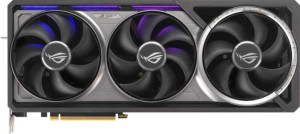
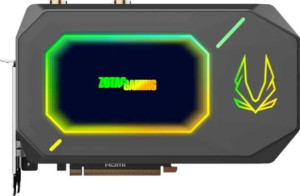
In terms of raw performance, the Asus ROG Astral RTX 5090 and the Zotac Gaming RTX 5090 ArcticStorm AIO are virtually identical across every measurable metric. Both cards share the same 2017 MHz base clock and 2437 MHz boost clock, the same 21,760 shading units, 680 TMUs, and 176 ROPs, and both deliver 106.1 TFLOPS of floating-point performance alongside a 428.9 GPixel/s pixel rate. This is expected, as both are built on the same RTX 5090 silicon with no factory overclocking differentiating them at the GPU frequency level.
The only numerical discrepancy in the entire dataset is the texture rate: the Asus reports 1657 GTexels/s while the Zotac reports 1657.2 GTexels/s. This 0.2 GTexels/s difference is effectively a rounding artifact rather than a real-world distinction — no application or benchmark would ever surface a perceptible gap from this margin. Both cards also support Double Precision Floating Point (DPFP), which matters for GPU-accelerated compute workloads such as scientific simulations and certain professional rendering tasks, though it is not a differentiator here since both offer it equally.
For this performance group, these two cards are in a dead heat. Neither holds any meaningful advantage over the other in GPU throughput, memory speed, or compute capability. A buyer choosing between them should look entirely to other factors — such as cooling solution, acoustics, physical dimensions, or price — rather than expecting any performance delta at stock settings.