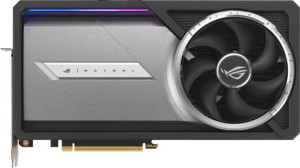
Asus ROG Astral LC GeForce RTX 5090 OC Edition
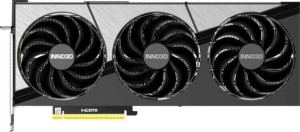
Inno3D GeForce RTX 5090 X3 OC

Asus ROG Astral LC GeForce RTX 5090 OC Edition Inno3D GeForce RTX 5090 X3 OC

Overview

When two flagship-class graphics cards are built around the same GPU, the finer details of engineering and tuning take center stage. This head-to-head comparison examines the Asus ROG Astral LC GeForce RTX 5090 OC Edition and the Inno3D GeForce RTX 5090 X3 OC, two top-tier Blackwell-based cards that diverge in meaningful ways across boost clock performance, cooling solutions, physical dimensions, and display connectivity — all of which could influence which card best suits your specific needs.

Common Features

  • Both cards share a base GPU clock speed of 2017 MHz.
  • Both cards have a GPU memory speed of 1750 MHz.
  • Both cards feature 21760 shading units.
  • Both cards include 680 texture mapping units (TMUs).
  • Both cards have 176 render output units (ROPs).
  • Double Precision Floating Point (DPFP) support is available on both products.
  • Both cards have an effective memory speed of 28000 MHz.
  • Both cards come with 32GB of VRAM.
  • Both cards use GDDR7 memory.
  • Both cards feature a 512-bit memory bus width.
  • ECC memory support is available on both products.
  • Both cards support DirectX 12 Ultimate.
  • Both cards support OpenGL version 4.6.
  • Both cards support OpenCL version 3.
  • Multi-display technology support is available on both products.
  • Ray tracing support is available on both products.
  • 3D support is available on both products.
  • DLSS support is available on both products.
  • XeSS (XMX) support is not available on either product.
  • Both cards include an HDMI output using HDMI version 2.1b.
  • Both cards feature 3 DisplayPort outputs.
  • Neither card has USB-C ports, DVI outputs, or mini DisplayPort outputs.
  • Both cards are built on the Blackwell GPU architecture.
  • Both cards have a Thermal Design Power (TDP) of 575W.
  • Both cards use PCIe version 5.
  • Both cards are manufactured on a 5 nm semiconductor process.
  • Both cards contain 92200 million transistors.

Main Differences

  • GPU turbo clock speed is 2580 MHz on Asus ROG Astral LC GeForce RTX 5090 OC Edition and 2452 MHz on Inno3D GeForce RTX 5090 X3 OC.
  • Pixel rate is 454.1 GPixel/s on Asus ROG Astral LC GeForce RTX 5090 OC Edition and 431.6 GPixel/s on Inno3D GeForce RTX 5090 X3 OC.
  • Floating-point performance is 112.3 TFLOPS on Asus ROG Astral LC GeForce RTX 5090 OC Edition and 106.7 TFLOPS on Inno3D GeForce RTX 5090 X3 OC.
  • Texture rate is 1754 GTexels/s on Asus ROG Astral LC GeForce RTX 5090 OC Edition and 1667.4 GTexels/s on Inno3D GeForce RTX 5090 X3 OC.
  • Maximum memory bandwidth is 1790 GB/s on Asus ROG Astral LC GeForce RTX 5090 OC Edition and 1792 GB/s on Inno3D GeForce RTX 5090 X3 OC.
  • HDMI port count is 2 on Asus ROG Astral LC GeForce RTX 5090 OC Edition and 1 on Inno3D GeForce RTX 5090 X3 OC.
  • Air-water cooling is present on Asus ROG Astral LC GeForce RTX 5090 OC Edition but not available on Inno3D GeForce RTX 5090 X3 OC.
  • Card width is 288.5 mm on Asus ROG Astral LC GeForce RTX 5090 OC Edition and 333 mm on Inno3D GeForce RTX 5090 X3 OC.
  • Card height is 153.7 mm on Asus ROG Astral LC GeForce RTX 5090 OC Edition and 137 mm on Inno3D GeForce RTX 5090 X3 OC.
Specs Comparison
Asus ROG Astral LC GeForce RTX 5090 OC Edition

Asus ROG Astral LC GeForce RTX 5090 OC Edition

Inno3D GeForce RTX 5090 X3 OC

Inno3D GeForce RTX 5090 X3 OC

Performance:
GPU clock speed 2017 MHz 2017 MHz
GPU turbo 2580 MHz 2452 MHz
pixel rate 454.1 GPixel/s 431.6 GPixel/s
floating-point performance 112.3 TFLOPS 106.7 TFLOPS
texture rate 1754 GTexels/s 1667.4 GTexels/s
GPU memory speed 1750 MHz 1750 MHz
shading units 21760 21760
texture mapping units (TMUs) 680 680
render output units (ROPs) 176 176
Has Double Precision Floating Point (DPFP)

Both cards share the same foundation: identical base clocks of 2017 MHz, the same 21,760 shading units, 680 TMUs, 176 ROPs, and matched memory speeds of 1750 MHz. This means they are built on the same silicon with the same theoretical throughput ceiling — the real story is entirely in how aggressively each manufacturer has pushed the boost clock.

That is where the Asus ROG Astral LC pulls decisively ahead. Its GPU turbo reaches 2580 MHz versus the Inno3D X3 OC's 2452 MHz — a gap of 128 MHz, or roughly 5.2%. Because pixel fill rate, texture throughput, and floating-point performance all scale linearly with clock speed on identical silicon, this single difference cascades across every derived metric: the ROG delivers 112.3 TFLOPS of FP32 compute and a texture rate of 1754 GTexels/s, compared to 106.7 TFLOPS and 1667.4 GTexels/s on the Inno3D. In practice, that translates to a measurable, consistent throughput advantage in GPU-bound workloads — ray tracing, AI inference, and high-resolution rasterization alike.

The Asus ROG Astral LC holds a clear performance edge in this group, and its advantage is not a rounding quirk — it is a sustained, clock-driven lead that will be visible in benchmarks. The Inno3D X3 OC is by no means slow, but buyers prioritizing raw compute headroom should favour the ROG. Both cards support Double Precision Floating Point, which matters for professional and scientific workloads, so that capability is a non-differentiator here.
Memory:
effective memory speed 28000 MHz 28000 MHz
maximum memory bandwidth 1790 GB/s 1792 GB/s
VRAM 32GB 32GB
GDDR version GDDR7 GDDR7
memory bus width 512-bit 512-bit
Supports ECC memory

The Asus ROG Astral LC GeForce RTX 5090 OC Edition and the Inno3D GeForce RTX 5090 X3 OC are closely matched in terms of memory specifications. Both models feature an effective memory speed of 28000 MHz, ensuring equivalent performance in terms of memory access speed.

The maximum memory bandwidth is nearly identical, with the Asus model offering 1790 GB/s and the Inno3D model slightly edging ahead at 1792 GB/s. Both products come with 32GB of VRAM, and both use GDDR7 memory, ensuring high-speed performance across the board.

Both products also share the same 512-bit memory bus width, which facilitates fast data transfer across the memory system. Additionally, both cards support Error-Correcting Code (ECC) memory, offering enhanced reliability during heavy workloads and reducing the risk of memory errors.

Features:
DirectX version DirectX 12 Ultimate DirectX 12 Ultimate
OpenGL version 4.6 4.6
OpenCL version 3 3
Supports multi-display technology
supports ray tracing
Supports 3D
supports DLSS
has XeSS (XMX)
AMD SAM / Intel Resizable BAR Intel Resizable BAR Intel Resizable BAR
has LHR
has RGB lighting
supported displays 4 4

The Asus ROG Astral LC GeForce RTX 5090 OC Edition and the Inno3D GeForce RTX 5090 X3 OC offer identical feature sets. Both models support DirectX 12 Ultimate, OpenGL 4.6, and OpenCL 3, ensuring compatibility with a wide range of modern software and applications.

Both products also support multi-display technology, ray tracing, and 3D, providing immersive visuals and versatile display options. They are compatible with DLSS for improved performance in supported games, and neither card includes XeSS (XMX) support.

For system compatibility, both cards support Intel Resizable BAR and feature no LHR (Lite Hash Rate), ensuring full mining potential. Additionally, both models feature RGB lighting and support up to four displays, making them ideal for multi-monitor setups.

Ports:
has an HDMI output
HDMI ports 2 1
HDMI version HDMI 2.1b HDMI 2.1b
DisplayPort outputs 3 3
USB-C ports 0 0
DVI outputs 0 0
mini DisplayPort outputs 0 0

The Asus ROG Astral LC GeForce RTX 5090 OC Edition and the Inno3D GeForce RTX 5090 X3 OC both include HDMI 2.1b outputs. However, the Asus model provides two HDMI ports, while the Inno3D model has only one HDMI port.

Both products feature three DisplayPort outputs, ensuring compatibility with a variety of display setups. Neither card includes USB-C, DVI, or mini DisplayPort outputs, meaning their video output options are limited to HDMI and DisplayPort.

In summary, the main difference between the two cards in this group is the number of HDMI ports, with the Asus model offering a greater number of ports for HDMI-based displays.

General info:
GPU architecture Blackwell Blackwell
release date January 2025 April 2025
Thermal Design Power (TDP) 575W 575W
PCI Express (PCIe) version 5 5
semiconductor size 5 nm 5 nm
number of transistors 92200 million 92200 million
Has air-water cooling
width 288.5 mm 333 mm
height 153.7 mm 137 mm

Both the Asus ROG Astral LC GeForce RTX 5090 OC Edition and the Inno3D GeForce RTX 5090 X3 OC share identical GPU architecture (Blackwell), thermal design power (TDP) of 575W, PCIe version 5, semiconductor size of 5 nm, and number of transistors (92,200 million), meaning the core specifications of these two cards are identical in terms of processing power and energy consumption.

One key difference lies in cooling: the Asus model features air-water cooling, while the Inno3D model lacks this feature, relying solely on air cooling. This distinction could affect thermal performance and noise levels under load.

In terms of physical dimensions, the Asus card is 288.5 mm in width and 153.7 mm in height, whereas the Inno3D model is slightly wider at 333 mm and shorter in height at 137 mm. These differences in size could influence case compatibility depending on available space.

Comparison Summary & Verdict

Both cards share a rock-solid Blackwell foundation: 32GB of GDDR7 memory on a 512-bit bus, a 575W TDP, and full support for ray tracing, DLSS, and DirectX 12 Ultimate. That said, the differences are telling. The Asus ROG Astral LC GeForce RTX 5090 OC Edition pulls ahead with a higher GPU turbo clock of 2580 MHz, translating into better pixel rate, floating-point throughput, and texture rate, while its unique air-water hybrid cooling system and second HDMI port make it the premium choice for enthusiasts chasing peak performance and multi-display flexibility. The Inno3D GeForce RTX 5090 X3 OC, by contrast, offers a wider yet lower-profile form factor at 333 mm wide and just 137 mm tall, which may suit certain case layouts better, and its 2452 MHz turbo still places it firmly in elite territory. Choose based on whether raw overclocked performance and advanced cooling or physical fitment and value are your priority.

Asus ROG Astral LC GeForce RTX 5090 OC Edition
Buy Asus ROG Astral LC GeForce RTX 5090 OC Edition if...

Buy the Asus ROG Astral LC GeForce RTX 5090 OC Edition if you want the highest boost clock speeds, superior floating-point performance, hybrid air-water cooling, and two HDMI ports for a versatile multi-display setup.

Inno3D GeForce RTX 5090 X3 OC
Buy Inno3D GeForce RTX 5090 X3 OC if...

Choose the Inno3D GeForce RTX 5090 X3 OC if you need a lower-profile card that fits more comfortably in width-constrained cases while still delivering exceptional high-end RTX 5090 performance.