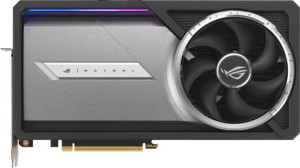
Asus ROG Astral LC GeForce RTX 5090 OC Edition
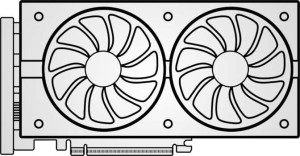
Nvidia RTX Pro 6000 Blackwell Server Edition

Asus ROG Astral LC GeForce RTX 5090 OC Edition Nvidia RTX Pro 6000 Blackwell Server Edition

Overview

When putting the Asus ROG Astral LC GeForce RTX 5090 OC Edition against the Nvidia RTX Pro 6000 Blackwell Server Edition, two formidable Blackwell-architecture GPUs enter the arena. While both share a strong common foundation of GDDR7 memory, PCIe 5 support, and ray tracing capability, they diverge meaningfully across VRAM capacity, raw compute throughput, cooling design, and display connectivity. This page breaks down every key specification to help you identify which card truly fits your needs.

Common Features

  • Both products have a GPU memory speed of 1750 MHz.
  • Double Precision Floating Point (DPFP) is supported on both products.
  • Both products have an effective memory speed of 28000 MHz.
  • Both products use GDDR7 memory.
  • Both products feature a 512-bit memory bus width.
  • ECC memory is supported on both products.
  • Both products support DirectX 12 Ultimate.
  • Both products support OpenGL version 4.6.
  • Both products support OpenCL version 3.
  • Multi-display technology is supported on both products.
  • Ray tracing is supported on both products.
  • 3D support is available on both products.
  • DLSS is supported on both products.
  • XeSS (XMX) is not available on either product.
  • Neither product includes USB-C ports.
  • Neither product includes DVI outputs.
  • Neither product includes mini DisplayPort outputs.
  • Both products are built on the Blackwell GPU architecture.
  • Both products use PCIe version 5.
  • Both products are manufactured on a 5 nm semiconductor process and contain 92,200 million transistors.

Main Differences

  • GPU base clock speed is 2017 MHz on the Asus ROG Astral LC GeForce RTX 5090 OC Edition and 1590 MHz on the Nvidia RTX Pro 6000 Blackwell Server Edition.
  • GPU turbo clock speed is 2580 MHz on the Asus ROG Astral LC GeForce RTX 5090 OC Edition and 2617 MHz on the Nvidia RTX Pro 6000 Blackwell Server Edition.
  • Pixel rate is 454.1 GPixel/s on the Asus ROG Astral LC GeForce RTX 5090 OC Edition and 502.5 GPixel/s on the Nvidia RTX Pro 6000 Blackwell Server Edition.
  • Floating-point performance is 112.3 TFLOPS on the Asus ROG Astral LC GeForce RTX 5090 OC Edition and 126 TFLOPS on the Nvidia RTX Pro 6000 Blackwell Server Edition.
  • Texture rate is 1754 GTexels/s on the Asus ROG Astral LC GeForce RTX 5090 OC Edition and 1968 GTexels/s on the Nvidia RTX Pro 6000 Blackwell Server Edition.
  • Shading units number 21,760 on the Asus ROG Astral LC GeForce RTX 5090 OC Edition and 24,064 on the Nvidia RTX Pro 6000 Blackwell Server Edition.
  • Texture mapping units (TMUs) number 680 on the Asus ROG Astral LC GeForce RTX 5090 OC Edition and 752 on the Nvidia RTX Pro 6000 Blackwell Server Edition.
  • Render output units (ROPs) number 176 on the Asus ROG Astral LC GeForce RTX 5090 OC Edition and 192 on the Nvidia RTX Pro 6000 Blackwell Server Edition.
  • Maximum memory bandwidth is 1790 GB/s on the Asus ROG Astral LC GeForce RTX 5090 OC Edition and 1600 GB/s on the Nvidia RTX Pro 6000 Blackwell Server Edition.
  • VRAM is 32 GB on the Asus ROG Astral LC GeForce RTX 5090 OC Edition and 96 GB on the Nvidia RTX Pro 6000 Blackwell Server Edition.
  • RGB lighting is present on the Asus ROG Astral LC GeForce RTX 5090 OC Edition but not available on the Nvidia RTX Pro 6000 Blackwell Server Edition.
  • An HDMI output is present on the Asus ROG Astral LC GeForce RTX 5090 OC Edition but not available on the Nvidia RTX Pro 6000 Blackwell Server Edition.
  • DisplayPort outputs number 3 on the Asus ROG Astral LC GeForce RTX 5090 OC Edition and 4 on the Nvidia RTX Pro 6000 Blackwell Server Edition.
  • Thermal Design Power (TDP) is 575W on the Asus ROG Astral LC GeForce RTX 5090 OC Edition and 600W on the Nvidia RTX Pro 6000 Blackwell Server Edition.
  • Air-water cooling is present on the Asus ROG Astral LC GeForce RTX 5090 OC Edition but not available on the Nvidia RTX Pro 6000 Blackwell Server Edition.
  • Width is 288.5 mm on the Asus ROG Astral LC GeForce RTX 5090 OC Edition and 266.7 mm on the Nvidia RTX Pro 6000 Blackwell Server Edition.
  • Height is 153.7 mm on the Asus ROG Astral LC GeForce RTX 5090 OC Edition and 111.8 mm on the Nvidia RTX Pro 6000 Blackwell Server Edition.
Specs Comparison
Asus ROG Astral LC GeForce RTX 5090 OC Edition

Asus ROG Astral LC GeForce RTX 5090 OC Edition

Nvidia RTX Pro 6000 Blackwell Server Edition

Nvidia RTX Pro 6000 Blackwell Server Edition

Performance:
GPU clock speed 2017 MHz 1590 MHz
GPU turbo 2580 MHz 2617 MHz
pixel rate 454.1 GPixel/s 502.5 GPixel/s
floating-point performance 112.3 TFLOPS 126 TFLOPS
texture rate 1754 GTexels/s 1968 GTexels/s
GPU memory speed 1750 MHz 1750 MHz
shading units 21760 24064
texture mapping units (TMUs) 680 752
render output units (ROPs) 176 192
Has Double Precision Floating Point (DPFP)

At first glance, the Asus ROG Astral RTX 5090 OC appears to hold a clock speed advantage with a base of 2017 MHz versus the RTX Pro 6000's 1590 MHz — a gap of over 400 MHz. However, this lead largely evaporates at boost, where both cards converge near the top: the Pro 6000 actually edges ahead at 2617 MHz turbo versus 2580 MHz. This tells an important story: the Pro 6000 is tuned for sustained professional workloads rather than aggressive out-of-the-box clocking, while the ROG Astral leans on its factory OC for headline base numbers.

Where the RTX Pro 6000 pulls a decisive advantage is in raw silicon scale. With 24,064 shading units, 752 TMUs, and 192 ROPs versus the RTX 5090's 21,760 / 680 / 176 respectively, it simply has more execution resources. This directly translates into the throughput numbers: the Pro 6000 delivers 126 TFLOPS of floating-point performance and a texture rate of 1,968 GTexels/s, compared to 112.3 TFLOPS and 1,754 GTexels/s for the RTX 5090. In compute-heavy tasks — think AI inference, 3D rendering, or scientific simulation — those extra TFLOPS represent a tangible ~12% performance margin.

Both cards share identical 1750 MHz memory speed and both support Double Precision Floating Point (DPFP), putting them on equal footing for workloads sensitive to FP64 precision, such as engineering simulations. Overall, the RTX Pro 6000 holds the clear performance edge in this group: its higher shader and TMU count gives it superior compute throughput across nearly every metric, making it the stronger choice for maximizing raw GPU horsepower — particularly in professional and workstation-class scenarios.
Memory:
effective memory speed 28000 MHz 28000 MHz
maximum memory bandwidth 1790 GB/s 1600 GB/s
VRAM 32GB 96GB
GDDR version GDDR7 GDDR7
memory bus width 512-bit 512-bit
Supports ECC memory

Both the Asus ROG Astral LC GeForce RTX 5090 OC Edition and the Nvidia RTX Pro 6000 Blackwell Server Edition feature an effective memory speed of 28000 MHz, ensuring similar performance in terms of memory access speed. However, the Nvidia card has a lower maximum memory bandwidth of 1600 GB/s, while the Asus card offers a higher 1790 GB/s, indicating that the Asus may handle memory-intensive tasks with slightly more efficiency.

In terms of VRAM, the Nvidia RTX Pro 6000 stands out with a significantly larger 96GB of memory, compared to the Asus's 32GB of VRAM. Both products use GDDR7 memory, offering the latest generation of graphics memory technology. The memory bus width is the same for both cards at 512-bit, which allows for high-speed data transfer between the GPU and memory.

Both cards support ECC (Error-Correcting Code) memory, which helps ensure data integrity by detecting and correcting memory errors, providing reliability for critical applications.

Features:
DirectX version DirectX 12 Ultimate DirectX 12 Ultimate
OpenGL version 4.6 4.6
OpenCL version 3 3
Supports multi-display technology
supports ray tracing
Supports 3D
supports DLSS
has XeSS (XMX)
AMD SAM / Intel Resizable BAR Intel Resizable BAR Intel Resizable BAR
has LHR
has RGB lighting

Both the Asus ROG Astral LC GeForce RTX 5090 OC Edition and the Nvidia RTX Pro 6000 Blackwell Server Edition support the same core set of features, including DirectX 12 Ultimate, OpenGL 4.6, OpenCL 3, multi-display technology, ray tracing, 3D support, and DLSS. These shared capabilities ensure both cards are well-equipped for high-end gaming and professional workloads that demand cutting-edge graphics and computational performance.

Both cards also feature Intel Resizable BAR support, which allows for better utilization of GPU memory, but they differ when it comes to RGB lighting. The Asus card includes RGB lighting for aesthetic customization, whereas the Nvidia card does not support this feature.

Neither product includes XeSS (XMX) support, and both lack LHR (Low Hash Rate), meaning they are not specifically limited in cryptocurrency mining performance. These features are consistent between the two cards, highlighting a similar focus on gaming and professional use without restrictions on mining.

Ports:
has an HDMI output
DisplayPort outputs 3 4
USB-C ports 0 0
DVI outputs 0 0
mini DisplayPort outputs 0 0

The Asus ROG Astral LC GeForce RTX 5090 OC Edition features one HDMI output and three DisplayPort outputs, offering a flexible range of connectivity options for monitors. In contrast, the Nvidia RTX Pro 6000 Blackwell Server Edition does not include an HDMI output but provides four DisplayPort outputs, slightly expanding the number of DisplayPort connections compared to the Asus card.

Neither card includes USB-C, DVI, or mini DisplayPort outputs, ensuring both are limited to HDMI and DisplayPort for display connections. This makes them similar in terms of the types of ports they offer for external displays.

General info:
GPU architecture Blackwell Blackwell
release date January 2025 March 2025
Thermal Design Power (TDP) 575W 600W
PCI Express (PCIe) version 5 5
semiconductor size 5 nm 5 nm
number of transistors 92200 million 92200 million
Has air-water cooling
width 288.5 mm 266.7 mm
height 153.7 mm 111.8 mm

Both the Asus ROG Astral LC GeForce RTX 5090 OC Edition and the Nvidia RTX Pro 6000 Blackwell Server Edition share the same GPU architecture, Blackwell, and semiconductor size of 5 nm, indicating they both use the same cutting-edge manufacturing process for their GPUs. Both cards also feature the same number of transistors, with 92200 million transistors each.

In terms of power consumption, the Asus card has a Thermal Design Power (TDP) of 575W, while the Nvidia card has a slightly higher TDP of 600W, suggesting it may require more power for operation. Additionally, the Asus card utilizes air-water cooling, providing potentially more efficient cooling, while the Nvidia card lacks this hybrid cooling system, relying solely on air or another cooling method.

The physical dimensions of the two cards differ slightly. The Asus card has a width of 288.5 mm and a height of 153.7 mm, while the Nvidia card is more compact with a width of 266.7 mm and a height of 111.8 mm, making it a smaller and potentially more space-efficient option.

Comparison Summary & Verdict

Both GPUs are built on the same 5 nm Blackwell architecture, yet they serve very different audiences. The Asus ROG Astral LC GeForce RTX 5090 OC Edition impresses with its air-water hybrid cooling, higher memory bandwidth of 1790 GB/s, a higher base clock of 2017 MHz, RGB lighting, and consumer-friendly connectivity including an HDMI output and three DisplayPort outputs, making it a compelling pick for enthusiast gamers and high-end content creators. The Nvidia RTX Pro 6000 Blackwell Server Edition counters with superior raw compute at 126 TFLOPS, a commanding 96 GB VRAM pool, more shading units and TMUs, a higher turbo clock of 2617 MHz, and four DisplayPort outputs, clearly targeting professional workstation and server deployments where memory capacity and computational throughput take priority over aesthetics.

Asus ROG Astral LC GeForce RTX 5090 OC Edition
Buy Asus ROG Astral LC GeForce RTX 5090 OC Edition if...

Choose the Asus ROG Astral LC GeForce RTX 5090 OC Edition if you want a high-bandwidth enthusiast GPU with air-water hybrid cooling, RGB lighting, and HDMI connectivity for gaming or demanding creative workloads.

Nvidia RTX Pro 6000 Blackwell Server Edition
Buy Nvidia RTX Pro 6000 Blackwell Server Edition if...

Opt for the Nvidia RTX Pro 6000 Blackwell Server Edition if your workload demands a massive 96 GB VRAM pool and superior floating-point compute performance for professional or server-class applications.