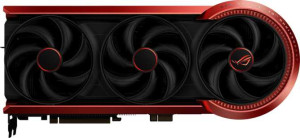
Asus ROG Matrix Platinum GeForce RTX 5090 30th Anniversary Edition
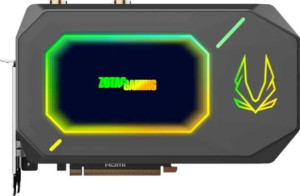
Zotac Gaming GeForce RTX 5090 ArcticStorm AIO

Asus ROG Matrix Platinum GeForce RTX 5090 30th Anniversary Edition Zotac Gaming GeForce RTX 5090 ArcticStorm AIO

Common Features

  • Both products have a GPU clock speed of 2017 MHz.
  • Both products have a GPU memory speed of 1750 MHz.
  • Both products have 21760 shading units.
  • Both products have 680 texture mapping units (TMUs).
  • Both products have 176 render output units (ROPs).
  • Both products support double precision floating point (DPFP).
  • Both products have an effective memory speed of 28000 MHz.
  • Both products have a maximum memory bandwidth of 1790 GB/s.
  • Both products have 32GB of VRAM.
  • Both products use GDDR7 memory.
  • Both products have a 512-bit memory bus width.
  • Both products support ECC memory.
  • Both products support DirectX 12 Ultimate.
  • Both products support OpenGL version 4.6.
  • Both products support OpenCL version 3.
  • Both products support multi-display technology.
  • Both products support ray tracing.
  • Both products support 3D.
  • Both products support DLSS.
  • Both products use the Blackwell GPU architecture.

Main Differences

  • GPU turbo is 2580 MHz on Asus ROG Matrix Platinum GeForce RTX 5090 30th Anniversary Edition and 2437 MHz on Zotac Gaming GeForce RTX 5090 ArcticStorm AIO.
  • Pixel rate is 454.1 GPixel/s on Asus ROG Matrix Platinum GeForce RTX 5090 30th Anniversary Edition and 428.9 GPixel/s on Zotac Gaming GeForce RTX 5090 ArcticStorm AIO.
  • Floating-point performance is 112.3 TFLOPS on Asus ROG Matrix Platinum GeForce RTX 5090 30th Anniversary Edition and 106.1 TFLOPS on Zotac Gaming GeForce RTX 5090 ArcticStorm AIO.
  • Texture rate is 1754.4 GTexels/s on Asus ROG Matrix Platinum GeForce RTX 5090 30th Anniversary Edition and 1657.2 GTexels/s on Zotac Gaming GeForce RTX 5090 ArcticStorm AIO.
  • HDMI ports are 2 on Asus ROG Matrix Platinum GeForce RTX 5090 30th Anniversary Edition and 1 on Zotac Gaming GeForce RTX 5090 ArcticStorm AIO.
  • Asus ROG Matrix Platinum GeForce RTX 5090 30th Anniversary Edition does not have air-water cooling, while Zotac Gaming GeForce RTX 5090 ArcticStorm AIO has air-water cooling.
  • Width is 357.6 mm on Asus ROG Matrix Platinum GeForce RTX 5090 30th Anniversary Edition and 251.6 mm on Zotac Gaming GeForce RTX 5090 ArcticStorm AIO.
  • Height is 149.3 mm on Asus ROG Matrix Platinum GeForce RTX 5090 30th Anniversary Edition and 160.1 mm on Zotac Gaming GeForce RTX 5090 ArcticStorm AIO.
Specs Comparison
Asus ROG Matrix Platinum GeForce RTX 5090 30th Anniversary Edition

Asus ROG Matrix Platinum GeForce RTX 5090 30th Anniversary Edition

Zotac Gaming GeForce RTX 5090 ArcticStorm AIO

Zotac Gaming GeForce RTX 5090 ArcticStorm AIO

Performance:
GPU clock speed 2017 MHz 2017 MHz
GPU turbo 2580 MHz 2437 MHz
pixel rate 454.1 GPixel/s 428.9 GPixel/s
floating-point performance 112.3 TFLOPS 106.1 TFLOPS
texture rate 1754.4 GTexels/s 1657.2 GTexels/s
GPU memory speed 1750 MHz 1750 MHz
shading units 21760 21760
texture mapping units (TMUs) 680 680
render output units (ROPs) 176 176
Has Double Precision Floating Point (DPFP)

Both the Asus ROG Matrix Platinum GeForce RTX 5090 30th Anniversary Edition and the Zotac Gaming GeForce RTX 5090 ArcticStorm AIO feature a GPU clock speed of 2017 MHz, ensuring a strong baseline for performance. However, their GPU turbo speeds differ: the Asus card reaches 2580 MHz, while the Zotac model peaks at 2437 MHz. This gives the Asus product a slight edge in terms of turbo performance.

When it comes to pixel rate, the Asus card has a higher output at 454.1 GPixel/s compared to the Zotac's 428.9 GPixel/s. This means the Asus model can handle more pixels per second, which can translate into smoother visuals in demanding applications. Similarly, the Asus product offers a higher texture rate of 1754.4 GTexels/s, while the Zotac card operates at 1657.2 GTexels/s, again giving the Asus card a bit of an advantage in texture handling.

Both models feature a GPU memory speed of 1750 MHz and the same number of shading units (21760), texture mapping units (680), and render output units (176). Additionally, both support Double Precision Floating Point (DPFP) calculations. In terms of raw floating-point performance, the Asus ROG Matrix Platinum leads with 112.3 TFLOPS, while the Zotac ArcticStorm AIO offers 106.1 TFLOPS, a noticeable difference favoring the Asus card for intense computational tasks.

Memory:
effective memory speed 28000 MHz 28000 MHz
maximum memory bandwidth 1790 GB/s 1790 GB/s
VRAM 32GB 32GB
GDDR version GDDR7 GDDR7
memory bus width 512-bit 512-bit
Supports ECC memory

Both the Asus ROG Matrix Platinum GeForce RTX 5090 30th Anniversary Edition and the Zotac Gaming GeForce RTX 5090 ArcticStorm AIO offer identical memory specifications. They each feature an effective memory speed of 28000 MHz and a maximum memory bandwidth of 1790 GB/s, ensuring high-speed data transfer for demanding applications. Both cards are equipped with 32GB of VRAM, which is ample for handling high-resolution textures and complex tasks in gaming and professional workloads.

In terms of memory type, both cards use GDDR7, providing the latest memory technology for superior performance. The memory bus width is also the same for both products, with a 512-bit interface ensuring wide bandwidth for efficient memory communication.

Lastly, both models support Error Correction Code (ECC) memory, which adds an extra layer of reliability by detecting and correcting memory errors, enhancing stability for critical workloads.

Features:
DirectX version DirectX 12 Ultimate DirectX 12 Ultimate
OpenGL version 4.6 4.6
OpenCL version 3 3
Supports multi-display technology
supports ray tracing
Supports 3D
supports DLSS
has XeSS (XMX)
AMD SAM / Intel Resizable BAR Intel Resizable BAR Intel Resizable BAR
has LHR
has RGB lighting
supported displays 4 4

The Asus ROG Matrix Platinum GeForce RTX 5090 30th Anniversary Edition and the Zotac Gaming GeForce RTX 5090 ArcticStorm AIO share an identical set of features. Both cards support DirectX 12 Ultimate, OpenGL 4.6, and OpenCL 3, ensuring compatibility with modern software and APIs. They also both support multi-display technology, ray tracing, and 3D, allowing for immersive visuals and flexible display configurations.

Additionally, both products support DLSS (Deep Learning Super Sampling) for improved performance in supported games. Neither card supports XeSS (XMX), and both are equipped with Intel Resizable BAR, a feature that allows for improved GPU performance with compatible Intel processors.

Both models also share the same features regarding RGB lighting, providing customizable lighting effects, and the ability to support up to four displays. Neither product has an LHR (Low Hash Rate) model, so both are equally suitable for tasks like cryptocurrency mining if desired.

Ports:
has an HDMI output
HDMI ports 2 1
HDMI version HDMI 2.1b HDMI 2.1b
DisplayPort outputs 3 3
USB-C ports 0 0
DVI outputs 0 0
mini DisplayPort outputs 0 0

Both the Asus ROG Matrix Platinum GeForce RTX 5090 30th Anniversary Edition and the Zotac Gaming GeForce RTX 5090 ArcticStorm AIO feature HDMI 2.1b outputs. However, there is a difference in the number of HDMI ports: the Asus card has 2 HDMI ports, while the Zotac card only has 1 HDMI port.

Both products are equipped with 3 DisplayPort outputs, offering plenty of options for connecting multiple monitors. Neither card includes USB-C, DVI, or mini DisplayPort outputs, meaning users will rely on HDMI and DisplayPort for video output.

In summary, the main difference in ports between these two models is the number of HDMI ports, with the Asus card offering more flexibility with 2 HDMI ports compared to the Zotac's single HDMI port.

General info:
GPU architecture Blackwell Blackwell
release date August 2025 July 2025
Thermal Design Power (TDP) 575W 575W
PCI Express (PCIe) version 5 5
semiconductor size 5 nm 5 nm
number of transistors 92200 million 92200 million
Has air-water cooling
width 357.6 mm 251.6 mm
height 149.3 mm 160.1 mm

The Asus ROG Matrix Platinum GeForce RTX 5090 30th Anniversary Edition and the Zotac Gaming GeForce RTX 5090 ArcticStorm AIO both feature the Blackwell GPU architecture, 575W Thermal Design Power (TDP), and PCI Express 5.0 support. These specifications ensure that both cards are built for high-performance gaming and intensive workloads. Additionally, they are built with a 5 nm semiconductor size and share the same number of transistors at 92,200 million, offering robust processing power.

However, there is a difference in cooling solutions: the Asus card uses traditional air cooling, while the Zotac card features a more advanced air-water cooling system. This gives the Zotac model a potential edge in cooling efficiency, particularly under heavy loads.

When it comes to physical dimensions, the Asus card is larger, with a width of 357.6 mm and a height of 149.3 mm, compared to the Zotac card’s 251.6 mm width and 160.1 mm height. Despite the Zotac being shorter in width, its height is slightly greater, which may affect case compatibility depending on the space available in the system.

Comparison Summary

This is a specification comparison between Asus ROG Matrix Platinum GeForce RTX 5090 30th Anniversary Edition and Zotac Gaming GeForce RTX 5090 ArcticStorm AIO. Both products feature a GPU clock speed of 2017 MHz, 32GB of VRAM, and support ray tracing and multi-display technology. However, they differ in GPU turbo speed, with Asus reaching 2580 MHz and Zotac at 2437 MHz. The pixel rate is 454.1 GPixel/s on Asus and 428.9 GPixel/s on Zotac. The width is 357.6 mm for Asus and 251.6 mm for Zotac. Additionally, Asus offers 2 HDMI ports, while Zotac provides just 1.