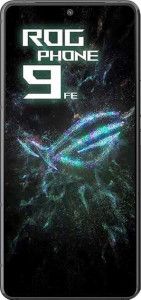
Asus ROG Phone 9 FE
Oukitel WP200 Pro

Asus ROG Phone 9 FE Oukitel WP200 Pro

Overview

Welcome to our in-depth comparison of the Asus ROG Phone 9 FE and the Oukitel WP200 Pro — two smartphones that share an IP68 waterproof rating and Android 15, yet take remarkably different paths in design, performance, and daily usability. From display quality and refresh rate to battery capacity and audio features, these two devices cater to very different user priorities. Read on to discover which one deserves a place in your pocket.

Common Features

  • Both phones are waterproof with an IP68 ingress protection rating.
  • Neither phone has a rugged build.
  • Neither phone can be folded.
  • Both phones feature an OLED/AMOLED display type.
  • Both phones have branded damage-resistant glass.
  • Neither phone supports Dolby Vision.
  • Neither phone has a secondary screen.
  • Both phones have a touchscreen.
  • Both phones have integrated LTE.
  • Both phones use a 4 nm semiconductor size.
  • Both phones support 64-bit processing.
  • Both phones use DirectX 12.
  • Both phones have integrated graphics.
  • Both phones use big.LITTLE technology with 8 CPU threads and HMP support.
  • Both phones have a multi-lens main camera.
  • Both phones have a 32MP front camera.
  • Both phones can record 4K video at 30 fps with the main camera.
  • Neither phone has a dual-tone LED flash.
  • Both phones have a CMOS sensor with continuous autofocus and phase-detection autofocus.
  • Both phones run Android 15.
  • Both phones have clipboard warnings, location privacy options, and camera/microphone privacy options.
  • Neither phone has Mail Privacy Protection.
  • Both phones support theme customization and can block app tracking.
  • Neither phone blocks cross-site tracking.
  • Both phones support fast charging.
  • Neither phone has reverse wireless charging.
  • Neither phone has a removable battery.
  • Both phones have a battery level indicator and a rechargeable battery.
  • Neither phone has LDAC or a radio.
  • Both phones support 5G and have dual SIM capability.
  • Neither phone has an external memory slot.
  • Both phones have USB Type-C, NFC, and a fingerprint scanner.
  • Neither phone has emergency SOS via satellite or crash detection.
  • Both phones have a video light.
  • Neither phone has a sapphire glass display, curved display, or e-paper display.

Main Differences

  • Weight is 225 g on Asus ROG Phone 9 FE and 311 g on Oukitel WP200 Pro.
  • Thickness is 8.9 mm on Asus ROG Phone 9 FE and 13.7 mm on Oukitel WP200 Pro.
  • Width is 76.8 mm on Asus ROG Phone 9 FE and 77.85 mm on Oukitel WP200 Pro.
  • Volume is 111.96 cm³ on Asus ROG Phone 9 FE and 174.49 cm³ on Oukitel WP200 Pro.
  • Screen size is 6.78″ on Asus ROG Phone 9 FE and 6.7″ on Oukitel WP200 Pro.
  • Refresh rate is 185Hz on Asus ROG Phone 9 FE and 120Hz on Oukitel WP200 Pro.
  • Typical brightness is 1600 nits on Asus ROG Phone 9 FE and 500 nits on Oukitel WP200 Pro.
  • Gorilla Glass version is Victus 2 on Asus ROG Phone 9 FE and Gorilla Glass 5 on Oukitel WP200 Pro.
  • HDR10 and HDR10+ support is present on Asus ROG Phone 9 FE but not available on Oukitel WP200 Pro.
  • Always-On Display is available on Asus ROG Phone 9 FE but not on Oukitel WP200 Pro.
  • Internal storage is 256GB on Asus ROG Phone 9 FE and 1000GB on Oukitel WP200 Pro.
  • RAM is 16GB on Asus ROG Phone 9 FE and 24GB on Oukitel WP200 Pro.
  • GPU is Adreno 750 on Asus ROG Phone 9 FE and Mali G610 MP6 on Oukitel WP200 Pro.
  • Geekbench 6 multi-core score is 7325 on Asus ROG Phone 9 FE and 3891 on Oukitel WP200 Pro.
  • Geekbench 6 single-core score is 2213 on Asus ROG Phone 9 FE and 1224 on Oukitel WP200 Pro.
  • Maximum memory bandwidth is 76.6 GB/s on Asus ROG Phone 9 FE and 51.2 GB/s on Oukitel WP200 Pro.
  • Main camera resolution is 50 & 13 & 5 MP on Asus ROG Phone 9 FE and 108 & 2 & 0.3 MP on Oukitel WP200 Pro.
  • Optical image stabilization is present on Asus ROG Phone 9 FE but not available on Oukitel WP200 Pro.
  • Laser autofocus is available on Asus ROG Phone 9 FE but not on Oukitel WP200 Pro.
  • Battery capacity is 5500 mAh on Asus ROG Phone 9 FE and 8800 mAh on Oukitel WP200 Pro.
  • Wireless charging is supported on Asus ROG Phone 9 FE but not on Oukitel WP200 Pro.
  • Charging speed is 65W on Asus ROG Phone 9 FE and 45W on Oukitel WP200 Pro.
  • A 3.5mm audio jack is present on Asus ROG Phone 9 FE but not on Oukitel WP200 Pro.
  • Stereo speakers are available on Asus ROG Phone 9 FE but not on Oukitel WP200 Pro.
  • aptX, aptX HD, aptX Adaptive, and aptX Lossless support is present on Asus ROG Phone 9 FE but not on Oukitel WP200 Pro.
  • Wi-Fi version support goes up to Wi-Fi 7 on Asus ROG Phone 9 FE and up to Wi-Fi 6 on Oukitel WP200 Pro.
  • Bluetooth version is 5.4 on Asus ROG Phone 9 FE and 5.3 on Oukitel WP200 Pro.
  • Download speed is 10000 Mbits/s on Asus ROG Phone 9 FE and 4700 Mbits/s on Oukitel WP200 Pro.
  • A barometer is present on Oukitel WP200 Pro but not on Asus ROG Phone 9 FE.
Specs Comparison
Asus ROG Phone 9 FE

Asus ROG Phone 9 FE

Oukitel WP200 Pro

Oukitel WP200 Pro

Design:
water resistance Waterproof Waterproof
weight 225 g 311 g
thickness 8.9 mm 13.7 mm
width 76.8 mm 77.85 mm
height 163.8 mm 163.6 mm
volume 111.960576 cm³ 174.486762 cm³
Ingress Protection (IP) rating IP68 IP68
has a rugged build
can be folded

Both the Asus ROG Phone 9 FE and the Oukitel WP200 Pro share an IP68 waterproof rating, meaning both can withstand submersion in water under the same standardized conditions. Neither device is classified as having a rugged build, and both have a conventional candy-bar form factor. On these fundamental protection and form-factor criteria, they are evenly matched.

Where the two diverge sharply is in physical footprint and mass. The ROG Phone 9 FE is notably slimmer at 8.9 mm thick versus the WP200 Pro's 13.7 mm — a difference of nearly 5 mm that is immediately perceptible in the hand and pocket. This goes hand-in-hand with weight: the ROG Phone 9 FE comes in at 225 g while the WP200 Pro is a considerably heavier 311 g. That 86 g gap translates to real fatigue during extended one-handed use or long gaming sessions. The volume figures reinforce this: the WP200 Pro displaces roughly 174.5 cm³ compared to the ROG Phone 9 FE's 112 cm³ — over 55% more bulk, despite virtually identical height and width dimensions. This means the WP200 Pro's extra mass is almost entirely due to its much greater thickness, likely housing a larger internal component stack.

From a design perspective, the Asus ROG Phone 9 FE holds a clear advantage for users who prioritize a slim, lightweight profile for daily carry and extended handling comfort. The WP200 Pro's substantially thicker and heavier chassis makes it noticeably less pocketable, offering no offsetting design benefit based on the available specs — both devices share the same IP68 protection level and neither carries a rugged designation.

Display:
Display type OLED/AMOLED OLED/AMOLED
screen size 6.78" 6.7"
pixel density 388 ppi 394 ppi
resolution 1080 x 2400 px 1080 x 2412 px
refresh rate 185Hz 120Hz
brightness (typical) 1600 nits 500 nits
has branded damage-resistant glass
Gorilla Glass version Gorilla Glass Victus 2 Gorilla Glass 5
supports HDR10
supports HDR10+
Always-On Display
supports Dolby Vision
Has a secondary screen
has a touch screen

On the surface, these two phones look similar — both feature an OLED/AMOLED panel at virtually the same screen size and near-identical pixel density (~388–394 ppi). In practice, however, the ROG Phone 9 FE pulls significantly ahead on nearly every quality metric that defines the viewing experience.

The most striking gap is brightness: the ROG Phone 9 FE delivers 1600 nits of typical brightness versus just 500 nits on the WP200 Pro. That is more than three times the luminance, which has a direct real-world consequence — outdoor legibility in sunlight. At 500 nits, the WP200 Pro's display will struggle in direct sunlight, while the ROG Phone 9 FE remains comfortably readable. The refresh rate gap is equally meaningful: 185Hz on the ROG Phone 9 FE versus 120Hz on the WP200 Pro. For gaming and fast-scrolling content, the higher rate produces visibly smoother motion. Beyond raw numbers, the ROG Phone 9 FE also supports HDR10 and HDR10+, unlocking richer contrast and color depth on compatible streaming content — features entirely absent on the WP200 Pro. Add Always-On Display functionality and the newer Gorilla Glass Victus 2 (versus Gorilla Glass 5 on the WP200 Pro), and the protection and utility gap widens further.

The Asus ROG Phone 9 FE is the clear winner in this category. Sharing the same panel technology and resolution class only highlights how much further ahead it is in brightness, refresh rate, HDR support, and glass durability — advantages that matter both in daily use and in demanding scenarios like outdoor viewing or gaming.

Performance:
internal storage 256GB 1000GB
RAM 16GB 24GB
GPU name Adreno 750 Mali G610 MP6
CPU speed 3 x 3.15 & 2 x 2.96 & 2 x 2.26 & 1 x 3.3 GHz 1 x 3.1 & 3 x 3 & 4 x 2 GHz
Geekbench 6 result (multi) 7325 3891
Geekbench 6 result (single) 2213 1224
GPU clock speed 900 MHz 950 MHz
Has integrated LTE
RAM speed 4800 MHz 6400 MHz
semiconductor size 4 nm 4 nm
Supports 64-bit
DirectX version DirectX 12 DirectX 12
Has integrated graphics
Uses big.LITTLE technology
CPU threads 8 threads 8 threads
Uses HMP
Has TrustZone
maximum memory bandwidth 76.6 GB/s 51.2 GB/s
OpenCL version 2 2
memory channels 2 4
maximum memory amount 24GB 16GB
Thermal Design Power (TDP) 12.5W 6W
DDR memory version 5 5
L3 cache 12 MB 4 MB

Raw compute performance is not even close here. The ROG Phone 9 FE's Geekbench 6 scores — 2213 single-core and 7325 multi-core — are nearly double those of the WP200 Pro, which posts 1224 single-core and 3891 multi-core. Single-core performance is especially important for everyday responsiveness, app launch speed, and gaming frame pacing, where the ROG Phone 9 FE's advantage translates into a noticeably snappier real-world experience. The Adreno 750 GPU, backed by 76.6 GB/s of memory bandwidth and a large 12 MB L3 cache, further distances itself from the WP200 Pro's Mali G610 MP6, which is limited to 51.2 GB/s bandwidth and only 4 MB of L3 cache — a meaningful bottleneck for GPU-intensive workloads like high-fidelity gaming.

The WP200 Pro does hold two tangible advantages: storage and RAM. It ships with 1000 GB of internal storage versus 256 GB on the ROG Phone 9 FE — a massive difference for users who store large media libraries or files locally. It also comes with 24 GB of RAM compared to 16 GB, and while the ROG Phone 9 FE's RAM is faster in bandwidth terms, the WP200 Pro's higher raw capacity theoretically supports more apps staying open simultaneously. These are real practical benefits, but they do not compensate for the underlying CPU and GPU performance gulf.

For performance, the Asus ROG Phone 9 FE wins decisively. The WP200 Pro's storage and RAM headroom may appeal to power users with heavy local storage needs, but anyone prioritizing processing speed, gaming capability, or sustained computational throughput will find the ROG Phone 9 FE in a different league entirely.

Cameras:
megapixels (main camera) 50 & 13 & 5 MP 108 & 2 & 0.3 MP
Has a dual-lens (or multi-lens) main camera
megapixels (front camera) 32MP 32MP
has built-in optical image stabilization
video recording (main camera) 2160 x 30 fps 2160 x 30 fps
Has a dual-tone LED flash
has a BSI sensor
has a CMOS sensor
has continuous autofocus when recording movies
Has phase-detection autofocus for photos
supports slow-motion video recording
has a built-in HDR mode
has manual exposure
has a flash
optical zoom 0x 0x
has manual ISO
has a serial shot mode
has manual focus
has a front camera
Has laser autofocus
Shoots 360° panorama
has manual white balance
shoots raw
has touch autofocus
has manual shutter speed
can create panoramas in-camera
wide aperture (front camera) 2.5f 2.2f
Has a front-facing LED flash
has a dual-lens (or multi-lens) front camera
supports HDR10 recording
supports Dolby Vision recording
has a front-facing camera under the display
Has a RGB LED flash
has 3D photo/video recording capabilities

Megapixel counts tell an incomplete story here. The WP200 Pro leads with a 108 MP main sensor, but its secondary lenses drop sharply to just 2 MP and 0.3 MP — the latter being essentially non-functional for practical photography. The ROG Phone 9 FE counters with a more balanced 50 MP main, 13 MP, and 5 MP triple-lens setup, where all three cameras are capable of contributing meaningfully to the shooting experience. High megapixel counts on the primary sensor can capture more detail in good lighting, but the WP200 Pro's secondary cameras offer little versatility in practice.

Two differentiators stand out beyond the sensor array. The ROG Phone 9 FE includes optical image stabilization (OIS), which the WP200 Pro lacks entirely. OIS is one of the most impactful camera hardware features for everyday users — it physically compensates for hand movement during handheld shots and video, resulting in sharper stills in low light and smoother footage. Without it, the WP200 Pro relies solely on software stabilization, which is a meaningful step down. Additionally, the ROG Phone 9 FE features laser autofocus, complementing its phase-detection autofocus for faster, more reliable subject locking — particularly in low-contrast or dim scenes — while the WP200 Pro lacks this entirely. On the front camera, both deliver 32 MP, though the WP200 Pro's slightly wider f/2.2 aperture (versus f/2.5) allows marginally more light in selfie scenarios.

The Asus ROG Phone 9 FE holds the camera advantage. Despite a lower headline megapixel count on the main sensor, its OIS and laser autofocus are hardware-level improvements with tangible real-world impact on image and video quality. The WP200 Pro's 108 MP sensor is headline-grabbing, but the absence of stabilization and the near-useless secondary lenses limit its practical camera versatility.

Operating system:
Android version Android 15 Android 15
has clipboard warnings
has location privacy options
has camera/microphone privacy options
has Mail Privacy Protection
has theme customization
can block app tracking
blocks cross-site tracking
has on-device machine learning
has notification permissions
has media picker
Can play games while they download
has dark mode
has Wi-Fi password sharing
has battery health check
has an extra dim mode
has focus modes
has dynamic theming
can offload apps
Has customizable notifications
has Live Text
has full-page screenshots
supports split screen
gets direct OS updates
has PiP
Can be used as a PC
Has sharing intents
has a child lock
Supports widgets
Is free and open source
Has offline voice recognition
has voice commands
Tracks the current position of a mobile device
is a multi-user system
has Quick Start

This is a rare case of a complete tie. Every single operating system specification provided for the Asus ROG Phone 9 FE and the Oukitel WP200 Pro is identical — both run Android 15 and share the exact same feature set across privacy controls, productivity tools, and system capabilities.

Notable shared highlights include a robust privacy suite with location, camera, and microphone controls alongside app tracking blockers; practical daily-use features like split-screen multitasking, Picture-in-Picture, dynamic theming, and offline voice recognition; and utility tools such as battery health checks, full-page screenshots, and on-device machine learning. Neither device receives direct OS updates from Google, meaning both depend on their respective manufacturers for Android version upgrades — a consideration worth noting for long-term software support.

Based strictly on the provided specifications, this category is a dead heat. There is no differentiating OS feature, version difference, or capability gap between the two devices that would give either one an advantage over the other.

Battery:
battery power 5500 mAh 8800 mAh
has wireless charging
Supports fast charging
charging speed 65W 45W
has reverse wireless charging
has a removable battery
has a battery level indicator
has a rechargeable battery

Battery capacity is where the WP200 Pro makes its most compelling case. At 8800 mAh, it carries a battery that is 60% larger than the ROG Phone 9 FE's already-generous 5500 mAh cell. In real-world terms, this kind of gap typically translates to a full additional day of use between charges — a significant advantage for heavy users, travelers, or anyone in situations where reliable access to a charger cannot be guaranteed.

The ROG Phone 9 FE responds with a meaningful edge on charging speed and flexibility. Its 65W fast charging outpaces the WP200 Pro's 45W, meaning it replenishes its battery faster when plugged in — partially offsetting the capacity deficit for users who can charge regularly. More notably, the ROG Phone 9 FE supports wireless charging, a convenience feature entirely absent on the WP200 Pro. For users accustomed to dropping their phone on a pad overnight, this is a quality-of-life difference that matters in daily routines.

This category comes down to usage philosophy. The Oukitel WP200 Pro wins on raw endurance — its massive battery is a decisive advantage for longevity between charges. The ROG Phone 9 FE counters with faster wired charging and the added convenience of wireless charging, making it the better fit for users who charge frequently and value flexibility. Those who prioritize going longer without needing a charger at all should lean toward the WP200 Pro.

Audio:
has a socket for a 3.5 mm audio jack
has stereo speakers
has aptX
has LDAC
has aptX HD
has aptX Adaptive
has aptX Lossless
Has a radio

Audio is one of the most lopsided categories in this entire comparison. The ROG Phone 9 FE is comprehensively equipped: it has stereo speakers for immersive spatial sound during media playback and gaming, a 3.5 mm headphone jack for wired listening without adapters, and a full suite of high-resolution Bluetooth audio codecs including aptX Adaptive and aptX Lossless. The WP200 Pro, by contrast, has none of these — no stereo speakers, no headphone jack, and no advanced wireless audio codec support whatsoever.

The practical implications are significant across every listening scenario. Without stereo speakers, the WP200 Pro produces mono audio — noticeably flat and less immersive for gaming, videos, or music. The absence of a headphone jack forces reliance on Bluetooth or USB-C audio exclusively. And without aptX Adaptive or aptX Lossless support, even Bluetooth listening on the WP200 Pro is limited to standard compressed audio, unable to take advantage of higher-quality wireless audio hardware the user may already own.

The Asus ROG Phone 9 FE wins this category by a wide margin. The WP200 Pro has no offsetting audio advantage — it is outclassed on speakers, wired connectivity, and wireless audio quality simultaneously, making the ROG Phone 9 FE the clear choice for any user who values audio performance.

Connectivity & Features:
release date February 2025 February 2025
has 5G support
Wi-Fi version Wi-Fi 4 (802.11n), Wi-Fi 6E (802.11ax), Wi-Fi 6 (802.11ax), Wi-Fi 5 (802.11ac), Wi-Fi 7 (802.11be) Wi-Fi 4 (802.11n), Wi-Fi 5 (802.11ac), Wi-Fi 6 (802.11ax)
SIM cards 2 SIM 2 SIM
Bluetooth version 5.4 5.3
has an external memory slot
Has USB Type-C
has NFC
download speed 10000 MBits/s 4700 MBits/s
upload speed 3500 MBits/s 2500 MBits/s
Has a fingerprint scanner
has emergency SOS via satellite
has crash detection
is DLNA-certified
has a gyroscope
supports ANT+
Has a heart rate monitor
has GPS
has a compass
supports Wi-Fi
Has an infrared sensor
has an accelerometer
has a cellular module
Has a barometer
has an HDMI output
Uses 3D facial recognition
Has an iris scanner
Stylus included
supports Galileo
Has motion tracking
Has optical tracking
Has a built-in projector

Wireless connectivity is an area where the ROG Phone 9 FE pulls ahead in both ceiling and speed. Most notably, it supports Wi-Fi 7 (802.11be) and Wi-Fi 6E, while the WP200 Pro tops out at Wi-Fi 6 (802.11ax). Wi-Fi 7 brings substantially higher throughput and lower latency — particularly relevant for competitive gaming or large file transfers on compatible routers. The cellular speed gap reinforces this: the ROG Phone 9 FE supports up to 10,000 Mbits/s download versus 4,700 Mbits/s on the WP200 Pro, a reflection of its more advanced 5G modem capabilities. Bluetooth tells a similar story — version 5.4 on the ROG Phone 9 FE versus 5.3 on the WP200 Pro, a modest but forward-looking difference in connection stability and efficiency.

The WP200 Pro does claim one unique sensor advantage: a built-in barometer, which the ROG Phone 9 FE lacks. A barometer enables more accurate altitude readings and can support weather monitoring applications — a niche but genuine benefit for outdoor or field use. Everything else in the sensor and feature set is shared between the two: both offer GPS, compass, gyroscope, accelerometer, NFC, fingerprint scanner, dual SIM, and USB Type-C.

The Asus ROG Phone 9 FE takes this category on the strength of its significantly more advanced wireless stack — faster Wi-Fi, higher cellular throughput, and a newer Bluetooth version. The WP200 Pro's barometer is a meaningful differentiator for a specific outdoor-oriented audience, but it does not offset the broader connectivity advantage the ROG Phone 9 FE holds for most users.

Miscellaneous:
has a video light
Has sapphire glass display
Has a curved display
Has an e-paper display

The miscellaneous specification set for these two devices is identical across every data point provided. Both the Asus ROG Phone 9 FE and the Oukitel WP200 Pro feature a video light, and neither carries a sapphire glass display, a curved display, or an e-paper display.

This category is a complete tie — there is no differentiating feature on either side that would influence a purchasing decision. Both devices share the same profile here, and no advantage can be declared for either product based strictly on the available data.

Comparison Summary & Verdict

After examining every specification, it becomes clear that these two phones serve distinct audiences. The Asus ROG Phone 9 FE is the stronger choice for users who demand raw performance, offering a dramatically higher Geekbench 6 score, a 185Hz display with 1600 nits of brightness, HDR10+ support, stereo speakers, wireless charging, and a full aptX audio codec suite — all in a notably slimmer and lighter body. The Oukitel WP200 Pro, on the other hand, appeals to users who prioritize endurance and storage, packing a massive 8800 mAh battery and 1TB of internal storage alongside 24GB of RAM. If portability, display excellence, and multimedia performance matter most, the ROG Phone 9 FE wins out. If you need a phone that lasts days on a single charge with generous onboard storage, the Oukitel WP200 Pro is the pragmatic pick.

Asus ROG Phone 9 FE
Buy Asus ROG Phone 9 FE if...

Buy the Asus ROG Phone 9 FE if you want a high-performance smartphone with a brilliant 185Hz OLED display, superior Geekbench scores, wireless charging, stereo speakers, and a slim lightweight design.

Oukitel WP200 Pro
Buy Oukitel WP200 Pro if...

Buy the Oukitel WP200 Pro if you prioritize all-day battery endurance with its massive 8800 mAh cell, need generous 1TB internal storage, and prefer a higher RAM configuration for multitasking.