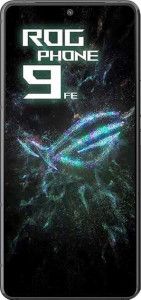
Asus ROG Phone 9 FE
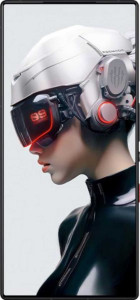
ZTE Nubia Red Magic 10 Air

Asus ROG Phone 9 FE ZTE Nubia Red Magic 10 Air

Overview

Welcome to our in-depth comparison of the Asus ROG Phone 9 FE and the ZTE Nubia Red Magic 10 Air — two gaming-focused Android smartphones sharing the same Snapdragon 8 Gen 3 processor yet taking noticeably different paths. From display performance and water resistance to battery capacity and camera capabilities, these two devices each bring a distinct set of trade-offs worth exploring before you commit to a purchase.

Common Features

  • Neither product can be folded.
  • Both products have an OLED/AMOLED display.
  • Both products have a typical brightness of 1600 nits.
  • Both products feature damage-resistant glass.
  • Both products support Always-On Display.
  • Both products have a touchscreen.
  • Both products are equipped with 16GB of RAM.
  • Both products use the Qualcomm Snapdragon 8 Gen 3 chipset.
  • Both products feature the Adreno 750 GPU with a clock speed of 900 MHz.
  • Both products share the same CPU speed of 3 x 3.15 & 2 x 2.96 & 2 x 2.26 & 1 x 3.3 GHz.
  • Both products achieved a Geekbench 6 multi-core score of 7325 and a single-core score of 2213.
  • Both products have integrated LTE support.
  • Both products run Android 15.
  • Both products support fast charging and have a non-removable, rechargeable battery with a battery level indicator.
  • Both products have stereo speakers.
  • Both products support aptX HD, aptX Adaptive, and aptX Lossless audio codecs.
  • Neither product has a radio.
  • Both products support 5G, Wi-Fi 7, Wi-Fi 6E, Wi-Fi 6, Wi-Fi 5, and Wi-Fi 4.
  • Both products have Bluetooth 5.4.
  • Both products have NFC, USB Type-C, dual SIM support, no external memory slot, and a maximum download speed of 10000 MBits/s.
  • Both products have a video light and a flat (non-curved) display.
  • Both products have multi-lens main cameras with optical image stabilization, CMOS sensors, phase-detection autofocus, continuous autofocus during video recording, slow-motion video recording, built-in HDR mode, and manual exposure.
  • Cross-site tracking is not blocked on either product.
  • Mail Privacy Protection is not available on either product.
  • Both products include clipboard warnings, location privacy options, camera and microphone privacy options, theme customization, and app tracking blocking.

Main Differences

  • Water resistance is rated as Waterproof (IP68) on Asus ROG Phone 9 FE and Water resistant (IP54) on ZTE Nubia Red Magic 10 Air.
  • Weight is 225 g on Asus ROG Phone 9 FE and 205 g on ZTE Nubia Red Magic 10 Air.
  • Thickness is 8.9 mm on Asus ROG Phone 9 FE and 7.9 mm on ZTE Nubia Red Magic 10 Air.
  • Width is 76.8 mm on Asus ROG Phone 9 FE and 76.6 mm on ZTE Nubia Red Magic 10 Air.
  • Height is 163.8 mm on Asus ROG Phone 9 FE and 164.3 mm on ZTE Nubia Red Magic 10 Air.
  • Volume is 111.96 cm³ on Asus ROG Phone 9 FE and 99.42 cm³ on ZTE Nubia Red Magic 10 Air.
  • Screen size is 6.78″ on Asus ROG Phone 9 FE and 6.8″ on ZTE Nubia Red Magic 10 Air.
  • Pixel density is 388 ppi on Asus ROG Phone 9 FE and 400 ppi on ZTE Nubia Red Magic 10 Air.
  • Resolution is 1080 x 2400 px on Asus ROG Phone 9 FE and 1116 x 2480 px on ZTE Nubia Red Magic 10 Air.
  • Refresh rate is 185Hz on Asus ROG Phone 9 FE and 120Hz on ZTE Nubia Red Magic 10 Air.
  • Touch sampling rate is 720Hz on Asus ROG Phone 9 FE and 960Hz on ZTE Nubia Red Magic 10 Air.
  • Screen protection is Gorilla Glass Victus 2 on Asus ROG Phone 9 FE and Gorilla Glass 5 on ZTE Nubia Red Magic 10 Air.
  • HDR10 and HDR10+ support is present on Asus ROG Phone 9 FE but not available on ZTE Nubia Red Magic 10 Air.
  • Internal storage is 256GB on Asus ROG Phone 9 FE and 512GB on ZTE Nubia Red Magic 10 Air.
  • AnTuTu benchmark score is 2,313,700 on Asus ROG Phone 9 FE and 1,898,456 on ZTE Nubia Red Magic 10 Air.
  • Main camera megapixels are 50 & 13 & 5 MP on Asus ROG Phone 9 FE and 50 & 50 MP on ZTE Nubia Red Magic 10 Air.
  • Front camera resolution is 32MP on Asus ROG Phone 9 FE and 16MP on ZTE Nubia Red Magic 10 Air.
  • Maximum video recording resolution is 2160 x 30 fps on Asus ROG Phone 9 FE and 4320 x 30 fps on ZTE Nubia Red Magic 10 Air.
  • A BSI sensor is present on ZTE Nubia Red Magic 10 Air but not on Asus ROG Phone 9 FE.
  • Laser autofocus is available on Asus ROG Phone 9 FE but not on ZTE Nubia Red Magic 10 Air.
  • An under-display front-facing camera is featured on ZTE Nubia Red Magic 10 Air but not on Asus ROG Phone 9 FE.
  • Battery capacity is 5500 mAh on Asus ROG Phone 9 FE and 6000 mAh on ZTE Nubia Red Magic 10 Air.
  • Wireless charging is supported on Asus ROG Phone 9 FE but not available on ZTE Nubia Red Magic 10 Air.
  • Charging speed is 65W on Asus ROG Phone 9 FE and 80W on ZTE Nubia Red Magic 10 Air.
  • A 3.5mm audio jack is present on Asus ROG Phone 9 FE but absent on ZTE Nubia Red Magic 10 Air.
  • aptX support is available on Asus ROG Phone 9 FE but not on ZTE Nubia Red Magic 10 Air.
  • An infrared sensor is present on ZTE Nubia Red Magic 10 Air but not on Asus ROG Phone 9 FE.
Specs Comparison
Asus ROG Phone 9 FE

Asus ROG Phone 9 FE

ZTE Nubia Red Magic 10 Air

ZTE Nubia Red Magic 10 Air

Design:
water resistance Waterproof Water resistant
weight 225 g 205 g
thickness 8.9 mm 7.9 mm
width 76.8 mm 76.6 mm
height 163.8 mm 164.3 mm
volume 111.960576 cm³ 99.424502 cm³
Ingress Protection (IP) rating IP68 IP54
can be folded

In terms of physical footprint, these two gaming phones are nearly twins: both share an almost identical width (around 76.7 mm) and height (roughly 164 mm), so neither will feel meaningfully taller or wider in hand. The real divergence comes in thickness and weight. The ZTE Nubia Red Magic 10 Air is notably slimmer at 7.9 mm versus the ROG Phone 9 FE's 8.9 mm, a full millimeter difference that translates to a more pocketable profile — a genuine achievement for a gaming-focused handset. Its weight of 205 g also undercuts the ROG Phone 9 FE's 225 g by 20 grams, which may not sound dramatic but is noticeable during extended gaming sessions where fatigue accumulates.

Where the Asus ROG Phone 9 FE reclaims significant ground is in water protection. Its IP68 rating means it is fully waterproof — rated for submersion in water — while the Red Magic 10 Air carries only an IP54 rating, which offers basic splash and dust resistance but nothing close to submersion protection. For a device that may travel to pools, beaches, or simply survive an accidental sink drop, this is a meaningful real-world advantage.

Overall, the Red Magic 10 Air wins on ergonomics and portability with its slimmer, lighter build, but the ROG Phone 9 FE holds a clear edge in durability and environmental protection. Which matters more depends on the user's priorities: those who want a svelte, lightweight gaming phone will prefer the Red Magic 10 Air, while those who need robust water protection should lean toward the ROG Phone 9 FE.

Display:
Display type OLED/AMOLED OLED/AMOLED
screen size 6.78" 6.8"
pixel density 388 ppi 400 ppi
resolution 1080 x 2400 px 1116 x 2480 px
refresh rate 185Hz 120Hz
touch sampling rate 720Hz 960Hz
brightness (typical) 1600 nits 1600 nits
has branded damage-resistant glass
Gorilla Glass version Gorilla Glass Victus 2 Gorilla Glass 5
supports HDR10
supports HDR10+
Always-On Display
has a touch screen

Both screens are nearly identical in size — 6.78″ vs 6.8″ — and share the same OLED/AMOLED panel technology and peak brightness of 1600 nits, so baseline visual quality is comparable. Pixel density is also very close (388 ppi vs 400 ppi), meaning neither will look noticeably sharper to the naked eye at normal viewing distances. The more revealing differences emerge when you look at the gaming-centric specs.

The Asus ROG Phone 9 FE pushes a 185Hz refresh rate — unusually high even among gaming phones — delivering smoother motion in fast-paced titles compared to the Red Magic 10 Air's more conventional 120Hz. The Red Magic does fight back with a 960Hz touch sampling rate versus the ROG's 720Hz, meaning it theoretically registers finger input more frequently. In practice, however, the perceptible benefit of 960Hz over 720Hz is marginal for most users, while the jump from 120Hz to 185Hz in refresh rate is far more visibly impactful during gameplay. The ROG also supports HDR10 and HDR10+ — which the Red Magic 10 Air lacks entirely — unlocking richer contrast and color depth in compatible streaming content and games.

Durability tells a similar story: the ROG Phone 9 FE uses Gorilla Glass Victus 2, a newer and more drop-resistant generation than the Red Magic's Gorilla Glass 5. Taken together, the ROG Phone 9 FE holds a clear display advantage — its higher refresh rate, HDR support, and superior glass protection make it the stronger all-around screen for both gaming and media consumption.

Performance:
internal storage 256GB 512GB
RAM 16GB 16GB
AnTuTu benchmark score 2313700 1898456
Chipset (SoC) name Qualcomm Snapdragon 8 Gen 3 Qualcomm Snapdragon 8 Gen 3
GPU name Adreno 750 Adreno 750
CPU speed 3 x 3.15 & 2 x 2.96 & 2 x 2.26 & 1 x 3.3 GHz 3 x 3.15 & 2 x 2.96 & 2 x 2.26 & 1 x 3.3 GHz
Geekbench 6 result (multi) 7325 7325
Geekbench 6 result (single) 2213 2213
GPU clock speed 900 MHz 900 MHz
Has integrated LTE
RAM speed 4800 MHz 4800 MHz
semiconductor size 4 nm 4 nm
Supports 64-bit
DirectX version DirectX 12 DirectX 12
Has integrated graphics
OpenGL version 3.2 3.2
OpenGL ES version 3.2 3.2
Uses big.LITTLE technology
CPU threads 8 threads 8 threads
Uses HMP
Has TrustZone
maximum memory bandwidth 76.6 GB/s 76.6 GB/s
OpenVG version 1.2 1.2
OpenCL version 2 2
memory channels 2 2
L2 cache 1 MB 1 MB
eMMC version 5.1 5.1
maximum memory amount 24GB 24GB
uses multithreading
GPU execution units 3 3
Thermal Design Power (TDP) 12.5W 12.5W
DDR memory version 5 5
supported displays 1 1
L3 cache 12 MB 12 MB

At the silicon level, these two phones are effectively identical: both run on the Qualcomm Snapdragon 8 Gen 3 with the same Adreno 750 GPU, identical CPU core configuration, 16GB of LPDDR5 RAM at 4800 MHz, and matching cache sizes. Predictably, their Geekbench 6 scores are carbon copies — 2213 single-core and 7325 multi-core — confirming that at the processor level, neither phone has any architectural advantage over the other.

The one performance figure that does diverge significantly is the AnTuTu benchmark: the ROG Phone 9 FE scores 2,313,700 against the Red Magic 10 Air's 1,898,456 — a gap of roughly 22%. AnTuTu is a composite score that weights GPU, memory throughput, and UX responsiveness alongside raw CPU performance, so this spread suggests that factors like sustained thermal management or software-level tuning may be contributing to the difference, rather than the silicon itself. The storage configuration also sets them apart: the Red Magic 10 Air ships with 512GB of internal storage as standard, doubling the ROG's 256GB — a meaningful advantage for users who accumulate large game libraries or media files.

Summing it up: for raw, sustained gaming performance as reflected in benchmarks, the ROG Phone 9 FE holds a measurable edge despite identical hardware on paper. The Red Magic 10 Air counters with significantly more base storage. Users who prioritize peak benchmark performance should lean toward the ROG; those who need generous onboard space without upgrading will find the Red Magic 10 Air's 512GB default more practical.

Cameras:
megapixels (main camera) 50 & 13 & 5 MP 50 & 50 MP
wide aperture (main camera) 1.9 & 2.2 & 2.4f 2.2 & 1.9f
Has a dual-lens (or multi-lens) main camera
megapixels (front camera) 32MP 16MP
has built-in optical image stabilization
video recording (main camera) 2160 x 30 fps 4320 x 30 fps
has a BSI sensor
has a CMOS sensor
has continuous autofocus when recording movies
Has phase-detection autofocus for photos
supports slow-motion video recording
has a built-in HDR mode
has manual exposure
has a flash
has manual ISO
has a serial shot mode
has manual focus
has a front camera
Has laser autofocus
Shoots 360° panorama
has manual white balance
has touch autofocus
has manual shutter speed
can create panoramas in-camera
Has timelapse function
Has a front-facing LED flash
has a dual-lens (or multi-lens) front camera
has a front-facing camera under the display
Has a RGB LED flash

The rear camera systems take meaningfully different approaches. The ROG Phone 9 FE opts for a triple-camera setup (50 + 13 + 5 MP), trading the third lens for versatility — covering a wider focal range — and adds laser autofocus for faster, more reliable subject locking. The Red Magic 10 Air counters with a dual 50 MP system, prioritizing resolution consistency across both lenses, and includes a BSI (Back-Side Illuminated) sensor that the ROG lacks, which typically improves light capture in low-light conditions by reducing noise at the pixel level.

The most dramatic gap is in video capability: the Red Magic 10 Air tops out at 8K (4320p) at 30fps, a full tier above the ROG's 4K (2160p) at 30fps. For users who shoot high-resolution video for large-screen playback or future-proofing, this is a substantial advantage. On the selfie side, the dynamic flips — the ROG Phone 9 FE offers a 32MP front camera versus the Red Magic's 16MP, doubling the resolution for sharper portraits and video calls. The Red Magic does, however, feature an under-display front camera, which eliminates the notch or punch-hole entirely for a cleaner full-screen experience, albeit often at some cost to image clarity inherent to that technology.

Neither phone dominates outright. The Red Magic 10 Air holds the edge for rear camera video resolution and low-light sensor design, making it the stronger choice for videographers. The ROG Phone 9 FE counters with a more versatile triple-lens array, laser autofocus, and a significantly higher-resolution selfie camera. Users who prioritize rear video quality should lean toward the Red Magic; those who value front camera sharpness and rear focal flexibility will find the ROG more capable.

Operating system:
Android version Android 15 Android 15
has clipboard warnings
has location privacy options
has camera/microphone privacy options
has Mail Privacy Protection
has theme customization
can block app tracking
blocks cross-site tracking
has on-device machine learning
has notification permissions
has media picker
Can play games while they download
has dark mode
has Wi-Fi password sharing
has battery health check
has an extra dim mode
has focus modes
has dynamic theming
can offload apps
Has customizable notifications
has Live Text
has full-page screenshots
supports split screen
gets direct OS updates
has PiP
Can be used as a PC
Has sharing intents
has a child lock
Supports widgets
Is free and open source
Has offline voice recognition
has voice commands
Tracks the current position of a mobile device
is a multi-user system
has Quick Start

This is a rare case of complete parity: the Asus ROG Phone 9 FE and the ZTE Nubia Red Magic 10 Air share an identical operating system profile across every measured dimension. Both ship with Android 15 and offer the same feature set — from privacy controls like camera/microphone permissions and app tracking blocks, to usability staples like split-screen multitasking, Picture-in-Picture, dynamic theming, and offline voice recognition. Neither receives direct OS updates from Google, and neither supports features like Wi-Fi password sharing, cross-site tracking blocking, or focus modes.

The practical takeaway is that a user switching between these two phones would find a functionally indistinguishable software environment. The privacy toolset is solid on both — location controls, clipboard warnings, and on-device machine learning are all present — though the absence of cross-site tracking blocking and Mail Privacy Protection is a shared limitation worth noting for privacy-conscious buyers.

This category is a clear tie. With no differentiating software features between them, the operating system should not factor into a purchase decision between these two phones. The choice will rest entirely on the hardware differences covered in other categories.

Battery:
battery power 5500 mAh 6000 mAh
has wireless charging
Supports fast charging
charging speed 65W 80W
has a removable battery
has a battery level indicator
has a rechargeable battery

Battery capacity and charging speed are where these two phones diverge in interesting, almost inverse ways. The Red Magic 10 Air packs a larger 6000 mAh cell versus the ROG Phone 9 FE's 5500 mAh — a 500 mAh difference that, during the kind of sustained gaming sessions these phones are designed for, can translate to a meaningful extra window of use before reaching for a cable. It also charges faster at 80W compared to the ROG's 65W, meaning less time tethered to a wall even when the battery does run low.

The ROG Phone 9 FE hits back with one feature the Red Magic 10 Air lacks entirely: wireless charging. For users who rely on Qi pads at a desk or bedside, this is a genuine convenience advantage — dropping the phone on a pad rather than fumbling for a cable adds up over time. Whether that convenience outweighs the Red Magic's larger battery and faster wired charging depends entirely on the user's daily habits.

On balance, the Red Magic 10 Air holds the stronger battery profile for pure gaming endurance and rapid top-ups, making it the more practical choice for heavy users away from home. The ROG Phone 9 FE's wireless charging support is a meaningful lifestyle perk, but it cannot compensate for the smaller capacity and slower wired speeds. Users who prioritize longevity and fast recovery will find the Red Magic 10 Air's 6000 mAh / 80W combination more compelling.

Audio:
has a socket for a 3.5 mm audio jack
has stereo speakers
has aptX
has aptX HD
has aptX Adaptive
has aptX Lossless
Has a radio

Wired audio enthusiasts will immediately notice the most significant split in this category: the ROG Phone 9 FE retains a 3.5mm headphone jack, while the Red Magic 10 Air omits it entirely. For gamers who rely on wired headsets for zero-latency audio — particularly in competitive play where wireless latency can be a concern — this is a tangible functional advantage that no Bluetooth codec can fully replicate.

On the wireless side, both phones support the high-tier aptX HD, aptX Adaptive, and aptX Lossless codecs, covering high-resolution and low-latency Bluetooth audio for compatible headphones. The ROG Phone 9 FE adds base aptX support as well, though this lower-tier codec is largely redundant when the more capable variants are already present — a minor technical footnote rather than a meaningful real-world differentiator. Both phones also feature stereo speakers, ensuring comparable immersive audio for gaming and media without headphones.

The ROG Phone 9 FE holds a clear advantage here. The shared Bluetooth codec support and stereo speakers keep the two evenly matched for wireless and speaker audio, but the inclusion of a 3.5mm jack gives the ROG meaningful added flexibility — a feature that gaming-oriented users with wired headsets will genuinely appreciate and that the Red Magic 10 Air simply cannot offer.

Connectivity & Features:
release date February 2025 April 2025
has 5G support
Wi-Fi version Wi-Fi 4 (802.11n), Wi-Fi 6E (802.11ax), Wi-Fi 6 (802.11ax), Wi-Fi 5 (802.11ac), Wi-Fi 7 (802.11be) Wi-Fi 4 (802.11n), Wi-Fi 6E (802.11ax), Wi-Fi 6 (802.11ax), Wi-Fi 5 (802.11ac), Wi-Fi 7 (802.11be)
SIM cards 2 SIM 2 SIM
Bluetooth version 5.4 5.4
has an external memory slot
Has USB Type-C
has NFC
download speed 10000 MBits/s 10000 MBits/s
upload speed 3500 MBits/s 3500 MBits/s
Has a fingerprint scanner
has a gyroscope
Has a heart rate monitor
has GPS
has a compass
supports Wi-Fi
Has an infrared sensor
has an accelerometer
has a cellular module
Has a barometer
Uses 3D facial recognition
Has an iris scanner
Stylus included
supports Galileo

Connectivity parity is the defining story of this category. Both phones offer identical wireless stacks — Wi-Fi 7 (802.11be) with full backwards compatibility, Bluetooth 5.4, 5G, NFC, and matching peak download and upload speeds of 10,000 / 3,500 Mbps. Dual SIM, USB Type-C, and the same core sensor suite — fingerprint scanner, gyroscope, accelerometer, GPS, and compass — are shared across both as well. For the vast majority of connectivity use cases, these two phones are functionally indistinguishable.

The sole differentiator in this entire category is the Red Magic 10 Air's inclusion of an infrared (IR) blaster, which the ROG Phone 9 FE lacks. An IR blaster allows the phone to function as a universal remote control for TVs, air conditioners, and other home appliances — a niche but genuinely useful convenience feature for users who want to consolidate their devices.

This category is nearly a tie, with the Red Magic 10 Air claiming a narrow edge solely due to its IR blaster. For users who have no interest in that feature, the two phones are completely equivalent in connectivity and sensors. Those who value smart home or remote-control functionality will find the Red Magic 10 Air's extra hardware a welcome addition the ROG Phone 9 FE simply cannot match.

Miscellaneous:
has a video light
Has a curved display

With only two data points in this category — and both phones sharing identical values on each — there is nothing to differentiate here. Both the ROG Phone 9 FE and the Red Magic 10 Air feature a video light and opt for a flat display over a curved one, the latter being a deliberate and sensible choice for gaming-focused devices where curved edges can introduce accidental touch inputs during intense gameplay.

This category is a complete tie. Neither phone holds any advantage over the other based on the available data, and this group should carry no weight in a purchase decision between the two.

Comparison Summary & Verdict

After examining every specification, it is clear that both phones serve the gaming and power-user audience well, but with different priorities. The Asus ROG Phone 9 FE stands out with its superior IP68 waterproof rating, a higher 185Hz refresh rate, HDR10 and HDR10+ display support, wireless charging, a 3.5mm audio jack, and a stronger AnTuTu benchmark score — making it the better pick for users who want a more well-rounded, feature-rich device with proven durability. The ZTE Nubia Red Magic 10 Air, on the other hand, wins on slimmer and lighter design, a larger 6000 mAh battery, faster 80W wired charging, 8K video recording, 512GB of built-in storage, and an under-display front camera — appealing to users who prioritize portability, endurance, and cutting-edge camera hardware. Both run Android 15 on identical silicon, so your choice ultimately comes down to lifestyle and the features that matter most to you.

Asus ROG Phone 9 FE
Buy Asus ROG Phone 9 FE if...

Buy the Asus ROG Phone 9 FE if you want superior waterproofing (IP68), a higher display refresh rate, HDR10+ support, wireless charging, and a headphone jack in a feature-packed gaming phone.

ZTE Nubia Red Magic 10 Air
Buy ZTE Nubia Red Magic 10 Air if...

Buy the ZTE Nubia Red Magic 10 Air if you prefer a slimmer and lighter design, a larger 6000 mAh battery with faster 80W charging, double the storage at 512GB, and 8K video recording capability.