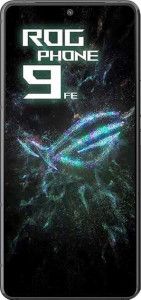
Asus ROG Phone 9 FE
ZTE Nubia Red Magic 11 Pro (China)

Asus ROG Phone 9 FE ZTE Nubia Red Magic 11 Pro (China)

Overview

Welcome to our in-depth comparison of the Asus ROG Phone 9 FE and the ZTE Nubia Red Magic 11 Pro (China), two powerhouse gaming smartphones that share a surprising amount of common ground while diverging sharply in key areas. From chipset performance and display characteristics to battery capacity and audio codec support, this head-to-head breakdown will help you identify which device best matches your priorities and use case.

Common Features

  • Both phones share the same thickness of 8.9 mm.
  • Both phones share the same height of 163.8 mm.
  • Neither phone has a rugged build.
  • Neither phone can be folded.
  • Both phones feature an OLED/AMOLED display type.
  • Both phones support Always-On Display.
  • Neither phone supports Dolby Vision.
  • Neither phone has a secondary screen.
  • Both phones have a touch screen.
  • Both phones come with 16GB of RAM.
  • Both phones have integrated LTE support.
  • Both phones support 64-bit processing.
  • Both phones use DirectX 12.
  • Both phones use big.LITTLE CPU technology.
  • Both phones have integrated graphics.
  • Both phones feature a multi-lens main camera.
  • Both phones have built-in optical image stabilization.
  • Neither phone has a dual-tone LED flash.
  • Both phones have a CMOS sensor.
  • Both phones support continuous autofocus when recording movies.
  • Both phones support phase-detection autofocus for photos.
  • Both phones share the same main camera wide aperture values of 1.9 & 2.2 & 2.4f.
  • Both phones run on Android with clipboard warnings available.
  • Both phones include location privacy options.
  • Both phones include camera and microphone privacy options.
  • Neither phone has Mail Privacy Protection.
  • Both phones support theme customization.
  • Both phones can block app tracking.
  • Neither phone blocks cross-site tracking.
  • Both phones have on-device machine learning.
  • Both phones support wireless charging.
  • Both phones support fast charging.
  • Neither phone supports reverse wireless charging.
  • Neither phone has a removable battery.
  • Both phones have a battery level indicator.
  • Both phones have a rechargeable battery.
  • Both phones include a 3.5 mm audio jack.
  • Both phones have stereo speakers.
  • Neither phone has a radio.
  • Both phones support 5G.
  • Both phones support Wi-Fi 4, Wi-Fi 5, Wi-Fi 6, Wi-Fi 6E, and Wi-Fi 7.
  • Both phones accommodate 2 SIM cards.
  • Both phones use Bluetooth version 5.4.
  • Neither phone has an external memory slot.
  • Both phones have USB Type-C.
  • Both phones have NFC.
  • Both phones have a download speed of 10000 MBits/s.
  • Both phones have a video light.
  • Neither phone has a sapphire glass display.
  • Neither phone has a curved display.
  • Neither phone has an e-paper display.

Main Differences

  • Water resistance is rated as fully waterproof on Asus ROG Phone 9 FE, while ZTE Nubia Red Magic 11 Pro (China) is only water resistant.
  • Weight is 225 g on Asus ROG Phone 9 FE and 230 g on ZTE Nubia Red Magic 11 Pro (China).
  • Width is 76.8 mm on Asus ROG Phone 9 FE and 76.5 mm on ZTE Nubia Red Magic 11 Pro (China).
  • Volume is 111.960576 cm³ on Asus ROG Phone 9 FE and 111.52323 cm³ on ZTE Nubia Red Magic 11 Pro (China).
  • IP rating is IP68 on Asus ROG Phone 9 FE and IPX8 on ZTE Nubia Red Magic 11 Pro (China).
  • Screen size is 6.78″ on Asus ROG Phone 9 FE and 6.85″ on ZTE Nubia Red Magic 11 Pro (China).
  • Pixel density is 388 ppi on Asus ROG Phone 9 FE and 431 ppi on ZTE Nubia Red Magic 11 Pro (China).
  • Resolution is 1080 x 2400 px on Asus ROG Phone 9 FE and 1216 x 2688 px on ZTE Nubia Red Magic 11 Pro (China).
  • Refresh rate is 185Hz on Asus ROG Phone 9 FE and 144Hz on ZTE Nubia Red Magic 11 Pro (China).
  • Damage-resistant glass is present on Asus ROG Phone 9 FE but not available on ZTE Nubia Red Magic 11 Pro (China).
  • HDR10 support is present on Asus ROG Phone 9 FE but not available on ZTE Nubia Red Magic 11 Pro (China).
  • HDR10+ support is present on Asus ROG Phone 9 FE but not available on ZTE Nubia Red Magic 11 Pro (China).
  • Internal storage is 256GB on Asus ROG Phone 9 FE and 512GB on ZTE Nubia Red Magic 11 Pro (China).
  • The chipset is Qualcomm Snapdragon 8 Gen 3 on Asus ROG Phone 9 FE and Qualcomm Snapdragon 8 Elite Gen 5 on ZTE Nubia Red Magic 11 Pro (China).
  • The GPU is Adreno 750 on Asus ROG Phone 9 FE and Adreno 830 on ZTE Nubia Red Magic 11 Pro (China).
  • CPU speed is 3 x 3.15 & 2 x 2.96 & 2 x 2.26 & 1 x 3.3 GHz on Asus ROG Phone 9 FE and 2 x 4.6 & 6 x 3.62 GHz on ZTE Nubia Red Magic 11 Pro (China).
  • Geekbench 6 multi-core score is 7325 on Asus ROG Phone 9 FE and 10059 on ZTE Nubia Red Magic 11 Pro (China).
  • Geekbench 6 single-core score is 2213 on Asus ROG Phone 9 FE and 3234 on ZTE Nubia Red Magic 11 Pro (China).
  • GPU clock speed is 900 MHz on Asus ROG Phone 9 FE and 1200 MHz on ZTE Nubia Red Magic 11 Pro (China).
  • RAM speed is 4800 MHz on Asus ROG Phone 9 FE and 5300 MHz on ZTE Nubia Red Magic 11 Pro (China).
  • Semiconductor size is 4 nm on Asus ROG Phone 9 FE and 3 nm on ZTE Nubia Red Magic 11 Pro (China).
  • Maximum memory bandwidth is 76.6 GB/s on Asus ROG Phone 9 FE and 85.1 GB/s on ZTE Nubia Red Magic 11 Pro (China).
  • OpenCL version is 2 on Asus ROG Phone 9 FE and 3 on ZTE Nubia Red Magic 11 Pro (China).
  • L2 cache is 1 MB on Asus ROG Phone 9 FE and 12 MB on ZTE Nubia Red Magic 11 Pro (China).
  • Main camera megapixels are 50 & 13 & 5 MP on Asus ROG Phone 9 FE and 50 & 50 & 2 MP on ZTE Nubia Red Magic 11 Pro (China).
  • Front camera megapixels are 32MP on Asus ROG Phone 9 FE and 16MP on ZTE Nubia Red Magic 11 Pro (China).
  • Main camera video recording goes up to 2160 x 30 fps on Asus ROG Phone 9 FE and 4320 x 30 fps on ZTE Nubia Red Magic 11 Pro (China).
  • Laser autofocus is present on Asus ROG Phone 9 FE but not available on ZTE Nubia Red Magic 11 Pro (China).
  • Front camera wide aperture is 2.5f on Asus ROG Phone 9 FE and 2f on ZTE Nubia Red Magic 11 Pro (China).
  • Android version is Android 15 on Asus ROG Phone 9 FE and Android 16 on ZTE Nubia Red Magic 11 Pro (China).
  • Battery capacity is 5500 mAh on Asus ROG Phone 9 FE and 8000 mAh on ZTE Nubia Red Magic 11 Pro (China).
  • Charging speed is 65W on Asus ROG Phone 9 FE and 80W on ZTE Nubia Red Magic 11 Pro (China).
  • aptX support is present on Asus ROG Phone 9 FE but not available on ZTE Nubia Red Magic 11 Pro (China).
  • aptX HD support is present on Asus ROG Phone 9 FE but not available on ZTE Nubia Red Magic 11 Pro (China).
  • aptX Adaptive support is present on Asus ROG Phone 9 FE but not available on ZTE Nubia Red Magic 11 Pro (China).
  • aptX Lossless support is present on Asus ROG Phone 9 FE but not available on ZTE Nubia Red Magic 11 Pro (China).
  • An infrared sensor is present on ZTE Nubia Red Magic 11 Pro (China) but not available on Asus ROG Phone 9 FE.
Specs Comparison
Asus ROG Phone 9 FE

Asus ROG Phone 9 FE

ZTE Nubia Red Magic 11 Pro (China)

ZTE Nubia Red Magic 11 Pro (China)

Design:
water resistance Waterproof Water resistant
weight 225 g 230 g
thickness 8.9 mm 8.9 mm
width 76.8 mm 76.5 mm
height 163.8 mm 163.8 mm
volume 111.960576 cm³ 111.52323 cm³
Ingress Protection (IP) rating IP68 IPX8
has a rugged build
can be folded

In terms of physical form, these two gaming flagships are nearly identical twins. Both share the exact same 8.9 mm thickness and 163.8 mm height, with only a trivial 0.3 mm difference in width. The weight gap is similarly negligible — the Asus ROG Phone 9 FE at 225 g versus the ZTE Nubia Red Magic 11 Pro at 230 g — a 5-gram delta that will be imperceptible in daily use. For a category of phones known for packing large batteries and cooling hardware, both are reasonably compact.

The one area where a meaningful distinction emerges is environmental protection. The ROG Phone 9 FE carries a full IP68 rating, meaning it is certified against both dust ingress and sustained water submersion. The Red Magic 11 Pro, by contrast, holds an IPX8 rating — the ″X″ explicitly indicates that dust resistance has not been tested or certified. In practice, this means the Red Magic offers solid water protection but provides no guarantee against fine particulate matter like sand or dust, which matters for users who take their device into outdoor or harsh environments.

Overall, these phones are essentially tied on ergonomics and portability. However, the Asus ROG Phone 9 FE holds a clear edge in design durability thanks to its superior IP68 certification, making it the more comprehensively protected device for users who prioritize resilience beyond water resistance alone.

Display:
Display type OLED/AMOLED OLED/AMOLED
screen size 6.78" 6.85"
pixel density 388 ppi 431 ppi
resolution 1080 x 2400 px 1216 x 2688 px
refresh rate 185Hz 144Hz
has branded damage-resistant glass
supports HDR10
supports HDR10+
Always-On Display
supports Dolby Vision
Has a secondary screen
has a touch screen

Both phones use OLED/AMOLED panels, ensuring deep blacks and vibrant colors as a shared baseline. Where they diverge is meaningful. The Red Magic 11 Pro's 1216 x 2688 px resolution across a 6.85″ screen yields a notably sharper 431 ppi pixel density, compared to the ROG Phone 9 FE's 388 ppi at 1080 x 2400 px. In real-world use, that gap is perceptible — text, fine UI details, and high-resolution media will look crisper on the Red Magic, particularly at close viewing distances typical of handheld gaming.

The ROG Phone 9 FE fights back on multiple fronts, though. Its 185Hz refresh rate significantly outpaces the Red Magic's 144Hz, which translates to smoother motion in fast-paced games and more responsive scrolling — a genuinely important spec for the gaming phone segment. Beyond that, the ROG also supports HDR10+, enabling dynamic tone-mapping for compatible streaming content, while the Red Magic supports neither HDR10 nor HDR10+. Add in the ROG's branded damage-resistant glass — absent on the Red Magic — and the ROG offers a more complete, durable display package for media consumption.

This group comes down to a genuine trade-off: the Red Magic 11 Pro delivers a sharper, higher-resolution picture, while the Asus ROG Phone 9 FE counters with a faster refresh rate, superior HDR support, and better physical screen protection. For competitive gaming where fluid motion is paramount, the ROG holds the edge. For users who prioritize image fidelity and sharpness above all else, the Red Magic has the upper hand. On balance, the ROG Phone 9 FE edges ahead for the gaming-focused buyer this category targets.

Performance:
internal storage 256GB 512GB
RAM 16GB 16GB
Chipset (SoC) name Qualcomm Snapdragon 8 Gen 3 Qualcomm Snapdragon 8 Elite Gen 5
GPU name Adreno 750 Adreno 830
CPU speed 3 x 3.15 & 2 x 2.96 & 2 x 2.26 & 1 x 3.3 GHz 2 x 4.6 & 6 x 3.62 GHz
Geekbench 6 result (multi) 7325 10059
Geekbench 6 result (single) 2213 3234
GPU clock speed 900 MHz 1200 MHz
Has integrated LTE
RAM speed 4800 MHz 5300 MHz
semiconductor size 4 nm 3 nm
Supports 64-bit
DirectX version DirectX 12 DirectX 12
Has integrated graphics
OpenGL version 3.2 3.2
OpenGL ES version 3.2 3.2
Uses big.LITTLE technology
CPU threads 8 threads 8 threads
Uses HMP
Has TrustZone
maximum memory bandwidth 76.6 GB/s 85.1 GB/s
OpenCL version 2 3
memory channels 2 2
L2 cache 1 MB 12 MB
maximum memory amount 24GB 24GB
uses multithreading
Thermal Design Power (TDP) 12.5W 8.2W
DDR memory version 5 5
supported displays 1 2
L3 cache 12 MB 8 MB

The chipset gap here is substantial and defines the entire performance story. The ROG Phone 9 FE runs on the Snapdragon 8 Gen 3, a capable 4nm chip, while the Red Magic 11 Pro houses the newer Snapdragon 8 Elite Gen 5 built on a 3nm process. That generational leap shows clearly in the benchmarks: the Red Magic scores 10,059 multi-core and 3,234 single-core on Geekbench 6, versus 7,325 and 2,213 for the ROG — roughly a 37% multi-core and 46% single-core advantage. These are not marginal differences; they translate to noticeably faster app launches, smoother sustained workloads, and more headroom for demanding titles at high settings.

The GPU story reinforces this lead. The Red Magic's Adreno 830 runs at 1,200 MHz with 85.1 GB/s memory bandwidth, compared to the ROG's Adreno 750 at 900 MHz and 76.6 GB/s. For a gaming phone, GPU throughput is arguably the most critical performance metric, and the Red Magic holds a commanding edge. It also ships with 512 GB of internal storage versus 256 GB on the ROG — double the space for game libraries that routinely exceed 10–20 GB per title. Equally notable is the Red Magic's lower 8.2W TDP against the ROG's 12.5W, meaning the newer chip delivers more performance while generating less heat — a critical advantage for sustained gaming sessions.

The ZTE Nubia Red Magic 11 Pro wins this category decisively. Across every meaningful performance dimension — raw CPU throughput, GPU speed, memory bandwidth, storage capacity, and thermal efficiency — it outclasses the ROG Phone 9 FE by a clear margin that users will feel in real-world, high-demand scenarios.

Cameras:
megapixels (main camera) 50 & 13 & 5 MP 50 & 50 & 2 MP
wide aperture (main camera) 1.9 & 2.2 & 2.4f 1.9 & 2.2 & 2.4f
Has a dual-lens (or multi-lens) main camera
megapixels (front camera) 32MP 16MP
has built-in optical image stabilization
video recording (main camera) 2160 x 30 fps 4320 x 30 fps
Has a dual-tone LED flash
has a BSI sensor
has a CMOS sensor
has continuous autofocus when recording movies
Has phase-detection autofocus for photos
supports slow-motion video recording
has a built-in HDR mode
has manual exposure
has a flash
optical zoom 0x 0x
has manual ISO
has a serial shot mode
has manual focus
has a front camera
Has laser autofocus
Shoots 360° panorama
has manual white balance
has touch autofocus
has manual shutter speed
can create panoramas in-camera
wide aperture (front camera) 2.5f 2f
Has timelapse function
Has a front-facing LED flash
has a dual-lens (or multi-lens) front camera
supports HDR10 recording
supports Dolby Vision recording
has a front-facing camera under the display
Has a RGB LED flash
has 3D photo/video recording capabilities

The rear camera systems share a 50MP primary sensor and identical aperture values across all three lenses, but the composition of the supporting cameras tells different stories. The ROG Phone 9 FE pairs its main shooter with a 13MP ultrawide and a 5MP macro, while the Red Magic 11 Pro opts for a far more capable 50MP ultrawide alongside a modest 2MP depth sensor. A 50MP ultrawide captures dramatically more detail in landscape and architectural shots compared to a 13MP equivalent — for rear versatility, the Red Magic's secondary lens is a genuine upgrade. The ROG's macro lens, by contrast, is a lower-utility addition that most users rarely reach for.

The video gap is equally decisive. The Red Magic supports 8K (4320p) recording at 30fps, while the ROG tops out at 4K (2160p). For users who want maximum resolution footage — whether for professional use or future-proofing edits — that is a meaningful ceiling difference. Flipping to the front camera, however, the ROG reclaims ground: its 32MP selfie sensor outresolves the Red Magic's 16MP, and the ROG also adds laser autofocus for faster, more reliable subject locking. The Red Magic counters with a slightly wider f/2.0 front aperture versus the ROG's f/2.5, admitting more light in low-light selfie conditions.

On balance, the Red Magic 11 Pro holds the advantage in this category. Its superior ultrawide resolution and 8K video capability give it a stronger rear camera package for most shooting scenarios. The ROG Phone 9 FE leads on selfie resolution and autofocus, making it the better pick for front-camera-focused users — but rear camera utility is typically the higher-priority metric, and the Red Magic wins there clearly.

Operating system:
Android version Android 15 Android 16
has clipboard warnings
has location privacy options
has camera/microphone privacy options
has Mail Privacy Protection
has theme customization
can block app tracking
blocks cross-site tracking
has on-device machine learning
has notification permissions
has media picker
Can play games while they download
has dark mode
has Wi-Fi password sharing
has battery health check
has an extra dim mode
has focus modes
has dynamic theming
can offload apps
Has customizable notifications
has Live Text
has full-page screenshots
supports split screen
gets direct OS updates
has PiP
Can be used as a PC
Has sharing intents
has a child lock
Supports widgets
Is free and open source
Has offline voice recognition
has voice commands
Tracks the current position of a mobile device
is a multi-user system
has Quick Start

Across the full breadth of OS-level features, these two phones are in near-perfect lockstep. Privacy controls, multitasking capabilities, customization options, productivity tools — every single feature in the provided data is shared identically by both devices. This is largely a consequence of both running stock Android with the same feature set baked in at the platform level.

The one — and only — differentiator in this group is the Android version. The ROG Phone 9 FE ships on Android 15, while the Red Magic 11 Pro launches on Android 16. A newer base version means the Red Magic arrives with the latest platform security patches, behavioral improvements, and any new system-level APIs that Android 16 introduces out of the box. For the ROG to reach parity, it would need to receive an OS update — and notably, neither phone is listed as getting direct OS updates, which introduces some uncertainty about how quickly or reliably that upgrade path would materialize.

This category has a clear but narrow winner: the Red Magic 11 Pro holds the edge purely by virtue of launching on a newer OS version. It is not a sweeping advantage — the functional day-to-day experience will be virtually indistinguishable between the two — but shipping on Android 16 from the outset means better baseline security and platform currency without waiting for an update.

Battery:
battery power 5500 mAh 8000 mAh
has wireless charging
Supports fast charging
charging speed 65W 80W
has reverse wireless charging
has a removable battery
has a battery level indicator
has a rechargeable battery

Battery capacity is where the Red Magic 11 Pro makes one of its most dramatic statements in this entire comparison. Its 8,000 mAh cell dwarfs the ROG Phone 9 FE's already-generous 5,500 mAh — a 45% larger reserve that, in practical terms, could mean the difference between one and two full days of heavy gaming use without reaching for a charger. For a device category where sustained screen-on time and intensive GPU loads are the norm, that extra headroom is not a luxury; it is a core usability advantage.

Charging speed follows a similar pattern. The Red Magic tops up at 80W versus the ROG's 65W, meaning it refills faster despite having a significantly larger tank — a combination that is genuinely impressive. Both phones support wireless charging, and neither offers reverse wireless charging, so those features are a wash. The shared absence of a removable battery is standard for the segment and worth no differentiation.

The Red Magic 11 Pro wins this category comprehensively. A larger battery and faster wired charging together form a package that the ROG Phone 9 FE simply cannot match on paper. For marathon gaming sessions or heavy-use days where plugging in is inconvenient, the Red Magic's battery configuration offers a substantial real-world advantage.

Audio:
has a socket for a 3.5 mm audio jack
has stereo speakers
has aptX
has aptX HD
has aptX Adaptive
has aptX Lossless
Has a radio

At the hardware level, both phones are evenly matched: each offers a 3.5mm audio jack — increasingly rare in flagships — and stereo speakers. For wired and speaker-based listening, neither holds an advantage. The meaningful divergence lies entirely in Bluetooth audio codec support, and it is one-sided.

The ROG Phone 9 FE supports the full Qualcomm aptX stack: aptX, aptX HD, aptX Adaptive, and aptX Lossless. The Red Magic 11 Pro supports none of them. In practice, this means that when paired with compatible wireless headphones or earbuds, the ROG can stream audio at significantly higher bitrates with lower latency — aptX Lossless in particular enables CD-quality wireless audio, while aptX Adaptive dynamically adjusts quality and latency based on connection conditions. The Red Magic, lacking these codecs, will fall back to standard SBC or AAC when connected to Bluetooth audio devices, which represents a tangible quality ceiling for wireless listening.

The Asus ROG Phone 9 FE wins this category clearly. The shared hardware features — headphone jack and stereo speakers — neutralize each other, but the ROG's comprehensive aptX codec support gives it a decisive edge for anyone who uses Bluetooth headphones and cares about audio fidelity. For the Red Magic, the absence of aptX is a notable omission with no offsetting advantage in this spec group.

Connectivity & Features:
release date February 2025 October 2025
has 5G support
Wi-Fi version Wi-Fi 4 (802.11n), Wi-Fi 6E (802.11ax), Wi-Fi 6 (802.11ax), Wi-Fi 5 (802.11ac), Wi-Fi 7 (802.11be) Wi-Fi 4 (802.11n), Wi-Fi 6E (802.11ax), Wi-Fi 6 (802.11ax), Wi-Fi 5 (802.11ac), Wi-Fi 7 (802.11be)
SIM cards 2 SIM 2 SIM
Bluetooth version 5.4 5.4
has an external memory slot
Has USB Type-C
has NFC
download speed 10000 MBits/s 10000 MBits/s
upload speed 3500 MBits/s 3500 MBits/s
Has a fingerprint scanner
has emergency SOS via satellite
has crash detection
is DLNA-certified
has a gyroscope
supports ANT+
Has a heart rate monitor
has GPS
has a compass
supports Wi-Fi
Has an infrared sensor
has an accelerometer
has a cellular module
Has a barometer
has an HDMI output
Uses 3D facial recognition
Has an iris scanner
Stylus included
supports Galileo
Has motion tracking
Has optical tracking
Has a built-in projector

Connectivity parity is almost total here. Both phones share an identical feature set across the most consequential specs: Wi-Fi 7 support, Bluetooth 5.4, 5G, NFC, dual SIM, USB Type-C, and matching peak download and upload speeds of 10,000 / 3,500 Mbps. For day-to-day connectivity — whether gaming online, transferring files, or pairing peripherals — users of either device will have access to the same modern wireless infrastructure. The sensor suite is equally matched, covering GPS with Galileo support, gyroscope, accelerometer, compass, and fingerprint scanner on both sides.

Scanning the entire spec list for a differentiator, only one emerges: the Red Magic 11 Pro includes an infrared sensor, which the ROG Phone 9 FE lacks. An IR blaster allows the phone to function as a universal remote for televisions, air conditioners, and other consumer electronics — a niche but genuinely convenient feature for users who want to consolidate their remotes into a single device.

This is the closest category in the entire comparison. The two phones are functionally identical across every high-impact connectivity metric. The Red Magic 11 Pro earns a narrow technical edge solely due to its infrared sensor, but the practical significance of that advantage depends entirely on whether the user has IR-compatible devices at home. For the vast majority of connectivity use cases, these phones are a dead heat.

Miscellaneous:
has a video light
Has sapphire glass display
Has a curved display
Has an e-paper display

The Miscellaneous group offers no differentiating data between these two devices. Every spec listed — presence of a video light, absence of sapphire glass, flat display, and no e-paper panel — is identical across both the Asus ROG Phone 9 FE and the Red Magic 11 Pro. There is simply nothing in this dataset to separate them.

This is a complete tie. No advantage can be assigned to either product based strictly on the provided specs, and introducing external assumptions would go beyond the data. Users can treat this category as a non-factor in their decision-making process and weigh the other specification groups accordingly.

Comparison Summary & Verdict

After examining every specification, a clear picture emerges for each device. The ZTE Nubia Red Magic 11 Pro (China) dominates in raw performance thanks to its Snapdragon 8 Elite Gen 5 chipset, larger 8000 mAh battery with 80W charging, higher-resolution display, 8K video recording, and greater internal storage, making it the superior choice for enthusiasts who demand the absolute best in power and endurance. The Asus ROG Phone 9 FE, on the other hand, counters with a higher 185Hz refresh rate, full IP68 waterproofing, HDR10 and HDR10+ display support, a higher-resolution front camera, comprehensive aptX audio codec support, and a lighter build, catering well to users who value display quality, audio fidelity, and everyday durability in a slightly more compact package.

Asus ROG Phone 9 FE
Buy Asus ROG Phone 9 FE if...

Buy the Asus ROG Phone 9 FE if you prioritize a higher 185Hz refresh rate, full IP68 waterproofing, HDR10+ display support, and comprehensive aptX audio codec compatibility in a slightly lighter device.

ZTE Nubia Red Magic 11 Pro (China)
Buy ZTE Nubia Red Magic 11 Pro (China) if...

Buy the ZTE Nubia Red Magic 11 Pro (China) if you want maximum processing power with the Snapdragon 8 Elite Gen 5, a significantly larger 8000 mAh battery, more internal storage, and 8K video recording capability.