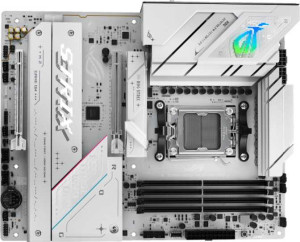
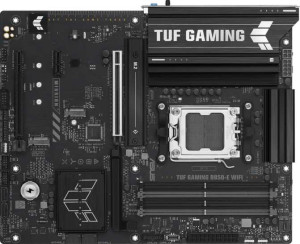
At their core, both the Asus ROG Strix B850-A Gaming WiFi and the Asus TUF Gaming B850-E Wi-Fi share the same fundamental platform: the AM5 socket, B850 chipset, and standard ATX form factor (244 × 305 mm). They also match on HDMI 2.1 output, dual BIOS, easy BIOS reset, overclocking support, RGB lighting, and a 3-year warranty — meaning the overall build philosophy and long-term reliability promise are effectively identical between the two.
The clearest differentiator in this group is wireless connectivity. The ROG Strix steps up to Wi-Fi 7 (802.11be), while the TUF Gaming tops out at Wi-Fi 6E (802.11ax). In practical terms, Wi-Fi 7 introduces Multi-Link Operation (MLO), which allows simultaneous use of multiple frequency bands for lower latency and higher throughput — a meaningful advantage for users with a Wi-Fi 7 router, or those planning to upgrade their home network. On Bluetooth, the ROG Strix carries version 5.4 versus 5.3 on the TUF Gaming; the gap here is minor in everyday use, but 5.4 brings improved energy efficiency and connection reliability for peripheral-heavy setups.
Based strictly on the general specs provided, the ROG Strix B850-A Gaming WiFi holds a clear edge in this category. The Wi-Fi 7 support is a forward-looking advantage that the TUF Gaming simply does not offer, making the ROG Strix the stronger choice for users who prioritize cutting-edge wireless performance or want to future-proof their build against upcoming router standards.