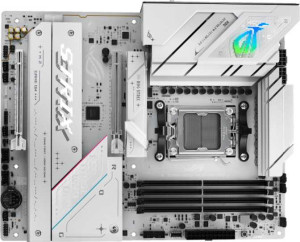
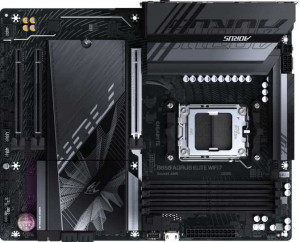
At the platform level, the Asus ROG Strix B850-A Gaming WiFi and the Gigabyte B850 Aorus Elite WiFi7 are built on identical foundations: both use the AM5 socket with the B850 chipset, share the standard ATX form factor (305 × 244 mm), and offer the same full wireless stack from Wi-Fi 4 through Wi-Fi 7 (802.11be) paired with Bluetooth 5.4. For users planning a Ryzen 7000/9000 series build, either board slots in without compromise on connectivity or compatibility. Both also support overclocking, feature RGB lighting, include dual BIOS for firmware redundancy, and carry identical 3-year warranties — so the ownership experience is largely mirrored.
The one concrete differentiator in this group is easy BIOS reset: the ROG Strix supports it, while the Aorus Elite does not. In practice, a dedicated BIOS reset mechanism — typically a physical button on the I/O panel or board — is genuinely useful when pushing memory overclocks or experimenting with settings that cause no-POST situations. Without it, recovering from a bad BIOS state on the Aorus Elite requires more manual steps, such as removing the CMOS battery, which is a minor but real inconvenience for enthusiast users who iterate frequently on their configurations.
Overall, these two boards are nearly indistinguishable in their general specifications. The ROG Strix B850-A holds a narrow but practical edge in this group solely due to its easy BIOS reset feature, making it marginally more user-friendly for builders who plan to overclock or tinker with firmware settings regularly. For users who never touch BIOS settings after initial setup, the two boards are effectively tied here.