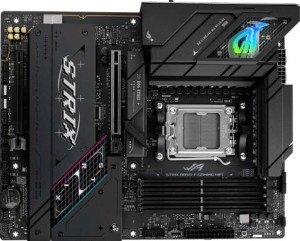
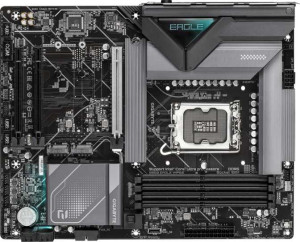
Storage connectivity is where these two boards make different trade-offs. The Asus ROG Strix B850-F prioritizes NVMe with 4 M.2 sockets, making it the stronger choice for builds centered around fast solid-state storage — think high-speed game libraries, content creation scratch drives, or tiered NVMe arrays. The Gigabyte B860 Eagle counters with 4 SATA 3 connectors versus only 2 on the Asus, giving it an edge for users who still rely on SATA SSDs, traditional hard drives, or optical drive setups. It also has one fewer M.2 slot at 3 sockets, so users planning an all-NVMe build may feel the constraint sooner.
A noteworthy inclusion on the Gigabyte is a dedicated TPM connector, which the Asus lacks. A physical TPM header allows users to add a discrete TPM module — relevant for enterprise environments, BitLocker encryption workflows, or stricter security compliance scenarios. For most home users this is a non-issue, but in a professional or business context it is a tangible advantage. Both boards are otherwise identical in internal expansion USB headers and fan headers — six fan/pump headers each, which is a healthy allocation for thermally demanding builds.
The verdict here depends entirely on intended use. The Asus B850-F is the better fit for NVMe-heavy, modern storage configurations, while the Gigabyte B860 Eagle suits users with mixed or legacy storage needs and anyone who values hardware-level security features. Neither board dominates outright — it is a meaningful trade-off rather than a clear winner.