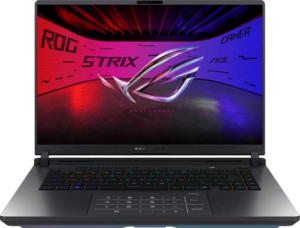
Asus ROG Strix G16 (2025) G615LW 16" Intel Core Ultra 9 275HX 2.7GHz / Nvidia GeForce RTX 5080 Laptop / 64GB RAM / 2TB SSD
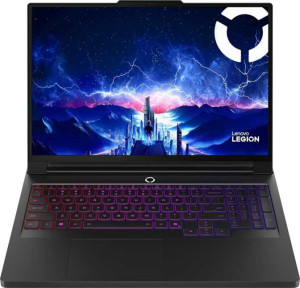
Lenovo Legion Pro 7i Gen 10 16"

Asus ROG Strix G16 (2025) G615LW 16" Intel Core Ultra 9 275HX 2.7GHz / Nvidia GeForce RTX 5080 Laptop / 64GB RAM / 2TB SSD Lenovo Legion Pro 7i Gen 10 16"

Common Features

  • Both products have a 16″ screen size.
  • Both products have a resolution of 2560 x 1600 px.
  • Both products have a 240Hz refresh rate.
  • Both products support up to 4 displays.
  • Both products have a backlit keyboard.
  • Both products are not weather-sealed.
  • Both products have stereo speakers.
  • Both products support ray tracing.
  • Both products support DLSS.
  • Both products include a front camera.
  • Both products have 64GB of RAM.
  • Both products use flash storage.
  • Both products have DirectX 12 Ultimate support.
  • Both products support multithreading.
  • Both products have a PCI Express 4.0 version.
  • Both products have a socket for a 3.5 mm audio jack.
  • Both products have a maximum memory amount of 64GB.
  • Both products have an HDMI output.
  • Both products have Wi-Fi support.
  • Both products support multi-display technology.

Main Differences

  • The weight of Asus ROG Strix G16 (2025) G615LW 16″ is 2730 g, while the weight of Lenovo Legion Pro 7i Gen 10 16″ is 2720 g.
  • The volume of Asus ROG Strix G16 (2025) G615LW 16″ is 2087.184 cm³, while the volume of Lenovo Legion Pro 7i Gen 10 16″ is 2671.37416 cm³.
  • The width of Asus ROG Strix G16 (2025) G615LW 16″ is 354 mm, while the width of Lenovo Legion Pro 7i Gen 10 16″ is 364 mm.
  • The height of Asus ROG Strix G16 (2025) G615LW 16″ is 268 mm, while the height of Lenovo Legion Pro 7i Gen 10 16″ is 275.9 mm.
  • The thickness of Asus ROG Strix G16 (2025) G615LW 16″ is 22 mm, while the thickness of Lenovo Legion Pro 7i Gen 10 16″ is 26.6 mm.
  • The display type on Asus ROG Strix G16 (2025) G615LW 16″ is LCD, LED-backlit, IPS, while the display type on Lenovo Legion Pro 7i Gen 10 16″ is OLED/AMOLED.
  • The RAM speed on Asus ROG Strix G16 (2025) G615LW 16″ is 5600 MHz, while the RAM speed on Lenovo Legion Pro 7i Gen 10 16″ is 6400 MHz.
  • The internal storage on Asus ROG Strix G16 (2025) G615LW 16″ is 2048GB, while the internal storage on Lenovo Legion Pro 7i Gen 10 16″ is 1000GB.
  • The VRAM on Asus ROG Strix G16 (2025) G615LW 16″ is 16GB, while the VRAM on Lenovo Legion Pro 7i Gen 10 16″ is 24GB.
  • The floating-point performance on Asus ROG Strix G16 (2025) G615LW 16″ is 23.04 TFLOPS, while the floating-point performance on Lenovo Legion Pro 7i Gen 10 16″ is 31.8 TFLOPS.
  • The texture rate on Asus ROG Strix G16 (2025) G615LW 16″ is 384 GTexels/s, while the texture rate on Lenovo Legion Pro 7i Gen 10 16″ is 496.9 GTexels/s.
  • The pixel rate on Asus ROG Strix G16 (2025) G615LW 16″ is 144 GPixel/s, while the pixel rate on Lenovo Legion Pro 7i Gen 10 16″ is 193.9 GPixel/s.
  • The GPU clock speed on Asus ROG Strix G16 (2025) G615LW 16″ is 975 MHz, while the GPU clock speed on Lenovo Legion Pro 7i Gen 10 16″ is 990 MHz.
  • The maximum memory amount on Asus ROG Strix G16 (2025) G615LW 16″ is 64GB, while the maximum memory amount on Lenovo Legion Pro 7i Gen 10 16″ is 192GB.
  • The GPU turbo on Asus ROG Strix G16 (2025) G615LW 16″ is 1500 MHz, while the GPU turbo on Lenovo Legion Pro 7i Gen 10 16″ is 1515 MHz.
  • The PCI Express (PCIe) version on Asus ROG Strix G16 (2025) G615LW 16″ is 4, while the PCI Express (PCIe) version on Lenovo Legion Pro 7i Gen 10 16″ is 5.
  • The USB 3.2 Gen 2 ports (USB-A) on Asus ROG Strix G16 (2025) G615LW 16″ is 3, while the USB 3.2 Gen 2 ports (USB-A) on Lenovo Legion Pro 7i Gen 10 16″ is 1.
  • The USB 4 40Gbps ports on Asus ROG Strix G16 (2025) G615LW 16″ is 2, while the USB 4 40Gbps ports on Lenovo Legion Pro 7i Gen 10 16″ is 1.
  • The Thunderbolt 4 ports on Asus ROG Strix G16 (2025) G615LW 16″ is 0, while the Thunderbolt 4 ports on Lenovo Legion Pro 7i Gen 10 16″ is 1.
  • The USB 3.2 Gen 1 ports (USB-A) on Asus ROG Strix G16 (2025) G615LW 16″ is 0, while the USB 3.2 Gen 1 ports (USB-A) on Lenovo Legion Pro 7i Gen 10 16″ is 2.
  • The battery size on Asus ROG Strix G16 (2025) G615LW 16″ is 90 Wh, while the battery size on Lenovo Legion Pro 7i Gen 10 16″ is 99 Wh.
  • Dolby Atmos support is available on Asus ROG Strix G16 (2025) G615LW 16″ but not on Lenovo Legion Pro 7i Gen 10 16″.
  • 3D facial recognition is available on Asus ROG Strix G16 (2025) G615LW 16″ but not on Lenovo Legion Pro 7i Gen 10 16″.
  • Voice commands are available on Lenovo Legion Pro 7i Gen 10 16″ but not on Asus ROG Strix G16 (2025) G615LW 16″.
  • An accelerometer is available on Lenovo Legion Pro 7i Gen 10 16″ but not on Asus ROG Strix G16 (2025) G615LW 16″.
  • A compass is available on Lenovo Legion Pro 7i Gen 10 16″ but not on Asus ROG Strix G16 (2025) G615LW 16″.
  • The thermal design power (TDP) on Asus ROG Strix G16 (2025) G615LW 16″ is 80W, while the thermal design power (TDP) on Lenovo Legion Pro 7i Gen 10 16″ is 95W.
  • The render output units (ROPs) on Asus ROG Strix G16 (2025) G615LW 16″ is 96, while the render output units (ROPs) on Lenovo Legion Pro 7i Gen 10 16″ is 128.
  • The texture mapping units (TMUs) on Asus ROG Strix G16 (2025) G615LW 16″ is 256, while the texture mapping units (TMUs) on Lenovo Legion Pro 7i Gen 10 16″ is 328.
  • The shading units on Asus ROG Strix G16 (2025) G615LW 16″ is 7680, while the shading units on Lenovo Legion Pro 7i Gen 10 16″ is 10496.
Specs Comparison
Asus ROG Strix G16 (2025) G615LW 16" Intel Core Ultra 9 275HX 2.7GHz / Nvidia GeForce RTX 5080 Laptop / 64GB RAM / 2TB SSD

Asus ROG Strix G16 (2025) G615LW 16" Intel Core Ultra 9 275HX 2.7GHz / Nvidia GeForce RTX 5080 Laptop / 64GB RAM / 2TB SSD

Lenovo Legion Pro 7i Gen 10 16"

Lenovo Legion Pro 7i Gen 10 16"

Design:
Type Gaming Gaming
weight 2730 g 2720 g
Uses a fanless design
Has a backlit keyboard
volume 2087.184 cm³ 2671.37416 cm³
width 354 mm 364 mm
height 268 mm 275.9 mm
thickness 22 mm 26.6 mm
is weather-sealed (splashproof)
has a rugged build

The Asus ROG Strix G16 (2025) G615LW and Lenovo Legion Pro 7i Gen 10 are both gaming laptops with similar designs, though there are some key differences in size and weight. The Asus model weighs 2730 g, while the Lenovo is slightly lighter at 2720 g. In terms of volume, the Lenovo Legion Pro 7i has a larger footprint at 2671.37416 cm³, compared to the Asus ROG Strix G16′s 2087.184 cm³.

Both laptops feature a backlit keyboard, which is a standard inclusion for gaming devices, but neither employs a fanless design. The thickness and dimensions also differ between the two: the Asus ROG Strix G16 measures 354 mm in width, 268 mm in height, and 22 mm in thickness, while the Lenovo Legion Pro 7i is slightly larger, with a width of 364 mm, height of 275.9 mm, and a thickness of 26.6 mm.

Neither laptop is weather-sealed (splashproof) or has a rugged build, indicating that both are more focused on performance and design rather than durability for extreme conditions.

Display:
screen size 16" 16"
resolution 2560 x 1600 px 2560 x 1600 px
pixel density 188 ppi 189 ppi
Display type LCD, LED-backlit, IPS OLED/AMOLED
has a touch screen
refresh rate 240Hz 240Hz
has anti-reflection coating
supported displays 4 4

Both the Asus ROG Strix G16 (2025) and the Lenovo Legion Pro 7i feature 16″ screens with the same resolution of 2560 x 1600 px, offering high-definition displays. The Asus has a pixel density of 188 ppi, while the Lenovo slightly edges it out with a pixel density of 189 ppi, making the display on the Lenovo very marginally sharper.

The display technology differs between the two models: the Asus ROG Strix G16 uses an LCD, LED-backlit, IPS panel, while the Lenovo Legion Pro 7i boasts an OLED/AMOLED screen. Both displays have a 240Hz refresh rate, which is great for smooth gaming performance, and neither offers a touch screen or anti-reflection coating.

Both laptops support up to four displays, so users have the flexibility to connect additional monitors for a multi-screen setup.

Performance:
RAM 64GB 64GB
RAM speed 5600 MHz 6400 MHz
Uses flash storage
internal storage 2048GB 1000GB
CPU speed 8 x 2.7 & 16 x 2.1 GHz 8 x 2.7 & 16 x 2.1 GHz
CPU threads 24 threads 24 threads
VRAM 16GB 24GB
floating-point performance 23.04 TFLOPS 31.8 TFLOPS
GDDR version GDDR7 GDDR7
texture rate 384 GTexels/s 496.9 GTexels/s
pixel rate 144 GPixel/s 193.9 GPixel/s
Is an NVMe SSD
DirectX version DirectX 12 Ultimate DirectX 12 Ultimate
GPU clock speed 975 MHz 990 MHz
uses multithreading
maximum memory amount 64GB 192GB
DDR memory version 5 5
turbo clock speed 5.4GHz 5.4GHz
GPU turbo 1500 MHz 1515 MHz
PCI Express (PCIe) version 4 5
semiconductor size 4 nm 4 nm
has XeSS (XMX)
Supports 64-bit

The Asus ROG Strix G16 (2025) and Lenovo Legion Pro 7i both come with 64GB of RAM, but the Lenovo's RAM is slightly faster, running at 6400 MHz compared to the Asus' 5600 MHz. Both laptops use flash storage and feature an NVMe SSD, with the Asus offering 2048GB of storage, while the Lenovo has 1000GB.

In terms of CPU, both devices are equipped with 8 cores running at 2.7 GHz and 16 cores at 2.1 GHz, and they share the same number of threads—24. However, the Lenovo comes with a more powerful GPU, featuring 24GB of VRAM compared to the Asus' 16GB. The floating-point performance of the Lenovo is also higher at 31.8 TFLOPS, versus the Asus' 23.04 TFLOPS.

The GPUs are equipped with GDDR7 memory in both cases, but the Lenovo's texture rate is higher at 496.9 GTexels/s, compared to 384 GTexels/s on the Asus. The pixel rate on the Lenovo is also superior at 193.9 GPixel/s, versus the Asus' 144 GPixel/s. Both laptops support DirectX 12 Ultimate and have the same turbo clock speed of 5.4GHz, but the Lenovo's GPU clock speed is slightly higher at 990 MHz, compared to 975 MHz on the Asus. The Asus uses PCI Express 4, while the Lenovo features PCI Express 5, offering potentially faster data transfer speeds. Both products support multithreading and 64-bit architecture, and have a 4 nm semiconductor size.

Benchmarks:
PassMark result 56426 56426
PassMark result (single) 4723 4723

Both the Asus ROG Strix G16 (2025) and Lenovo Legion Pro 7i share identical results in benchmark testing. They both achieved a PassMark result of 56426, with a single-threaded score of 4723. This indicates that both laptops offer similar levels of performance according to these specific benchmarks.

Given the matching results, users can expect equivalent overall processing power in terms of multi-core and single-core performance from both devices.

Since there are no differences in the benchmark scores, the performance in these tests is identical for both models.

Connectivity:
USB 3.2 Gen 2 ports (USB-C) 0 0
USB 3.2 Gen 2 ports (USB-A) 3 1
USB 4 20Gbps ports 0 0
USB 4 40Gbps ports 2 1
Thunderbolt 4 ports 0 1
USB 3.2 Gen 1 ports (USB-C) 0 0
USB 3.2 Gen 1 ports (USB-A) 0 2
Thunderbolt 3 ports 0 0
has an HDMI output
Has USB Type-C
supports Wi-Fi
Wi-Fi version Wi-Fi 7 (802.11be), Wi-Fi 6E (802.11ax), Wi-Fi 6 (802.11ax), Wi-Fi 5 (802.11ac), Wi-Fi 4 (802.11n) Wi-Fi 6E (802.11ax), Wi-Fi 6 (802.11ax), Wi-Fi 5 (802.11ac), Wi-Fi 4 (802.11n), Wi-Fi 7 (802.11be)
has an external memory slot
Bluetooth version 5.4 5.4
RJ45 ports 1 1
HDMI ports 1 1
HDMI version HDMI 2.1 HDMI 2.1
DisplayPort outputs 0 0
has AirPlay
mini DisplayPort outputs 0 0
has a VGA connector

In terms of connectivity, the Asus ROG Strix G16 (2025) and Lenovo Legion Pro 7i offer some similarities but also notable differences. Both laptops include HDMI 2.1 ports, and both support Wi-Fi 6E (802.11ax), Wi-Fi 6 (802.11ax), Wi-Fi 5 (802.11ac), and Wi-Fi 4 (802.11n). Additionally, both have Bluetooth 5.4 and an RJ45 port for wired networking. However, the Asus model supports AirPlay, while the Lenovo does not.

When it comes to USB ports, the Asus offers three USB 3.2 Gen 2 ports (USB-A) and two USB 4 40Gbps ports, but no USB Type-C 3.2 Gen 2 or Thunderbolt ports. The Lenovo, on the other hand, has one USB 3.2 Gen 2 port (USB-A), one USB 4 40Gbps port, and one Thunderbolt 4 port, alongside two USB 3.2 Gen 1 ports (USB-A). Both laptops feature USB Type-C, but the Lenovo adds Thunderbolt 4, which the Asus lacks.

Neither laptop includes a VGA connector, mini DisplayPort outputs, or an external memory slot, ensuring that both devices focus on modern connectivity standards like USB and HDMI for external devices.

Battery:
battery size 90 Wh 99 Wh
Has a MagSafe power adapter

The Asus ROG Strix G16 (2025) is equipped with a 90 Wh battery, while the Lenovo Legion Pro 7i comes with a slightly larger 99 Wh battery. Both laptops do not feature a MagSafe power adapter, indicating that they rely on traditional charging methods.

Although the Lenovo's battery is slightly larger, there is no other detailed information provided about the impact of battery size on performance or endurance in this comparison.

Overall, both laptops provide standard power options without specialized charging features like MagSafe.

Features:
release date January 2025 April 2025
has stereo speakers
has a socket for a 3.5 mm audio jack
supports ray tracing
supports DLSS
has Dolby Atmos
Stylus included
Has a fingerprint scanner
number of microphones 2 2
Uses 3D facial recognition
has voice commands
has a front camera
Has S/PDIF Out port
has a gyroscope
has GPS
has an accelerometer
has a compass
Has an optical disc drive

The Asus ROG Strix G16 (2025) and Lenovo Legion Pro 7i share several similar features, particularly in audio and graphics performance. Both laptops are equipped with stereo speakers and have a socket for a 3.5 mm audio jack. They also support ray tracing and DLSS, enhancing their gaming capabilities. However, the Asus model includes Dolby Atmos support, while the Lenovo does not.

In terms of biometrics, the Asus ROG Strix G16 uses 3D facial recognition, while the Lenovo Legion Pro 7i lacks this feature but includes voice command support. Both devices have two microphones and a front camera, but only the Asus laptop offers 3D facial recognition for additional security features.

The Lenovo model includes some additional sensors, such as an accelerometer and a compass, which the Asus model lacks. Both laptops exclude features like a fingerprint scanner, gyroscope, GPS, and optical disc drive, though the Asus model does not include voice commands, while the Lenovo does.

Miscellaneous:
clock multiplier 27 27
AMD SAM / Intel Resizable BAR Intel Resizable BAR Intel Resizable BAR
GPU architecture Blackwell Blackwell
has LHR
Thermal Design Power (TDP) 80W 95W
Supports 3D
Supports multi-display technology
OpenCL version 3 3
OpenGL version 4.6 4.6
Supports ECC memory
memory bus width 256-bit 256-bit
effective memory speed 25400 MHz 25400 MHz
maximum memory bandwidth 811.5 GB/s 811.5 GB/s
render output units (ROPs) 96 128
texture mapping units (TMUs) 256 328
shading units 7680 10496
Has Double Precision Floating Point (DPFP)
GPU memory speed 2000 MHz 2000 MHz
Type Laptop Laptop
CPU socket BGA 2114 BGA 2114
instruction sets MMX, F16C, FMA3, AES, AVX, AVX2, SSE 4.1, SSE 4.2 MMX, F16C, FMA3, AES, AVX, AVX2, SSE 4.1, SSE 4.2
Has an unlocked multiplier
L3 cache 36 MB 36 MB
L2 cache 40 MB 40 MB
Has NX bit
Turbo Boost version 2 2
CPU temperature 105 °C 105 °C
Has integrated graphics
memory channels 2 2
RAM speed (max) 6400 MHz 6400 MHz
Uses big.LITTLE technology

The Asus ROG Strix G16 (2025) and Lenovo Legion Pro 7i share several key features, with some differences in their specifications. Both laptops have a clock multiplier of 27 and support Intel Resizable BAR, with GPU architecture based on Blackwell. Neither device has LHR (Low Hash Rate) for cryptocurrency mining. The Asus has a Thermal Design Power (TDP) of 80W, while the Lenovo’s TDP is slightly higher at 95W.

Both laptops support 3D technology, multi-display setups, and have the same OpenCL and OpenGL versions (3 and 4.6, respectively). They also support ECC memory, have a 256-bit memory bus width, and an effective memory speed of 25400 MHz, providing ample memory bandwidth (811.5 GB/s). In terms of GPU performance, the Lenovo has a higher number of render output units (ROPs) at 128 compared to the Asus’ 96, and more texture mapping units (TMUs) at 328 vs 256. Additionally, the Lenovo offers a higher number of shading units, 10496 compared to the Asus’ 7680.

Both laptops share the same L3 cache (36 MB), L2 cache (40 MB), and CPU socket (BGA 2114). They also both support big.LITTLE technology and have integrated graphics. Both devices feature a maximum RAM speed of 6400 MHz, and their CPUs can reach a turbo boost of 2. The CPU temperature for both is listed at 105°C, though neither product specifies any differences in cooling solutions. The Asus and Lenovo models also share the same instruction sets (MMX, F16C, FMA3, AES, AVX, AVX2, SSE 4.1, SSE 4.2) and have unlocked multipliers for overclocking.

Comparison Summary

This is a specification comparison between Asus ROG Strix G16 (2025) G615LW 16″ Intel Core Ultra 9 275HX 2.7GHz / Nvidia GeForce RTX 5080 Laptop / 64GB RAM / 2TB SSD and Lenovo Legion Pro 7i Gen 10 16″. Both laptops share a 16″ screen size with a 2560 x 1600 px resolution, a 240Hz refresh rate, and support for up to 4 displays. However, there are notable differences such as the RAM speed, where the Asus model operates at 5600 MHz and the Lenovo at 6400 MHz, and the internal storage, which is 2048GB on the Asus and 1000GB on the Lenovo. The Asus has 16GB VRAM, while the Lenovo has 24GB VRAM. The Asus also has a lower GPU clock speed of 975 MHz, compared to the Lenovo's 990 MHz.