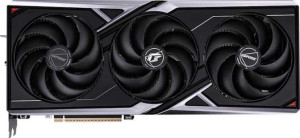
Asus ROG Strix GeForce RTX 5070 OC Edition
Colorful iGame GeForce RTX 5070 Vulcan OC

Asus ROG Strix GeForce RTX 5070 OC Edition Colorful iGame GeForce RTX 5070 Vulcan OC

Overview

When two cards share the same GPU foundation, the finer details become the true battleground. This comparison examines the Asus ROG Strix GeForce RTX 5070 OC Edition against the Colorful iGame GeForce RTX 5070 Vulcan OC — two Blackwell-architecture cards with identical memory configurations and feature sets. The contest centers on their boost clock speeds, raw compute throughput, power consumption, and physical dimensions, revealing a surprisingly nuanced choice for performance-focused enthusiasts.

Common Features

  • Both cards share a base GPU clock speed of 2325 MHz.
  • Both cards have a GPU memory speed of 1750 MHz.
  • Both cards feature 6144 shading units.
  • Both cards include 192 texture mapping units (TMUs).
  • Both cards have 80 render output units (ROPs).
  • Double Precision Floating Point (DPFP) is supported on both cards.
  • Both cards have an effective memory speed of 28000 MHz.
  • Both cards offer a maximum memory bandwidth of 672 GB/s.
  • Both cards come with 12GB of VRAM.
  • Both cards use GDDR7 memory.
  • Both cards use a 192-bit memory bus width.
  • ECC memory is supported on both cards.
  • Both cards support DirectX 12 Ultimate.
  • Both cards support OpenGL version 4.6.
  • Both cards support OpenCL version 3.
  • Multi-display technology is supported on both cards.
  • Ray tracing is supported on both cards.
  • 3D is supported on both cards.
  • DLSS is supported on both cards.
  • XeSS (XMX) is not available on either card.
  • Both cards include an HDMI output with HDMI 2.1b.
  • Both cards feature 3 DisplayPort outputs.
  • Neither card includes USB-C, DVI, or mini DisplayPort outputs.
  • Both cards are based on the Blackwell GPU architecture.
  • Both cards use PCIe version 5.
  • Both cards are manufactured on a 5 nm semiconductor process.
  • Both cards contain 31,100 million transistors.
  • Air-water cooling is not available on either card.

Main Differences

  • GPU turbo clock speed is 2512 MHz on the Asus ROG Strix GeForce RTX 5070 OC Edition and 2587 MHz on the Colorful iGame GeForce RTX 5070 Vulcan OC.
  • Pixel rate is 201 GPixel/s on the Asus ROG Strix GeForce RTX 5070 OC Edition and 207 GPixel/s on the Colorful iGame GeForce RTX 5070 Vulcan OC.
  • Floating-point performance is 30.87 TFLOPS on the Asus ROG Strix GeForce RTX 5070 OC Edition and 31.79 TFLOPS on the Colorful iGame GeForce RTX 5070 Vulcan OC.
  • Texture rate is 482.3 GTexels/s on the Asus ROG Strix GeForce RTX 5070 OC Edition and 496.7 GTexels/s on the Colorful iGame GeForce RTX 5070 Vulcan OC.
  • The number of HDMI ports is 2 on the Asus ROG Strix GeForce RTX 5070 OC Edition and 1 on the Colorful iGame GeForce RTX 5070 Vulcan OC.
  • Thermal Design Power (TDP) is 250W on the Asus ROG Strix GeForce RTX 5070 OC Edition and 270W on the Colorful iGame GeForce RTX 5070 Vulcan OC.
  • Card width is 332 mm on the Asus ROG Strix GeForce RTX 5070 OC Edition and 336 mm on the Colorful iGame GeForce RTX 5070 Vulcan OC.
  • Card height is 147 mm on the Asus ROG Strix GeForce RTX 5070 OC Edition and 145 mm on the Colorful iGame GeForce RTX 5070 Vulcan OC.
Specs Comparison
Asus ROG Strix GeForce RTX 5070 OC Edition

Asus ROG Strix GeForce RTX 5070 OC Edition

Colorful iGame GeForce RTX 5070 Vulcan OC

Colorful iGame GeForce RTX 5070 Vulcan OC

Performance:
GPU clock speed 2325 MHz 2325 MHz
GPU turbo 2512 MHz 2587 MHz
pixel rate 201 GPixel/s 207 GPixel/s
floating-point performance 30.87 TFLOPS 31.79 TFLOPS
texture rate 482.3 GTexels/s 496.7 GTexels/s
GPU memory speed 1750 MHz 1750 MHz
shading units 6144 6144
texture mapping units (TMUs) 192 192
render output units (ROPs) 80 80
Has Double Precision Floating Point (DPFP)

Both the Asus ROG Strix RTX 5070 OC and the Colorful iGame RTX 5070 Vulcan OC share identical architectural foundations: the same 6144 shading units, 192 TMUs, 80 ROPs, and a base GPU clock of 2325 MHz, which means their theoretical throughput ceilings are governed almost entirely by how aggressively each card boosts under load.

The meaningful separator here is the GPU turbo clock. The Colorful Vulcan OC reaches 2587 MHz versus the Asus ROG's 2512 MHz — a 75 MHz advantage that cascades directly into every derived throughput metric. The Vulcan OC edges ahead in floating-point performance at 31.79 TFLOPS versus 30.87 TFLOPS, in texture rate at 496.7 GTexels/s versus 482.3 GTexels/s, and in pixel rate at 207 GPixel/s versus 201 GPixel/s. In practice, this ~3% boost gap translates to a marginally higher sustained performance ceiling in GPU-bound workloads — think compute tasks, rendering, and shader-heavy scenes — though the difference is unlikely to manifest as a perceptible frame rate gap in most gaming scenarios.

Based strictly on these specs, the Colorful iGame RTX 5070 Vulcan OC holds a clear, if modest, performance edge in this group. Its higher factory turbo clock gives it a consistent throughput advantage across all compute and rasterization metrics. The Asus ROG Strix OC is not far behind, but if raw peak GPU throughput is the deciding factor, the Vulcan OC is the stronger card on paper.

Memory:
effective memory speed 28000 MHz 28000 MHz
maximum memory bandwidth 672 GB/s 672 GB/s
VRAM 12GB 12GB
GDDR version GDDR7 GDDR7
memory bus width 192-bit 192-bit
Supports ECC memory

Both the Asus ROG Strix GeForce RTX 5070 OC Edition and Colorful iGame GeForce RTX 5070 Vulcan OC feature identical memory specifications. Both models have an effective memory speed of 28000 MHz and a maximum memory bandwidth of 672 GB/s. They are equipped with 12GB of VRAM and use the GDDR7 memory standard.

The memory bus width is also the same for both products at 192-bit, and both support ECC (Error Correcting Code) memory, ensuring stability during intensive computing tasks.

Since all the memory specifications are the same between the two, there are no differences in performance or capabilities based on the memory configuration.

Features:
DirectX version DirectX 12 Ultimate DirectX 12 Ultimate
OpenGL version 4.6 4.6
OpenCL version 3 3
Supports multi-display technology
supports ray tracing
Supports 3D
supports DLSS
has XeSS (XMX)
AMD SAM / Intel Resizable BAR Intel Resizable BAR Intel Resizable BAR
has LHR
has RGB lighting
supported displays 4 4

Both the Asus ROG Strix GeForce RTX 5070 OC Edition and the Colorful iGame GeForce RTX 5070 Vulcan OC share the same set of features. Both cards support DirectX 12 Ultimate, OpenGL 4.6, and OpenCL 3, ensuring compatibility with modern games and applications. They also support multi-display technology, ray tracing, and 3D, along with DLSS (Deep Learning Super Sampling) for improved performance in supported titles.

Neither product includes XeSS (XMX) support, and both cards are equipped with Intel Resizable BAR, providing an optimized connection to compatible Intel CPUs. Both also feature RGB lighting, adding customizable lighting effects to the system.

In terms of display support, both models are capable of handling up to 4 displays, offering plenty of flexibility for multi-monitor setups. Additionally, both products are not equipped with LHR (Lite Hash Rate) limitations, which could be important for certain users.

Ports:
has an HDMI output
HDMI ports 2 1
HDMI version HDMI 2.1b HDMI 2.1b
DisplayPort outputs 3 3
USB-C ports 0 0
DVI outputs 0 0
mini DisplayPort outputs 0 0

In terms of ports, the Asus ROG Strix GeForce RTX 5070 OC Edition and the Colorful iGame GeForce RTX 5070 Vulcan OC share some similarities, but there are also key differences. Both cards feature HDMI 2.1b outputs, but the Asus model has two HDMI ports, while the Colorful iGame has just one.

Both products also come with 3 DisplayPort outputs, and neither includes USB-C ports, DVI outputs, or mini DisplayPort outputs.

These specifications highlight a minor difference in HDMI port count, with the Asus card offering an extra HDMI port for users who need more flexibility in connecting to HDMI displays.

General info:
GPU architecture Blackwell Blackwell
release date January 2025 March 2025
Thermal Design Power (TDP) 250W 270W
PCI Express (PCIe) version 5 5
semiconductor size 5 nm 5 nm
number of transistors 31100 million 31100 million
Has air-water cooling
width 332 mm 336 mm
height 147 mm 145 mm

Both the Asus ROG Strix GeForce RTX 5070 OC Edition and the Colorful iGame GeForce RTX 5070 Vulcan OC use the same Blackwell GPU architecture and feature a 5 nm semiconductor size with 31,100 million transistors. However, there is a difference in their Thermal Design Power (TDP). The Asus model has a TDP of 250W, while the Colorful iGame has a slightly higher TDP of 270W.

Both products support PCI Express (PCIe) version 5, ensuring high-speed data transfer. Neither product includes air-water cooling, which is consistent between the two models.

In terms of size, the Asus ROG Strix measures 332 mm in width and 147 mm in height, whereas the Colorful iGame is slightly wider at 336 mm but shorter in height at 145 mm.

Comparison Summary & Verdict

Both cards are built on the same Blackwell core, sharing 12GB of GDDR7 memory on a 192-bit bus, full ray tracing, DLSS support, and identical base clocks — so the gap narrows quickly. That said, the Colorful iGame GeForce RTX 5070 Vulcan OC holds a measurable edge in peak performance, reaching a boost clock of 2587 MHz and delivering 31.79 TFLOPS of floating-point throughput alongside a higher texture rate, making it the better pick for users chasing maximum compute headroom. The Asus ROG Strix GeForce RTX 5070 OC Edition, however, counters with a more restrained 250W TDP versus 270W, two HDMI outputs instead of one, and a slightly more compact width — advantages that matter in thermally constrained builds or multi-display configurations. Choose based on whether peak raw performance or power efficiency and connectivity flexibility better match your setup.

Asus ROG Strix GeForce RTX 5070 OC Edition
Buy Asus ROG Strix GeForce RTX 5070 OC Edition if...

Buy the Asus ROG Strix GeForce RTX 5070 OC Edition if you want dual HDMI outputs for a multi-display setup or need a more power-efficient card running at a lower 250W TDP.

Colorful iGame GeForce RTX 5070 Vulcan OC
Buy Colorful iGame GeForce RTX 5070 Vulcan OC if...

Choose the Colorful iGame GeForce RTX 5070 Vulcan OC if squeezing out the highest possible boost clock and peak floating-point performance from an RTX 5070 is your top priority.