Asus ROG Strix GeForce RTX 5070 Ti OC Edition
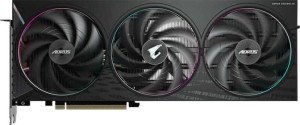
Gigabyte Aorus GeForce RTX 5060 Ti Elite 16GB

Asus ROG Strix GeForce RTX 5070 Ti OC Edition Gigabyte Aorus GeForce RTX 5060 Ti Elite 16GB

Overview

Welcome to our in-depth spec comparison between the Asus ROG Strix GeForce RTX 5070 Ti OC Edition and the Gigabyte Aorus GeForce RTX 5060 Ti Elite 16GB. Both cards share the same Blackwell architecture, GDDR7 memory, and a full suite of modern features, yet they diverge sharply in raw compute power, memory bandwidth, and thermal footprint. Read on to see how these two GPUs stack up across performance, memory, and design.

Common Features

  • GPU memory speed is 1750 MHz on both products.
  • Both products support Double Precision Floating Point (DPFP).
  • Effective memory speed is 28000 MHz on both products.
  • Both products have 16GB of VRAM.
  • Both products use GDDR7 memory.
  • ECC memory support is available on both products.
  • Both products support DirectX 12 Ultimate.
  • OpenGL version is 4.6 on both products.
  • OpenCL version is 3 on both products.
  • Multi-display technology is supported on both products.
  • Ray tracing is supported on both products.
  • 3D support is available on both products.
  • DLSS support is available on both products.
  • XeSS (XMX) support is not available on either product.
  • Both products have an HDMI output using HDMI version 2.1b.
  • Both products have 3 DisplayPort outputs.
  • Neither product has USB-C ports, DVI outputs, or mini DisplayPort outputs.
  • Both products are built on the Blackwell GPU architecture.
  • Both products use PCIe version 5.
  • Both products are manufactured on a 5 nm semiconductor process.
  • Neither product features air-water cooling.

Main Differences

  • GPU clock speed is 2295 MHz on Asus ROG Strix GeForce RTX 5070 Ti OC Edition and 2407 MHz on Gigabyte Aorus GeForce RTX 5060 Ti Elite 16GB.
  • GPU turbo clock is 2602 MHz on Asus ROG Strix GeForce RTX 5070 Ti OC Edition and 2722 MHz on Gigabyte Aorus GeForce RTX 5060 Ti Elite 16GB.
  • Pixel rate is 249.8 GPixel/s on Asus ROG Strix GeForce RTX 5070 Ti OC Edition and 130.7 GPixel/s on Gigabyte Aorus GeForce RTX 5060 Ti Elite 16GB.
  • Floating-point performance is 46.63 TFLOPS on Asus ROG Strix GeForce RTX 5070 Ti OC Edition and 25.09 TFLOPS on Gigabyte Aorus GeForce RTX 5060 Ti Elite 16GB.
  • Texture rate is 728.6 GTexels/s on Asus ROG Strix GeForce RTX 5070 Ti OC Edition and 392 GTexels/s on Gigabyte Aorus GeForce RTX 5060 Ti Elite 16GB.
  • Shading units number 8960 on Asus ROG Strix GeForce RTX 5070 Ti OC Edition and 4608 on Gigabyte Aorus GeForce RTX 5060 Ti Elite 16GB.
  • Texture mapping units (TMUs) total 280 on Asus ROG Strix GeForce RTX 5070 Ti OC Edition and 144 on Gigabyte Aorus GeForce RTX 5060 Ti Elite 16GB.
  • Render output units (ROPs) number 96 on Asus ROG Strix GeForce RTX 5070 Ti OC Edition and 48 on Gigabyte Aorus GeForce RTX 5060 Ti Elite 16GB.
  • Maximum memory bandwidth is 896 GB/s on Asus ROG Strix GeForce RTX 5070 Ti OC Edition and 448 GB/s on Gigabyte Aorus GeForce RTX 5060 Ti Elite 16GB.
  • Memory bus width is 256-bit on Asus ROG Strix GeForce RTX 5070 Ti OC Edition and 128-bit on Gigabyte Aorus GeForce RTX 5060 Ti Elite 16GB.
  • HDMI port count is 2 on Asus ROG Strix GeForce RTX 5070 Ti OC Edition and 1 on Gigabyte Aorus GeForce RTX 5060 Ti Elite 16GB.
  • Thermal Design Power (TDP) is 300W on Asus ROG Strix GeForce RTX 5070 Ti OC Edition and 180W on Gigabyte Aorus GeForce RTX 5060 Ti Elite 16GB.
  • Number of transistors is 45600 million on Asus ROG Strix GeForce RTX 5070 Ti OC Edition and 21900 million on Gigabyte Aorus GeForce RTX 5060 Ti Elite 16GB.
  • Width is 332 mm on Asus ROG Strix GeForce RTX 5070 Ti OC Edition and 329 mm on Gigabyte Aorus GeForce RTX 5060 Ti Elite 16GB.
  • Height is 147.3 mm on Asus ROG Strix GeForce RTX 5070 Ti OC Edition and 128 mm on Gigabyte Aorus GeForce RTX 5060 Ti Elite 16GB.
Specs Comparison
Asus ROG Strix GeForce RTX 5070 Ti OC Edition

Asus ROG Strix GeForce RTX 5070 Ti OC Edition

Gigabyte Aorus GeForce RTX 5060 Ti Elite 16GB

Gigabyte Aorus GeForce RTX 5060 Ti Elite 16GB

Performance:
GPU clock speed 2295 MHz 2407 MHz
GPU turbo 2602 MHz 2722 MHz
pixel rate 249.8 GPixel/s 130.7 GPixel/s
floating-point performance 46.63 TFLOPS 25.09 TFLOPS
texture rate 728.6 GTexels/s 392 GTexels/s
GPU memory speed 1750 MHz 1750 MHz
shading units 8960 4608
texture mapping units (TMUs) 280 144
render output units (ROPs) 96 48
Has Double Precision Floating Point (DPFP)

At first glance, the clock speed story seems to favor the Gigabyte Aorus RTX 5060 Ti Elite, which runs a higher base clock of 2407 MHz and boosts to 2722 MHz compared to the Asus ROG Strix RTX 5070 Ti OC Edition's 2295 / 2602 MHz. However, clock speed in isolation is one of the most misleading metrics in GPU comparisons — what truly determines throughput is how many execution units are doing work at those clocks.

That is where the picture changes dramatically. The RTX 5070 Ti OC packs 8960 shading units, 280 TMUs, and 96 ROPs — almost exactly double the 4608 shaders, 144 TMUs, and 48 ROPs of the 5060 Ti. This translates directly into real-world rendering power: the 5070 Ti delivers 46.63 TFLOPS of floating-point performance versus 25.09 TFLOPS on the 5060 Ti, an ~86% advantage. Similarly, its pixel fill rate of 249.8 GPixel/s and texture rate of 728.6 GTexels/s are roughly 91% and 86% higher respectively — meaning it can push far more pixels and texture data per second at comparable resolutions. The one area of parity is GPU memory speed, with both cards running at 1750 MHz, and both supporting Double Precision Floating Point for compute workloads.

The Asus ROG Strix RTX 5070 Ti OC Edition holds a commanding and unambiguous performance advantage in this group. The 5060 Ti's modest clock speed edge is entirely outweighed by the 5070 Ti's vastly larger shader array. For gaming at high resolutions, GPU-accelerated content creation, or compute tasks, the 5070 Ti is substantially the more capable card based purely on these specs.

Memory:
effective memory speed 28000 MHz 28000 MHz
maximum memory bandwidth 896 GB/s 448 GB/s
VRAM 16GB 16GB
GDDR version GDDR7 GDDR7
memory bus width 256-bit 128-bit
Supports ECC memory

Both the Asus ROG Strix GeForce RTX 5070 Ti OC Edition and Gigabyte Aorus GeForce RTX 5060 Ti Elite 16GB feature identical effective memory speeds of 28000 MHz, providing the same high-speed memory performance. However, when it comes to maximum memory bandwidth, the Asus card offers a significant advantage with 896 GB/s, whereas the Gigabyte card supports only 448 GB/s, which is half the bandwidth of the Asus model.

Both cards are equipped with 16GB of VRAM, ensuring ample memory for most modern gaming and professional workloads. The GDDR7 memory version is also consistent across both products, so there are no differences in this aspect of memory technology.

In terms of memory bus width, the Asus ROG Strix has a 256-bit width, while the Gigabyte Aorus has a narrower 128-bit bus. This wider bus on the Asus card contributes to its higher memory bandwidth. Both products support ECC memory, which is beneficial for error correction, though this feature is shared equally between the two cards.

Features:
DirectX version DirectX 12 Ultimate DirectX 12 Ultimate
OpenGL version 4.6 4.6
OpenCL version 3 3
Supports multi-display technology
supports ray tracing
Supports 3D
supports DLSS
has XeSS (XMX)
AMD SAM / Intel Resizable BAR Intel Resizable BAR Intel Resizable BAR
has LHR
has RGB lighting
supported displays 4 4

The Asus ROG Strix GeForce RTX 5070 Ti OC Edition and Gigabyte Aorus GeForce RTX 5060 Ti Elite 16GB are nearly identical in terms of their feature sets. Both cards support DirectX 12 Ultimate, OpenGL 4.6, and OpenCL 3, providing full compatibility with modern graphics technologies. Additionally, both support multi-display technology, ray tracing, 3D rendering, and DLSS, ensuring that both cards can handle the latest gaming and professional applications.

Neither card supports XeSS (XMX), but both are equipped with Intel Resizable BAR, ensuring compatibility with newer Intel platforms for increased memory bandwidth. Both cards also lack LHR (Lite Hash Rate) functionality, which is often desired by users looking to mine cryptocurrency.

Both the Asus and Gigabyte cards feature RGB lighting, adding an aesthetic element to your setup. In terms of display support, both cards can drive up to 4 displays, offering ample connectivity for multi-monitor setups.

Ports:
has an HDMI output
HDMI ports 2 1
HDMI version HDMI 2.1b HDMI 2.1b
DisplayPort outputs 3 3
USB-C ports 0 0
DVI outputs 0 0
mini DisplayPort outputs 0 0

The Asus ROG Strix GeForce RTX 5070 Ti OC Edition and Gigabyte Aorus GeForce RTX 5060 Ti Elite 16GB both feature HDMI 2.1b outputs, but the Asus card has two HDMI ports, while the Gigabyte card has only one HDMI port. Both cards support 3 DisplayPort outputs, so there is no difference in terms of DisplayPort connectivity between the two models.

Neither card includes USB-C ports, DVI outputs, or mini DisplayPort outputs, meaning that display connectivity options are fairly limited to HDMI and DisplayPort for both products.

General info:
GPU architecture Blackwell Blackwell
release date January 2025 April 2025
Thermal Design Power (TDP) 300W 180W
PCI Express (PCIe) version 5 5
semiconductor size 5 nm 5 nm
number of transistors 45600 million 21900 million
Has air-water cooling
width 332 mm 329 mm
height 147.3 mm 128 mm

Both the Asus ROG Strix GeForce RTX 5070 Ti OC Edition and Gigabyte Aorus GeForce RTX 5060 Ti Elite 16GB share the same GPU architecture, Blackwell, and both use a 5 nm semiconductor size. However, the cards differ in several other areas. The Asus card has a higher Thermal Design Power (TDP) of 300W, compared to the Gigabyte’s 180W. This means the Asus card is designed to consume more power under load, likely due to its higher performance capabilities.

Both cards use PCI Express version 5, ensuring the latest data transfer speeds between the GPU and the motherboard. The Asus card has 45,600 million transistors, significantly more than the Gigabyte’s 21,900 million transistors, reflecting a more complex and powerful GPU design in the Asus model.

In terms of physical dimensions, the Asus ROG Strix card is slightly larger, with a width of 332 mm and a height of 147.3 mm, while the Gigabyte Aorus card is slightly smaller, measuring 329 mm in width and 128 mm in height. Both cards lack air-water cooling systems, meaning they rely on traditional cooling methods.

Comparison Summary & Verdict

After examining every spec, a clear picture emerges for each card. The Asus ROG Strix GeForce RTX 5070 Ti OC Edition dominates on raw throughput, delivering 46.63 TFLOPS of floating-point performance, a 256-bit memory bus with 896 GB/s of bandwidth, and nearly double the shading units — making it the obvious pick for demanding workloads and high-resolution gaming. The Gigabyte Aorus GeForce RTX 5060 Ti Elite 16GB, by contrast, draws only 180W TDP versus 300W, runs slightly higher boost clocks out of the box, and occupies a notably smaller footprint, making it a compelling choice for compact builds or power-conscious users who still want 16GB of fast GDDR7 memory and full feature parity including ray tracing and DLSS.

Asus ROG Strix GeForce RTX 5070 Ti OC Edition
Buy Asus ROG Strix GeForce RTX 5070 Ti OC Edition if...

Buy the Asus ROG Strix GeForce RTX 5070 Ti OC Edition if you need maximum rendering power, with nearly double the shading units, 896 GB/s memory bandwidth, and 46.63 TFLOPS for high-resolution gaming or GPU-intensive workloads.

Gigabyte Aorus GeForce RTX 5060 Ti Elite 16GB
Buy Gigabyte Aorus GeForce RTX 5060 Ti Elite 16GB if...

Buy the Gigabyte Aorus GeForce RTX 5060 Ti Elite 16GB if you want a power-efficient card with a lower 180W TDP and a more compact size, while still getting 16GB of GDDR7 memory and slightly higher out-of-the-box boost clocks.