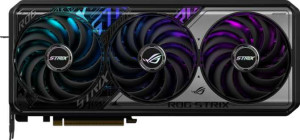
Asus ROG Strix GeForce RTX 5070 Ti
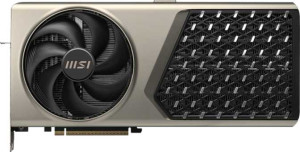
MSI GeForce RTX 5070 Ti Expert OC

Asus ROG Strix GeForce RTX 5070 Ti MSI GeForce RTX 5070 Ti Expert OC

Overview

Welcome to our in-depth specification comparison between the Asus ROG Strix GeForce RTX 5070 Ti and the MSI GeForce RTX 5070 Ti Expert OC. Both cards are built on the same Blackwell architecture and share identical memory configurations, yet they diverge in key areas such as GPU boost clock speeds, raw compute performance, physical dimensions, and connectivity options. Read on to explore exactly where these two cards align and where they pull apart.

Common Features

  • Both cards share a base GPU clock speed of 2295 MHz.
  • Both cards have a GPU memory speed of 1750 MHz.
  • Both cards feature 8960 shading units.
  • Both cards include 280 texture mapping units (TMUs).
  • Both cards have 96 render output units (ROPs).
  • Double Precision Floating Point (DPFP) is supported on both cards.
  • Both cards have an effective memory speed of 28000 MHz.
  • Both cards offer a maximum memory bandwidth of 896 GB/s.
  • Both cards come with 16GB of VRAM.
  • Both cards use GDDR7 memory.
  • Both cards feature a 256-bit memory bus width.
  • ECC memory is supported on both cards.
  • Both cards support DirectX 12 Ultimate.
  • Both cards support OpenGL version 4.6.
  • Both cards support OpenCL version 3.
  • Multi-display technology is supported on both cards.
  • Ray tracing is supported on both cards.
  • 3D support is available on both cards.
  • DLSS is supported on both cards.
  • XeSS (XMX) is not available on either card.
  • Both cards include an HDMI 2.1b output.
  • Both cards feature 3 DisplayPort outputs.
  • Neither card includes USB-C, DVI, or mini DisplayPort outputs.
  • Both cards are based on the Blackwell GPU architecture.
  • Both cards have a Thermal Design Power (TDP) of 300W.
  • Both cards use PCIe version 5.
  • Both cards are manufactured on a 5 nm semiconductor process.
  • Both cards contain 45600 million transistors.
  • Air-water cooling is not available on either card.

Main Differences

  • GPU turbo clock speed is 2452 MHz on Asus ROG Strix GeForce RTX 5070 Ti and 2580 MHz on MSI GeForce RTX 5070 Ti Expert OC.
  • Pixel rate is 235.4 GPixel/s on Asus ROG Strix GeForce RTX 5070 Ti and 247.7 GPixel/s on MSI GeForce RTX 5070 Ti Expert OC.
  • Floating-point performance is 43.94 TFLOPS on Asus ROG Strix GeForce RTX 5070 Ti and 46.23 TFLOPS on MSI GeForce RTX 5070 Ti Expert OC.
  • Texture rate is 686.6 GTexels/s on Asus ROG Strix GeForce RTX 5070 Ti and 722.4 GTexels/s on MSI GeForce RTX 5070 Ti Expert OC.
  • RGB lighting is present on Asus ROG Strix GeForce RTX 5070 Ti but not available on MSI GeForce RTX 5070 Ti Expert OC.
  • HDMI port count is 2 on Asus ROG Strix GeForce RTX 5070 Ti and 1 on MSI GeForce RTX 5070 Ti Expert OC.
  • Card width is 332 mm on Asus ROG Strix GeForce RTX 5070 Ti and 319 mm on MSI GeForce RTX 5070 Ti Expert OC.
  • Card height is 147.3 mm on Asus ROG Strix GeForce RTX 5070 Ti and 150 mm on MSI GeForce RTX 5070 Ti Expert OC.
Specs Comparison
Asus ROG Strix GeForce RTX 5070 Ti

Asus ROG Strix GeForce RTX 5070 Ti

MSI GeForce RTX 5070 Ti Expert OC

MSI GeForce RTX 5070 Ti Expert OC

Performance:
GPU clock speed 2295 MHz 2295 MHz
GPU turbo 2452 MHz 2580 MHz
pixel rate 235.4 GPixel/s 247.7 GPixel/s
floating-point performance 43.94 TFLOPS 46.23 TFLOPS
texture rate 686.6 GTexels/s 722.4 GTexels/s
GPU memory speed 1750 MHz 1750 MHz
shading units 8960 8960
texture mapping units (TMUs) 280 280
render output units (ROPs) 96 96
Has Double Precision Floating Point (DPFP)

Both cards share identical foundations: the same 2295 MHz base clock, 8960 shading units, 280 TMUs, 96 ROPs, and 1750 MHz memory speed. This means any performance difference between them is purely a product of how aggressively each manufacturer has tuned the boost behavior — not architectural variation.

That's where the MSI GeForce RTX 5070 Ti Expert OC pulls ahead. Its GPU turbo of 2580 MHz outpaces the Asus ROG Strix's 2452 MHz — a gap of 128 MHz, or roughly 5.2%. In sustained workloads, this translates directly into higher throughput across every derived metric: the MSI reaches 46.23 TFLOPS of floating-point performance versus 43.94 TFLOPS, and a texture rate of 722.4 GTexels/s compared to 686.6 GTexels/s. For rasterization, its pixel rate of 247.7 GPixel/s similarly edges out the Asus. In real-world terms, this kind of clock advantage tends to manifest as a few extra frames per second in GPU-bound scenarios, particularly at high resolutions where shader and texture throughput are the primary bottlenecks.

The verdict for this group is clear: the MSI Expert OC holds a measurable performance edge on every throughput metric, driven entirely by its higher boost clock. Both cards support Double Precision Floating Point, so neither has an advantage in compute-oriented tasks that rely on DPFP. If raw GPU performance is the deciding factor, the MSI is the stronger card based solely on the data provided.

Memory:
effective memory speed 28000 MHz 28000 MHz
maximum memory bandwidth 896 GB/s 896 GB/s
VRAM 16GB 16GB
GDDR version GDDR7 GDDR7
memory bus width 256-bit 256-bit
Supports ECC memory

The memory specifications for the Asus ROG Strix GeForce RTX 5070 Ti and the MSI GeForce RTX 5070 Ti Expert OC are identical. Both graphics cards feature an effective memory speed of 28000 MHz, maximum memory bandwidth of 896 GB/s, and 16GB of VRAM. They also both use GDDR7 memory and have a memory bus width of 256-bit.

Furthermore, both cards support ECC memory (Error Correction Code), ensuring enhanced memory reliability. Given the identical specifications in all these areas, there are no notable differences between the two products in terms of memory performance.

In summary, both the Asus and MSI models offer the same memory setup, making them equally matched in this regard.

Features:
DirectX version DirectX 12 Ultimate DirectX 12 Ultimate
OpenGL version 4.6 4.6
OpenCL version 3 3
Supports multi-display technology
supports ray tracing
Supports 3D
supports DLSS
has XeSS (XMX)
AMD SAM / Intel Resizable BAR Intel Resizable BAR Intel Resizable BAR
has LHR
has RGB lighting
supported displays 4 4

The Asus ROG Strix GeForce RTX 5070 Ti and the MSI GeForce RTX 5070 Ti Expert OC share most of their key features. Both support DirectX 12 Ultimate, OpenGL 4.6, and OpenCL 3, offering strong compatibility with modern APIs. They also support multi-display technology, ray tracing, and 3D, along with DLSS (Deep Learning Super Sampling) for improved performance.

In terms of minor differences, the Asus card has RGB lighting, while the MSI model does not. Both products support Intel Resizable BAR, but neither offers XeSS (XMX) support. Both also have 4 supported displays, and neither model features LHR (Lite Hash Rate) restrictions.

Overall, while the two cards are quite similar in features, the Asus ROG Strix GeForce RTX 5070 Ti stands out with its RGB lighting, which the MSI model lacks.

Ports:
has an HDMI output
HDMI ports 2 1
HDMI version HDMI 2.1b HDMI 2.1b
DisplayPort outputs 3 3
USB-C ports 0 0
DVI outputs 0 0
mini DisplayPort outputs 0 0

The Asus ROG Strix GeForce RTX 5070 Ti and the MSI GeForce RTX 5070 Ti Expert OC have similar port configurations, but there are a couple of differences. Both cards feature HDMI 2.1b outputs, but the Asus model has two HDMI ports, while the MSI model has only one HDMI port.

Both products also include three DisplayPort outputs, but neither card offers USB-C ports, DVI outputs, or mini DisplayPort outputs.

In summary, the main distinction between the two cards in terms of ports is that the Asus model provides an additional HDMI port compared to the MSI model.

General info:
GPU architecture Blackwell Blackwell
release date January 2025 August 2025
Thermal Design Power (TDP) 300W 300W
PCI Express (PCIe) version 5 5
semiconductor size 5 nm 5 nm
number of transistors 45600 million 45600 million
Has air-water cooling
width 332 mm 319 mm
height 147.3 mm 150 mm

The Asus ROG Strix GeForce RTX 5070 Ti and the MSI GeForce RTX 5070 Ti Expert OC share the same core specifications in several areas. Both use the Blackwell GPU architecture, have a Thermal Design Power (TDP) of 300W, and feature PCI Express (PCIe) version 5. They also have a 5 nm semiconductor size and the same number of transistors at 45600 million.

Both cards also lack air-water cooling, meaning they rely on standard cooling solutions. In terms of physical dimensions, the Asus model is slightly larger, measuring 332 mm in width and 147.3 mm in height, while the MSI model is smaller at 319 mm in width and 150 mm in height.

In conclusion, the main difference between the two models is the size, with the Asus model being wider and the MSI model being taller, but both share identical specifications in terms of architecture, TDP, PCIe version, semiconductor size, transistors, and cooling type.

Comparison Summary & Verdict

After examining every specification, the choice between these two cards comes down to your specific priorities. The MSI GeForce RTX 5070 Ti Expert OC holds a clear edge in outright performance, delivering a higher GPU turbo clock of 2580 MHz, a superior floating-point throughput of 46.23 TFLOPS, and a faster texture rate of 722.4 GTexels/s, making it the stronger pick for enthusiasts focused purely on framerates and compute workloads. The Asus ROG Strix GeForce RTX 5070 Ti, on the other hand, wins on connectivity and aesthetics, offering two HDMI 2.1b ports instead of one and full RGB lighting support, which appeals to multi-display users and system builders who care about visual flair. Both cards share the same 300W TDP, 16GB GDDR7 memory, and feature set, so neither compromises on the fundamentals.

Asus ROG Strix GeForce RTX 5070 Ti
Buy Asus ROG Strix GeForce RTX 5070 Ti if...

Buy the Asus ROG Strix GeForce RTX 5070 Ti if you want two HDMI 2.1b ports for a multi-display setup and value RGB lighting for a visually striking build.

MSI GeForce RTX 5070 Ti Expert OC
Buy MSI GeForce RTX 5070 Ti Expert OC if...

Buy the MSI GeForce RTX 5070 Ti Expert OC if maximizing raw GPU performance is your priority, as it offers a higher boost clock, greater floating-point throughput, and a faster texture rate.