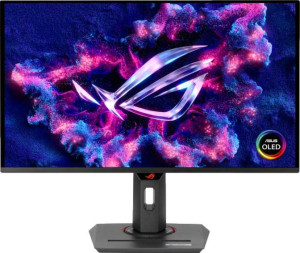
Asus ROG Strix OLED XG27UCDMG 27"
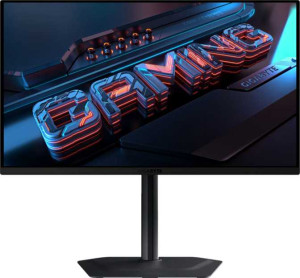
Gigabyte MO27U2 27"

Asus ROG Strix OLED XG27UCDMG 27" Gigabyte MO27U2 27"

Common Features

  • Both products have a resolution of 3840 x 2160 px.
  • Both products have an anti-glare coating.
  • Both products have a refresh rate of 240Hz.
  • Both products have a maximum horizontal viewing angle of 178º.
  • Both products have a maximum vertical viewing angle of 178º.
  • Both products have a matte panel.
  • Both products have Nvidia G-Sync and AMD FreeSync support.
  • Both products have Nvidia G-Sync Compatible support.
  • Both products support a VESA mount.
  • Both products have 2 HDMI ports.
  • Both products have 1 DisplayPort output.
  • Both products support DisplayPort 1.4.
  • Both products have a socket for a 3.5 mm audio jack.
  • Both products have 4 USB ports.
  • Both products have USB Type-C support.
  • Both products consume 0.5W in standby power.
  • Both products support PiP (Picture-in-Picture).
  • Both products do not have stereo speakers.
  • Both products do not have a built-in smart TV.
  • Both products do not have a remote control.

Main Differences

  • Asus ROG Strix OLED XG27UCDMG 27″ has an OLED/AMOLED display type, while Gigabyte MO27U2 27″ has an OLED/AMOLED, QD-OLED display type.
  • Asus ROG Strix OLED XG27UCDMG 27″ has a screen size of 26.5″, while Gigabyte MO27U2 27″ has a screen size of 27″.
  • Asus ROG Strix OLED XG27UCDMG 27″ has a pixel density of 166 ppi, while Gigabyte MO27U2 27″ has a pixel density of 163 ppi.
  • Asus ROG Strix OLED XG27UCDMG 27″ supports AMD FreeSync Premium Pro, while Gigabyte MO27U2 27″ does not.
  • Asus ROG Strix OLED XG27UCDMG 27″ has a height of 369.2 mm, while Gigabyte MO27U2 27″ has a height of 356.4 mm.
  • Asus ROG Strix OLED XG27UCDMG 27″ has a thickness of 66.5 mm, while Gigabyte MO27U2 27″ has a thickness of 57.2 mm.
  • Asus ROG Strix OLED XG27UCDMG 27″ weighs 7440 g, while Gigabyte MO27U2 27″ weighs 7110 g.
  • Asus ROG Strix OLED XG27UCDMG 27″ supports portrait mode, while Gigabyte MO27U2 27″ does not.
  • Asus ROG Strix OLED XG27UCDMG 27″ has a volume of 14983.96354 cm³, while Gigabyte MO27U2 27″ has a volume of 12441.624624 cm³.
  • Asus ROG Strix OLED XG27UCDMG 27″ has a brightness of 450 nits, while Gigabyte MO27U2 27″ has a brightness of 250 nits.
  • Asus ROG Strix OLED XG27UCDMG 27″ does not support color calibration, while Gigabyte MO27U2 27″ supports color calibration.
  • Asus ROG Strix OLED XG27UCDMG 27″ can display 1073 million colors, while Gigabyte MO27U2 27″ can display 1070 million colors.
  • Asus ROG Strix OLED XG27UCDMG 27″ consumes 80W of power during operation, while Gigabyte MO27U2 27″ consumes 45W of power during operation.
  • Asus ROG Strix OLED XG27UCDMG 27″ does not have stereo speakers, while Gigabyte MO27U2 27″ has stereo speakers.
Specs Comparison
Asus ROG Strix OLED XG27UCDMG 27"

Asus ROG Strix OLED XG27UCDMG 27"

Gigabyte MO27U2 27"

Gigabyte MO27U2 27"

Display:
Display type OLED/AMOLED OLED/AMOLED, QD-OLED
response time 0.03 ms 0.03 ms
screen size 26.5" 27"
resolution 3840 x 2160 px 3840 x 2160 px
pixel density 166 ppi 163 ppi
Adaptive synchronization Nvidia G-Sync, AMD FreeSync, Nvidia G-Sync Compatible, AMD FreeSync Premium Pro Nvidia G-Sync, AMD FreeSync, Nvidia G-Sync Compatible
has anti-glare coating
refresh rate 240Hz 240Hz
maximum horizontal viewing angle 178º 178º
maximum vertical viewing angle 178º 178º
has a matte panel
has a glossy panel
has a touch screen

The Asus ROG Strix OLED XG27UCDMG and Gigabyte MO27U2 are both 27″ displays with OLED/AMOLED technology, offering impressive response times of 0.03 ms. While the Asus model has a screen size of 26.5″, the Gigabyte is slightly larger at 27″. Both displays offer a resolution of 3840 x 2160 px, ensuring high clarity with the Asus having a pixel density of 166 ppi compared to the Gigabyte's 163 ppi, indicating a marginal difference in pixel sharpness.

Both monitors support adaptive synchronization technologies including Nvidia G-Sync and AMD FreeSync, with the Asus model additionally supporting Nvidia G-Sync Compatible and AMD FreeSync Premium Pro. The Gigabyte lacks the Premium Pro feature but still supports the core G-Sync and FreeSync technologies. Both displays feature an anti-glare coating, matte panels, and do not include glossy panels or touchscreens.

When it comes to viewing angles, both monitors offer the same impressive maximum horizontal and vertical viewing angles of 178º, ensuring consistent image quality from various positions. The refresh rate for both is set at 240Hz, providing smooth performance for fast-moving content.

General info:
Type Gaming Gaming
release date March 2025 April 2025
EU energy label F G
supports total tilt
Has a swivel stand
Supports VESA mount
height 369.2 mm 356.4 mm
width 610.3 mm 610.3 mm
thickness 66.5 mm 57.2 mm
weight 7440 g 7110 g
supports portrait mode
volume 14983.96354 cm³ 12441.624624 cm³

Both the Asus ROG Strix OLED XG27UCDMG and Gigabyte MO27U2 are gaming monitors, designed to deliver high-performance experiences. The Asus model has an EU energy label of F, while the Gigabyte has a slightly less efficient energy label of G. Both monitors support total tilt, feature a swivel stand, and are compatible with VESA mounts for flexible positioning.

In terms of physical dimensions, the Asus is slightly taller, with a height of 369.2 mm compared to the Gigabyte's 356.4 mm. Both monitors have the same width of 610.3 mm, but the Asus is thicker at 66.5 mm versus the Gigabyte’s 57.2 mm. Weight-wise, the Asus model is heavier at 7440 g, while the Gigabyte is lighter at 7110 g. Additionally, the Asus has a larger volume of 14983.96 cm³, while the Gigabyte's volume is 12441.62 cm³.

One key difference is that the Asus supports portrait mode, giving it an advantage for users who prefer rotating their monitor for vertical viewing, whereas the Gigabyte does not support portrait mode.

Colors:
brightness (typical) 450 nits 250 nits
supports color calibration
display colors 1073 million 1070 million
bit depth 10-bit 10-bit
contrast ratio 1500000:1 1500000:1

The Asus ROG Strix OLED XG27UCDMG and Gigabyte MO27U2 both feature a 10-bit color depth, ensuring smooth color transitions. However, there are a few key differences in their color specifications. The Asus monitor offers a higher typical brightness of 450 nits, while the Gigabyte is notably dimmer at 250 nits. Both monitors have a contrast ratio of 1500000:1, providing deep blacks and vivid colors.

When it comes to display colors, the Asus supports 1073 million colors, slightly outperforming the Gigabyte, which supports 1070 million colors. This difference is quite small and may not be noticeable in everyday use. Additionally, the Gigabyte model has support for color calibration, which the Asus model lacks.

In summary, while both displays offer similar color depth and contrast, the Asus has a higher brightness and a marginally wider color range, while the Gigabyte offers the advantage of color calibration support.

Connectivity:
HDMI ports 2 2
supports Thunderbolt
DisplayPort outputs 1 1
DisplayPort version DisplayPort 1.4 DisplayPort 1.4
has a socket for a 3.5 mm audio jack
has a DVI connector
USB ports 4 4
Has USB Type-C
HDMI version HDMI 2.1 HDMI 2.1
supports Ethernet
supports Wi-Fi
has AirPlay
mini DisplayPort outputs 0 0
has a VGA connector

The Asus ROG Strix OLED XG27UCDMG and Gigabyte MO27U2 have identical connectivity specifications. Both feature 2 HDMI ports, 1 DisplayPort output (DisplayPort 1.4), and 4 USB ports, with USB Type-C support. Both monitors also have a 3.5 mm audio jack socket but lack a DVI connector, mini DisplayPort outputs, or VGA connectors. They support HDMI 2.1 and do not have Ethernet, Wi-Fi, or AirPlay capabilities. Neither monitor supports Thunderbolt.

In summary, the connectivity features on both monitors are identical, offering a similar set of ports and support options for a range of devices.

Power:
operating power consumption 80W 45W
standby power consumption 0.5W 0.5W

The Asus ROG Strix OLED XG27UCDMG and Gigabyte MO27U2 have different operating power consumption. The Asus model consumes 80W during operation, while the Gigabyte model is more power-efficient, consuming only 45W. Both monitors have the same standby power consumption of 0.5W, meaning they use the same minimal amount of power when not in active use.

In summary, the Asus monitor uses more power during operation compared to the Gigabyte, but both share the same standby power consumption.

Features:
has PiP
has stereo speakers
has built-in smart TV
has a remote control
supports Dolby Digital
supports Dolby Digital Plus
has DTS Surround
has an ambient light sensor
has a front camera

Both the Asus ROG Strix OLED XG27UCDMG and Gigabyte MO27U2 support Picture-in-Picture (PiP), allowing users to view two sources simultaneously. However, the Asus model does not include stereo speakers, while the Gigabyte features built-in stereo speakers for audio output. Neither monitor has a built-in smart TV, a remote control, support for Dolby Digital or Dolby Digital Plus, or DTS Surround. Additionally, neither monitor includes an ambient light sensor or a front camera.

In summary, the key difference between the two is that the Gigabyte includes stereo speakers, while the Asus does not.

Comparison Summary

This is a specification comparison between the Asus ROG Strix OLED XG27UCDMG 27″ and Gigabyte MO27U2 27″. Both products share features such as a resolution of 3840 x 2160 px, a 240Hz refresh rate, and support for adaptive synchronization. However, there are several differences: the Asus model has an OLED/AMOLED display, while the Gigabyte model also includes QD-OLED; the Asus model has a pixel density of 166 ppi, while the Gigabyte has 163 ppi; the Asus model is heavier at 7440 g compared to the Gigabyte's 7110 g; and the Asus model consumes 80W during operation, while the Gigabyte consumes only 45W.