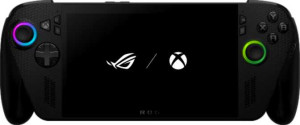
Asus ROG Xbox Ally X
Nintendo Switch 2

Asus ROG Xbox Ally X Nintendo Switch 2

Common Features

  • Both products support ray tracing.
  • Both products use an NVMe SSD.
  • Both products support multithreading.
  • Both products have a 120Hz refresh rate.
  • Both products use DDR5 memory.
  • Both products have a 1080p display resolution.
  • Both products have an internal power supply.
  • Both products are region free.
  • Both products do not have an optical disc drive.
  • Both products are handheld devices.
  • Both products have a 3.5 mm audio jack.
  • Both products support Wi-Fi.
  • Both products have 2 USB ports.
  • Both products support Bluetooth version 5.2.
  • Both products have an external memory slot.
  • Both products support quick resume.
  • Both products support VR.
  • Both products have a touch screen.
  • Both products support motion-sensing controllers.
  • Both products have 2 analog sticks.

Main Differences

  • CPU speed is 8 x 2 GHz on Asus ROG Xbox Ally X and 8 x 1.7 GHz on Nintendo Switch 2.
  • RAM is 24GB on Asus ROG Xbox Ally X and 12GB on Nintendo Switch 2.
  • Asus ROG Xbox Ally X can connect to an external drive, but Nintendo Switch 2 cannot.
  • Output resolution is 1080p on Asus ROG Xbox Ally X and 4K on Nintendo Switch 2.
  • Hard drive is replaceable on Asus ROG Xbox Ally X but not on Nintendo Switch 2.
  • Display type is LCD, LED-backlit, IPS on Asus ROG Xbox Ally X and LCD on Nintendo Switch 2.
  • Internal storage is 1024GB on Asus ROG Xbox Ally X and 256GB on Nintendo Switch 2.
  • Asus ROG Xbox Ally X has a thickness of 27 mm, while Nintendo Switch 2 has a thickness of 14 mm.
  • Asus ROG Xbox Ally X is 290 mm wide, while Nintendo Switch 2 is 272 mm wide.
  • Asus ROG Xbox Ally X is 121 mm tall, while Nintendo Switch 2 is 115 mm tall.
  • Volume is 947.43 cm³ on Asus ROG Xbox Ally X and 437.92 cm³ on Nintendo Switch 2.
  • Weight is 715 g on Asus ROG Xbox Ally X and 535 g on Nintendo Switch 2.
  • Brightness (typical) is 500 nits on Asus ROG Xbox Ally X and 430 nits on Nintendo Switch 2.
  • Battery size is 80 Wh on Asus ROG Xbox Ally X and 19.74 Wh on Nintendo Switch 2.
  • Wi-Fi version is Wi-Fi 6E (802.11ax), Wi-Fi 6 (802.11ax), Wi-Fi 5 (802.11ac), Wi-Fi 4 (802.11n) on Asus ROG Xbox Ally X and Wi-Fi 6 (802.11ax), Wi-Fi 5 (802.11ac), Wi-Fi 4 (802.11n) on Nintendo Switch 2.
  • Asus ROG Xbox Ally X does not have an HDMI output, while Nintendo Switch 2 does.
  • Asus ROG Xbox Ally X does not have NFC, while Nintendo Switch 2 does.
  • Asus ROG Xbox Ally X has 0 RJ45 ports, while Nintendo Switch 2 has 1 RJ45 port.
  • Pixel density is 314 ppi on Asus ROG Xbox Ally X and 275 ppi on Nintendo Switch 2.
  • Asus ROG Xbox Ally X supports Discord voice chat, but Nintendo Switch 2 does not.
  • Asus ROG Xbox Ally X has 2 channels of sound output, while Nintendo Switch 2 has 5.1 channels of sound output.
  • Asus ROG Xbox Ally X comes with 4 controllers, while Nintendo Switch 2 comes with 8 controllers.
  • Asus ROG Xbox Ally X does not have a wireless controller, while Nintendo Switch 2 does.
Specs Comparison
Asus ROG Xbox Ally X

Asus ROG Xbox Ally X

Nintendo Switch 2

Nintendo Switch 2

Performance:
CPU speed 8 x 2 GHz 8 x 1.7 GHz
RAM 24GB 12GB
supports ray tracing
Is an NVMe SSD
Can connect to an external drive
uses multithreading
refresh rate 120Hz 120Hz
DDR memory version 5 5

The Asus ROG Xbox Ally X and the Nintendo Switch 2 both feature a 120Hz refresh rate, ensuring smooth visuals during gaming. However, the two differ in several key performance aspects. The Asus ROG Xbox Ally X is equipped with an 8-core CPU running at 2 GHz, while the Nintendo Switch 2’s CPU is also 8-core but operates at a slightly lower 1.7 GHz.

When it comes to RAM, the Asus ROG Xbox Ally X boasts a significantly larger 24GB, compared to the 12GB found in the Nintendo Switch 2. This gives the Asus model a clear edge in handling more demanding tasks and multitasking. Both devices support ray tracing and utilize NVMe SSD storage, though the Switch 2 cannot connect to an external drive, unlike the Asus ROG Xbox Ally X, which offers that capability.

In terms of memory, both consoles use DDR5 memory, but the Asus ROG Xbox Ally X supports multithreading, which may provide additional processing efficiency. Overall, the Asus ROG Xbox Ally X offers a more robust performance setup, particularly in RAM and CPU speed, while the Nintendo Switch 2 is a bit more limited in these areas, particularly when it comes to external storage connectivity.

General info:
Type Handheld Handheld, Home
output resolution 1080p 4K
display resolution 1080p (Full HD) 1080p (Full HD)
release date October 2025 June 2025
Hard drive is replaceable
Has an internal power supply
Display type LCD, LED-backlit, IPS LCD
internal storage 1024GB 256GB
Is region free
thickness 27 mm 14 mm
width 290 mm 272 mm
height 121 mm 115 mm
volume 947.43 cm³ 437.92 cm³
Has an optical disc drive
weight 715 g 535 g
brightness (typical) 500 nits 430 nits
battery size 80 Wh 19.74 Wh

The Asus ROG Xbox Ally X and the Nintendo Switch 2 both offer a handheld gaming experience, but they vary in other aspects. The Asus model has a display resolution of 1080p (Full HD) and an output resolution of 1080p, while the Switch 2, despite having the same display resolution, supports a 4K output resolution, making it potentially better for upscaling to a larger display.

In terms of internal storage, the Asus ROG Xbox Ally X has 1024GB, which is significantly larger than the 256GB storage found in the Nintendo Switch 2. The storage in the Switch 2 is not replaceable, whereas the Asus device allows for storage upgrades. Both models are region-free and have an internal power supply. The Asus ROG Xbox Ally X uses an LCD, LED-backlit, IPS display, while the Switch 2 features a simpler LCD display.

Physical dimensions also differ between the two. The Asus ROG Xbox Ally X is larger and thicker at 27 mm in thickness, 290 mm in width, and 121 mm in height, with a volume of 947.43 cm³. In comparison, the Nintendo Switch 2 is more compact, with a thickness of 14 mm, a width of 272 mm, and a height of 115 mm, resulting in a smaller volume of 437.92 cm³. The Switch 2 is also lighter at 535 g, compared to the 715 g weight of the Asus ROG Xbox Ally X. The Asus model has a higher typical brightness of 500 nits, while the Switch 2 offers 430 nits. Additionally, the Asus ROG Xbox Ally X features an 80 Wh battery, much larger than the 19.74 Wh battery in the Nintendo Switch 2.

Connectivity:
has a socket for a 3.5 mm audio jack
supports Wi-Fi
Wi-Fi version Wi-Fi 6E (802.11ax), Wi-Fi 6 (802.11ax), Wi-Fi 5 (802.11ac), Wi-Fi 4 (802.11n) Wi-Fi 6 (802.11ax), Wi-Fi 5 (802.11ac), Wi-Fi 4 (802.11n)
is DLNA-certified
USB ports 2 2
has an HDMI output
Bluetooth version 5.2 5.2
has an external memory slot
Supports connectivity between home and portable devices
Has USB Type-C
has a cellular module
has NFC
RJ45 ports 0 1

Both the Asus ROG Xbox Ally X and the Nintendo Switch 2 feature a socket for a 3.5 mm audio jack, allowing users to easily connect wired headphones. Both devices also support Wi-Fi connectivity, but there is a slight difference in their Wi-Fi capabilities. The Asus model supports Wi-Fi 6E, in addition to Wi-Fi 6, Wi-Fi 5, and Wi-Fi 4, whereas the Switch 2 only supports Wi-Fi 6, Wi-Fi 5, and Wi-Fi 4.

In terms of USB ports, both devices offer two USB ports and include USB Type-C support. The Asus ROG Xbox Ally X does not have an HDMI output, while the Nintendo Switch 2 includes an HDMI output, which can be useful for connecting to external displays. Both devices feature Bluetooth 5.2 and an external memory slot, but the Switch 2 is the only one to include NFC support. The Asus ROG Xbox Ally X does not support NFC functionality.

For wired networking, the Nintendo Switch 2 is equipped with an RJ45 port, which allows for direct Ethernet connectivity, while the Asus ROG Xbox Ally X does not have an RJ45 port. Neither product has a cellular module, and both are not DLNA-certified. Both also lack the ability to support connectivity between home and portable devices.

Features:
has voice commands
pixel density 314 ppi 275 ppi
Can play games while they download
supports quick resume
supports Discord voice chat
Supports 3D audio
supports Dolby Vision
supports VR
screen size 7" 7.9"
number of channels of sound output 2 5.1
has a touch screen
Has optical tracking
Has an autostereoscopic display
Has a secondary screen
Access high scores and achievements
has stereo speakers
Supports 3D
Uses flash storage
has a child lock

The Asus ROG Xbox Ally X and the Nintendo Switch 2 share some common features, such as the ability to play games while they download, support for quick resume, access to high scores and achievements, and a touch screen. Both devices also use flash storage and include a child lock for parental controls. However, there are several differences in their specific features.

In terms of display, the Asus ROG Xbox Ally X has a pixel density of 314 ppi, while the Nintendo Switch 2 has a lower pixel density of 275 ppi. The screen sizes are also slightly different, with the Asus model sporting a 7″ display, while the Switch 2 has a slightly larger 7.9″ screen. The Asus ROG Xbox Ally X has stereo sound output with 2 channels, while the Switch 2 offers a more advanced 5.1-channel sound output.

The Asus ROG Xbox Ally X supports Discord voice chat, while the Nintendo Switch 2 does not. Both devices support VR, but only the Switch 2 supports 3D audio. Neither product supports Dolby Vision or 3D, and both lack optical tracking and an autostereoscopic display. Neither device has a secondary screen, and both include stereo speakers for sound output.

Controllers:
number of controllers 4 8
has adaptive triggers
Compatible with a motion-sensing controller(s)
Has a wireless controller
number of analog sticks 2 2
has an integrated touchpad
Has dual force feedback
number of buttons 16 14

The Asus ROG Xbox Ally X and the Nintendo Switch 2 differ in terms of controller options. The Asus ROG Xbox Ally X comes with 4 controllers, while the Nintendo Switch 2 includes 8 controllers. Both products feature two analog sticks, but neither has adaptive triggers. Both are compatible with motion-sensing controllers and include dual force feedback, providing immersive haptic sensations during gameplay.

When it comes to buttons, the Asus ROG Xbox Ally X has 16 buttons, whereas the Nintendo Switch 2 has slightly fewer with 14 buttons. The Asus model does not include a wireless controller, while the Nintendo Switch 2 offers wireless controller support. Neither product features an integrated touchpad.

Comparison Summary

This is a specification comparison between the Asus ROG Xbox Ally X and Nintendo Switch 2. Both devices share features such as a 1080p display resolution and support for Wi-Fi, along with a 120Hz refresh rate. However, there are key differences: the Asus ROG Xbox Ally X has a 24GB RAM and a 1024GB internal storage, while the Nintendo Switch 2 offers a 4K output resolution but with only 12GB RAM and 256GB of storage. The Asus ROG Xbox Ally X is heavier and thicker, with a battery size of 80 Wh, compared to the 19.74 Wh battery in the Nintendo Switch 2.