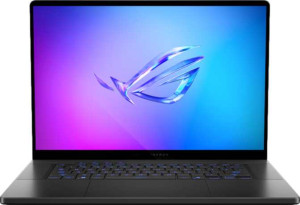
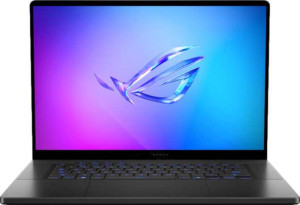
Digging into the deeper GPU silicon reveals some of the most consequential differences between these two configurations. The base GU605 carries a discrete GPU with 10,496 shading units, 328 TMUs, and 128 ROPs, compared to the Ultra 9 variant's 4,608 shading units, 144 TMUs, and just 48 ROPs. These figures map directly to rendering throughput — more shading units process geometry and pixels in parallel, more TMUs handle texture workloads faster, and more ROPs accelerate the final output of rendered pixels to the framebuffer. The base model's advantage here is substantial, not marginal.
The memory subsystem gap is equally stark. A 256-bit memory bus with 811.5 GB/s of bandwidth in the base model dwarfs the Ultra 9 variant's 128-bit bus and 405.8 GB/s — exactly half the memory bandwidth. In GPU-bound scenarios, memory bandwidth is often the bottleneck that constrains frame rates at high resolutions and with demanding texture loads. The base model's wider bus directly translates to more headroom in those situations. The TDP difference — 95W versus 50W — reflects the power draw required to feed these larger GPU resources, and explains in part why the two variants perform so differently despite sharing the same chassis.
On the CPU and platform side, both units are identical: same socket, same L3 cache, same instruction set support, same integrated graphics, and the same overclocked PassMark result. But the GPU-level data in this group strongly reinforces the clear advantage of the base GU605, which fields a significantly more powerful discrete GPU by nearly every measurable silicon metric.