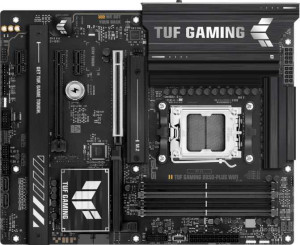
Asus TUF Gaming B850-Plus WiFi
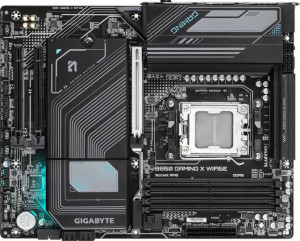
Gigabyte B850 Gaming X WiFi6E

Asus TUF Gaming B850-Plus WiFi Gigabyte B850 Gaming X WiFi6E

Overview

When building an AMD Ryzen platform, choosing the right B850 motherboard can make a real difference. This page puts the Asus TUF Gaming B850-Plus WiFi head-to-head against the Gigabyte B850 Gaming X WiFi6E, two ATX contenders sharing the same AM5 socket and B850 chipset. We examine how they differ across key areas like memory capacity and speed, rear-panel connectivity, expansion slots, and wireless standards to help you find the best fit for your build.

Common Features

  • Both boards use the AM5 CPU socket.
  • Both boards feature the B850 chipset.
  • Both boards have an ATX form factor.
  • Wi-Fi connectivity is available on both boards.
  • Bluetooth is available on both boards.
  • Both boards output HDMI 2.1.
  • Overclocking support is present on both boards.
  • RGB lighting is present on both boards.
  • Both boards have 4 memory slots.
  • Both boards support DDR5 memory.
  • Both boards operate in dual-channel memory mode.
  • ECC memory is not supported on either board.
  • Neither board has USB 3.2 Gen 1 Type-C ports on the rear panel.
  • Neither board features USB 4 40Gbps or USB 4 20Gbps ports.
  • Neither board includes Thunderbolt 3 or Thunderbolt 4 ports.
  • Both boards have an HDMI output and one DisplayPort output.
  • Both boards include one RJ45 ethernet port.
  • Both boards provide 2 USB 3.2 Gen 1 ports and 4 USB 2.0 ports through internal expansion headers.
  • Both boards have 4 SATA 3 connectors, 3 M.2 sockets, and no U.2 sockets.
  • Both boards include 6 fan headers.
  • An mSATA connector is absent on both boards.
  • Both boards have one PCIe 5.0 x16 slot, two PCIe x1 slots, and no PCI slots.
  • Both boards deliver 7.1-channel audio.
  • An S/PDIF output port is absent on both boards.
  • Both boards support RAID 0, RAID 1, RAID 5, and RAID 10, but neither supports RAID 0+1.

Main Differences

  • Wi-Fi 7 (802.11be) support is present on the Asus TUF Gaming B850-Plus WiFi but not available on the Gigabyte B850 Gaming X WiFi6E.
  • Bluetooth version is 5.4 on the Asus TUF Gaming B850-Plus WiFi and 5.3 on the Gigabyte B850 Gaming X WiFi6E.
  • Maximum supported memory is 192GB on the Asus TUF Gaming B850-Plus WiFi and 256GB on the Gigabyte B850 Gaming X WiFi6E.
  • Maximum native RAM speed is 4000 MHz on the Asus TUF Gaming B850-Plus WiFi and 5200 MHz on the Gigabyte B850 Gaming X WiFi6E.
  • Maximum overclocked RAM speed is 8000 MHz on the Asus TUF Gaming B850-Plus WiFi and 8200 MHz on the Gigabyte B850 Gaming X WiFi6E.
  • USB 3.2 Gen 2 Type-A ports total 3 on the Asus TUF Gaming B850-Plus WiFi and 1 on the Gigabyte B850 Gaming X WiFi6E.
  • USB 3.2 Gen 1 Type-A ports total 4 on the Asus TUF Gaming B850-Plus WiFi and 3 on the Gigabyte B850 Gaming X WiFi6E.
  • A USB 3.2 Gen 2 Type-C port is present on the Gigabyte B850 Gaming X WiFi6E but absent on the Asus TUF Gaming B850-Plus WiFi.
  • USB 2.0 ports total 2 on the Asus TUF Gaming B850-Plus WiFi and 3 on the Gigabyte B850 Gaming X WiFi6E.
  • A USB 3.2 Gen 2x2 port is present on the Asus TUF Gaming B850-Plus WiFi but absent on the Gigabyte B850 Gaming X WiFi6E.
  • A PS/2 port is present on the Gigabyte B850 Gaming X WiFi6E but absent on the Asus TUF Gaming B850-Plus WiFi.
  • A TPM connector is present on the Gigabyte B850 Gaming X WiFi6E but absent on the Asus TUF Gaming B850-Plus WiFi.
  • A PCIe 4.0 x16 slot is present on the Asus TUF Gaming B850-Plus WiFi but absent on the Gigabyte B850 Gaming X WiFi6E.
  • Audio connectors total 5 on the Asus TUF Gaming B850-Plus WiFi and 3 on the Gigabyte B850 Gaming X WiFi6E.
Specs Comparison
Asus TUF Gaming B850-Plus WiFi

Asus TUF Gaming B850-Plus WiFi

Gigabyte B850 Gaming X WiFi6E

Gigabyte B850 Gaming X WiFi6E

General info:
CPU socket AM5 AM5
chipset B850 B850
form factor ATX ATX
release date January 2025 January 2025
supports Wi-Fi
Wi-Fi version Wi-Fi 4 (802.11n), Wi-Fi 5 (802.11ac), Wi-Fi 6 (802.11ax), Wi-Fi 6E (802.11ax), Wi-Fi 7 (802.11be) Wi-Fi 4 (802.11n), Wi-Fi 5 (802.11ac), Wi-Fi 6 (802.11ax), Wi-Fi 6E (802.11ax)
Has Bluetooth
Bluetooth version 5.4 5.3
HDMI version HDMI 2.1 HDMI 2.1
Easy to overclock
has RGB lighting
Easy to reset BIOS
Has dual BIOS
has aptX
CPU sockets 1 1
Has integrated graphics
warranty period 3 years 3 years
height 244 mm 244 mm
width 305 mm 305 mm
Has integrated CPU

Both the Asus TUF Gaming B850-Plus WiFi and the Gigabyte B850 Gaming X WiFi6E share the same foundational profile: AM5 socket, B850 chipset, full ATX form factor, and identical physical dimensions of 244 × 305 mm. They both support overclocking, dual BIOS, RGB lighting, HDMI 2.1, Bluetooth, Wi-Fi, and carry a 3-year warranty. For the vast majority of build considerations in this category, the two boards are effectively twins.

The meaningful separation appears in wireless connectivity. The Asus TUF supports Wi-Fi 7 (802.11be), while the Gigabyte tops out at Wi-Fi 6E (802.11ax) — which is reflected even in Gigabyte's own product name. In practical terms, Wi-Fi 7 delivers significantly higher theoretical throughput, lower latency, and better multi-link operation (MLO), which allows a device to simultaneously use multiple bands. For most users today this advantage is latent — it requires a Wi-Fi 7 router to unlock — but it is a meaningful future-proofing edge. The Asus also edges ahead on Bluetooth 5.4 versus 5.3 on the Gigabyte, a minor but real improvement in connection stability and energy efficiency.

In this spec group, the Asus TUF Gaming B850-Plus WiFi holds a clear advantage strictly due to its Wi-Fi 7 support and slightly newer Bluetooth version. If wireless longevity and forward compatibility matter to you, the Asus is the stronger choice here. If you are certain your network infrastructure will remain at Wi-Fi 6E or below, the Gigabyte closes the gap considerably, as all other general specs are a dead heat.
Memory:
maximum memory amount 192GB 256GB
RAM speed (max) 4000 MHz 5200 MHz
overclocked RAM speed 8000 MHz 8200 MHz
memory slots 4 4
DDR memory version 5 5
memory channels 2 2
Supports ECC memory

The memory architecture on both boards shares the same solid foundation: 4 slots, dual-channel DDR5, and no ECC support — exactly what you would expect from a mainstream B850 platform. Where things diverge is in the ceiling each board sets for your RAM configuration. The Gigabyte B850 Gaming X WiFi6E supports up to 256GB of total memory, compared to 192GB on the Asus TUF Gaming B850-Plus WiFi. With 4 slots, that translates to a maximum of 64GB per DIMM on the Gigabyte versus 48GB per DIMM on the Asus — a distinction that is largely academic for gaming and most creative workloads today, but could matter in heavily memory-intensive professional scenarios.

The more practically relevant gap is in memory speed. The Gigabyte supports a native (non-overclocked) maximum of 5200 MHz, while the Asus caps its rated speed at 4000 MHz — a substantial 1200 MHz difference that reflects real-world bandwidth available without touching XMP/EXPO profiles. Even on the overclocking side, the Gigabyte edges ahead at 8200 MHz versus 8000 MHz, though at those extremes the practical performance delta is negligible. The native speed gap, however, means the Gigabyte can extract more bandwidth from standard DDR5 kits out of the box, which benefits latency-sensitive applications and games that respond well to higher memory throughput.

The Gigabyte holds a clear advantage in this group. Its higher native RAM speed ceiling and greater maximum capacity give it more headroom in both everyday and demanding use cases. Unless your build is firmly capped at 64GB or below and you have no plans to push memory speeds, the Gigabyte is the stronger platform for memory scalability.

Ports:
USB 3.2 Gen 2 ports (USB-A) 3 1
USB 3.2 Gen 1 ports (USB-A) 4 3
USB 3.2 Gen 2 ports (USB-C) 0 1
USB 3.2 Gen 1 ports (USB-C) 0 0
USB 2.0 ports 2 3
USB 3.2 Gen 2x2 ports 1 0
USB 4 40Gbps ports 0 0
USB 4 20Gbps ports 0 0
Thunderbolt 4 ports 0 0
Thunderbolt 3 ports 0 0
has an HDMI output
DisplayPort outputs 1 1
RJ45 ports 1 1
Has USB Type-C
eSATA ports 0 0
DVI outputs 0 0
has a VGA connector
PS/2 ports 0 1

Rear I/O is often where boards quietly differentiate themselves, and this comparison is no exception. The Asus TUF Gaming B850-Plus WiFi comes out ahead on raw USB density, offering 7 high-speed USB-A ports in total — three at Gen 2 (10Gbps) and four at Gen 1 (5Gbps) — compared to just four on the Gigabyte (one Gen 2 and three Gen 1). For users running multiple peripherals, external drives, or a heavily populated desk setup without a hub, that extra port count has real day-to-day value.

The more technically interesting difference lies in the USB-C situation. The Asus includes a USB 3.2 Gen 2x2 port delivering 20Gbps — the fastest USB standard present on either board — which comes in USB-C form. The Gigabyte B850 Gaming X WiFi6E, by contrast, offers a USB 3.2 Gen 2 USB-C at 10Gbps. For users connecting high-speed external SSDs or modern docks via USB-C, the Asus's 20Gbps port provides meaningfully faster transfer headroom. The Gigabyte also includes a PS/2 port, a legacy inclusion that is unlikely to matter to the vast majority of modern builders. Both boards are otherwise matched on video output, each providing HDMI and a single DisplayPort.

The Asus holds a clear advantage here, both in total high-speed port count and in peak USB-C throughput. The Gigabyte is not deficient by any means, but if I/O flexibility and USB bandwidth matter to your workflow, the Asus TUF is the stronger choice in this category.

Connectors:
USB 3.2 Gen 1 ports (through expansion) 2 2
USB 2.0 ports (through expansion) 4 4
SATA 3 connectors 4 4
fan headers 6 6
USB 3.0 ports (through expansion) 2 2
M.2 sockets 3 3
Has TPM connector
U.2 sockets 0 0
Has mSATA connector
SATA 2 connectors 0 0

Strip away the branding and the internal connector specs on these two boards are virtually a mirror image: both offer 4 SATA 3 connectors, 3 M.2 sockets, 6 fan headers, and identical expansion USB headers. For storage builders and cooling enthusiasts, this parity means neither board offers a tangible edge in how you can populate drives or manage airflow and pump headers inside your case.

The only point of separation in this entire group is the TPM connector. The Gigabyte B850 Gaming X WiFi6E includes a dedicated TPM header, while the Asus TUF Gaming B850-Plus WiFi does not. A TPM (Trusted Platform Module) header lets you add a discrete TPM chip, which is relevant for enterprise security requirements, BitLocker encryption workflows, and certain compliance-driven environments. For the typical gaming or enthusiast build, this distinction goes unnoticed — modern CPUs include firmware TPM (fTPM) which satisfies Windows 11 requirements without any physical module. However, in professional or security-conscious deployments where a hardware TPM is mandated, the Gigabyte has a meaningful edge.

This is as close to a tie as a spec group gets. For the overwhelming majority of users, the connector layouts are functionally identical. The Gigabyte earns a narrow advantage solely due to its TPM header — a detail that only matters in specific professional contexts, but worth noting for builders who need it.

Expansion slots:
PCIe 4.0 x16 slots 1 0
PCIe 5.0 x16 slots 1 1
PCIe 3.0 x16 slots 0 0
PCIe x1 slots 2 2
PCI slots 0 0
PCIe 2.0 x16 slots 0 0
PCIe x4 slots 0 0
PCIe x8 slots 0 0

For GPU placement, both boards deliver the same primary slot: a single PCIe 5.0 x16 connection for your graphics card, ensuring neither board bottlenecks even the most bandwidth-demanding current-generation GPUs. Two PCIe x1 slots are also present on both, covering add-in cards like sound cards, network adapters, or capture cards. At this level, the two boards are functionally identical for the vast majority of single-GPU builds.

The one distinguishing feature here is the Asus TUF Gaming B850-Plus WiFi's additional PCIe 4.0 x16 slot. While it operates at a lower bandwidth ceiling than the primary Gen 5 slot, it opens the door to a secondary expansion card that benefits from x16 physical spacing — such as a high-end capture card, a professional compute card, or a second GPU in a non-gaming workload. The Gigabyte B850 Gaming X WiFi6E has no equivalent secondary x16 slot, limiting heavier multi-card configurations.

The Asus holds a clear edge in this group. For single-GPU gaming rigs, both boards are equally capable, but the Asus's additional PCIe 4.0 x16 slot provides meaningful extra flexibility for users who anticipate populating more than one full-size expansion card — a genuine advantage that the Gigabyte simply cannot match here.

Audio:
audio channels 7.1 7.1
Has S/PDIF Out port
audio connectors 5 3

Onboard audio is a relatively lean spec category for both of these boards. They share the same 7.1-channel audio support and neither includes an S/PDIF optical output — meaning users who rely on a digital optical connection to an external receiver or DAC will need to look elsewhere on both platforms. For most headset and stereo speaker users, this omission is inconsequential.

The practical difference comes down to the number of analog audio jacks. The Asus TUF Gaming B850-Plus WiFi provides 5 audio connectors, while the Gigabyte B850 Gaming X WiFi6E offers just 3. In a 7.1 setup, more jacks mean more discrete analog outputs without needing to rely on software remapping or a separate audio interface. A 5-jack layout typically separates the rear surround, center/subwoofer, and front output channels independently, which is more convenient for users wiring multi-speaker analog systems directly to the motherboard.

The Asus has a clear edge here for anyone using a multi-speaker analog audio setup, as its additional jacks reduce friction in a full surround configuration. For users who exclusively use a USB headset, Bluetooth audio, or a dedicated sound card, both boards are practically equivalent — but on the spec data provided, the Asus is the stronger choice for analogue audio versatility.

Storage:
Supports RAID 1
Supports RAID 10 (1+0)
Supports RAID 5
Supports RAID 0
Supports RAID 0+1

RAID support is identical across both boards, and there is no way to dress that up differently. The Asus TUF Gaming B850-Plus WiFi and the Gigabyte B850 Gaming X WiFi6E both support RAID 0, 1, 5, and 10, while neither supports RAID 0+1. This is a textbook match with no differentiation whatsoever.

For context, the supported configurations cover the most practical use cases: RAID 0 for striped performance, RAID 1 for mirrored redundancy, RAID 5 for a balance of redundancy and usable capacity across three or more drives, and RAID 10 for the combined benefits of striping and mirroring. The absence of RAID 0+1 is a minor footnote — it is largely redundant given RAID 10 support, and rarely requested in consumer builds.

This group is a complete tie. Both boards offer exactly the same storage redundancy options, and neither holds any advantage over the other. Your choice between these two should rest entirely on the differentiators identified in other spec groups.

Comparison Summary & Verdict

Both the Asus TUF Gaming B850-Plus WiFi and the Gigabyte B850 Gaming X WiFi6E are competent AM5 boards built on the B850 chipset, but they each cater to a slightly different builder. The Asus board stands out with its Wi-Fi 7 support, a PCIe 4.0 x16 slot, more USB 3.2 Gen 2 Type-A ports, a USB 3.2 Gen 2x2 port, and a higher audio connector count, making it the stronger pick for users who want cutting-edge wireless and richer connectivity. The Gigabyte board counters with a higher maximum memory capacity of 256GB, a faster native RAM speed ceiling of 5200 MHz, a USB 3.2 Gen 2 Type-C rear port, and an onboard TPM connector, making it better suited for memory-intensive workloads and security-conscious builds. Neither board is a clear overall winner; your ideal choice hinges on whether flexible connectivity or raw memory headroom matters more to you.

Asus TUF Gaming B850-Plus WiFi
Buy Asus TUF Gaming B850-Plus WiFi if...

Buy the Asus TUF Gaming B850-Plus WiFi if you want Wi-Fi 7 support, more USB 3.2 Gen 2 Type-A ports, a PCIe 4.0 x16 slot, or a richer audio connector layout.

Gigabyte B850 Gaming X WiFi6E
Buy Gigabyte B850 Gaming X WiFi6E if...

Buy the Gigabyte B850 Gaming X WiFi6E if you need a higher maximum memory capacity of 256GB, a faster native RAM speed ceiling, a rear USB 3.2 Gen 2 Type-C port, or a dedicated TPM connector.