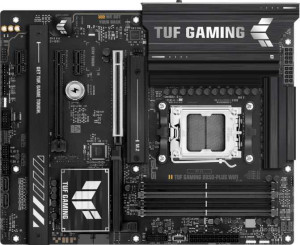
Rear I/O layout often reveals a board's intended audience, and here the two boards take noticeably different approaches. The Asus TUF Gaming B850-Plus WiFi is the more port-dense option, offering a combined 7 high-speed USB-A ports (three Gen 2 at 10 Gbps and four Gen 1 at 5 Gbps), plus a USB 3.2 Gen 2x2 port delivering 20 Gbps — ideal for fast external SSDs. That sheer quantity of USB-A makes it well-suited for users with multiple peripherals, controllers, headsets, and hubs who want to avoid a cluttered chain of adapters.
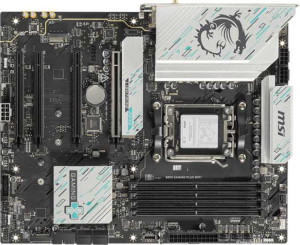
The MSI B850 Gaming Plus WiFi counters with a more modern connector philosophy: it trades raw USB-A count for two USB 3.2 Gen 2 Type-C ports, catering to newer devices like high-speed drives, docks, and smartphones that have moved to USB-C. However, it drops the Gen 2x2 port entirely, so its peak single-port throughput tops out at 10 Gbps rather than 20 Gbps. The MSI also omits an HDMI output — present on the Asus — which limits display options for users relying on integrated graphics for a secondary monitor or quick display output without a discrete GPU installed.
Taken together, the Asus TUF Gaming B850-Plus WiFi has a meaningful edge in this category. Its higher USB-A port count, faster peak USB throughput via Gen 2x2, and inclusion of HDMI make it the more versatile and plug-and-play-friendly option for the majority of users. The MSI's USB-C ports are a forward-looking touch, but they do not offset the gaps in total connectivity.