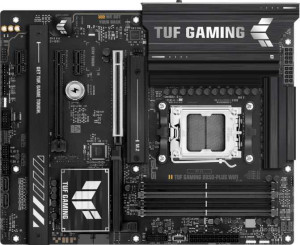
Internal connectors are where a board's true expandability lives, and the MSI MAG B850 Tomahawk Max WiFi pulls ahead on nearly every metric here. Its 4 M.2 sockets versus the Asus TUF's 3 means one additional slot for NVMe storage — meaningful for content creators, video editors, or power users who want to run multiple fast drives without touching the SATA ports. Both boards offer 4 SATA 3 connectors, so traditional HDD or SSD arrays are equally supported on either platform.
Fan and thermal management tells a similar story. The Tomahawk Max WiFi provides 8 fan headers compared to the TUF's 6, which is a tangible advantage in high-airflow builds with multiple case fans, radiator pumps, and AIO headers to manage. Two extra headers eliminate the need for splitters or fan hubs in complex cooling setups, simplifying cable management and giving finer individual control over each fan zone. The MSI also doubles the TUF's internal USB 3.0 expansion headers — 4 versus 2 — useful for front-panel connectivity on cases with multiple high-speed USB ports.
A quieter but notable differentiator is the MSI's TPM connector, which the Asus lacks. A dedicated TPM header supports hardware-based security modules — relevant for enterprise environments, Windows 11 compliance without relying solely on firmware TPM, or users who prioritize hardware-level encryption. Taken together, the MSI MAG B850 Tomahawk Max WiFi holds a clear advantage in this category, offering more storage slots, more fan headers, more internal USB bandwidth, and an added security feature that the Asus simply does not provide.