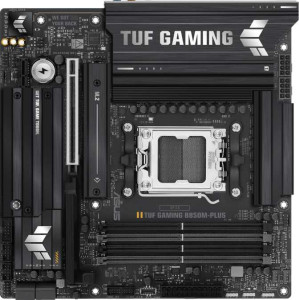
Asus TUF Gaming B850M-Plus
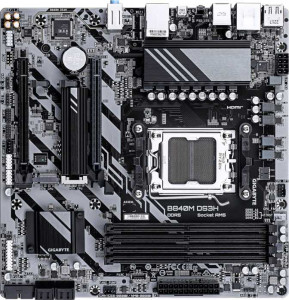
Gigabyte B840M DS3H

Asus TUF Gaming B850M-Plus Gigabyte B840M DS3H

Overview

Welcome to our in-depth specification comparison between the Asus TUF Gaming B850M-Plus and the Gigabyte B840M DS3H — two Micro-ATX motherboards built on the AM5 platform with DDR5 support. While they share a common foundation, these boards diverge in meaningful ways across connectivity, expansion slots, storage options, and audio features. Read on to discover which board best fits your build goals.

Common Features

  • Both boards use the AM5 CPU socket.
  • Both boards come in a Micro-ATX form factor.
  • Neither board includes Wi-Fi connectivity.
  • Neither board includes Bluetooth connectivity.
  • Both boards feature HDMI 2.1 output.
  • Both boards support overclocking easily.
  • Neither board offers easy BIOS reset functionality.
  • Both boards feature a dual BIOS.
  • Both boards have 4 memory slots.
  • Both boards support DDR5 memory.
  • Both boards operate in dual-channel memory mode.
  • Neither board supports ECC memory.
  • Both boards have 4 USB 2.0 rear ports.
  • Neither board has USB 3.2 Gen 2 USB-C rear ports.
  • Neither board has USB 3.2 Gen 1 USB-C rear ports.
  • Neither board has USB 4, Thunderbolt 3, or Thunderbolt 4 ports.
  • Both boards include an HDMI output.
  • Both boards provide 2 USB 3.2 Gen 1 ports through expansion.
  • Both boards provide 4 USB 2.0 ports through expansion.
  • Both boards have 4 SATA 3 connectors and no SATA 2 connectors.
  • Neither board has an mSATA connector or U.2 socket.
  • Both boards support 7.1 audio channels.
  • Both boards have no PCIe 3.0 x16, PCIe 2.0 x16, PCIe x8, or legacy PCI slots.
  • Both boards support RAID 0, RAID 1, RAID 5, and RAID 10, but neither supports RAID 0+1.

Main Differences

  • The chipset is B850 on Asus TUF Gaming B850M-Plus and B840 on Gigabyte B840M DS3H.
  • RGB lighting is present on Asus TUF Gaming B850M-Plus but not available on Gigabyte B840M DS3H.
  • Maximum memory capacity is 192GB on Asus TUF Gaming B850M-Plus and 256GB on Gigabyte B840M DS3H.
  • Overclocked RAM speed reaches 8000 MHz on Asus TUF Gaming B850M-Plus and 8200 MHz on Gigabyte B840M DS3H.
  • USB 3.2 Gen 2 USB-A ports number 3 on Asus TUF Gaming B850M-Plus and 1 on Gigabyte B840M DS3H.
  • USB 3.2 Gen 1 USB-A ports number 4 on Asus TUF Gaming B850M-Plus and 2 on Gigabyte B840M DS3H.
  • A USB 3.2 Gen 2x2 port is present on Asus TUF Gaming B850M-Plus but not available on Gigabyte B840M DS3H.
  • DisplayPort outputs number 1 on Asus TUF Gaming B850M-Plus and 2 on Gigabyte B840M DS3H.
  • A PS/2 port is present on Gigabyte B840M DS3H but not available on Asus TUF Gaming B850M-Plus.
  • Fan headers number 5 on Asus TUF Gaming B850M-Plus and 4 on Gigabyte B840M DS3H.
  • M.2 sockets number 3 on Asus TUF Gaming B850M-Plus and 2 on Gigabyte B840M DS3H.
  • A TPM connector is present on Gigabyte B840M DS3H but not available on Asus TUF Gaming B850M-Plus.
  • A PCIe 5.0 x16 slot is present on Asus TUF Gaming B850M-Plus, while Gigabyte B840M DS3H offers a PCIe 4.0 x16 slot instead.
  • A PCIe x1 slot is present on Asus TUF Gaming B850M-Plus but not available on Gigabyte B840M DS3H.
  • A PCIe x4 slot is present on Gigabyte B840M DS3H but not available on Asus TUF Gaming B850M-Plus.
  • An S/PDIF Out port is present on Asus TUF Gaming B850M-Plus but not available on Gigabyte B840M DS3H.
  • Audio connectors number 5 on Asus TUF Gaming B850M-Plus and 3 on Gigabyte B840M DS3H.
Specs Comparison
Asus TUF Gaming B850M-Plus

Asus TUF Gaming B850M-Plus

Gigabyte B840M DS3H

Gigabyte B840M DS3H

General info:
CPU socket AM5 AM5
chipset B850 B840
form factor Micro-ATX Micro-ATX
release date January 2025 January 2025
supports Wi-Fi
Has Bluetooth
HDMI version HDMI 2.1 HDMI 2.1
Easy to overclock
has RGB lighting
Easy to reset BIOS
Has dual BIOS
CPU sockets 1 1
Has integrated graphics
warranty period 3 years 3 years
height 244 mm 244 mm
width 244 mm 244 mm
Has integrated CPU

Both the Asus TUF Gaming B850M-Plus and the Gigabyte B840M DS3H share the same foundational profile: Micro-ATX form factor at identical 244 × 244 mm dimensions, an AM5 socket for AMD's current-generation processors, HDMI 2.1 video output, overclocking support, dual BIOS, and a 3-year warranty. Neither board includes integrated Wi-Fi, Bluetooth, an integrated CPU, or integrated graphics, so users on both platforms will need to budget for a discrete GPU and, if needed, a separate wireless adapter.

The most meaningful hardware difference lies in the chipset: the TUF Gaming carries a B850 versus the DS3H's B840. Within AMD's current lineup, B850 sits a tier above B840, and while both support overclocking per the specs provided, B850 generally enables broader tuning headroom and additional connectivity features. This makes the TUF Gaming a slightly more future-oriented platform for users who want flexibility as their build evolves.

The secondary differentiator is purely aesthetic: the TUF Gaming includes RGB lighting, while the DS3H does not. For builders who value a clean, understated look — or who simply do not want to manage RGB software — the DS3H's omission is a feature, not a drawback. Overall, the Asus TUF Gaming B850M-Plus holds a modest edge in this group thanks to its higher-tier chipset; the Gigabyte DS3H is the leaner, no-frills alternative for budget-conscious builders who do not need that extra headroom.
Memory:
maximum memory amount 192GB 256GB
overclocked RAM speed 8000 MHz 8200 MHz
memory slots 4 4
DDR memory version 5 5
memory channels 2 2
Supports ECC memory

The Asus TUF Gaming B850M-Plus supports a maximum memory amount of 192GB, while the Gigabyte B840M DS3H can accommodate up to 256GB. Both motherboards feature 4 memory slots, offering similar expansion options for RAM. They both also support DDR5 memory and operate with 2 memory channels, ensuring optimal performance for modern RAM configurations.

In terms of overclocking capabilities, the Asus TUF Gaming B850M-Plus supports a maximum overclocked RAM speed of 8000 MHz, while the Gigabyte B840M DS3H supports a slightly higher overclocked speed of 8200 MHz. However, both motherboards do not support ECC memory, which is relevant for users seeking error-correcting memory for critical workloads.

Overall, while the Gigabyte B840M DS3H offers a higher maximum memory capacity and slightly faster RAM overclocking speeds, both motherboards are equipped with similar features for general memory support, including the same number of slots, DDR5 compatibility, and dual memory channels.

Ports:
USB 3.2 Gen 2 ports (USB-A) 3 1
USB 3.2 Gen 1 ports (USB-A) 4 2
USB 3.2 Gen 2 ports (USB-C) 0 0
USB 3.2 Gen 1 ports (USB-C) 0 0
USB 2.0 ports 4 4
USB 3.2 Gen 2x2 ports 1 0
USB 4 40Gbps ports 0 0
USB 4 20Gbps ports 0 0
Thunderbolt 4 ports 0 0
Thunderbolt 3 ports 0 0
has an HDMI output
DisplayPort outputs 1 2
RJ45 ports 1 1
Has USB Type-C
eSATA ports 0 0
DVI outputs 0 0
has a VGA connector
PS/2 ports 0 1

The Asus TUF Gaming B850M-Plus offers a variety of USB ports, including 3 USB 3.2 Gen 2 (USB-A) ports, 4 USB 3.2 Gen 1 (USB-A) ports, and 4 USB 2.0 ports. It also features a USB 3.2 Gen 2x2 port, which is absent on the Gigabyte B840M DS3H. Both motherboards support USB Type-C, but the Asus model provides more USB 3.2 Gen 2 (USB-A) ports, while the Gigabyte B840M DS3H has fewer of these but includes 2 USB 3.2 Gen 1 (USB-A) ports.

Regarding video outputs, both motherboards have an HDMI output, but the Asus TUF Gaming B850M-Plus features a single DisplayPort output, while the Gigabyte B840M DS3H has two. Neither motherboard offers USB 4, Thunderbolt 3, or Thunderbolt 4 ports, and neither includes eSATA or DVI outputs. Both motherboards lack a VGA connector.

On the networking front, both motherboards have one RJ45 Ethernet port, and the Asus board does not have a PS/2 port, while the Gigabyte B840M DS3H does. The overall selection of ports is quite similar, but the Asus TUF Gaming B850M-Plus offers slightly more variety in USB 3.2 Gen 2 (USB-A) options, while the Gigabyte B840M DS3H has more DisplayPort outputs.

Connectors:
USB 3.2 Gen 1 ports (through expansion) 2 2
USB 2.0 ports (through expansion) 4 4
SATA 3 connectors 4 4
fan headers 5 4
USB 3.0 ports (through expansion) 2 2
M.2 sockets 3 2
Has TPM connector
U.2 sockets 0 0
Has mSATA connector
SATA 2 connectors 0 0

Both the Asus TUF Gaming B850M-Plus and the Gigabyte B840M DS3H offer similar connectors in terms of expansion, with both supporting 2 USB 3.2 Gen 1 ports (through expansion), 4 USB 2.0 ports (through expansion), and 2 USB 3.0 ports (through expansion). However, the Asus TUF Gaming B850M-Plus has 5 fan headers, while the Gigabyte B840M DS3H has 4, giving the Asus board a slight edge in terms of cooling options.

When it comes to storage, both motherboards provide 4 SATA 3 connectors. The Asus board features 3 M.2 sockets, while the Gigabyte board has 2, which may offer more flexibility for expansion with high-speed storage devices on the Asus board.

One notable difference is that the Gigabyte B840M DS3H includes a TPM connector, which is absent on the Asus TUF Gaming B850M-Plus. Both motherboards lack U.2 and mSATA connectors, and neither has SATA 2 connectors.

Expansion slots:
PCIe 4.0 x16 slots 0 1
PCIe 5.0 x16 slots 1 0
PCIe 3.0 x16 slots 0 0
PCIe x1 slots 1 0
PCI slots 0 0
PCIe 2.0 x16 slots 0 0
PCIe x4 slots 0 1
PCIe x8 slots 0 0

The Asus TUF Gaming B850M-Plus features a PCIe 5.0 x16 slot, but lacks PCIe 4.0 x16, PCIe 3.0 x16, PCIe x1, PCIe x4, and PCIe x8 slots. In contrast, the Gigabyte B840M DS3H offers a PCIe 4.0 x16 slot and a PCIe x4 slot but does not include a PCIe 5.0 x16 slot. The Gigabyte motherboard also lacks PCIe 3.0 x16, PCIe x1, PCI slots, and PCIe x8 slots, similar to the Asus model.

Both motherboards do not have PCI slots, PCIe 2.0 x16 slots, or PCIe x8 slots. The key difference lies in the type of PCIe x16 slots available: the Asus TUF Gaming B850M-Plus is equipped with PCIe 5.0 x16, while the Gigabyte B840M DS3H supports PCIe 4.0 x16.

Overall, both boards provide a limited selection of expansion slots, but the Asus model offers the newer PCIe 5.0 x16 slot, while the Gigabyte board supports PCIe 4.0 x16 and adds a PCIe x4 slot for additional flexibility.

Audio:
audio channels 7.1 7.1
Has S/PDIF Out port
audio connectors 5 3

Both the Asus TUF Gaming B850M-Plus and the Gigabyte B840M DS3H support 7.1 audio channels, providing high-quality surround sound. However, the Asus TUF Gaming B850M-Plus includes an S/PDIF Out port, which the Gigabyte B840M DS3H does not offer.

In terms of audio connectors, the Asus board provides 5 connectors, while the Gigabyte board has only 3. This makes the Asus model more versatile for connecting multiple audio devices, such as speakers or headphones.

Overall, both motherboards support the same audio channel configuration, but the Asus TUF Gaming B850M-Plus stands out with its additional S/PDIF Out port and extra audio connectors, offering more flexibility for audio setups.

Storage:
Supports RAID 1
Supports RAID 10 (1+0)
Supports RAID 5
Supports RAID 0
Supports RAID 0+1

Both the Asus TUF Gaming B850M-Plus and the Gigabyte B840M DS3H support RAID 1, RAID 10 (1+0), and RAID 5, allowing for various storage configurations. Neither motherboard supports RAID 0+1, which is a mirrored and striped RAID configuration.

Overall, the RAID support is identical between the two motherboards, offering flexibility for users seeking data redundancy and performance improvements. Both boards support the essential RAID configurations, with no differences in capabilities for RAID 1, 10, or 5.

Comparison Summary & Verdict

Both the Asus TUF Gaming B850M-Plus and the Gigabyte B840M DS3H are competent Micro-ATX AM5 boards with DDR5 support, dual BIOS, and broad RAID compatibility, but they cater to different builders. The Asus TUF Gaming B850M-Plus stands out for power users who want a PCIe 5.0 x16 slot, more USB ports including a USB 3.2 Gen 2x2 port, three M.2 sockets, richer audio output with S/PDIF, and RGB aesthetics. The Gigabyte B840M DS3H, on the other hand, appeals to those who prioritize a higher memory ceiling of 256GB, faster overclocked RAM at 8200 MHz, a PCIe 4.0 x16 slot, a TPM connector for security, and dual DisplayPort outputs — all without RGB lighting, keeping the build understated and focused.

Asus TUF Gaming B850M-Plus
Buy Asus TUF Gaming B850M-Plus if...

Buy the Asus TUF Gaming B850M-Plus if you want a PCIe 5.0 x16 slot, more USB ports including USB 3.2 Gen 2x2, three M.2 sockets, S/PDIF audio output, and RGB lighting for a feature-rich gaming build.

Gigabyte B840M DS3H
Buy Gigabyte B840M DS3H if...

Buy the Gigabyte B840M DS3H if you need a higher maximum memory capacity of 256GB, faster overclocked RAM support, a TPM connector, dual DisplayPort outputs, and a clean no-RGB aesthetic.