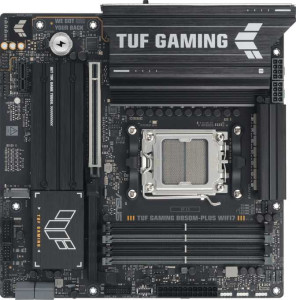
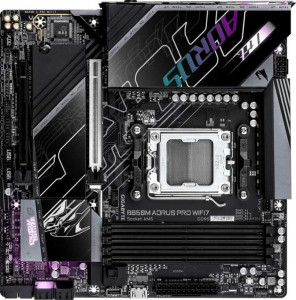
At the platform level, the Asus TUF Gaming B850M-Plus Wi-Fi 7 and the Gigabyte B850M Aorus Pro Wi-Fi 7 are virtually identical: both use the AM5 socket with the B850 chipset, share the same Micro-ATX footprint (244 × 244 mm), and support the full Wi-Fi stack up to Wi-Fi 7 (802.11be) alongside Bluetooth 5.4. Both also output video via HDMI 2.1, support overclocking, feature RGB lighting, and carry identical 3-year warranties. For the vast majority of general-use considerations, these two boards are on equal footing.
The only meaningful differentiators in this group fall under BIOS resilience. The Asus TUF offers both easy BIOS reset and a dual BIOS chip, while the Gigabyte Aorus Pro has neither. In practice, dual BIOS acts as a hardware safety net: if a failed flash or corrupted firmware renders the primary BIOS unbootable, the board automatically falls back to a backup copy. Easy BIOS reset further simplifies recovery without needing to clear CMOS manually. These are not features most users will ever need — but when they do, their absence on the Gigabyte can mean a bricked board rather than a quick recovery.
Based strictly on the general info specs provided, the Asus TUF Gaming B850M-Plus Wi-Fi 7 holds a clear edge. Its dual BIOS and easy reset functionality add a layer of fault tolerance that the Gigabyte simply lacks, making it the safer long-term choice — particularly for users who plan to experiment with BIOS updates or overclocking profiles.